CT Ranks #4 in High-Speed Internet Use; #14 in Computer Ownership, Census Data Shows
/
acslogo
Connecticut ranks #14 in the nation in computer ownership, and #4 in high-speed internet use, according to national data compiled by the U.S. Census. Overall, 83.8 percent of U.S. households reported computer ownership, with 78.5 percent of all households having a desktop or laptop computer, and 63.6 percent having a handheld computer, according to the recently released data.
The top ten in computer ownership were Utah, New Hampshire, Alaska, Wyoming, Colorado, Washington, Oregon, Minnesota, Maryland and New Jersey. Also just ahead of Connecticut were Hawaii, Massachusetts and Idaho.
Nationwide, 88.4 percent of the population lives in a household with a computer. In Connecticut, it is 90.8 percent. Utah leads the way at 94.9 percent. At the bottom of the list are West Virginia, Alabama, New Mexico and Mississippi, all at just under 83 percent.
5
The Census Bureau data also indicated that, on average, 78.1 percent of Americans live in a household with high-speed Internet use. The top ranked states were New Hampshire (85.7%), Massachusetts (85.3%), New Jersey (84.5%), and Connecticut (83.9%). Rounding out the top ten are Utah, Maryland, Hawaii, Washington, Colorado and Rhode Island. The lowest percentages were in New Mexico, Arkansas and Mississippi.
In analyzing the data from metropolitan areas, the U.S. Census Bureau indicates that none of Connecticut’s metro regions made the nation’s top 30 in computer ownership, but the Bridgeport-Stamford- Norwalk metropolitan region was ranked #7 in the nation in high-speed internet use.
The data used in the report, released in November 2014 for calendar year 2013, comes from the American Community Survey, a large and continuous national level data collection effort performed by the Census Bureau. Computer and Internet data from the ACS are based on a sample of approximately 3.5 million addresses.
Nationwide, 74.4 percent of all households reported Internet use, with 73.4 percent reporting a high-speed connection.

high-speed-internet
Of the 25 states with rates of computer ownership above the national average, 17 were located in either the West or Northeast. Of the 26 states with rates of high-speed Internet subscriptions above the national average, 18 were located in either the West or Northeast.
The Census Bureau also reported that although household computer ownership was consistently higher than household Internet use, both followed similar patterns across demographic groups. For example, computer ownership and Internet use were most common in homes with relatively young householders, and both indicators dropped off steeply as a householder’s age increased.
The most common household connection type was via a cable modem (42.8 percent), followed by mobile broadband (33.1 percent), and DSL connections (21.2 percent).

US map
 Making the grade are Bridgeport, Hartford, and New Haven. Their respective round one opponents make the Connecticut cities strong underdogs in need of a sizable population surge. Bridgeport goes up against San Francisco, Hartford faces Baltimore, and New Haven is up against Portland. (No, not Portland, Connecticut.)
 one of two versions of the game, geographic level: metro areas or states. Then they click on the name of the city in each match-up that you think has the larger population. Green shows a correct answer, red indicates an incorrect answer. Players are urged to “see how close you can come to a perfect score of 63” and then asked to “mouse-over results to view the most current population estimates for each pair.”



 The report also indicated that more than 80% of litigants appear without lawyers in matters as important as evictions, mortgage foreclosures, child custody and child support proceedings, and debt collection cases. “Making courts user-friendly for these self-represented litigants is imperative if we are to keep the promise of equal justice for all,” the report indicated. In comparing the 50 states’ systems for self-represented litigants, Connecticut ranked #9. The top states were Hawaii, California, Delaware, Arizona, Iowa, Indiana, Washington, Massachusetts and Connecticut.

 ld University at #396. Outside the top 400 from Connecticut were Wesleyan University, Yale University, Quinnipiac University and Trinity College.
 ity in New Jersey, Florida Agricultural and Mechanical University, Florida International University, and six institutions in California, including California State Polytechnic University, the University of California and Cal State.
 t households unable to afford all of life’s basic necessities far exceeds the official federal poverty statistics. United Way calls this newly revealed demographic ALICE, an acronym for Asset Limited, Income Constrained, Employed.
 an double the official U.S. poverty level.


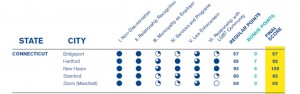
 with the Equality Federation, provide “a revealing snapshot of LGBT equality in municipalities of varying sizes, and from every state in the nation,” the report noted.
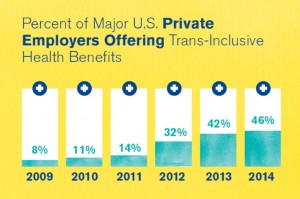 tive state laws.