Connecticut Ranks #16, Above National Average in Online Job Ads for College Graduates
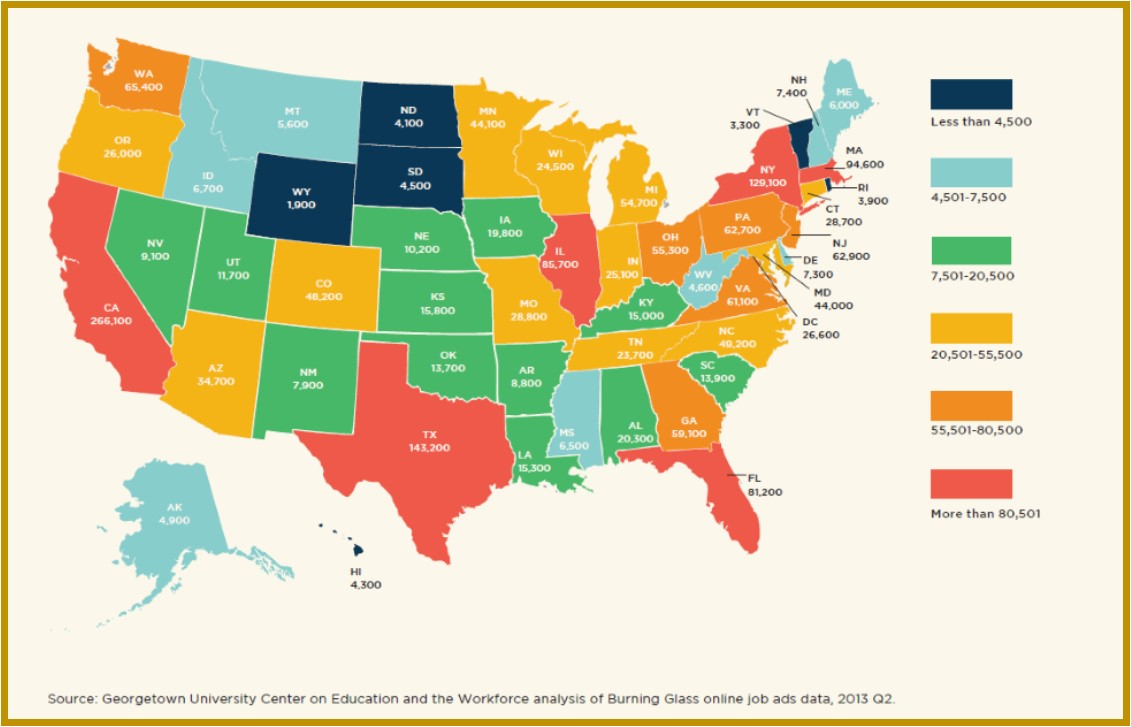
/Connecticut ranks as the 16th best online college labor market in the U.S., according to data compiled by the Georgetown University Center on Education and the Workforce. In Connecticut, 53 percent of online job ads seek college graduates. That translates to 28,700 online job ads, and places Connecticut – just barely – in the top tier of the states.
Massachusetts provides college graduates with the best odds of landing a job, according to the national survey. Using online job ads, the report provides information about where the jobs are for college graduates for each of the 50 states to help students, educators, and policymakers make better decisions.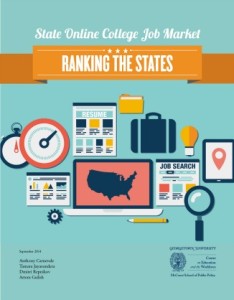
The report ranks the states by how many job openings there are per college-educated worker overall and within industries and career fields. College graduates seeking work in science, technology, engineering, and mathematics (STEM) careers, for example, have the best odds in Delaware, Massachusetts, and New York. Connecticut is in the middle of the pack.
Nationwide, between 60 and 70 percent of job openings are advertised online, and even though only 35 percent of workers have college degrees, nearly half of online job ads cater to college graduates. The top five best online markets for college graduates are Massachusetts, Delaware, Washington, Colorado, and Alaska.
The survey found that in Connecticut:
- 36% of online job adds for college graduates are for managerial and professional office occupations
- 22% of online job ads are in the consulting and business services sector
- The fastest growing occupational cluster for college graduates is in food and personal service, growing by 73 percent between the 1st quarter of 2010 and 2nd quarter of 2013
- The fastest growing industry sector of college graduates is construction, with a 92 percent increase in employment between the 1st quarter of 2010 and 2nd quarter of 2013
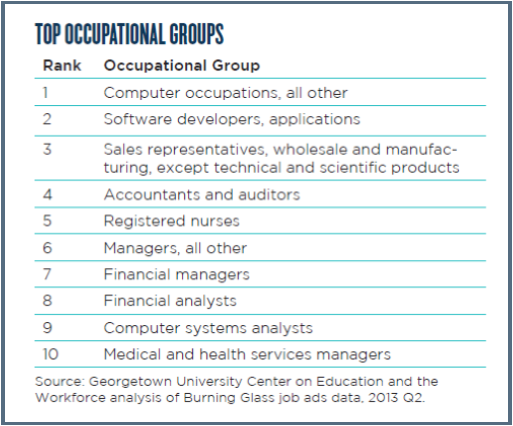 The top occupational groups reflected in the online job ads were 1) computer occupations, 2) software developers, 3) sales representatives,4) accountants and auditors, 5) registered nurses, 6) managers, 7) financial managers, 8) financial analysts, 9) computer system analysts and 10) medical and health services managers.
The distribution of online college job ads by occupational cluster shows that the largest percentage (24%) are in managerial and professional office occupations, followed by sales and office support (23%), STEM fields of science, technology, engineering and math (15%) and blue collar jobs (9%).
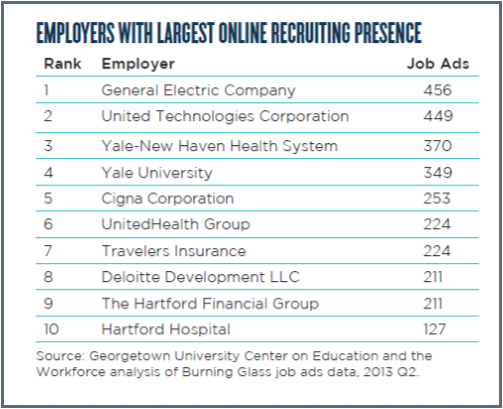
Connecticut employers with the largest online recruiting presence were General Electric Company, United Technologies Corporation, Yale-New Haven Health System, Yale University, Cigna Corporation, UnitedHealth Group, Travelers Insurance, Deloitte Development, The Hartford Financial Group, and Hartford Healthcare.
Across the country, college-educated workers will have the best odds of finding a job in STEM, managerial and professional office, and healthcare professional and technical occupations. The jobs of the new economy are prevalent for college graduates across the 50 states. Employers in information services, consulting and business services and financial services sectors post the most online job ads per college-educated worker.
 The Georgetown University Center on Education and the Workplace is affiliated with the McCourt School of Public Policy. The study was done by Anthony Carnevale, Tamara Jayasundera, Dmitrirepnikov and Artem Gulish.
“The promise of this information is the ability to connect real people with real jobs in real time,” said Anthony P. Carnevale, the report’s lead author and director of the Center. “By combining information on online job ads with traditional employment data we are able to get a more complete picture of job opportunities available to college graduates in each state,” said Tamara Jayasundera, the report’s co-author.
In Massachusetts, 63 percent of job openings are for college graduates, while in West Virginia, only 36 percent of job openings are for college graduates.
 is to bring together professionals from every aspect of Connecticut’s tourism industry — including hotels, restaurants, casinos, tourist attractions, entertainment venues, historic sites, and cultural and arts institutions — to share best practices and learn from national tourism and travel experts. The statewide conference is managed by the DECD Connecticut Office of Tourism in partnership with the Connecticut Convention & Sports Bureau.
 igher education resources, a focus on New York City meeting planners, experts on capturing a share of the international tourist market, ways to maximize use of social media, Tourism Awards for outstanding industry leaders, and an array of workshops on areas including mobile marketing and group bus tours, as well as an exhibition of the most innovative products and services in the tourism sector, according to state officials. Cost for the conference is $99, for industry professionals.
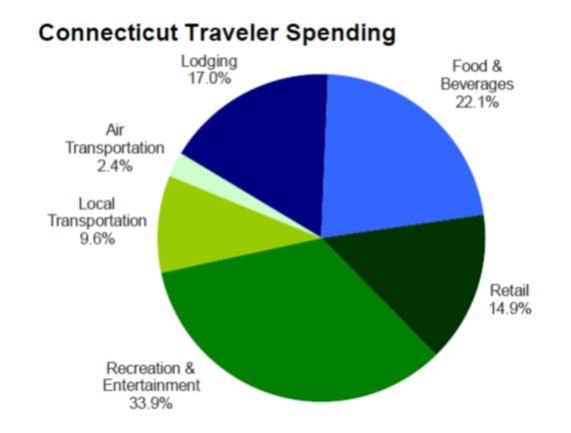 Traveler spending of $8.3 billion generated $14 billion in economic activity statewide in 2013, according to a study released recently by the office of Gov. Dannel P. Malloy. The study shows funds generated directly, through traveler spending, or indirectly, as employees, businesses and other beneficiaries turned around and paid for goods and services. Travelers to Connecticut destinations spent 3.0% more in 2013 than in 2012. Of all Connecticut travelers in 2013, nearly two-thirds were day travelers (66%). The tourism
sector supported more than 118,500 jobs in 2013, according to a recent state report.
Traveler spending of $8.3 billion generated $14 billion in economic activity statewide in 2013, according to a study released recently by the office of Gov. Dannel P. Malloy. The study shows funds generated directly, through traveler spending, or indirectly, as employees, businesses and other beneficiaries turned around and paid for goods and services. Travelers to Connecticut destinations spent 3.0% more in 2013 than in 2012. Of all Connecticut travelers in 2013, nearly two-thirds were day travelers (66%). The tourism
sector supported more than 118,500 jobs in 2013, according to a recent state report. irectors, a Greenwich-based live action production company, is producing a series of six on-air commercials for the Connecticut Office of Tourism, working in conjunction with Avon ad agency


 Often referred to as a Tech Ethicist,

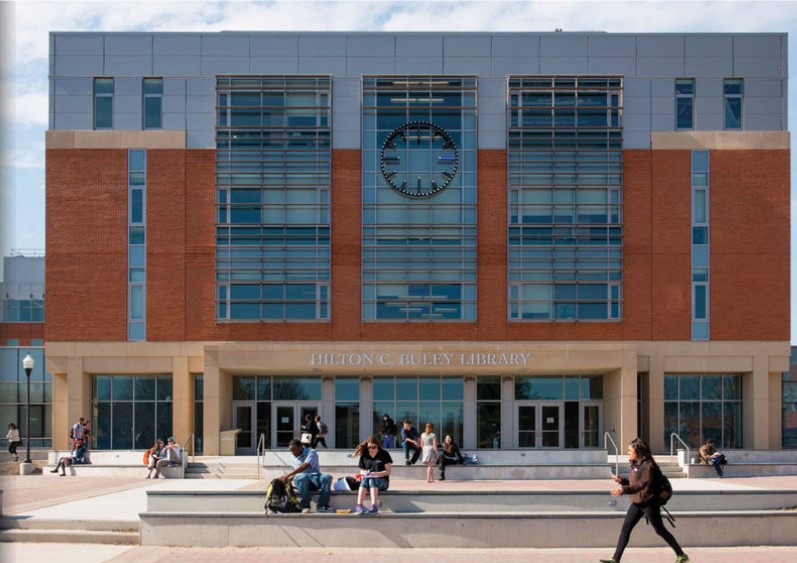 At Southern Connecticut State University in New Haven, students now have a first-rate, 21st century library in which to study, conduct research and meet with their friends and classmates, the university announced this week. A ribbon-cutting ceremony to mark the opening of the “new” Buley Library was held April 20. The event marked the completion of the $31 million project that renovated the original wing of the building. A 12,000-square-foot area that will serve as an atrium has been added to the older 98,000-square-foot wing as part of the project. When combined with the 135,000-square-foot addition that was completed in 2008, the library now encompasses 245,000 square feet.
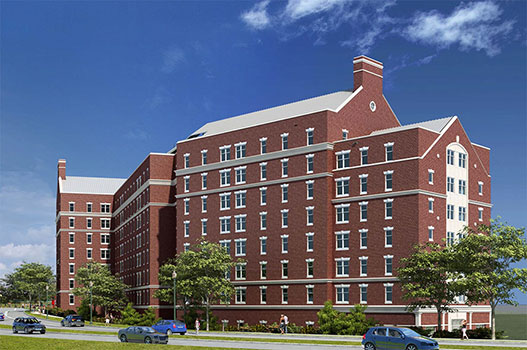 At Central Connecticut State University in New Britain, there is a Fall 2015 target date for completion of a new on-campus residence hall and food services dining facility. That will follow by just two years the opening of a major new classroom building on the CCSU campus. The four-story academic building houses classes and faculty offices for the sociology, history, anthropology, geography and political science departments, according to university officials. It includes 17 classrooms, five seminar rooms, seven labs and 71 offices for faculty and administrators. Now completing construction at the corner of Harold Lewis Drive and Ella Grasso Boulevard, the new $82.3 million, eight-story 220,000 square foot residence hall "will keep CCSU in the vanguard of higher education in operations and facilities," points out CCSU President Jack Miller, noting its ideal fit into the university's strategic plan for the recruitment and retention of new students.
 Opening this fall on the campus of Eastern Connecticut State University in Willimantic is a Fine Arts Instructional Center - a 118,000 square foot building that will contain three main performance venues; an auditorium; a procenium theater and a black box theater. In addition to the performance spaces there will be instructional labs and other spaces in support of the Performing Arts Department. There will be design studios for the Visual Arts Department including Printmaking, Sculpture, Painting and Drawing. The building will also have three general purpose classrooms and a gallery. Construction has been underway for the past two years.
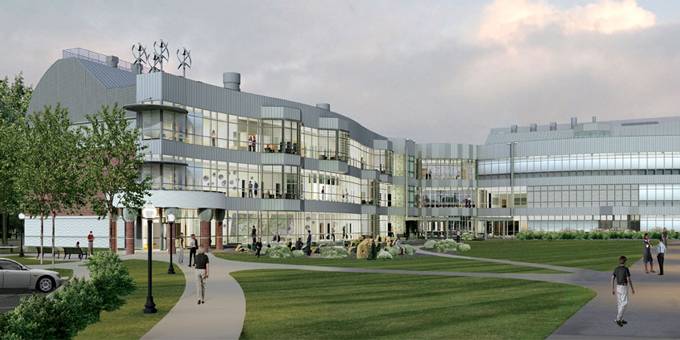 The next major opening among the CSCU institutions will likely be a Science and Laboratory Building at Southern Connecticut, due later this year. Southern's ongoing expansion of its science programs will be greatly enhanced with the construction of a 103,608-square-foot, four-level academic and laboratory science building. Situated adjacent to Jennings Hall, the current home for the sciences, the new building will enhance the ongoing expansion of Southern’s science programs and the university’s capacity to educate more students in the STEM disciplines – science, technology, engineering and mathematics.

 Gary Shapiro, president and CEO of CEA, said “The future of growth and economic prosperity in this country is most vibrant in places where policies and political climates serve to unleash the entrepreneurial spirit and can-do attitude that is part of our American DNA. Our hope is that states will use our Scorecard as a measurable guidepost to improve their policies supporting innovation.”
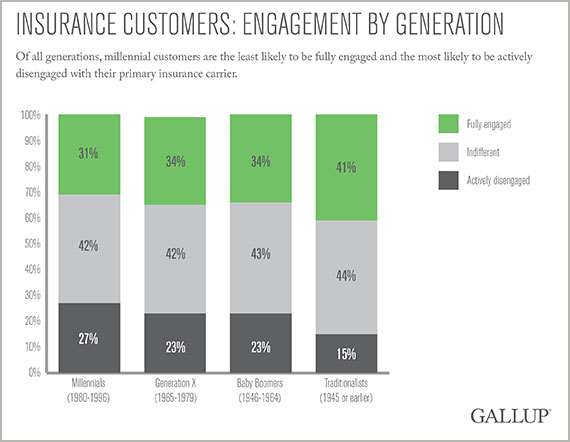

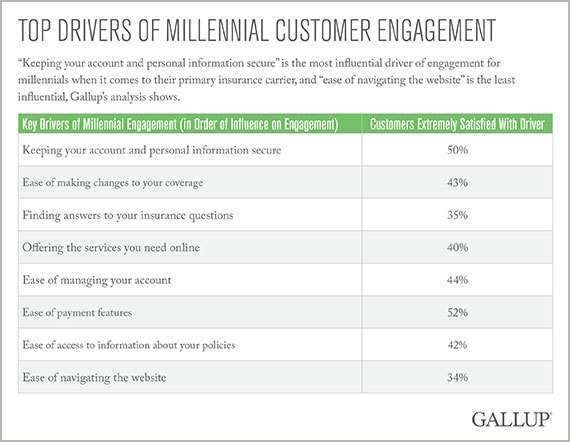 According to a study by the U.S. Public Interest Research Group, Americans are driving fewer total miles today than eight years ago, and driving fewer miles per person than we did in 1996. It is a reversal after decades of steady growth.
 st over 80 percent, according to a University of Michigan study, the website noted. If you don’t own a car, you don’t need car insurance.


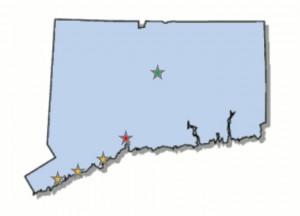 The Bridgeport-Stamford-Norwalk region ranked #5 in physical health, #43 in financial health, #58 in community ties, #63 in sense of purpose and #88 in social health.