White House Conference on Aging Has Connecticut Connections
/It is a once-a-decade event that will feature the President of the United States and other senior administration officials. The White House Conference on Aging (WHCOA), first held a half-century ago and a key driver of federal policy towards the nation’s seniors, will be a conference reliant on digital technology befitting 2015. Rather than having delegates from throughout the nation stream into Washington, D.C., Americans are asked to watch events unfold via live stream – either at home, or by getting together with co-workers or people from their local communities. Officials note that more than 600 public and private Watch Parties—in every state—have been organized and registered with WHCOA.
According to the WHCOA website, there are four “watch party” sites in Connecticut, where people can gather to watch the live video feed together. The sites are in Hamden at the Whitney Center, in Norwalk at Home Care 100, in Waterbury at the Western CT Area Agency on Aging, and in West Hartford at Hebrew Healthcare. The WHCOA has produced a Watch Party Discussion Guide to encourage dialogue during the event, in addition to listening to speeches emanating from the White House.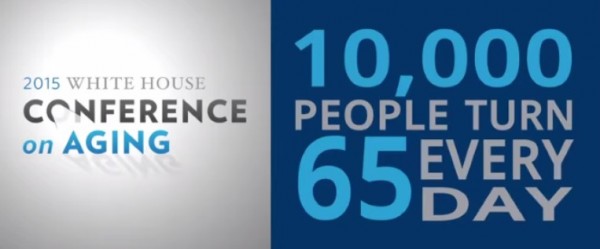
Earlier this year, regional forums leading up to the WHCOA were held in Tampa, Phoenix, Seattle, Cleveland and Boston. Lisa Ryerson, President, AARP Foundation President, moderated the panel in Boston, which explored the topics of healthy aging and long-term services and supports. Panelists included Jewel Mullen, Commissioner, Connecticut Department of Public Health and President, Association of State and Territorial Health Officials. The Boston Regional Forum, held on May 28, 2015, was the fifth and last in the series of regional forums, coordinated with the Leadership Council of Aging Organizations, a coalition of more than 70 of the nation’s leading organizations serving older Americans.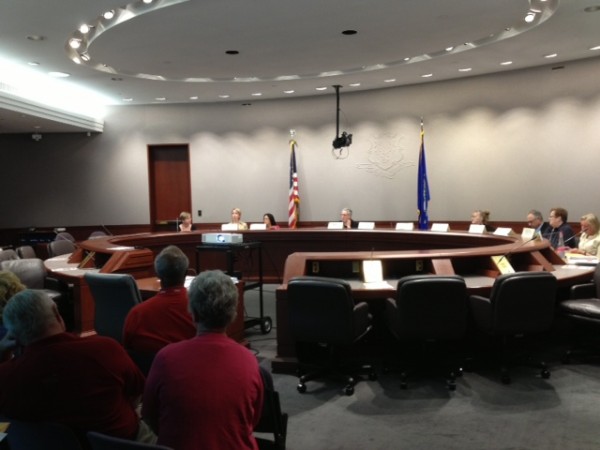
In addition, Connecticut’s Department on Aging, Legislative Committee on Aging and Commission on Aging held a public hearing in May at the Legislative Office Building highlighting issues impacting the state’s seniors, with the testimony from that day being shared with WHCOA officials. Connecticut officials noted that Connecticut is undergoing a “permanent and historic transformation” in its demographics, and currently has the nation’s 7th oldest population. Between 2010 and 2014, Connecticut’s population of people age 65 and older is projected to grow by 57 percent, while at the same time the population of individuals between age 20 and 64 will grow by less than 2 percent.
Monday's WHCOA begins with a welcome from Valerie Jarrett, Senior Advisor and Assistant to the President for Intergovernmental Affairs and Public Engagement, being introduced by Bernard Nash, Caregiving in America Panel. An early morning panel is to be moderated by actor David Hyde Pierce and will include Secretary Robert A. McDonald, U.S. Department of Veterans Affairs; Ai-jen Poo, Caring Across Generations; Harry Leider, The Walgreen Company; Frank Fernandez, BluePlus, BCBS Minnesota Foundation; and Britnee Fergins, Caregiver.
Remarks by President Barack Obama, will be followed by a panel on “Planning for Financial Security at Every Age” moderated by Secretary Tom Pe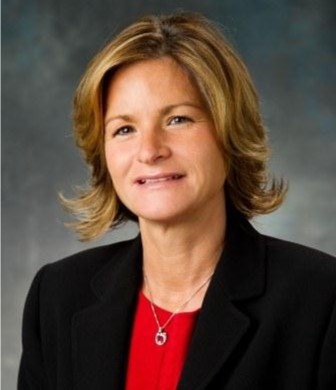 rez, U.S. Department of Labor. The panel will include Jean Chatzky, AARP Financial Ambassador; Vickie Elisa, Mothers’ Voices Georgia; Robin Diamonte, United Technologies Corporation; and Andy Sieg, Merrill Lynch Bank of America.
Diamonte, UTC’s Chief Investment Officer, was voted CIO of the Year in April by her peers in the Investor Intelligence Network (IIN), an online forum of senior financial decision-makers. IIN is part of Institutional Investor PLC, a leading international business-to-business publisher best known for its Institutional Investor magazine. Diamonte is responsible for overseeing UTC’s $52 billion in global retirement assets, including $24 billion in domestic pension plans, $7 billion in foreign pension plans and $21 billion in the defined contribution plan.
Following the panel that includes Diamonte, viewers will hear remarks from Nora Super, Executive Director of the 2015 White House Conference on Aging and Cecilia Muñoz, Assistant to the President and Director of the Domestic Policy Council.
Also delivering r emarks or participating in panels are Secretary Tom Perez, U.S. Department of Labor; DJ Patil, White House Office of Science and Technology Policy; Secretary Tom Vilsack, U.S. Department of Agriculture; professional athlete Diana Nyad; Vice Admiral Vivek Murthy, U.S. Surgeon General; Director Richard Cordray, Consumer Financial Protection Bureau; and Stephanie Santoso, White House Office of Science and Technology Policy.
In addition, Kevin Washington, President and CEO of the YMCA, will be a member of a panel on The Power of Intergenerational Connections and Healthy Aging. Washington, who formerly led the YMCA in Hartford, was honored last month by The Amistad Center for Art & Culture in Hartford for his leadership, noting that he is the first African American to lead the nation’s YMCA organization.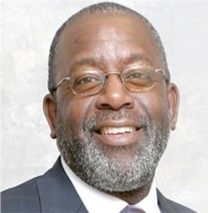
Throughout the day, individuals are asked to “Tweet us your questions using #WHCOA and we will pass them along to our experts participating on panels at the conference.” People are also asked how they would finish the sentence: “Getting older is getting better because …”? A PDF form can be downloaded and then sent along to WHCOA officials. Interviews with older adults can be uploaded to be archived in the Library of Congress, and people are encouraged to share their interviews on social media using the #WHCOA hashtag.
https://youtu.be/gdAWa6wNYXs
 As a result, the study found that inequality between “top and bottom income” neighborhoods intensified in the great majority of commuting zones. Even where inequality dropped, the story was not always positive: it often occurred because top-neighborhood incomes fell in the wake of economic stagnation.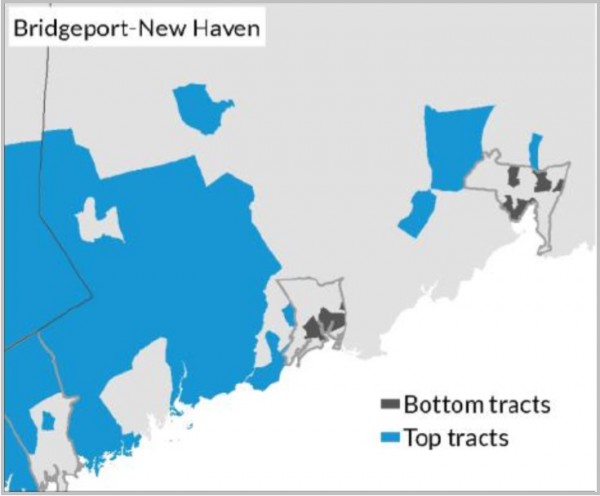

 Overall, the top 5 up-and-coming regions for tech jobs in the U.S. were 1) Austin-Round Rock, TX, 2) Raleigh-Cary, NC, 3) Provo-Orem, UT, and 4) Fort Collins-Loveland, CO. Also reaching the top 10 were 6) Indianapolis-Carmel, IN, 7) Boise City-Nampa, ID, 8) Manchester-Nashua, NH, 9) Nashville-Davidson-Murfreesboro-Franklin, TN and 10) Eugene-Springfield, OR.
 nd online interview tools, all while eliminating bulky and expensive software. Founded in 2010,
  e and local government agencies, major health care and academic institutions, and community and philanthropic organizations to design and conduct the program.
 Additionally, DataHaven has secured funding to ensure that residents of Connecticut's smaller cities and rural areas are included to the same degree as those living in its major metropolitan areas. Nearly $200,000 has been committed from organizations such as the Connecticut Community Foundation, Valley Community Foundation, Lawrence + Memorial Hospital, Ledge Light Health District, Community Foundation of Eastern Connecticut, Connecticut Housing Finance Authority, and others.
 s in Connecticut with the highest median age on July 1, 2014, were Litchfield at 46.3, Middlesex at 44.6 and New London at 40.9. (Median age means that half the population was older than this age and half younger.)
 re diverse than millennials are the youngest Americans. The Census Bureau indicates that those younger than 5 years old became majority-minority for the first time, with 50.2 percent being part of a minority race or ethnic group, as of 2014 data. Reflecting these younger age groups, the population as a whole has become more racially and ethnically diverse in just the last decade, with the percentage minority climbing from 32.9 percent in 2004 to 37.9 percent in 2014.
 The newly released report, looking back at the past two decades, found that women-owned firms are found in every state and in every industry: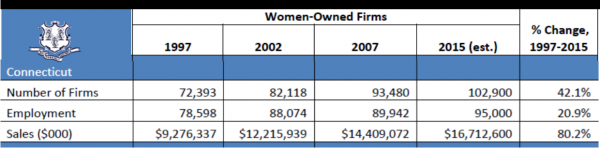
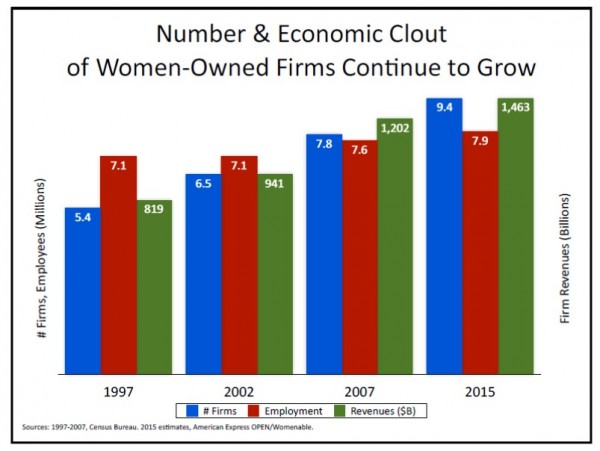
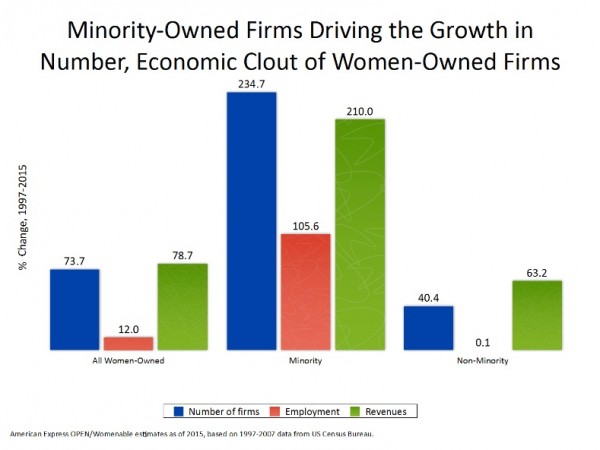


 uth Dakota, Wisconsin, and Minnesota, where it ranks 2nd. Anderson also ranks high in Massachusetts and Rhode Island, at #6.
 The #10 surname in the U.S. is Wilson, which is described as having “a checkerboard-like popularity across the United States.” In Connecticut, Wilson ranks as the 13th most popular last name.








 Fixed route transportation operates along a prescribed route and on a fixed schedule, and includes buses and light rail. In 2014 in Connecticut, buses provided over 43 million passenger trips and rail provided over 39 million passenger trips. Demand-responsive transportation provides routes and scheduling more individually tailored to the needs of the user. The Americans with Disabilities Act (ADA) requires transit agencies to provide paratransit service, subject to certain parameters, to people with disabilities who cannot use the fixed route services. Paratransit ridership in Connecticut in fiscal year 2014 under the ADA totaled over one million rides, and dial-a-ride ridership neared 100,000 rides.
 ommunities are located within a reasonable distance of quality, dependable public transportation.” In addition, policy makers were urged to “identify funding streams to sustain, coordinate, grow and make more convenient both fixed route and demand-responsive transportation options (including providing door-to-door service), and provide technical assistance to support regionalization efforts.”