Religion Slipping Away From Millennial Generation
/A major academic study into millennials and religion is gaining attention for its conclusion that the generation born in this century appears to be the least religious generation of the last six decades, and possibly in the nation's history.
“Survey results from 11.2 million American adolescents demonstrate a decline in religious orientation, especially after 2000. The trend appears among adolescents as young as 13 and suggests that Millennials are markedly less religious than Boomers and GenX’ers were at the same age. The majority are still religious, but a growing minority seem to embrace secularism, with the changes extending to spirituality and the importance of religion as well.”
The report also indicates that “correlational analyses show that this decline occurred at the same time as increases in individualism and declines in social support. Clearly, this is a time of dramatic change in the religious landscape of the United States.”
The researchers -- including Jean M. Twenge and Ramya Sastry from San Diego State University, Julie J. Exline and Joshua B. Grubbs from Case Western Reserve University and W. Keith Campbell from the University of Georgia -- analyzed data from 11.2 million respondents from four nationally representative surveys of U.S. adolescents ages 13 to 18 taken between 1966 and 2014.
Recent adolescents are less likely to say that religion is important in their lives, report less approval of religious organizations, and report being less spiritual and spending less time praying or meditating, the researchers point out. The results were published recently in the journal PLOS One.
Compared to the late 1970s, twice as many 12th graders and college students never attend religious services, and 75 percent more 12th graders say religion is "not important at all" in their lives. Compared to the early 1980s, twice as many high school seniors and three times as many college students in the 2010s answered "none" when asked their religion.
Compared to the 1990s, 20 percent fewer college students described themselves as above average in spirituality, suggesting that religion has not been replaced with spirituality.
"Unlike previous studies, ours is able to show that millennials' lower religious involvement is due to cultural change, not to millennials being young and unsettled," said Twenge. "Millennial adolescents are less religious than Boomers and GenX'ers were at the same age. We also looked at younger ages than the previous studies. More of today's adolescents are abandoning religion before they reach adulthood, with an increasing number not raised with religion at all."
The study comes just after research released last month by the Pew Research Center that showed the portion of U.S. population as a whole that's not affiliated with any religion has climbed from around 16 percent in 2007 to nearly 23 percent last year. Christianity's share of the country's population dropped from 78 percen t to under 71 percent, according to Pew.
"These trends are part of a larger cultural context, a context that is often missing in polls about religion," Twenge said. "One context is rising individualism in U.S. culture. Individualism puts the self first, which doesn't always fit well with the commitment to the institution and other people that religion often requires. As Americans become more individualistic, it makes sense that fewer would commit to religion."
Twenge and her colleagues looked at four large, nationally representative studies, according to published reports: The annual Monitoring the Future studies of eighth, 10th, and 12th graders, and the American Freshmen survey of entering college students (focusing on the years 1966 through 2014). They compared answers given by each of those groups to those given by members of previous generations at the same age.
The study finds the decline in religiosity is larger among young women, whites, those of lower socioeconomic status, and residents of the Northeast, the publication Public Standard points out. In contrast, this trend is “very small among blacks,” the researchers write, “and nonexistent among political conservatives.”



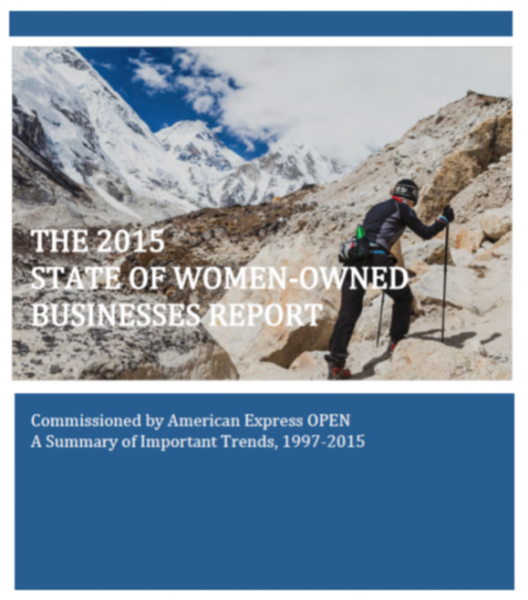
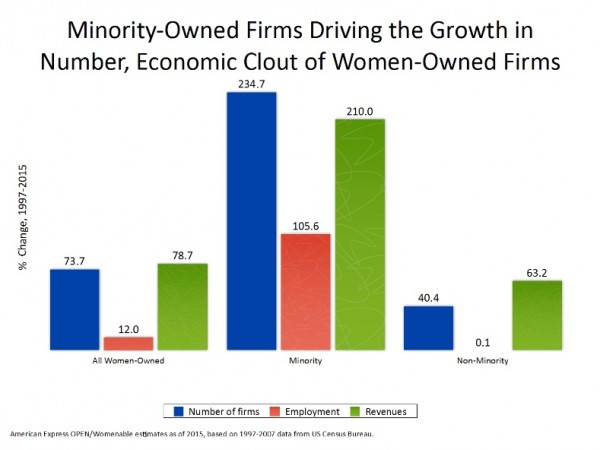
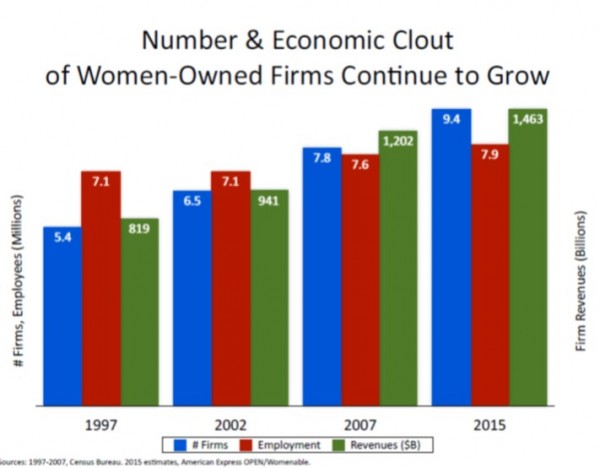 Of the nation’s women-owned businesses, African-American women own 1.3 million, Latinas 1 million, and Asian women more than 700,000. Businesses owned by women of color tend to be smaller in terms of their average employment and revenue, the report indicated. But their growth, both in numbers and in their economic clout—the combined average of their growth, revenue, and employment—continues to outpace that of their white peers, the data indicates.
 ow, there are an estimated 3.1 million minority women-owned firms, representing one in three (33 percent) women-owned firms,” pointed out Julie Weeks, President and CEO of


 The most recent fee data available from 2-1-1 Child Care estimates the statewide average cost of full-time child care in a licensed center-based day care setting is $211/week for 1 preschooler and $253/week for an infant, which adds up to $2,011 per month. This may be less than what many Connecticut families pay for child care each month, due to variations in cost and availability throughout the state, differences in family size, and other costs associated with child care that are not included—such as the cost of alternate care arrangements when the child care setting is closed
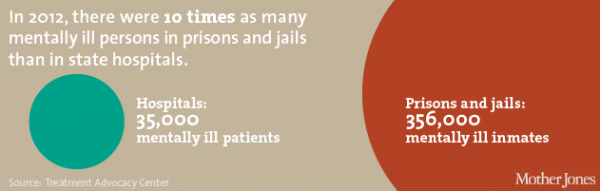 Writing in the
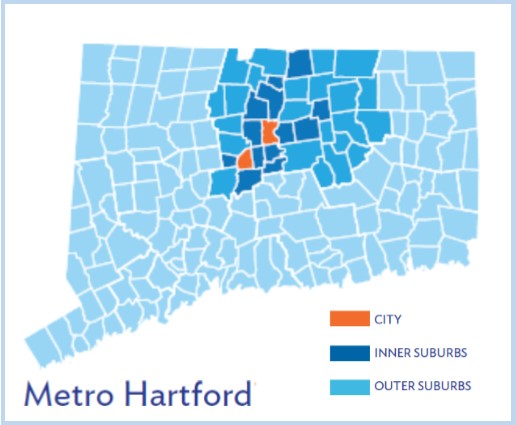
 Looking at five year trends, the report found that the region’s population of about 1 million people has grown by 2 percent, which translates to about 20,000 people or about 4,000 families. Regional job growth, 3.5 percent, is on par with the state, but remains about 8,000 jobs below pre-recession levels. The crime rate across the Greater Hartford region has been reduced by about 18 percent during the past five years, faster than the state (-16%) and national (11%) trends.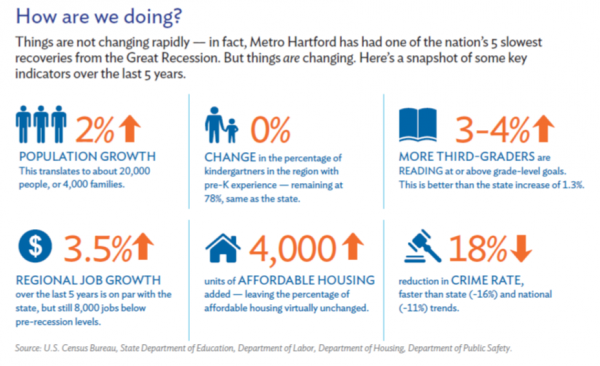
 Partner organizations in developing the report include the Hartford Foundation for Public Giving, Capital Workforce Partners, Capital region Council of Governments, Metro Hartford Alliance, Hispanic Health Council, United Way of Central and Northern Connecticut, Urban League of Greater Hartford, Center for Urban and Global Studies at Trinity College, and the City of Hartford.



 The survey noted that more than two-thirds of consumers (68 percent) looking to purchase their first home are interested in move-in ready homes while one-third would like to buy a fixer-upper. And when it comes to amenities, respondents are most interested in their first home having a backyard or pool and an attractive design, followed by energy efficient / smart homes technologies.
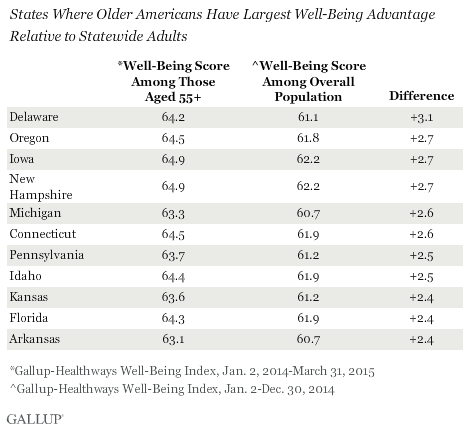 The Well-Being Index is calculated on a scale of zero to 100, where zero represents the lowest possible well-being and 100 represents the highest possible well-being. Connecticut’s well-being score was 64.5 for those age 55+, compared with 61.9 for the overall adult population. The difference of 2.6 was the sixth highest among the states.