Advertisers Target Hispanic and Black Youth with Unhealthy Snack Ads, UConn Center Study Finds
/The University of Connecticut’s Rudd Center for Food Policy & Obesity is calling on media companies to “set nutrition standards” for snack ads aimed at children and teens and “stop targeting advertising high-calorie, nutritionally poor foods to all young people,” but “especially advertising aimed at Black and Hispanic youth.”
The recommendations come in the wake of a report that found that Black and Hispanic children “are exposed to more food advertising than white non-Hispanic children” and much of it is for unhealthy foods that have a greater likelihood of adversely impact children’s health.
The Rudd Center’s report, Snack Facts, found that Black children saw 64 percent more snack food ads on TV compared to white children, and Black teens viewed 103 percent more compared to white teens. The disparity, according to the report issued last fall, had increased between 2010 and 2014, the most recent year studied. “FACTS” is an acronym for “Food Advertising to Children and Teens Score.”
The findings also indicated that in addition to a barrage of advertising for unhealthy snacks, Black children and teens saw approximately 50 percent and 80 percent more ads for healthier fruit and yogurt brands – although the positive findings were generally outdistanced by findings of concern. Black children also saw 99 percent more ads for savory snacks and Black teens saw 129 percent more, compared with white children and teens.
From 2010 to 2014, TV ads for savory snacks (salty or spicy) viewed by black children increased 48 percent and ads viewed by black teens increased 95 percent. “Given that youth of color suffer from higher rates of obesity and other diet-related diseases,” the Rudd Center indicated, “snack food advertising likely exacerbates health disparities affecting their communities.”
Two-thirds of 2- to 5 year-olds and more than half of youth ages 6 to 19 report having three of more snacks per day, and Americans are spending more on snacks – an increase of more than $100 million from 2012 to 2015, according to data cited in the report.
The Rudd Center report found that snack advertising on Spanish language television had changed dramatically between 2010 and 2014, and not for the better:
- Yogurt advertising declined by 93 percent, and not one fruit brand advertised on Spanish-language TV in 2014.
- Spending on savory snack ads (salty/spicy snacks) skyrocketed 551 percent and sweet snack ads rose 30 percent.
- Ads for unhealthy snacks comprised 88 percent of snack food ads viewed by Hispanic children on Spanish-language TV in 2014, a dramatic jump from 39 percent in 2010.
The 102-page report reviewed the advertising practices of specific companies in the snack food industry, and highlighted changes in advertising emphasis. It also tracked trends in advertising on social media. The advertising analysis examined 90 brands spending more than$1 million in total advertising in 2014 from 43 different companies, according to the report. 
The report suggested that “media companies could provide lower rates for advertising that promotes nutritious foods,” noting that aggressive marketing of unhealthy snack foods to children and teens exacerbates the crisis of poor diet and related diseases among young people.”
Snack FACTS examined the nutritional quality and advertising for 90 snack food brands offered by 43 companies that were marketed to U.S. children and teens on TV, internet, and in schools in 2014. Researchers analyzed healthier snacks, including yogurt, fruit, and nuts, as well as unhealthy snacks, including sweet and savory snacks such as cookies, chips, and fruit snacks, comparing 2010 and 2014 when possible.
The report also indicates that “companies have recognized the business opportunity in marketing healthy snacks to young people,” and urges those companies to respond in children and youth’s best interest.
The Rudd Center for Food Policy & Obesity, which affiliated with UConn a year ago after a decade at Yale University, is a non-profit research and public policy organization devoted to improving the world’s diet, preventing obesity, and reducing weight stigma. The Rudd Center is described as “a leader in building broad-based consensus to change diet and activity patterns, while holding industry and government agencies responsible for safeguarding public health.” Research related to the report was funded by a grant from the Robert Wood Johnson Foundation.
 Nearly 25 million children— 35% of the country’s children — lived in single-parent families in 2014, the latest full-year data. That is an increase of 392,000 since 2010.

 cent of children live in mother-only households and 8 percent live in father-only households. Those numbers are virtually unchanged since 2010. Back in 2000, however, 69 percent of children lived in married-couple households, 25 percent in mother-only homes and 6 percent in father-only households.
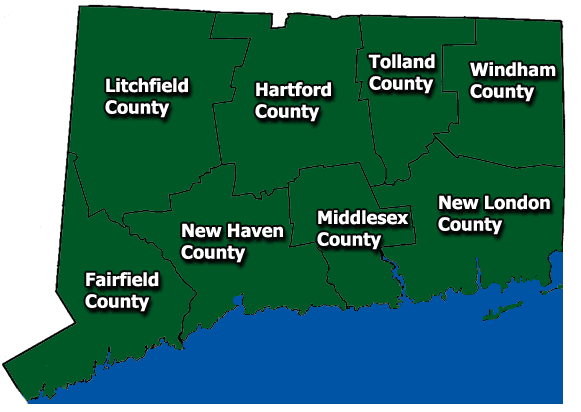 Congressional Districts, with the exception of the Fourth District, did better than the national average in the degree of income inequality.



 Thus far, eight leading funding institutions in Connecticut have expressed their intentions to commit financial contributions in support of the Collaborative goals utilizing their institutional grant-making process. Those organizations include Fairfield County’s Community Foundation, Hartford Foundation for Public Giving, Hispanic Federation, Perrin Family Foundation, Progreso Latino Fund (a committee-advised fund at CFGNH), Tariq Farid Foundation and The Community Foundation for Greater New Haven.


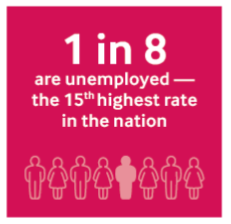 The action plan is spurred by clear concerns: “When young people are not attending school or working, they cannot attain necessary education or work experience, support themselves, save for their future, or contribute to the economy. What future do they face? What future does Fairfield County face?”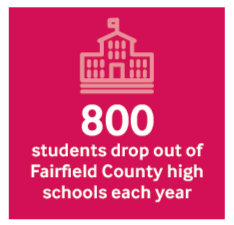
 According to the
 In addition, the Great Recession encouraged many young adults to ride out the difficult job market by continuing their education.
 ort called for an increase of 36,000 students system-wide without adding additional faculty or space. The 17 institutions currently have a total of 92,000 students. The report recommended experimentation with price reductions for out-of-state-students, changing the name of the state system, asserting a new brand position, developing a new logo and color palette, maintaining low tuition increases, centralizing and outsourcing administrative services such as call centers and marketing, and developing goals for students success and metrics to track progress.

 "The Connecticut Council for Philanthropy along with other funding partners invested in the first ever statewide Community Wellbeing Survey, a scientific survey of the state’s entire adult population that will provide timely, powerful knowledge about our communities and enable us to better know the people and places we care about,” added Maggie Osborn, President of the Connecticut Council for Philanthropy.
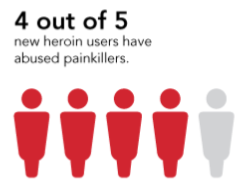
 In Connecticut, the average rate between 1999 and 2001 was 4.1 per 100,000. Between 2010 and 2013, the drug overdose rate had risen to 8.3, above the national aver
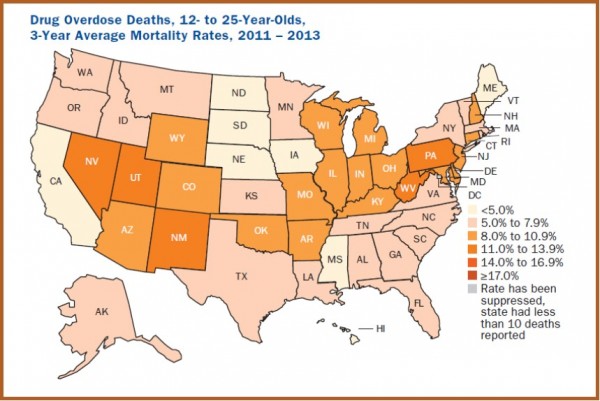 age but unchanged from a previous three-year period, 2005-2007. The data was compiled from the Centers for Disease Control and Prevention. Males are 2.5 times as likely to overdose as females (10.4 vs. 4.1 per 100,000), according to the report.
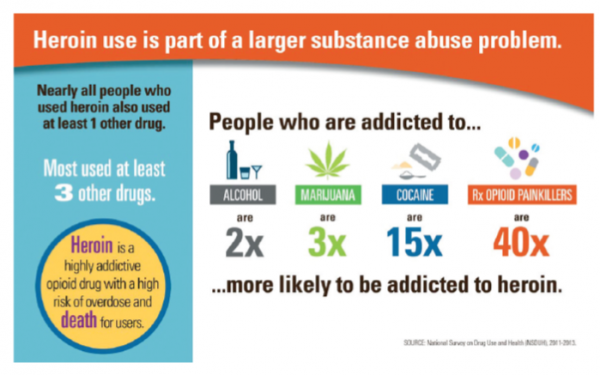 s to help practitioners identify potential abuse that leads to over prescribing by requiring them to check patient history to verify if patients seeking certain prescriptions have recently received these medications from multiple other prescribers or pharmacists.