
Diversity Lacking Among Nation's Philanthropic Organization Leaders; Graustein Memorial Fund Cited As Model of Progress
/Five years ago, America’s philanthropic community recognized it had a problem, not uncommon in board rooms nationwide – a lack of diversity. More than a dozen organizations with connections to thousands of grantmakers came together to found the D5 Coalition to advance diversity, equity, and inclusion (DEI) in philanthropy. Now, the coalition’s final report on progress is out, and the picture is barely encouraging.
In an op-ed published this month in the Chronicle of Philanthropy, the co-chairs of the D5 initiative Robert Ross, Luz Vega-Marquis and Stephen Heintz said bluntly that “philanthropy remains on a par with country clubs when it comes to exclusivity,” observing that “there have been pockets of progress in the last five years, but philanthropy still does not adequately reflect the diversity of our nation.”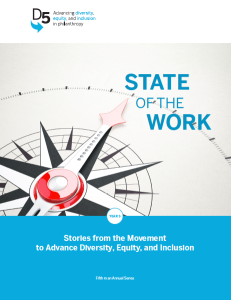
“The only source we have on foundation demographics, shows that the proportion of CEOs of color among respondents has remained flat over the past five years at eight percent. The corresponding figure for senior executive staff is a tad more positive – 17 percent, compared to 14 percent five years ago – but there’s been a slight decline in program officers of color.”
The status quo, they emphasized, “is unacceptable.” They point out that “as matters of inequality in income, employment, housing, public education, justice systems, and health care stake a growing claim on the national agenda, philanthropy must set the tone and pace for inclusiveness, and for who plays a key role in deciding where money goes.”
Robert Ross is the President and CEO of the California Endowment; Luz Vega-Marquis is the President and CEO of the Marguerite Casey Foundation; Stephen Heintz is the President of the Rockefeller Brothers Fund. Heintz, a former Connecticut resident, served as a state commissioner in the 1980’s in the administration of Gov. William O’Neill at the outset of his career.
 The D5 final report features stories about leaders in foundations and other philanthropic organizations taking meaningful action to advance DEI. “Storytelling is one of the most powerful ways to inspire action and change. We hope people working within foundations—whether they are a CEO, an HR manager or a program officer—draw on the important lessons from these stories, and apply them to their own unique situations,” said Kelly Brown, D5 Director. Kelly also cited statistics indicating that “when companies commit themselves to diverse leadership, they are more successful. Foundations and nonprofits,” she said, “have the opportunity to take a page from successful business playbooks.”
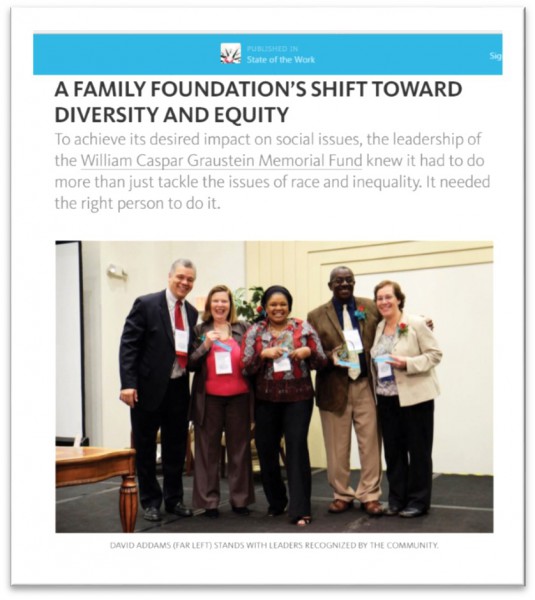
Among eight stories included in the final report which point to progress being made is one focused on Hamden-based William Caspar Graustein Memorial Fund, headlined “A Family Foundation’s Shift Toward Diversity and Equity.” The story explained that “Bill Graustein and his trustees had come to feel that the Fund would not make the desired progress addressing social issues unless it more explicitly addressed issues of race and inequality. To oversee that transition, in 2014 it hired as executive director David Addams, a former director of diversity at the ACLU and Vice President of Special Initiatives at the New York Urban League, who had made a mark running the Oliver Scholars in New York City, which identifies promising minority students and prepares them to succeed in top independent high schools and colleges.”
The report goes on to highlight that “a new mission statement, unveiled in 2015, pledges the Fund “to achieve equity in education by working with those affected and inspiring all to end racism and poverty.” The article indicates that they “will continue to attack barriers to achievement within schools and school districts, but, in an interview, Addams says a new focus will be ‘the barriers outside schools that undermine kids and undermine communities.’ Board members and staff members are thinking hard about how to translate the mission statement into new programmatic activity; they hope to present guidelines for the next phase of grant giving by mid-2016.”
Asked in the feature story whether it was important that the Graustein Fund turn to a leader of color at this juncture, Addams, who is African American, responded: “I don’t know if it has to be an African American person, but it has to be someone who can bring a missing perspective to the Fund. Part of that is understanding racism as well as — for me — having had the direct experience of coming up from poverty, and experiencing the barriers, and having been raised by a single black mother.” Addams, the article indicated, “grew up on the South Side of Chicago, in a neighborhood that was, and remains, nearly all black.”
The co-chairs of the D5 initiative note that “proponents of diversity and inclusion are successfully broadening the definition of diversity, which has evolved from a focus primarily on race and gender to include sexual orientation and disability. This strengthens our ability to have constructive conversations and help everyone understand how to get more perspectives into philanthropy.”
D5 has worked to help foundations and other philanthropic organizations recruit diverse leaders, identify the best actions for organizations to take, increase funding to diverse communities and improve data collection and transparency. Launched in 2010 as a five-year initiative, D5 has worked to help foundations and other philanthropic organizations recruit diverse leaders, identify the best actions for organizations to take, increase funding to diverse communities and improve data collection and transparency.
 impact of a seller’s race in a field experiment involving baseball card auctions on eBay. The results, according to the researchers, left little doubt.

 e first total was larger.”
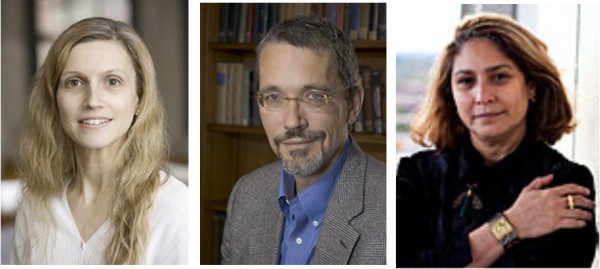 e Gordon Bradford Tweedy Professor at Yale Law School and the Director of the Law and Economics Program at the National Bureau of Economic Research (NBER) with headquarters in Cambridge, Massachusetts.
 The large majority is also present across the ideological spectrum, with 94 percent of registered Democrats, 79 percent of independents and 68 percent of Republicans indicating their support for state paid family medical leave to support Connecticut workers and family caregivers.
 One-thousand state voters age 25-plus were asked two questions about the paid family medical initiative, whether they supported such a plan, and whether they would support political candidates who did.

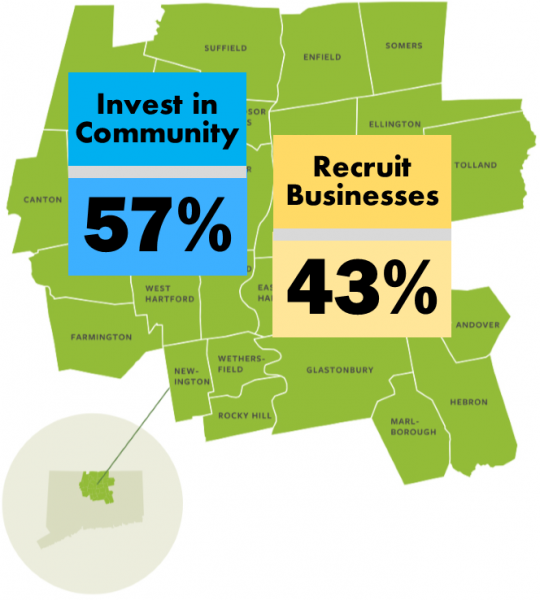 The data from the survey reflect a difference of opinion among older residents of the region. Individuals over age 46 took the opposite view from younger residents, with a majority expressing a preference for spending skewed toward recruiting companies. The reversal was dramatic, with two-thirds of those age 36-45 preferring investing in communities, by a margin of 67%-33%, and individuals age 46-55 expressing a preference for resources to be aimed at recruiting companies, with two-thirds holding the opposite view, 63%-38%.






 The need for stronger action is underscored by recent statistics. In Connecticut, one of every three kindergartners is overweight or obese, as is one of every three low-income children. Children who are overweight or obese are more likely, according to the policy brief, to have:
 A number of the proposals have been successfully implemented in other jurisdictions, including states and cities. Marlene Schwartz, Director of UConn's Rudd Center for Food Policy and Obesity, noted that Connecticut has long been a leader in providing nutritional lunches in schools, and said that now the state’s attention needs to move to the earlier years of childhood. “The field has realized that we need to start even earlier,” she said. Rudd also indicated that determining "policy changes that might help reduce the disparities" in Connecticut, which are apparent in race, ethnicity and socioeconomic data, is also essential.

 The recommendations, described as “affordable, achievable, common sense measures,” were prepared for CHDI as part of a grant to the UConn Rudd Center for Food Policy and Obesity, funded by the Children’s Fund of Connecticut. The author was public health policy consultant Roberta R. Friedman, ScM.
 IMPACT “Preventing Childhood Obesity: Maternal-Child Life Course Approach” in 2014. The report reviewed scientific research on the causes of obesity and explored implications for prevention and early intervention. In 2015, the Children’s Fund of Connecticut funded four obesity prevention projects in Connecticut that addressed health messaging, data development, policy development and baby-friendly hospitals.