
Gender Disparity Is Alive and Not-So-Well; Particularly in Connecticut, Analysis Finds
/Connecticut places dead last among the 50 states in the degree of gender gap in executive positions in the workplace and overall workplace environment for women, according to a new analysis prepared by the financial website WalletHub. The state also ranked in the bottom ten in the “education and health” category, ranking higher – in the top ten – only in “political empowerment,” despite having fewer women in the state legislature than about a decade ago.
Overall, the state ranked 28th among the “Best and Worst States for Women’s Equality.”
The challenges present in Connecticut are true – to varying degrees – nationwide. In 2016, the U.S. failed to place in the top 10 — or even the top 40 — of the World Economic Forum’s ranking of 144 countries based on gender equality, WalletHub reports.
Among the states, the top 10, with the slimmest inequality gap, were Hawaii, Nevada, Illinois, Minnesota, Washington, Maine, North Dakota, Oregon, Wisconsin, and Vermont. Among the other New England states, Massachusetts ranked #13, New Hampshire was #16, and Rhode Island was #34. The widest gaps were in Texas, Virginia and Utah.
"Connecticut ranked below average overall mostly because of its rankings for two of the categories we analyzed, Workplace Environment (50th) and Education & Health (43rd),” WalletHub analyst Jill Gonzalez told CT by the Numbers. “Connecticut's disparities between women and men are quite pronounced when it comes to the workplace environment. Women earn 23 percent less than men, 9th highest in the country, and Connecticut has the highest gap of women in executive positions. Large differences also appear when looking at higher-income earners, with a 13 percent gap between women and men, and the entrepreneurship gap in Connecticut is at 48 percent, again favoring men."
To determine where women receive the most equal treatment, WalletHub’s analysts compared the 50 states across 15 key indicators of gender equality in three central categories: workplace environment, education and health, and political empowerment Among the indicators used in the analysis, Connecticut ranked 46th with among the largest educational attainment gap among Bachelor’s Degree holders, 48th in the entrepreneurship gap, 49th in the disparity among higher income wage earners (in excess of $100,000 annually) and 50th with the largest executive positions gap.
According to the National Conference of State Legislatures, just over one-quarter of Connecticut’s legislators are women, at 27.3 percent, compared with the national average among state legislatures of 24.8 percent. There are 1,830 women serving in legislatures across the country. In Connecticut, 42 of 151 House members are women, and 9 of the Senate’s 36 seats are held by women. Among the states with the highest percentage of women in their legislature are Vermont, Colorado and Nevada with 39 percent, Arizona with 38 percent, and Illinois and Washington at 36 percent. Connecticut’s numbers have declined since 2009, when a total of 59 women held legislative seats, 8 in the Senate and 51 in the House.
The workplace environment category included data on income disparity, the number of executive positions held, minimum wage workers, unemployment rate disparity, entrepreneurship rate disparity and the disparity in the average number of work hours.
The analysis found that in every state, women earn less than men. Hawaii has the lowest gap, with women earning 12 percent less, and Wyoming has the highest, 31 percent. Connecticut ranked 41st. Rhode Island has the highest unemployment-rate gap favoring women, with 2.4 percent more unemployed men. Georgia has the highest gap favoring men, with 1 percent more unemployed women. The unemployment rate is equal for men and women in Illinois and Idaho. In Connecticut’s it’s nearly identical, with the 0.3 percent more unemployed men than women, based on the data reviewed.
Women continue to be disproportionately underrepresented in leadership positions nationwide. According to the Center for American Progress, women make up the majority of the population and 49 percent of the college-educated labor force. Yet they constitute “only 25 percent of executive- and senior-level officials and managers, hold only 20 percent of board seats, and are only 6 percent of CEOs.” In addition, salary inequity continues, and women are underrepresented in government.
The analysis was released to coincide with Women’s Equality Day, which is observed annually on August 26. The U.S. Congress designated the commemoration beginning in 1971 to remember the 1920 certification of the 19th Amendment to the Constitution, granting women the right to vote. The observance of Women’s Equality Day also calls attention to women’s continuing efforts toward full equality, according to the National Women’s History Project.


 For example, almost a quarter (23%) of Connecticut workers in science, technology, engineering, and math fields such as healthcare and bioscience were immigrants. Over 36,000 foreign-born Connecticut residents are self-employed, with immigrant-owned businesses generating $1.1 billion income in 2014 while employing 73,047 people. “Immigrants are already playing a huge part ensuring that Connecticut remains a leading innovator in industries like healthcare and bioscience,” according to the analysis.


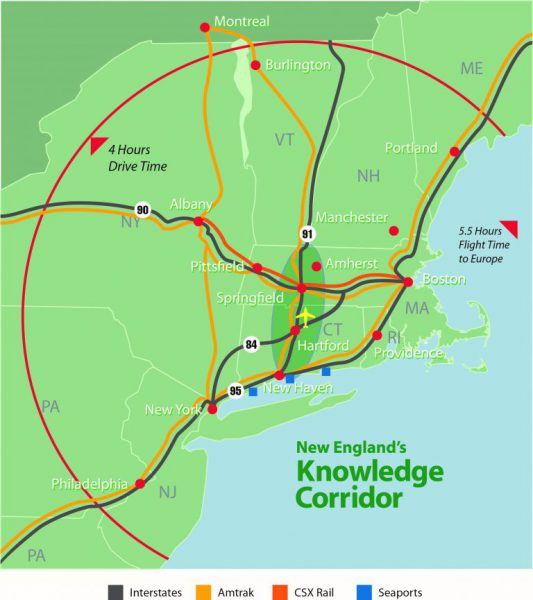
 The Hartford Line will act as a regional link with connections to existing rail services, including Metro-North, Shoreline East, and Amtrak Acela high-speed rail services on both the New Haven Line to New York and on the Northeast Corridor to New London and Boston. There will also be direct bus connections to the Bradley Airport Flyer and to CTfastrak. With a heightened level of direct and connecting service linking the region, the hope is that towns along the future Hartford Line will become magnets for growth – ideal places to live and to relocate businesses that depend on regional markets and travel.
 Also, very much a part of the strengthening transportation options with the potential to spur economic development is
 Rounding out the top 10 are Wisconsin, Iowa, New Hampshire, Louisiana, Rhode Island, Colorado, Nebraska and South Dakota. The states were ranked based on the most gyms using these four categories: total number of gyms, state population in 2016, people per gym, and gyms per capita (100,000 people). Totals were based on the 14 largest gym chains in America. There were more than 36,000 health clubs in the U.S. last year, up from 29,000 a decade ago.

 In Connecticut, April 5, 2017, was the Connecticut SAT School Day administration. SAT scores are used by the Connecticut State Department of Education (CSDE) for school and district accountability purposes, state Education Commissioner Diana Wentzell explained in a
 Hyman found that, prior to the policy, a substantial number of Michigan’s low-income students didn’t take the ACT even though they would have scored at or above the standard for college readiness. That might been due to financial or logistical barriers, like the cost of the test (between $30 and $50) or difficulties traveling to an exam center on a Saturday. (Both the SAT and ACT offer fee waivers to low-income students, but the study notes that the waivers are underused.)
 ted Nations and vetted by the State Department in a process that takes at least 18 months. By comparison, a million or so legal immigrants arrive annually. From October 2001 through 2016, Burma, Iraq, Somalia, Bhutan, and Iran are the top five nations that send refugees to the U.S.

 There were nine states that had less than 500 refugees from a single country since October 2001: Alabama, Alaska, Arkansas, Delaware, Hawaii, Mississippi, Montana West Virginia and Wyoming.
 International migration has helped, the data shows, but not enough to offset domestic out-migration. Average international in-migration has grown 29% post-recession compared to pre-recession, but in terms of overall net migration, the state has seen an increased loss starting from 2012.