CT Drops Among States But Exceeds National Average in Opportunities Available to Residents

A new report and analysis focusing on four “impact areas” of daily life – opportunity, economy, education and community - has determined that Connecticut exceeds the national average in each category, by at least five percentage points and as much as nearly seven.  Overall, the state ranked 13th in the U.S., with a score of 56.9 out of 100 in the study's index, designed to measure economic, academic, civic and other key factors.  The state ranked 10th a year ago, and is the only state to fall out of the top 10.

The top 10 states in the latest analysis are Vermont, Minnesota, North Dakota, New Hampshire, Nebraska, Iowa, Massachusetts, New Jersey, South Dakota and Maryland.   In addition to Connecticut, three other states (Montana, Oregon and Pennsylvania) dropped as many as three slots in the state-by-state rankings.

According to the report, developed by Measure of America  and Opportunity Nation, Connecticut did better than the national average in  mean household income, the number of banking institutions, and the percentage of households with high speed internet.  The state also exceeded the national average in the percentage of 3- and 4-year olds attending preschool and the percentage of the population (age 25 and older) with an associate degree or higher.  The unemployment rate in Connecticut was higher than the national average, but the percentage of the population with earnings below the poverty line was less than the average nationally.

Perhaps surprisingly, the percentage of students who graduate from high school on time (within four years) is below the national average – 75.1 percent in Opportunity-Nation-LogoConnecticut as compared with 78.2 percent nationally.

The Opportunity Index focuses on the conditions present in different communities and is designed to connect economic, academic, civic and other factors together to help identify solutions to lagging conditions for opportunity and economic mobility.  From preschool enrollment to income inequality, from volunteerism to access to healthy food, expanding opportunity depends on the intersection of multiple factors, Opportunity Nation's website explains.  The Index is designed to provide policymakers and community leaders with a powerful tool to advance opportunity-related issues and work, advocate for positive change and track progress over time.  

In the area of community health and civic life, the level of volunteerism among Connecticut residents exceeds the national average, as does the   number of primary care providers (per 100,000 population) and the percentage of adults who are involved in social, civic, sports and religious groups.  Violent crime is below the national average and the percentage of youth, ages 16-24, not in school and not working is also below the national average, at 12.3 percent as compared with 14.6 percent nationwide.

Nationally, almost 6 million young people are neither in school nor working, according to the study - almost 15 percent of those aged 16 to 24 nationwide who are neither employed or in school, the Associated Press reported.  In Connecticut, 12.3 percent of those aged 16 to 24 are not working either at a job or in class, the study found.

The study also determined that 49 states have seen an increase in the number of families living in poverty and 45 states have seen household median incomes fall in the last year, the AP reported.


13

Social Enterprises Honored at Statewide Event; New Entrepreneurs Lead the Way

Six outstanding new Connecticut-based social enterprises, led by entrepreneurs in a range of businesses and industries, earned public recognition – and cash prizes – at the Third Annual Social Enterprise Awards held by reSET, the Social Enterprise Trust.  Nearly 200 people were in attendance for the awards ceremony, held at The Society Room in Hartford.

There were 54 social entrepreneurs from across the state vying for recognition in the 2013 Social Enterprise Challenge; applicants were narrowed down to 10 finalists who were evaluated by a panel of business experts.

The top five sociresetal enterprises were honored at the Social Enterprise Awards celebration for having the best and most sustainable social enterprise business plans, and for effectively demonstrating that their businesses could improve the community and create jobs, and generate both purpose and profit.

reSET also honored the renowned social enterprise Honest Tea with the reSET Social Enterprise Innovator Award for its community impact and corporate conduct, which has inspired others.  Honest Tea values simplicity, fair dealings, partnerships, the environment, and sustainability.  Dr. Barry Nalebuff, Milton Steinbach Professor of Management at the Yale School of Management, and co-founder of the company, accepted the award on behalf of Honest Tea, and conducted a presentation outlining the company's early years and evolution.

The winners of the Social Enterprise Challenge were:

farmivoreRay Xiong, New Haven, Farmivore (The Boehringer Ingelheim More Health through Innovation Award) Farmivore offers community supported agriculture co-ops with affordable e-commerce and marketing platforms, and provides consumers with an easy way to search, pay for, and join a community supported agriculture program. Ray.xiong@aya.yale.edu

Lon SeidmPageLines- IMN.pngan, Ivoryton, Windsor, and West Hartford, Independent Media Network, LLC (The reSET Community Impact Award) Independent Media Network provides training sessions and informational meetings with community members while providing accurate and valuable information to the community, in order to preserve independent media. lon@imnct.com

Leslie Krumholz, Guilford, Good Streegood streetsts. Good Streets is a social enterprise that brings Main Street businesses on line to help consumers find great local establishments. Neighborhood business owners and customers can use this trusted site and in so doing receive authentic reviews, which helps to create dialogue and collaboration between local businesses and their customers. leslie@imbya.com

Rodger LaChance, East Windsor, Yummy CT.  Yummy CT takes a farmers market and puts it on an old school bus to help distribute fresh, YCTConnecticut- grown fruits, vegetables, and specialty foods to Connecticut communities that are considered food deserts. The objective is to provide fresh healthy foods to communities that otherwise would have limited access. reldistributors@gmail.com

Dr. David Shearer, Old Saybrook, Therapeutic Research Foundation. TRF’s mission is to develop innovative, affordable, and therapeutic medical solutions to address the unmet global health needs of all people, even the solutions considered less profitable by other mainstream medical research companies. dshearer@tr-f.oTRFrg

For the first time this year, reSET added an award to reflect the community’s voice through a People’s Choice Award. The public was able to vote on their favorite among the 10 finalists by viewing videos created by finalists and posted on reSET’s website. The People’s Choice winner was:

David J. Rubin, Simsbury, ElectroSpin University. ElectroSpin University is promoting a healthier, more fit, and eco-friendly culture through a one-of-a-kind group indoor cycling class titled Rage and Recharge that uses electric dance music to make playlists scientifically designed to improve exercise efficiency. The team is also working on ways of recapturing energy expended through exercise and pumping it back into the community’s electrical grid. rubin@electroSpinu.com

“reSET was so pleased to celebrate the accomplishments of entrepreneurs across Connecticut who demonstrate a deep commitment to helping out communities become safer, happier, and healthier places for all of our citizens,” said Program Director Michelle Cote.  “Each awarded business reinforces the idea that it is possible to generate profit and serve a social purpose at the same time.”

In the spirit of growing social enterprise in Connecticut, “A Taste of Social Enterprise” also celebrated locally-grown food and featured local farms and businesses that served up a menu showcasing Connecticut-SEA 2grown foods, from the Kitchen at Billings Forge and The G Stream.

reSET has supported the launch of 19 new social enterprises in Connecticut  and supported the success or growth of nine social enterprises. reSET has also established the Social Enterprise Investment Fund, which will begin to offer loans to investment-ready social entrepreneurs in January 2014.

Photo:  Dr. Barry Nalebuff accepts the reSET Social Enterprise Innovator Award from reSET CEO, Kate Emery.  [Editor's Note:  CT by the Numbers is a member of the Independent Media Network.]

Biking, Walking Gain Traction Around Connecticut; Training, Gala Upcoming

November is shaping up to be another busy month for Bike Walk CT, a member-supported non-profit organization making cycling and walking safe, feasible and attractive for a healthier, cleaner Connecticut. Bike Walk CT is owalkit_ct2nce again offering the League of American Bicyclist-designed Traffic Skills 101 program, a day long course to give cyclists the skills, knowledge and confidence to handle on-road cycling in traffic. The program will be held on Sunday, November 10 at Bishops Corner in West Hartford.

Just days later, bicycling and walking enthusiasts will celebrate the progress made by Bike Walk CT at the organization’s Annual Dinner and Silent Auction, to be held on Tuesday, November 12 at Central Connecticut State University.bike lane

During the evening celebration, Department of Economic and Community Development Deputy Commissioner Kip Bergstrom will lead a discussion of the important and growing role of active transportation and bikeable, walkable communities in Connecticut's economy and tourism industry.

Bike Walk CT works locally to increase grassroots efforts to make communities better places to bike and walk; at the state legislature to advance laws that protect the rights of cyclists and walkers, and at the DOT to make sure that policies and engineering practices that will improve conditions for cyclists are implemented. The organization is also active at the federal level, working cooperatively with national organizations to ensure continued funding for biking and walking projects.

Bergstrom has 30 years of experience as a strategist, business executive, economic development professional and place-maker. His DECD portfolio includes the development of the innovation economy, statewide branding, as well as the arts and culture, historic preservation and tourism functions.biking

Bike Walk Connecticut was formed in 2005 as the Central Connecticut Bicycle Alliance (CCBA), with a mission to advocate for bike-friendly facilities and policies in central Connecticut to benefit all bicyclists, both recreational riders and commuters. CCBA received 501walk(C)(3) status in January 2006. In April 2010, CCBA broadened its mission to include walking issues, adopted a statewide focus, and changed its name to Bike Walk Connecticut.

The National Highway Traffic Safety Administration (NHTSA) reports that 618 cyclists were killed in the United States in automobile accidents in 2010 (the last year for which statistics are available). That same year, 32,885 bikers were injured in traffic crashes. Although the numbers have declined since 2005 — when 43,510 bikers were injured, 786 of them fatally — these rates of injuries and deaths highlight cyclists' continued exposure to serious risks.

Stamford is #1 in USA in Workers with College Degree; Geography Key to Job Prospects

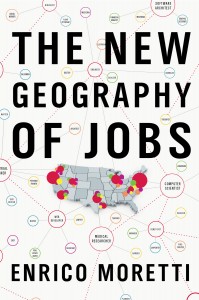
Stamford ranks first in the nation in the percentage of workers with a college degree, according to a  book that features an analysis of  the influences of geography on jobs, highlighting tremendous disparities that exist in cities across the country and citing innovation as a key jobs driver.

 “The sheer size of the differences between American communities is staggering," the book stated. " Stamford, Connecticut, the city with the largest percentage of college-educated workers in the United States, has five times the number of college graduates per capita as the city at the bottom, Merced, California.”

The New Geography of Jobs, written by Enrico Moretti, a professor of Economics and the University of California, ranked 306 of the nation’s metropolitan areas.  In the ranking, Waterbury was among the metropolitan areas with the smallest share of workers with a college degree, at 15 percent.

Stamford, with 56 percent, led the list, topping Washington, DC (49%), Boston (47%), Madison (47%) and San Jose (47%), which rounded out the top five metropolitan areas in the country.  Completing the top 10 metropolitan areas with the largest share of workers with a college degree is Ann Arbor (46%), Raleigh-Durham(44%), San Geograpgy-Jacket-ImageFrancisco-Oakland (44%), Fort Collins-Loveland, Colorado (44%), and Seattle-Everett, Washington (42%).  Yuma, AZ and Merced, CA, both at 11 percent, ranked last.

Moretti’s research and analysis reveals that the “new geography of jobs is benefitting centers of innovation,” and “among the beneficiaries are the workers who support the idea creators.”  He indicates that “for every new innovation job in a city, five additional non-innovation jobs are created, and those workers earn higher salaries than their counterparts in other urban areas.”

According to the book, the average salary of college graduates in Stamford is $133,479 and the average salary of high school graduates is $107,301.  Moretti points out that “the more college graduates there are (in a metropolitan area) the higher the salaries for high school graduates are.”  Overall, “the earnings of a worker with a high school City of Stamfordeducation rise by about 7 percent as the share of college graduates in his city increases by 10 percent,” a statistical analysis indicates.

Morelli also notes that the education level of the workforce not only impact salaries, but also the level of charitable contributions.  “Among large U.S. metropolitan areas, charities in five brain hubs – Stamford, Boston, Raleigh-Durham, Washington, D.C., and New York – receive the highest contributions relative to their population.”

The book also ranks Stamford as the metropolitan area with the second highest cost of living in the nation, behind only San Jose, CA, and just ahead of San Francisco-Oakland-Vallejo, California.  Also in the top 20 cities with the heist cost of living is Bridgeport, at number 17.

The New Geography of Jobs was published by Houghton Mifflin Harcourt in 2012. Moretti is Professor of Economics at the University of California, Berkeley where he holds the Michael Peevey and Donald Vial Career Development Chair in Labor Economics. He is the Director of the Infrastructure and Urbanization Program at the International Growth Centre (London School of Economics and Oxford University).

Subway Reaches 40,000 Locations; Growth Continues for World’s #1 Fast Food Chain

The Connecticut-headquartered SUBWAY® restaurant chain, which has been providing franchising opportunities to entrepreneurs since 1965 and is approaching its 48th year in business, has opened its 40,000th location at an Apple Green petrol station in Ipswich, England.

The opening reflects the consistent growth of the Subway brand, which has opened nearly 2,000 new locations around the world since the start of the year. In 1965, Subway was founded by 17 year-old Connecticut high school graduate Fred DeLuca, along with family friend Dr. Peter Buck. The first restaurant opened in Bridgeport in 1965 and was called Pete’s Super Submarines. The first franchised Subway unit opened in 1974 in Wallingford.

“This is certainly a testament to the dedication and hard work of the entire Subway team, who I often refer to as The Greatest Team in Franchising History,” said DeLuca. “I am proud to be part of a team that provides thousands of jobs for people at our restaurants, field, offices, headquarters and partner offices around the world.  Our franchisees are a diverse group of small business owners who take a great deal of pride in serving their customers.” subway-logo

CNN Money has reported that the “home of the $5 foot-long sub” is the most popular franchise (ahead of Quiznos, the UPS Store and Cold Stone Creamery) and biggest fast-food chain in the world, with an initial franchise fee startup is $15,000, a fairly low sum compared to other brands. With fewer than 8% of SBA-backed borrowers defaulting on their loans, Subway has a better track record than similar brands -- rival sub shop Blimpie has a 46% loan failure rate, and Quiznos is also well into the double digits, according to CNN Money.

This latest milestone puts the Subway brand far ahead of its competitors in the Quick Service Restaurant industry. Of the top restaurant chains, the next closest is more than 5,500 locations behind. Beyond that, the next three are between 21,000 and 33,000 behind, the company reported.

The combination of global branding, minimal upfront outlay of cash, and low loan default rates have made Subway the most popular brand in the last decade for entrepreneurs looking to open a franchise, the CNN website reported, based on the SBA's lending data.

The U.K. is the brand’s third largest Subway_6-inch_Ham_Submarine_Sandwichmarket, behind the U.S. and Canada, with more than 1,500 locations.  In all, there are 14,000 International locations in 102 countries outside the U.S.  The Eastern European nation of Estonia recently witnessed the opening its first Subway franchise.

The company headquarters remains in Milford, with additional regional and country offices in Amsterdam, Beirut, Brisbane, Miami and Singapore, employing about 1,000 people in total. Worldwide, its franchisees provide more than 300,000 jobs in the communities where they are located. With a robust social community of over 25 million, Subway engages daily with consumers from around the world.

In 2012, Subway became the first quick service restaurant to meet the American Heart Association's Heart Check Meal Certification Program nutritional criteria.  Earlier this year, the Connecticut Post reported that DeLuca plans to reach 50,000 sandwich shops in four years. The chain, which has attracted customers with lower-calorie and reduced-sodium sandwiches, is competing with Yum! Brands in India, China and Japan, as it proceeds with plans to open 300 stores in each nation in the next three years, DeLuca told the Post.

CT Should Look to New York, Aging Workforce, Urban Centers to Rebuild Economy

Connecticut would be foolish not to take greater advantage of the fact that nearly one-third of the state is within the financial orbit of New York City as it looks to rebuild its economic strength – while not overlooking the potential for entrepreneurial activity across the state.

Those were among the lead suggestions of a panel of economists and entrepreneurs at the University of Hartford looking at job prospects for today’s 20-somethings, in a program sponsored by CT Mirror.

Daniel Kennedy, Senior Economist in the Office of Research at the state Department of Labor emphasized that the strongest economic growth in the state in the years to come will be in Fairfield County, and evidence of that trend is already present in the current economic recovery.

Wayne Vaughn, president of Hartford-based Fuscient, which he launched in 1997, said the state should “play to its strengths,” in looking to Fairfield County.  He said that New York City's immense economy "bleeds over into one-third of our state."  He also called on the state’s colleges and universities to step up efforts to match students with mentors in the business community, to improve their workforce readiness.

The state’s college graduates should not sell the state short, offered Katelyn Anton, Community Manager of New Haven-based Independent Software, and a key contributor to Whiteboard, a popular blog for the technology and entrepreneurial community in the state.  “Connecticut is one of the ripest locations in the world,” for start-up ventures, she said, panelnoting the growth of co-working spaces in New Haven, Hartford, Bridgeport, Manchester and other communities, and the numerous incubator opportunities that individuals “can tap into.”

Connecticut Business and Industry Association (CBIA) economist and vice president Peter Gioia predicted that the state’s economy is “on the cusp of turning the corner,” noting that between 15 and 20 percent of today’s workforce will be retired within five years – creating job vacancies and opportunities for young people.  He predicted that as the workforce ages out of the market, the state’s workforce will need electrical line workers, plumbers, electricians, commercial loan officers, actuaries and financial planners, and some of that need is already apparent.

Gioia praised the state’s recent efforts to bolster the University of Connecticut and the state’s community colleges, underscoring the correlation between “where students go to school and where they get their first job.”  If students stay in the state for college, Connecticut businesses will ultimately benefit.

Kennedy said the state’s prolonged economic recovery is characterized by continued “demand deficient unemployment,” which is more structural than merely a reaction to the national downturn that began in 2008.  He indicated that even as some sectors are improving, many millennials remain underemployed -college graduates working in service, rather than professional, industries.

“More people are working, but they’re not making as much,” said Orlando Rodriguez, a senior policy fellow at Connecticut Voices for Children.  “For every job we lose in the financial industry, it takes eight and a half jobs in the restaurant industry.”

Rodriguez also raised a cautionary note, stating that Connecticut should be particularly concerned about young people in the state’s urban centers who do not attend college, and often are unable to obtain a first job. While statewide unemployment hovers around 8 percent, it can run as high as 40 percent among 18-24 year olds in Bridgeport and other urban communities. “Connecticut’s future,” Rodriguez said, “is in urban areas.”

Gioia was strongly critical of Congressional inaction on immigration reform, stating that the nation’s economy would be strengthened by a comprehensive policy.  “Immigrants are much more likely to start a business, and become net employers of Americans.”  He said the policy of educating foreign students, but not permitting them to then remain in the U.S., as “ridiculous.”  He also cited Canada as an example of a nation that has been more welcoming of immigrants, to the benefit of the nation’s economy.

Vaughn said that while his biggest challenge in doing business in Connecticut is retaining talent, the growth of technology in business transactions offers businesses here significant opportunities.  “Where your business is located doesn’t dictate who your customers are,” he said.

The discussion was the second of nine panels on a range of topics sponsored by The Connecticut Mirror to be held around the state in coming months.  It was moderated by Brett Ozrechowski, CEO-Publisher of the CT News Project, which operates CT Mirror.  Next month, discussions will be held  Nov. 7 at Fairfield University focused on measuring good teaching and Nov. 18 at the University of New Haven on the topic of the clean energy economy.

Independent Colleges Produce Majority of Graduates for State's Key Industries

The 16 institutions of higher education in Connecticut that are members of the Connecticut Conference of Independent Colleges are playing a pivotal role in producing graduates with expertise in precisely the industry clusters that Connecticut businesses view as the fields most likely to propel economic growth in  the state.

In one critical field, Computer & Information Sciences, three-quarters of the degrees granted in the state aCCIC chartre awarded by the independent institutions.  And in seven key industry clusters – essential to building the state’s economic strength and job opportunities – the independent institutions award more than half of the degrees granted by colleges and universities in the state.

By offering strong academic programs – and attracting top students – the independent colleges and universities are advancing a focus on industry areas with the greatest economic growth potential in Connecticut.

The percent of statewide industry cluster degrees awarded by Connecticut independent colleges in 2012:

  • Computer & Information Sciences & Support Services, 75%
  • Health Professions & Related Programs, 62%
  • Physical Sciences, 59%
  • Engineering Technology & Related Fields, 55%
  • Engineering, 53%
  • Biological& Biomedical Sciences, 53%
  • Business Management, Marketing & Related Fields, 52%

The 16 member institutions of CCIC are Albertus Magnus College, Connecticut College, Fairfield University, Goodwin College, Mitchell College, Quinnipiac University, Rensselaer University, Sacred Heart University, St. Vincent’s College, Trinity College, University of Bridgeport, University of Hartford, University of New Haven, University of Saint Joseph, Wesleyan University, and Yale University.

Independent institutions award 46 percent of all degrees granted in Connecticut, and enroll 30 percent of all college students statewide, including 45 percent of all minority students enrolled at four-year institutions in the state, according to a study last year by the Institute for Research & Public Service.

The study also found that Connecticut’s private not-for-profit college and university sector, on the state economy in 2010, had a total impact of $6.19 billion in sales of goods and services.  In the aggregate, the independent sector of higher education is Connecticut's third largest employer, with only the State itself and United Technologies employing larger workforces.

Hartford Skyline's Phoenix Boat Building Celebrates 50th Anniversary

Dubbed the "Boat Building," it is the world's first two-sided building and in 2013 celebrates its 50th anniversary. The headquarters of The Phoenix, located in downtown Hartford at One American Row, was an architectural original, and half a century later, continues to stand out amongst newcomers to the Hartford skyline.

Completed in 1963, the building is listed on the National Register of Historic Places, and is an exceptionally significant example of the Modernist architectural style.

Distinguished by its unique form and lenticular plan, the building was designed by Max Abramovitz, a recognized 20th century master. Abramovitz -- widely acclaimephotod for his role in designing two of New York City's landmarks, the United Nations and Lincoln Center -- envisioned the locally dubbed "boat building" as a reflection of a daring and progressive company.

The construction of One American Row cemented Phoenix's commitment to the renewal of Hartford, where the company was founded in 1851, and reflected its forward-thinking and innovative business approach. The company decided to remain in Hartford in the 1960’s – and since then – choosing neither to move to the suburbs or to the planned Constitution Plaza nearby, which was the first urban renewal project in Connecticut and one of the earliest in the nation.

The 13-story tower is properly called an elliptic lenticular cylinder and is 225 feet along its axis and 87 feet wide at maximum width. It is oriented so that its pointed ends face east and west and the sides face north and south. The building was designed by one of the nation's foremost architectural firms, Harrison & Abramovitz, of New York. Ground was broken in 1961 and the contractor, George A. Fuller Company, completed construction in November 1963.

In 2010, the building was awarded Silver Leed® certification from the U.S. Green Building Council, and is one of a small number of buildings that are both Leed® certified and listed on the National Register of Historic Places.

The Phoenix was named one of the region’s top workplaces by The Hartford Courant in 2012.

In 2013, th1381819_522913201135740_1394654112_ne plaza surrounding the building was renovated with environmentally friendly planted areas. The "green" plaza renovation was the first completed private property piece of Hartford's iQuilt Plan, which promotes creative urban design to strengthen pedestrian links between downtown destinations.

The Phoenix Companies, Inc. is a boutique life insurance and annuity company serving customers' retirement and protection needs. Insurance products are available through select independent distributors, supported by our wholesaling team at Saybrus Partners.  Founded in 1851, Phoenix is publicly traded on the New York Stock Exchange under the symbol PNX. Corporate offices are in Hartford, CT, and there is a customer service center in East Greenbush, NY. As of December 2012, they reportedly had approximately 600 employees.


1963

Hartford Hosts First-Ever International Start-Up Weekend

Hartford’s Start-Up Weekend is going international.  The MetroHartford Alliance and its young professionals organization, HYPE, have announced that this year’s Startup Weekend Hartford, to be held October 18-20, will represent the first transnational collaboration, as Hartford organizers have partnered with Start-Up participants in Ottawa, Canada.

 Startup Weekend Hartford-Ottawa, a coordination of virtually connected sets of teams, mentors and organizers during the competition, will also feature Jeff Hoffman, co-founder and partner at ColorJar and a former founding team member of Priceline.com, who will virtually connect to speak to the event's participants.

Startup Weekend convenes active and empowered entrepreneurs to navigate the basics of founding startups and launching successful ventures - all in 54 hours.  The event, held in cities all over the world, convenes local developers, graphic designers, marketing professionals, Htfd Ottawaproduct/business managers and startup enthusiasts to build viable business plans around entrepreneurial ventures.  In Connecticut, previous events have been held in New Haven, Storrs and Hartford.

The Hartford base will hold its event at the uniquely equipped Connecticut Institute for Primary Care Innovation at Saint Francis Hospital and Medical Center in Hartford.  Counterparts in Ottawa have partnered with longtime sponsor and Ottawa-based startup Shopify, where the local event will be held.

Startup Weekend begins with participants pitching their startup ideas and receiving feedback from peers. Participants are not required to pitch an idea to participate, but all are welcome to do so. Teams are then formed by participants based on the top ideas as voted on by the group.  Over the course of the subsequent 54 hours, each team focuses its energies on creating a business model and on coding, designing, and obtaining market validation for their product or service.

The weekend culminates with presentations in front of entrepreneurs and business community leaders who offer constructive feedback in the competition’s judging process.  This year, three winners will be named.

“Both cities have a strong entrepreneurial spirit and base, and the mechanics of this transnational effort will allow all participants, especially those who opt for the joint opportunity, to harness the most innovative and advanced technologies to connect, create and compete,” said John Shemo, vice president and director of economic development for the MetroHartford Alliance.

“We’ve found a great fit with the Startup Weekend Hartford team, both in terms of passion and in the common values that make up the secret sauce of technology entrepreneurship,” said Paul Austin-Menear, Marketing Director for Startup Weekend Ottawa.  The pace of change in business and technology continues to make waves in both Canada and the United States, and it’s important to us that the next generation of entrepreneurs be prepared for, and take part in the next leap forward.”

The MetroHartford Alliance and HYPE successfully facilitating two previous events in Hartford.  The 2012 event was the second vertical, or industry-focused, event of its kind with an emphasis on health and wellness. Registration to participate in the Hartford base for Startup Weekend Hartford-Ottawa is $99 per person.  A discount rate of $25 is available to college students.

For more information, visit http://hartford.startupweekend.org.

Good News, Bad News as Connecticut Seeks Economic Rebound

The assessment of the Connecticut Economic Resource Center (CERC) is good news, bad news for Connecticut’s economic recovery.  In a presentation to The Alliance for Nonprofit Growth and Opportunity, CERC Vice President of Research Alissa DeJonge and Research Analyst Carmel Ford reached two central conclusions:

  •  Connecticut has structural problems that continue to make its economy recover more difficult.  Structural problems include workforce and industry compositions that are not particular strengths in the overall U.S. ecnoCERC-300x100my.
  •  Connecticut has advantages in some areas such as healthcare employment, and we may see improvements in the state’s housing market as forecolousres start to diminish and inventory supply inequities become smaller.

Among the key stats that contributed to the overall analysis from CERC:

  1. Connecticut ranked 5th lowest among the states in per capita energy consumption in 2010.  However, Connecticut ranked 3rd highest in total energy prices and had the highest energy expenditure among all New England states.ctcounties
  2.    Connecticut’s youth unemployment rate was 17.1 percent in July 2013, compared with the national rate of 16.2 percent.
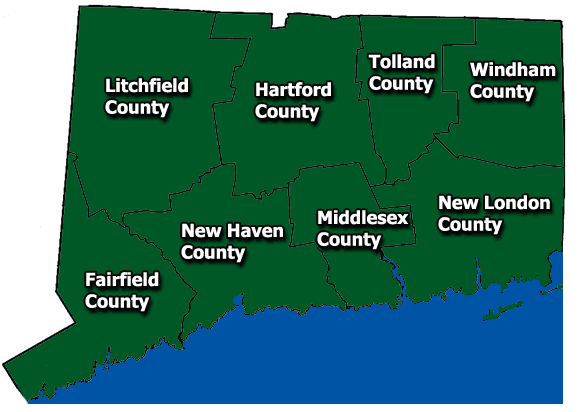
  3.   The unemployment rate in New London county hasn’t decreased significantly since 2010, and in Tolland County since 2011.  Overall, the states unemployment rate by county has been decreasing steadily in the state’s other six counties.
  4.   Median prices of single family homes in Connecticut increased 2.7% to $429,000, according to most recent data, and the inventory of single homes went down by 12.9% compared with a year ago.
  5. Newly issued housing permits in July 2013 incased slightly to 420 from 375 in July 2012.
  6. Connecticut remains the richest state with a per capita income of $58,908.

The CERC officials also pointed out that some of Connecticut’s leading industry categories, such as insurance and finance, are not performing well nationally, thus slowing the opportunities for the state’s economy to advance.

Based in Rocky Hill, CERC is a public-private partnership that provides economic development services consistent with state strategies, leveraging Connecticut’s unique advantages as a premier business location.  CERC was recognized earlier this month  for excellence in economic development marketing by key industry group, the Northeastern Economic Development Association (NEDA).  The award was presented at the recent NEDA annual conference in Portland, Maine among more than 130 economic development professionals from across the Northeast.