Boston Will Be U.S. Hope for 2024 Olympics; CT Could Provide Assist

Boston’s selection by the U.S. Olympic Committee (USOC) as the United States representative in the sweepstakes to host the 2024 Summer Olympic Games could be good news for Connecticut. The USOC will hope to convince international Olympicsvoters to bring the Summer Games to America after a 28-year gap.  The International Olympic Committee will award the Games in 2017. The U.S. last hosted a Summer Olympiad in Atlanta in 1996; a Winter Olympics in 2002.  St. Louis hosted in 1904 and Los Angeles held the Games in both 1932 and 1984.

Boston2024_LogoUSOC board members chose Boston, with its promise of frugality and temporary, reusable venues, over Los Angeles, San Francisco and Washington.  Boston joins Rome as the only other city that has officially decided to bid. Germany will submit either Hamburg or Berlin, with France, South Africa and Hungary among those also considering bids, according to published reports.

The Connecticut Convention & Sports Bureau (CCSB), the state’s official meetings and sports event sales and marketing organization, “supports Boston’s bid for the 2024 Olympics,” Interim President H. Scott Phelps told CT by the Numbers last fall.

CCSB officials noted that if the Olympic Games decide to come to Boston, “it could be great for tourism in nearby Connecticut as well, as spectators and competitors would be encouraged to come visit our State’s attractions,” adding that “there might be opportunities for our state to host pre-Olympic competitions and … athletes.”ConnecticutConvnSports

Even before Boston’s selection by the USOC, at least one Olympics observer suggested that Connecticut may have an Olympic supporting role to play.  Rosanna Garcia, associate professor of marketing in the D’Amore-McKim School of Business at Northeastern University in Boston, who has attended the past eight Summer Olympics, sees the city turning to Connecticut and Rhode Island to host some events.

“With more than 300 events that typically occur at the Olympics, many cities around Massachusetts, and even Rhode Island and Connecticut, will need to partner with the International Olympic Committee to host these events,” Garcia points out.

“Many preliminary competition events would need to take place outside of the main Olympic Park areas so events may occur as far away as Connecticut. This also is an opportunity for more people to get involved with the Olympic Spirit,” Garcia adds.

America's last two attempts to land the Games were unsuccessful - fourth-place finishes for New York seeking the 2012 Games that went to London and Chicago which had hoped to be selected for 2016.U.S.-Olympic-Committee-logo

Boston focused on its ability to use universities throughout the area to house events and athletes.  It touted a walkable, technology-based Olympics and said as many as 70 percent of its venues would be temporary, and the schools would pay for many of the venues, then take them over after the Games, according to reports on the city’s bid.

Olympic_rings_without_rims.svgLast fall, a promotional video advocating a Boston bid was released, and a website was launched. With an eye toward innovation and efficiency, the video highlights Boston’s bid “to create a sustainable model for hosting the Olympic and Paralympic Games that can become the blueprint for future host cities.”

It is the first time that Boston has prepared a bid to host the Games, and it is being led by an organization called the Boston 2024 Partnership, a nonprofit organization formed to prepare the bid materials. The group is governed by a 36-member executive committee, and has launched a series of subcommittees aimed at master planning, fundraising, outreach, and engagement.

Organizers note that no tax dollars have been spent on Boston 2024, and tax dollars will not be used to build venues or pay for the operation of the Games. Public investment will be confined to roadway, transportation and infrastructure improvements, most of which are already planned and are needed with or without the Olympics.

“Regardless of whether or not Boston wins the Olympics, the City’s bid has helped to elevate the Boston and other New England brands to sports event planners from all over the world,” Connecticut officials added.

https://www.youtube.com/watch?v=IiNItLCJ1jI
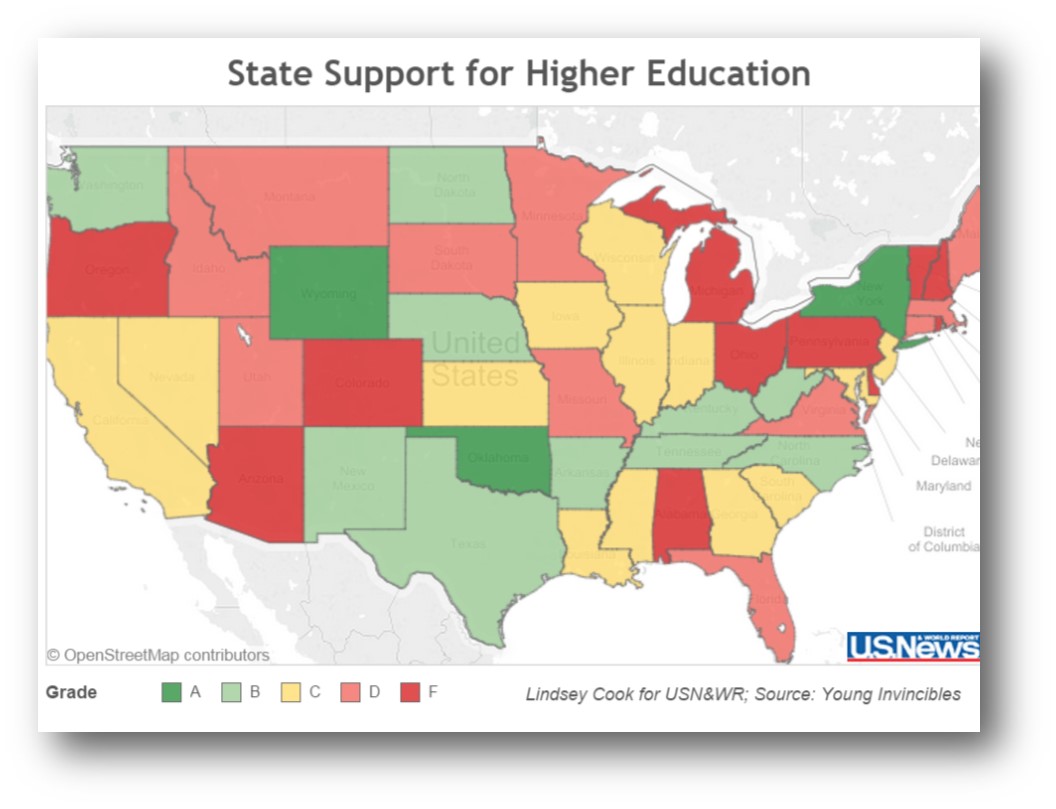
Connecticut Ranks 33rd in College Funding, Tuition, Burden; Grade: D

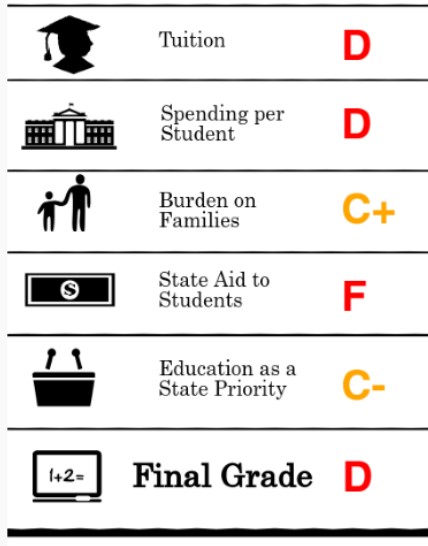
The Student Impact Project, an initiative of the youth advocacy group Young Invincibles, tracked trends in higher education finance in states across the country, and graded each state based on tuition levels, state funding per student, state aid to students, the financial burden to families and higher education spending as a portion of the total state budget.  Connecticut's report card grade:  D. In state-by-state reports published this week and reported by US News & World Report, the group found that on average, tuition at four-year public colleges and universities increased 37 percent between 2007 and 2013, which is three times the rate of inflation.  The data indicated that 47 states spend less per student today than they did before the Great Recession.map

Connecticut ranks 33rd among the nation’s 50 states in support for higher education.  Overall, just four states – Wyoming, New York, Alaska and Oklahoma – received a total grade equivalent to an A, while 10 got a B, 13 got a C, 12 got a D and 11 received an F, US News reported.

Overall, the state’s average in the five categories was 63 percent, which placed it ahead of only 16 states, including New Hampshire, which placed last, and Vermont, Colorado, Michigan and Oregon.  Connecticut received an F in the “aid for students” category, D in “state appropriation average” and “tuition” categories, C- in “Higher Ed as a Priority,” and the state's highest grade, C+, in “Burden on Families Average.”

New Hampshire, which at a 17 percent overall grade scored lowest in the country, spends the least amount of money per student than any other state ($1,708), and has cut the budget almost in half since the recession, according to the report. New Hampshire also provides no state aid to students, and spends 2 percent of its overall budget on higher education.  In Connecticut, the report indicated, that figure is 11 percent.

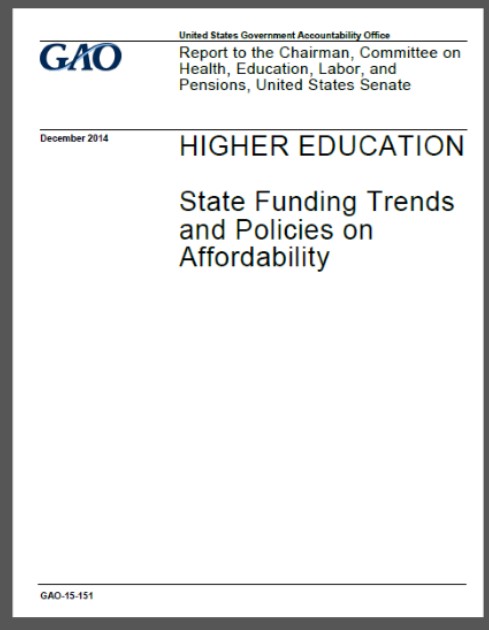
A report issuedCT report card last month by the General Accounting Office in Washington, D.C. for the U.S. Senate found “persistent state budget constraints have limited funding for public colleges” across the country. The result, according to the GAO report: “Students and their families are now bearing the cost of college as a larger portion of their total family budgets.”
A report by Connecticut’s Office of Higher Education in March 2014 found that for the 2013-14 academic year, “UConn’s increase of 5.8 percent for in-state commuting students compares to a national average of 3.7 percent for state flagship institutions. CSCU’s increase of 5.4 percent for in-state commuting students attending its State Universities compares to a national average of 4.1 percent for similar types of institutions; the Community Colleges’ increase of 5.5 percent for in-state commuting students compares to a national average of 4.5 percent for like institutions.”

The Connecticut report also noted that “from 2009 to 2014, tuition and fees for in-state undergraduates have increased 24.7 percent at the Connecticut State Universities, 26.9 percent at the Community Colleges, and 28.7 percent at UConn.”  Last fall, Connecticut’s largest public college system (CSCU) said it will need an 11 percent increase in its base-level state funding for the next fiscal year if they are to keep  an anticipated tuition-and-fee hike to 2 percent.  If additional state funding is not provided, steeper tuition hikes are possible.GAO report

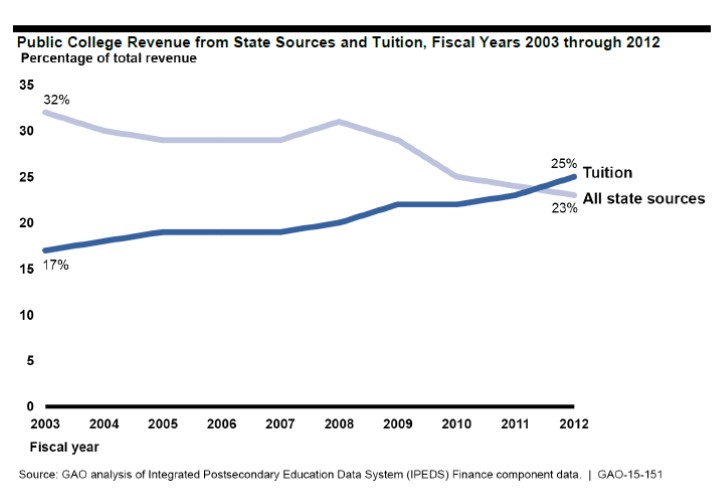
From fiscal years 2003 through 2012, the GAO report outlined, state funding for all public colleges decreased, while tuition rose. Specifically, state funding decreased by 12 percent overall while median tuition rose 55 percent across all public colleges. Tuition revenue for public colleges increased from 17 percent to 25 percent, surpassing state funding by fiscal year 2012 (see chart below).

In their report, “State Funding Trends and Policies on Affordability,” GAO identified several potential approaches that the federal government could use to expand incentives to states to improve affordability, such as creating new grants, providing more consumer information on affordability, or changing federal student aid programs. “Each of these approaches may have advantages and challenges, including cost implications for the federal government and consequences for students,” the report noted.

The report also indicates that GAO tuition state support“state grant aid directly affects students in that it can reduce their out-of-pocket expenses for college… state grant aid, both merit- and need-based, has positive effects on enrollment.”  The results of one program, in Washington State, cited by GAO “suggests that receiving the aid increased a student’s probability of enrolling in college by nearly 14 to 19 percentage points.”


Footnote to the story: to underscore the data, US News is running a video news story broadcast on FOX Connecticut, reporting on possible tuition increases at the Connecticut State Colleges & Universities.  The story, which is not referenced by date, was aired two years ago.

FOX


40 Years Ago, Transportation and Fiscal Austerity Highlighted Inauguration Day

On  inauguration day, Connecticut’s incoming Governor would be “commuting by train to the Capitol for the inauguration to dramatize the need for more mass transit,” local news media reported. The Governor-elect was Ella Grasso, and the year was 1975.  She took the train from her hometown of Windsor Locks into Hartford.

Four decades later, transportation will once again be center-stage on inauguration day, as Governor Dannel Malloy has indicated in the weeks prior to taking the oath of office for a second time that transportation will be a leading issue of his second term. ella train

The Wall Street Journal has reported that a White House economic analysis from July 2014 found that 41 percent of the state’s roads were in poor condition, noting that Connecticut was tied with Rhode Island with the highest percentage of poor roads.  The state is also in the midst of improving the New Haven - Springfield rail corridor, poised to launch a revitalized "Hartford line."

Grasso, according to news reports of the day, also took the opportunity “to emphasize the need for fiscal authority in the face of projected money pr1000px-seal_of_the_governor_of_connecticut.svgoblems for the state.”

Dollars and sense were also central to the first inaugural address of Governor William A. O’Neill on January 7, 1981.

Published reports indicated “that he favored cutting spending rather than increasing taxes to eliminate a deficit in this year's budget. But he said that balancing spending with existing revenues would be even harder for the fiscal year beginning July 1.”

Speaking before a joint session of the State House of Representatives and Senate, The New York Times reported that Mr. O'Neill said: ''Government at all levels faces increasingly tough decisions, finding itself forced to do more with less. It seems we have only one choice: Curb spending and control taxation.''

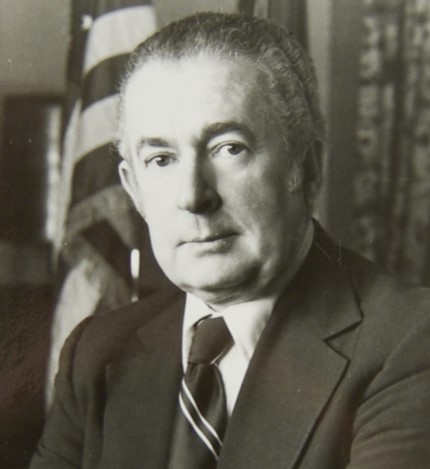
O’Neill, who had succeeded to the office just a week earlier upon Grasso’s resignation due to ill health, said 'To maintain a budget balance, we can raise taxes or cut spending even further,'' he said. ''I do not want to raise taxes.''

Later in his term, O’Neill would respond to the collapse of the Mianus River Bridge on I-95 in Greenwich on June 28, 19oneill83, which exposed a poor record of road and bridge maintenance in the state, with creation of a Special Transportation Fund to set aside money to maintain and repair the state's bridges.
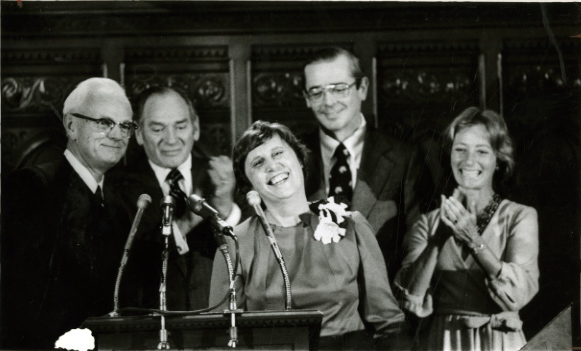
That same year, the legislature agreed to eliminate tolls from Connecticut roads, in part due to a horrific accident in January at the Stratford tograssoll station that killed seven people and galvanized public opinion.  The state had collected tolls at 14 locations - eight on the Connecticut Turnpike between Greenwich and Plainfield, three on the Merritt and Wilbur Cross Parkways, and at three bridges in the Hartford area. The tollbooths generated $66 million a year, The New York Times reported that year.

On January 9, 1991, former U.S. Senator and newly elected Governor Lowell P. Weicker said in his inaugural address that “The people of Connecticut have sent us here to do the right thing: to face up squarely to the facts of a state in fiscal trouble.'' Describing the state as ''rudderless,'' he said ''A deficit has taken control of our lives, coloring all else as it climbs beyond comprehension, sapping our confidence, humbling our visions. The past is not worth the best of our courage and creativity. That belongs to the future. 'So let's get this deficit business done, and fast.''weicker

Although he did not propose it on day one, he would soon recommend imposition of a state income tax in Connecticut, which was approved in August 1991 by a reluctant state legislature and signed into law.  Just a few weeks later, Gov. Weicker signed legislation increasing transportation fees by $6 million, clearing the way for dozens of stalled road and bridge projects.  The New York Times reported that the $6 million” will raise the state transportation fund to $63 million” and “insure enough money to pay for road projects for the next six years.”


Diversity Appears Lacking On Boards Leading Connecticut’s Technology Efforts

As Connecticut steps up its push into technology fields, seeking increased economic activity and more jobs, two of the organizations often associated with propelling opportunity for entrepreneurs and existing tech businesses appear to be less than representative of the state’s diverse population. The Connecticut Technology Council, a statewide association of technology oriented companies and institutions, has 49 individuals on their Board of Directors, according to the Council website.  Based on a cursory review, among the 49 members of the board,  one is African American, two are Asian, and six are women. The seven officers of the organization are all white males. state-tech

Connecticut Innovations, a quasi-governmental organization, has 13 appointed members on its Board of Directors, along with four ex-officio members. Among the appointed members, none are women, none are African Americans, one is Hispanic, and one is Asian American.   Eleven of the 13 appointed members are white males, a review of the website reveals.

The Connecticut Technology Council provides leadership in areas of policy advocacy, community building and assistance for growing companies.  Speaking for over 2,000 companies that employ some 200,000 residents, the Council seeks to provide a strong and urgent voice in support of the creation of a culture of innovation, the organization’s website explains.

This includes working to position Connecticut as a leader in idea creation, workforce preparation, entrepreneurial aptitude, early stage risk capital availability and providing on-going support and mentoring to high potential firms.connecticut-technology-council

The mission of the Connecticut Technology Council is “to build an interactive community of innovators and their supporters that can leverage these great advantages to create a thriving economy, job growth, a global reputation for entrepreneurial support, and a lifestyle that attracts the best and brightest people to come here and retains the young people who have grown up here.”CTC board

Since its founding in 1994, the CTC has had the continued support of the state’s leading corporations, which have enabled CTC to stimulate and facilitate the growth and awareness of technology-based companies throughout Connecticut.  The CTC currently lists 10 major sponsors – including corporations, businesses and law firms – and 28 supporting sponsors.

Members include investors, startups, established public and private companies, university and private industry researchers, government agencies, academic institutions, local development agencies, and senior executives from a wide range of industries.

Connecticut Innovations (CI), a quasi-governmental organization created in 1989 to provide strategic and operational insight to companies to push the frontiers of high industries such as energy, biotechnology, information technology photonics, plays a key role in the deployment of the state’s efforts toward supporting innovation and entrepreneurship.  The Connecticut Development Authority was folded into CI three years ago.

Connecticut Innovations’ Board of Directors includes four women serving in ex-officio capacities - all by virtue of the elected or appointed positions they hold:  State Treasurer Denise Nappier, Department of Economic and Community Development Commissioner Catherine Smith, Deputy Secretary of the Office of Policy and Management Karen Buffkin, and Board of Regents for Higher Education Director of Innovation and Outreach Gail Coppage.  Among the appointed members of the Board, none are women, none are African Americans, one is Hispanic, and one is Asian American.

The 17-member board is composed of nine members appointed by the governor and four appointed by the leadership of the General Assembly, as well as four ex-officio members who serve by virtue of their positions with the state: the State Treasurer, Commissioner of the Department of Economic and Community Development, the President of the Board of Regents for Higher Education, and the Secretary of the Office of Policy and Management (or their designees).

Connecticut Innovations’ Board of Directors is responsible for developing the overall strategic framework from which the organization creates policies and initiatives to help it succeed. The board is responsible for adopting an annual plan of operation and budget, overseeing the organization’s financial activities, including its investments, and overall governance of Connecticut Innovations. CI Board

Connecticut Innovations’ board of directors announced earlier this month that Claire Leonardi has resigned as chief executive officer. Leonardi’s last day will be January 8, 2015, which will allow her to assist with the transition and help the board name a successor, according to a CI news release.  Leonardi led CI for three years, and her accomplishments include its consolidation with the quasi-public Connecticut Development Authority, absorbing CDA.

CI was also in the news earlier this fall, when the quasi-public put on hold its investment and entrepreneurial programs until early next year because it lacked sufficient state funds to cover additional commitments, according to published reports.  Funds were allocated by the State Bond Commission last month.

The State Department of Economic and Community Development (DECD) and CI have created an Innovation Ecosystem called CTNEXT. As a public-private partnership, CTNEXT catalyzes public and private resources to better support the formation, growth and attraction of companies with high growth potential, according to the state’s Economic Development Strategy report, published earlier this year.  That document notes that “Diversity of people is also a critical prerequisite to innovation.”


One Percent of Last Year’s Unaccompanied Children Immigrants End Up in Connecticut

One-in-three (36 percent) of the nearly 54,000 unaccompanied children released to sponsors over the past year after their apprehension by U.S. immigration authorities have been placed in homes in three states – Texas, New York and California, according to Office of Refugee Resettlement (ORR) data. Connecticut is now home to 570 of the children, about one percent of the total, who have been temporarily resettled between October 2014 and October 2015, according to totals compiled by Pew Research Center using Department of Health and Human Services ORR data. OLYMPUS DIGITAL CAMERA

Among the New England states, New Hampshire has taken in 35 children, Maine 17, Vermont has 3, Rhode Island 215, and Massachusetts 1,405. The children are placed with sponsors, often relatives, while they wait for their next court appearance in immigration court. These cases can be delayed if asylum is sought, the Pew Research Center report indicated.

Last summer’s surge in the number of children without their parents apprehended at the Southwest border overwhelmed federal resources. Many of the children were making the dangerous journey from Mexico and Central America to the U.S., with sharp increases in apprehensions among children under 12. The issue brought widespread media attention, and strong opposition and support from people throughout the nation, especially in the southwest border states.

At the time, the Connecticut Commission on Children urged Governor Malloy to reverse his denial of a request by the Obama Administration to house children in a state facility.  In a July 21, 2014 letter, Commission Executive Director Elaine Zimmerman wrote:1=20=25

“Recently, the Obama administration asked the State of Connecticut for assistance in hosting a number of these children within our state while their status is processed by the federal government. While we fully support your decision to not host the children at the Southbury Training Facility, or any other facility ill-equipped to house children safely, we believe that there are state, private, institutional, as well as faith-based resources in Connecticut that could respond well, through your leadership, to the President’s request.”

Since last summer, apprehensions of unaccompanied minors crossing the U.S.-Mexico border has decreased dramatically, according to published reports, from 10,508 in June alone to 2,529 in October, U.S. Customs and Border Protection data indicates.

Texas took in the highest number of unaccompanied minors, with 7,409 children placed during fiscal year 2014, which ended on Sept. 30, government data showed. New York and California each took in just under 6,000 children. These three states account for more than half (53 percent) of the nation’s Hispanic population.


immigrantmap

Whittlesey & Hadley Joins BlumShapiro Among Nation’s Top 200 CPA Firms

Whittlesey & Hadley, P.C., one of the area's largest regional accounting firms, ranks #192 in the Inside Public Accounting (IPA) fifth annual ranking of the Top 200 public accounting firms in the United States.  It is the firms’ debut appearance on the industry ranking list. West Hartford-based BlumShapiro was the highest ranked Connecticut headquartered public accounting firm, ranking at #56, up from #68 a year ago.  BlumShapiro and Whittlesey & Hadley are the only Connecticut-based firms among the top 200.2014 inside

Inside Public Accounting (IPA), founded in 1987, is published by The Platt Group. The Platt Group publishes both the award-winning Inside Public Accounting newsletter and the award-winning National Benchmarking Report.

The top 10 firms – ranked by U.S. net revenue - include some well-known national names, and large regional firms not well known by businesses and consumers outside their regions.  The top 10 are:  Deloitte, PwC, Ernst & Young, KPMG, McGladrey, Grant Thornton, BDO USA, Crow Horwath, CliftonLarsonAllen, and CBIZ  & Mayer Hoffman McCan.  CohnReznick, which has a footprint in Connecticut (including a recent consolidation of suburban offices in downtown Hartford) ranked at #11.

Whittlesey & Hadley’s managing partner, Drew Andrews says, “We are pleased to see our firm join this prestigious list of growing CPA firms in the United States. This ranking represents our strategic plan to expand our professional services and talented team throughout the northeast.”

BlumShapiro was also named among the fifty “Best of the Best” by the publication, a category described as firms that “show strong growth and profitability, and rank high on numerous key metrics, they also demonstrate an enviable culture. These Best of the Best firms are at the top of their game.”accounting

“We are honored to be recognized for this prestigious award,” said Carl Johnson, BlumShapiro Firm Managing Partner.  “To be distinguished as one of the best firms … is a testament to the teamwork, leadership and vision of all employees at BlumShapiro,” said Johnson. BlumShapiro is the largest regional accounting, tax and business consulting firm based in New England, with offices in Connecticut, Massachusetts and Rhode Island.

According to the publication, net revenue at Whittlesey & Hadley grew by 7.9 percent from the previous year; at BlumShapiro up 6.5 percent.

whittlesey“With more than 540 firms participating in the IPA annual Survey and Analysis of Firms this year, along with many CPA firm associations contributing to the search to identify the IPA 200, this (is) the definitive ranking of the nation’s largest public accounting firms,” said Kelly Platt, principal of The Platt Group, the publisher of IPA.

Ablumshapiromong the industry trends cited by the publication are tighter margins, leadership changes, globalization, new regulations, acquisition pressures, evolving technology, cultural shifts, fierce competition, and commoditization of services (firms struggling to differentiate in the marketplace).

Three firms earned positions in the Top 100 for the first time, and 12 firms – including Hartford’s Whittlesey & Hadley – debut on the Top 200 list.

Other industry trends, as highlighted by Inside Public Accounting:

  • Cultural shifts – Younger employees often have different motivations and expectations than their elders at the firm. Up-and-comers who have “the right stuff” aren’t willing to wait the traditional 12 to 15 years to become partner and will challenge the firm to re-think normal career paths.
  • Lack of diversity among partners – The ever-diversifying population – in age, ethnicity, language and gender – is not reflected in the makeup of the owners of accounting firms and change is glacially slow.
  • Work environment challenges – Technology makes it possible for professionals to work anytime, anywhere. Balancing the needs of the individual with the needs of the firm, colleagues and clients can be tricky.

The IPA 200 are also engaged in acquisitions to grow in size, scope and capability, with 21 mergers reported for the group last year, adding more than 200 staff and more than $22 million into the aggregate numbers of the group.


Planning Underway for 2015 White House Conference on Aging; Connecticut Has 7th Oldest Population

Next year will be the 50th anniversary of Medicare, Medicaid, and the Older Americans Act, as well as the 80th anniversary of Social Security. It will also be the year when the White House will convene the 2015 White House Conference on Aging. The Conference will be of particular interest in Connecticut, currently the 7th oldest state in the nation based on median age.  The state is undergoing “a permanent and historic transformation in its demographics,” according to the state’s Legislative Commission on Aging (LCA).

The first White House Conference on Aging was held in 1961, with subsequent conferences in 1971, 1981, 1995, and 2005. These conferences have been widely viewed as catalysts for development of aging policy over the past 50 years.

The White House is “fully committed,” to conducting a 2015 conference, and is moving forward developing plans.  Officials intend to seek broad public engagemelogo-WHCOA2015nt and work closely with stakeholders in developing the conference, viewed as “an opportunity to look ahead to the issues that will help shape the landscape for older Americans for the next decade.”

Given the advances in technology and social media in the past decade, the 2015 Conference is expected to use web tools and social media “to encourage as many older Americans as possible to participate,” according to White House officials.

Among the key issues likely to be included are: retirement security; healthy aging; long-term services and supports to help older adults remain in their communities; and preventing financial exploitation, abuse, and neglect of older adults.

According to the Connecticut for Livable Communities report, issued earlier this year by the LCA, the state’s 65 and older population is projected to grow by 57% between 2010 and 2040. During the same period, Connecticut’s 20- to 64-year-old population is projected to grow less than 2%.

“In 2010, there were 4.35 working-age people for each person age 65 and older in Connecticut,” according to the CLCA. “In 2030, there will be only 2.75.”  More than one-third of the Connecticut population is over the age of 50, according to the report, and that proportion continues to rise. Residents born in Connecticut today, the report indicates, can expect to live to be 80.8 years old—the third highest life expectancy in the nation.

Nationally in 2013, there were 44.7 million Americans aged 65 and over and 6 million aged 85 and over.  Over the next 50 years, the number of people aged 65 and older is expected to more than double to 92 million and the number of people aged 85 and older is expected to triple to 18 million.

Among the key areas expected to be highlighted during the Conference, according to the White House website:282f3319af64c02e9f_h7m6bq4iz

  • Retirement security - Financial security in retirement provides essential peace of mind for older Americans, but requires attention during our working lives to ensure that we are well prepared for retirement.
  • Healthy aging will be all the more important as baby boomers age. As medical advances progress, the opportunities for older Americans to maintain their health and vitality should progress as well and community supports, including housing, are important tools to promote this vitality.
  • Long-term services and supports - Older Americans overwhelmingly prefer to remain independent in the community as they age. They need supports to do so, including a caregiving network and well-supported workforce.
  • Elder justice - Seniors, particularly the oldest older Americans, can be vulnerable to financial exploitation, abuse, and neglect. The Elder Justice Act was enacted as part of the Affordable Care Act, aimed at protecting seniors from scam artists and others seeking to take advantage of them.

In 2013, there were 75.9 million baby boomers (people born between 1946 and 1964) accounting for almost one-quarter of the population. Baby boomers began turning 65 years old in 2011.  Between 1980 and 2013, the centenarian population more than doubled from 32,194 in 1980 to 67,347 in 2013.

Between 1990 and 2013, the labor force participation rate of people age 65 and over increased from 12% to 19%.  Among the population age 65 and over, there are 128 women for every 100 men. At age 85 and over this ratio increases to 196 women for every 100 men.

Earlier this year, Cecilia Muñoz, Assistant to the President and Director of the Domestic Policy Council, announced that Nora Super will be leading this effort as the Executive Director of the 2015 White House Conference on Aging.

Additional information can be obtained by contacting: White House Conference on Aging, 200 Independence Avenue SW, Suite 637D, Hubert H. Humphrey Building, Washington, DC  20201, (202) 619-3636, info@whaging.gov. Individuals can also sign up for updates as plans develop, at https://public.govdelivery.com/accounts/USWHCA/subscriber/new?topic_id=USWHCA_1

Two CT Metro Regions Among Nation's Best for Young Workers

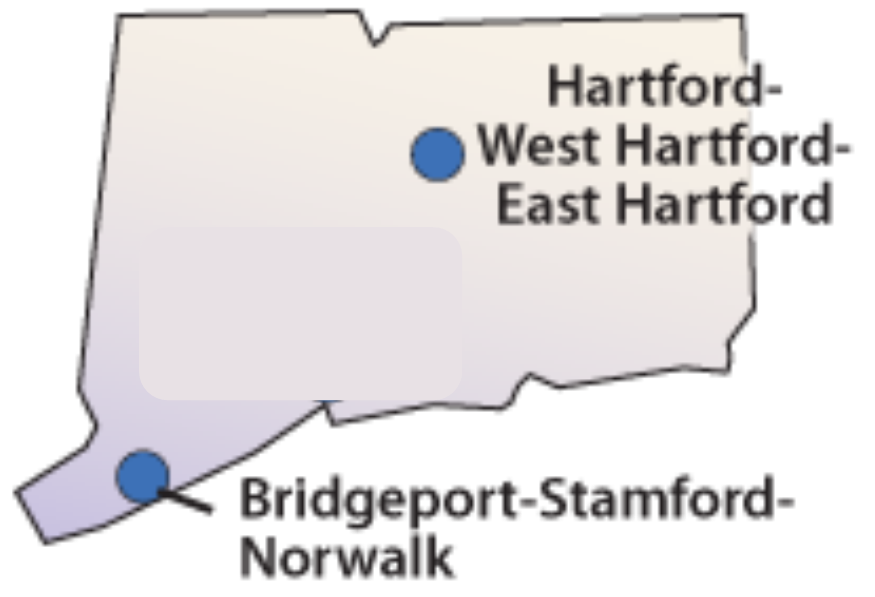
Two of Connecticut’s metropolitan regions have among the highest median earnings for full-time workers age 18 to 34, according to U.S. Census Bureau data.  The Bridgeport-Stamford-Norwalk area ranked #5, with Hartford-West Hartford-East Hartford ranked #6, just ahead of New York-Newark-Jersey City.  Connecticut and California were the only states to have two regions among the top ten. The media incomapme in the Bridgeport-Stamford-Norwalk metropolitan area was $42,757, and the Hartford-West Hartford-East Hartford region was $42,322 for 18-34 year olds working full-time, according to the data, highlighted in an article posted to The Atlantic’s CityLab website.
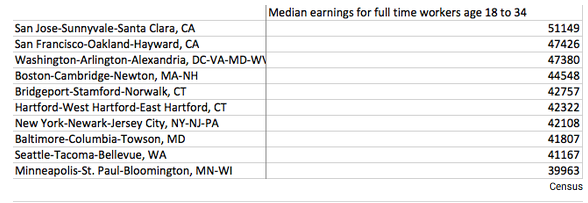
Those median salaries in Connecticut compare to a media of $33,883 for the same age category nationwide.    The data indicates that 21.9 percent of the region’s population is age 18-34 in the Hartford metro area; 19.9 percent in the Stamford centered region.

Nationwide, the website points out “since the start of the Great Recession in 2007, the median wage for people between the ages of 25 and 34, adjusted for inflation, has fallen in every major industry except for health care.”  The Atlantic reported earlier this month that “overall U.S. wages are barely growing, and wages for young people are growing 60 percent more slowly than overall U.S. wages.”

“When you dig into the numbers,” the website continues, “the Hartford, Connecticut, metro area emerges, beaconlike, in the darkness: It has become one of the most lucrative job markets for young Americans.”ef5a6bf26

The report notes “a higher median income for young workers than in New York, Seattle, or Chicago. Millennial wages in many smaller metropolitan areas, including Austin, Minneapolis, and Denver, also lag behind Hartford's.”  The Hartford-West Hartford-East Hartford region offers the combination of strong median income and a cost of living that isn’t rising at the rate of other metropolitan areas, which makes the regioncitylab “looking remarkably attractive.”

Also this month, the real estate website Zillow predicts “a big year for home buyers in 2015, with more millennials entering the market amid rising rents.”   Zillow’s annual housing predictions identified the five best housing markets for first-time homebuyers in the year ahead, and ranked Hartford at #2, just behind Pittsburgh and ahead of Chicago, Las Vegas and Atlanta.

Lookinzillowg ahead to 2015, Hartford was among the “markets most favorable to first-time buyers … with strong income growth among 23-34 year olds, significant growth in the number of entry-level homes on the market and home prices that won’t take a big chunk out of buyers’ paychecks.”

2016 US Gymnastics Championships Back in Hartford, All About the Men

Connecticut residents watching the televised coverage of the men’s and women’s gymnastics competitions at the 2016 Olympics from Rio de Janeiro will likely see some familiar faces.  The run-up to the Olympics will come through Hartford that summer, as USA Gymnastics rolls out a new split schedule for the men and women, which will bring the mens’ National Championships to the XL Center, and the women for a pre-Olympic competition. For the first time since 1976, the 2016 U.S. Olympic Team Trials in gymnastics will be held on different days, in different cities.  The women's gymnastics trials has been awarded to San Jose, and the men's trials to St. Louis, to be held in late June and early July.

The trials will follow USA Olympic Gymnastics Trials 2012the U.S. Championships, which will also be held in different cities.  The men’s championships will be held in Hartford, June 3-5, 2016.  The women will also be in town, competing in the Secret Classic – a major pre-Olympic event.  The women will move on to their national championships three weeks later in St. Louis.

Why the new event pairings and tradition-breaking schedule?  It’s all about the men.

In an effort to boost the mens’ team’s chances in the 2016 Olympics, and increase public interest in the team, the competition schedule has been revised.  USA Gymnastics president Steve Penny explained in published reports that the organization moved up the men's trials to give the team more recovery time before the Rio Games. The U.S. men earned the top score in qualifying at the 2012 London Olympics but dropped to a disappointing fifth in the team finals. The men will have about six weeks to prep between the trials and the Olympics, which begin on Aug. 5, 2016, compared with four between the trials and the games in 2012.

Performance and notoriety go hand-in-hand.  Despite having earned a Silver Medal at the 2008 Beijing Olympics, for example, American gymnast Jonathan Horton did not become a household name in the U.S.  That’s not surprising, as the public generally is more focused on the women’s teams competing in the Olympics every four years.Hartford Has It_black-aqua

“People think gymnastics, and they think little girls in leotards, powerful and graceful, and they forget about our side,” Horton recently told the Pittsburgh Post-Gazette. “Right now, there’s this stereotype that we’re not a masculine sport. All of us are trying to change that image that it’s a sissy sport. It’s not.”logo

The Post-Gazette noted that in most other countries where gymnastics skills are cultivated, the men are still more popular than the women. Because of that, Penny noted, there is more depth among the men in international competitions, which has made it tougher for the U.S. team to bring home medals with the same frequency as the women’s team.

Inside Gymnastics magazine reported last year that “in the NCAA, men’s teams are losing funding while women’s teams are being created,” adding that “The reality is - boys’ gymnastics has never been as popular as girls’ gymnastics.”

Only six states sponsor a high school boys gymnastics championship, and only 17 Division I colleges still support men’s gymnastics programs, the newspaper reported. USA Gymnastics is making a concerted effort to reward male gymnasts who are competing in club programs at the high school and college level with recognition for their effort, Penny told the Post-Gazette. “There’s always been more sport opportunities for young men than there were for women. The role models for women always stand out. For men, it’s a more cluttered sports landscape.”

There’s little doubt about the popularity of gymnastics during the Olympics.  After the 2012 Olympic Games in London, there was an analysis of the sports and athlete mentions on Twitter, which revealed that there were more than 150 million Summer Games tweets. According to Twitter, the sport which saw the most Twitter conversation was soccer with well over 5 million Tweets.  Rounding out the top five were swimming, track & field, gymnastics and volleyball.

USA Gymnastics tends to return to cities that have been successful hosts previously for major gymnastics competitions, and that is true for San Jose, St. Louis and Hartford.  The XL Center has hosted the USA Gymnastics national championships twice: in 2010 and 2013.  Neither was an Olympic year.  2016 will be.

2016 Competition Schedule

Men

  • National Championships, Hartford, June 3-5
  • Olympic Trials, St. Louis, June 23-26

Women

  • Secret Classic, Hartford, June 3-5
  • National Championships, St. Louis, June 23-26
  • Olympic Trials, San Jose, July 8-10

Economic Development Awards Recognize Innovation, Growth and Jobs

There are some economic development gems in Connecticut that have somehow managed to largely escape public attention, even as their businesses have grown and employment levels increased.  The companies were among 20 recipients at the annual Connecticut Economic Resource Center "Celebrate Connecticut" program, which recognizes "a broad range of individuals, companies and programs that have uniquely contributed to economic growth in Connecticut." Recipients ranged from individuals, including Waterbury Mayor Neil O'Leary and North Haven First Selectman Michael Freda, to the Seymour Fish Bypass, Durham Agricultural Fair Association (the largest fair in North America managed entirely by unpaid volunteers), and Five Point Gallery in Torrington.  But the bulk of the honorees were businesses - more small than large- with solid economic development stories to tell.  Among them:Cerc1

Tower Laboratories is a leading provider of effervescent products in the United States and supples to distributors worldwide.  The company provides the fizz and bubbly sensation that gives products an edge, both in effectiveness and product appeal.  Located in Centerbrook in Middlesex County, they develop and man;manufacture over-the-counter medications, prescription pharmaceuticals and personal care, beverage and household products.

Belimo Air Control USA employees 300 people in Danbury, and recently moved into newly constructed headquarters.  Belino's products are essential components of the HVAC systems that keep indoor air comfortable, healthy, efficient and safe.  Prominent customers are not only in the U.S, but worldwide.

Polamer Precision is an advanced contract aerospace manufacturing firm that has just completed a 152,000 square-foot facility in New Britain.  The company will employ 83 highly skilled workers in this new facility, which will allow the company to increase its output and handle larger contracts.  It will also feature the largest industrial solar power generation system in Connecticut.

ctRecognized programs and organizations  include the Rowley Spring Adult Education Diploma and Certificate Program, Billings Forge Community Works, Northwest Connecticut Manufacturer's Coalition, the Southeastern Connecticut Cultural Coalition, Fiddleheads Natural Food Co-op and the Putnam Business Association's First Fridays event.

"These awards pay tribute to the hardworking people and successful programs and projects that are stimulating new jobs and investment in our economy,” said CERC President and CEO Robert Santy. “CERC is proud to recognize the 2014 honorees and the many successes making a positive impact on our business environment.”  The awards were presented by state Economic and Community Development Commissioner Catherine Smith and Shelly Saczynski, Chair of the CERC Board.celebrate cover

Officials noted that a number of the businesses receiving awards began in local basements or with homegrown talent and have grown to successful enterprises.  Danbury-based Mediassociates, for example, has seen 30 percent growth over the past 10-plus years and was highlighted as one of the top 3,000 fastest growing privately owned businesses in America by Inc. magazine.  Datto, Inc., headquartered in Norwalk with nearly $50 million in revenue in 2013, and more than 300 employees, began in a basement as nothing more than an idea.

Among the innovative programs recognized was the Stamford 2030 district, a private-sector-led initiative of 23 property owners and managers and community and professional partners working toward the goal of cleaner and greener commercial and large-scale buildings.  Stamford is the first city in New England and the tri-state region to establish a District, and one of only a handful nationwide.  The initiative is led by Connecticut Fund for the Environment and the Business Council of Fairfield County.

The 20 award recipients, two in each of 10 regions across the state, were:

North Central Billings Forge Community Works CareCentrix

South Central First Selectman Michael Freda Alexion

Southeast Fiddleheads Natural Food Co-op Southeastern Connecticut Cultural Coalition

Middlesex Tower Laboratories, Ltd. Durham Agricultural Fair Association

Waterbury / Naugatuck Waterbury Mayor Neil M. O’Leary Seymour Fish Bypass (Paul Pawlak Fish Bypass)

West Mediassociates Belimo Air Control USA Inc.

Southwest Datto, Inc. Stamford 2030 District

Central Polamer Precision Rowley Spring Adult Education Diploma and Certificate Program

Northeast Putnam Business Association First Friday's Event Plainfield Renewable Energy – A Leidos Company

Northwest Five Point Gallery Northwest Connecticut Manufacturer's Coalition

In addition, CERC awarded its Customer Service Award,named for the late Connie Maffeo, to Donna Wertenbach, President and CEO of the Community Economic Development Fund.

Connecticut Economic Resource Center, Inc.  is a nonprofit corporation and public-private partnership that provides economic development services consistent with state strategies, leveraging Connecticut’s unique advantages as a premier business location.