Connecticut, Pakistan Have Similar Economic Output, Analysis Finds
/Connecticut is Pakistan. A review of state-by-state Gross Domestic Product (GDP) data for 2014 matches economic output in U.S. states to foreign countries with comparable nominal GDPs. Connecticut’s GDP, which ranks 23rd among the states, is comparable to the nation of Pakistan – just over $250 billion.
The U.S. map, with names of nations with comparable GDP’s, “helps put America’s GDP of nearly $18 trillion in 2014 into perspective by comparing the GDP of US states to other country’s entire national GDP,” according to the American Enterprise Institute (AEI), which developed the comparative analysis.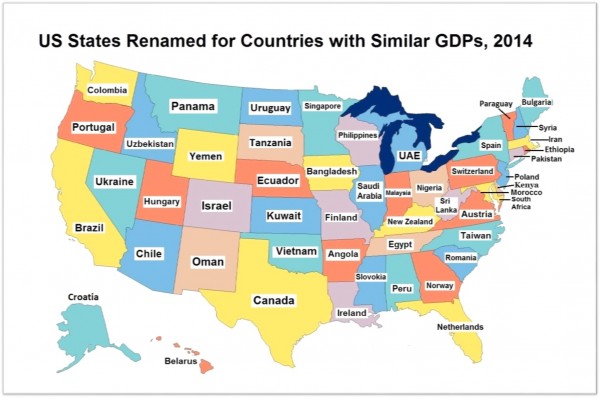
Among the highlights, as described by AEI:
- America’s largest state economy is California, which produced $2.31 trillion of economic output in 2014, just slightly below Brazil’s GDP in the same year of $2.35 trillion. In 2014, California as a separate country would have been the 8th largest economy in the world, ahead of Italy ($2.1 trillion) and India ($2.04 trillion) and Russia ($1.86 trillion). And California’s population is only 38.8 million compared to Brazil’s population of 200.4 million, which means California produces the same economic output as Brazil with 81% fewer people.
- America’s second largest state economy – Texas – produced $1.65 trillion of economic output in 2014, placing it just slightly behind the world’s 11th largest country by GDP – Canada – with $1.78 trillion of economic output.
- Saudi Arabia’s GDP in 2014 at $752 billion was just slightly more than the state GDP of Illinois ($746 billion).
- America’s third largest state – New York with a GDP in 2013 of $1.4 trillion – produced the same amount of economic output last year as Spain ($1.4 trillion), even though Spain’s population of 47.3 million people is more than twice the number of people living in New York (19.75 million).
- Other comparisons: Florida ($840 billion) produced about the same GDP in 2014 as the Netherlands ($866 billion), Pennsylvania ($663 billion) produces almost as much as the entire country of Switzerland ($712 billion) and Ohio ($583 billion) produces more than the entire country of Nigeria ($573 billion).
Connecticut’s GDP of $253 billion is close to that of Pakistan, which was $250 billion in 2014. Among the other New England states, Massachusetts had a GNP of $459 billion, slightly higher than that of Iran ($404 billion), New Hampshire’s GDP of $71 billion was comparable to Syria’s nearly $72 billion, and Rhode Island’s $54 billion GDP was similar to Ethiopia’s $52 billion.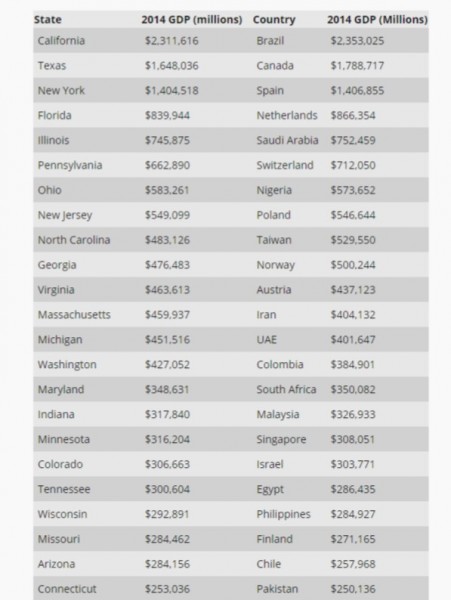
The comparison was developed by Mark J. Perry, concurrently a scholar at American Enterprise Institute and a professor of economics and finance at the University of Michigan's Flint campus. For each US state (and the District of Columbia), he determined the country closest in economic size in 2014 (measured by nominal GDP). For each state, there was a country “with a pretty close match,” he found.
Overall, the analysis indicated, the US produced 22.5% of world GDP in 2014, with only about 4.6% of the world’s population. Three of America’s states (California, Texas and New York) – as separate countries – would rank in the world’s top 14 largest economies. And one of those states – California – produced more than $2 trillion in economic output in 2014 – and the other two (Texas and New York) produced more than $1.6 trillion and $1.4 trillion of GDP in 2014 respectively.



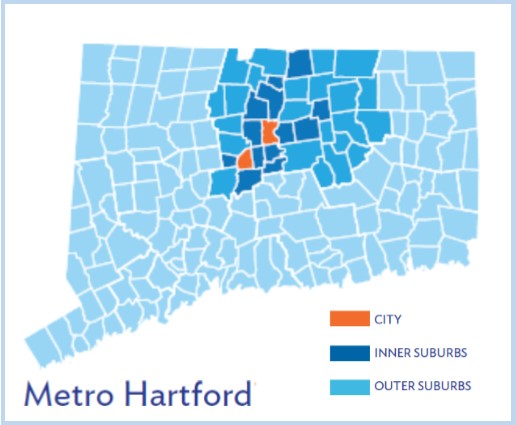
 Looking at five year trends, the report found that the region’s population of about 1 million people has grown by 2 percent, which translates to about 20,000 people or about 4,000 families. Regional job growth, 3.5 percent, is on par with the state, but remains about 8,000 jobs below pre-recession levels. The crime rate across the Greater Hartford region has been reduced by about 18 percent during the past five years, faster than the state (-16%) and national (11%) trends.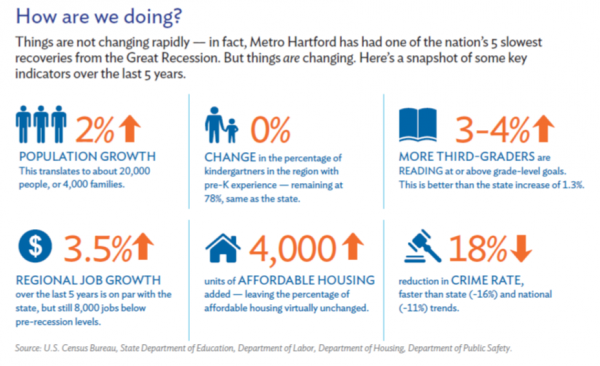
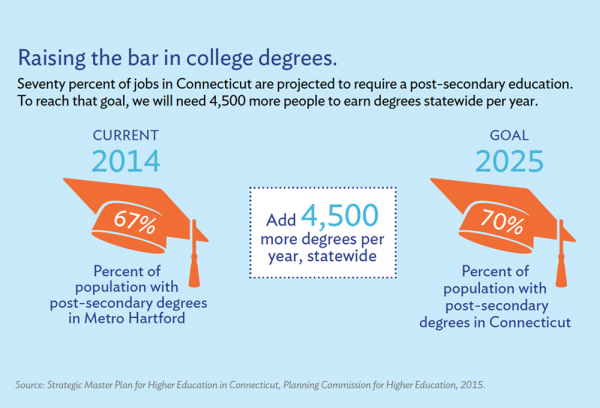 Partner organizations in developing the report include the Hartford Foundation for Public Giving, Capital Workforce Partners, Capital region Council of Governments, Metro Hartford Alliance, Hispanic Health Council, United Way of Central and Northern Connecticut, Urban League of Greater Hartford, Center for Urban and Global Studies at Trinity College, and the City of Hartford.


 The survey noted that more than two-thirds of consumers (68 percent) looking to purchase their first home are interested in move-in ready homes while one-third would like to buy a fixer-upper. And when it comes to amenities, respondents are most interested in their first home having a backyard or pool and an attractive design, followed by energy efficient / smart homes technologies.
 U.S. Commerce Secretary Penny Pritzker honored a total of 45 American companies and organizations, many of which are small- and medium-sized enterprises (SMEs), at the 2015 President’s “E” Awards ceremony, held earlier this year. The six Connecticut businesses were among the 45 honored.
 Proton Onsite makes hydrogen and nitrogen generators. Mutualink manufactures equipment used to facilitate collaborative communication between public safety and first response teams at the scene of emergencies. Jonal Laboratories makes sealant used in the aerospace industry. Dymotek manufactures custom injection molded plastic and silicone parts for electronics, plumbing valves and juice dispensers.
 t assist and facilitate export activities were honored with the “E” Award for Export Service. Four firms received the “E” Star Award for Exports, which recognizes previous “E” Award winners who have reported four years of additional export growth. And, three companies were awarded the “E” Star Award for Export Service, which recognizes previous “E” Award winners that have shown four years of continued support of exporters since first winning the “E” Award.
 This year marks the 53rd anniversary of the

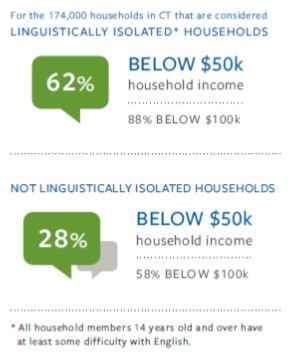
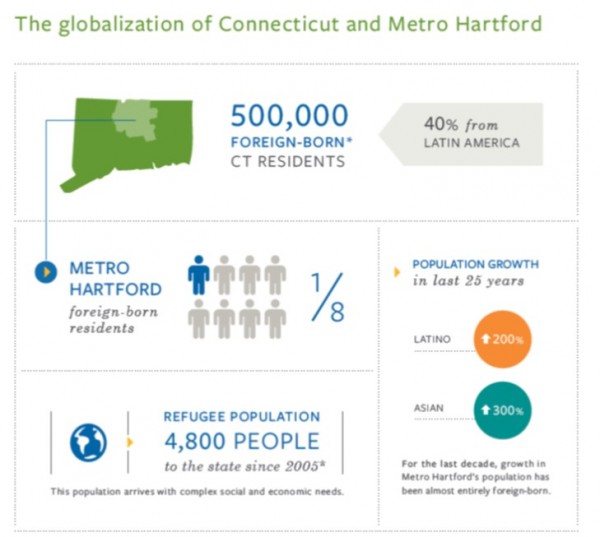 “The Latino Endowment Fund has offered this report as a means to expand the important discussion on efforts to support English Language Learners in our communities,” said Luis Cabán, chair emeritus of the Latino Endowment Fund Steering Committee. “This document provides us with an opportunity to reframe how we think about our increasingly global community and recognize the advantages of people speaking more than one language to enhance the richness of our community and create stronger links to the global marketplace.”


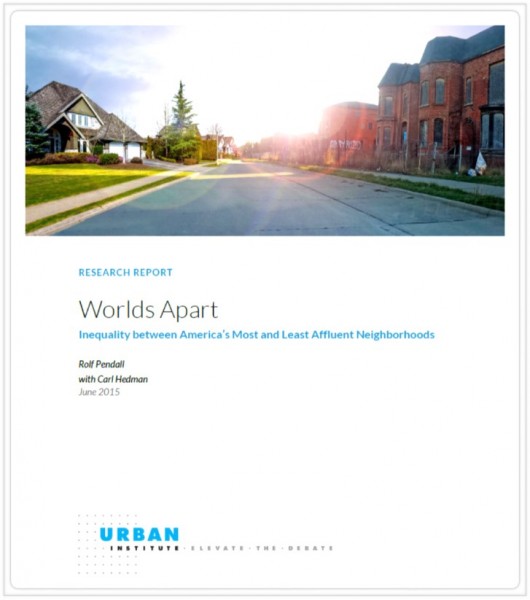 As a result, the study found that inequality between “top and bottom income” neighborhoods intensified in the great majority of commuting zones. Even where inequality dropped, the story was not always positive: it often occurred because top-neighborhood incomes fell in the wake of economic stagnation.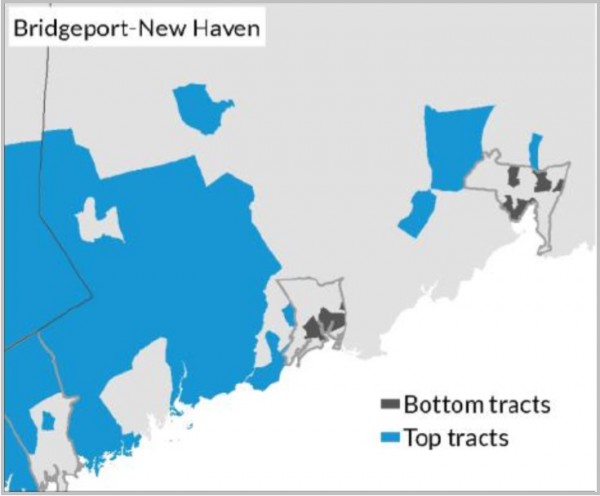

 Overall, the top 5 up-and-coming regions for tech jobs in the U.S. were 1) Austin-Round Rock, TX, 2) Raleigh-Cary, NC, 3) Provo-Orem, UT, and 4) Fort Collins-Loveland, CO. Also reaching the top 10 were 6) Indianapolis-Carmel, IN, 7) Boise City-Nampa, ID, 8) Manchester-Nashua, NH, 9) Nashville-Davidson-Murfreesboro-Franklin, TN and 10) Eugene-Springfield, OR.
 nd online interview tools, all while eliminating bulky and expensive software. Founded in 2010,