Digital Citizenship Summit will Bring State, National Tech Experts to Connecticut
/Connecticut will be the center of the digital universe this fall, when the University of Saint Joseph (USJ) in West Hartford hosts a Digital Citizenship Summit, bringing local and national experts together to explore the good, the bad and the ugly about the pervasive and ubiquitous use of technology in our personal and professional lives.
The term “digital citizenship” describes appropriate, responsible tech and Internet use. Similar to the rights and responsibilities involved in being a citizen, there are legal and ethical obligations with being a digital citizen, organizers explain.
The aim of the Digital Citizenship Summit, to be held on October 3, is to create positive, practical solutions along with amplifying the overall message of improving tech usage. Topics for the all-day Summit include digital literacy, etiquette, wellness, security, and law.
“We believe that digital citizenship deserves its own space for educational, non-profit, and industry leaders to focus on solutions and push new ideas forward focused on positive, practical solutions to improve our use of technology and the Internet. The Digital Citizenship Summit aims to bring together the various silos of thought and activity across the country in order to create a stronger, more unified message for better tech usage,” organizers said.
This inaugural event is being sponsored by the University of Saint Joseph’s School of Education, Office of Student Affairs and Office of Informational Technology and will engage students, teachers, parents, administrators and policy makers in a dynamic conversation focused on digital citizenship. It comes in the first semester of the administration of incoming university President Rhona Free, who takes office July 1. Free is a past national Professor of the Year as selected by the Carnegie Foundation for the Advancement of Teaching and the Council for Advancement and Support of Education (CASE).
Plans are for the Summit to include a panel discussion, breakaway sessions, a keynote talk TED-style, and a social event to “connect with all the fascinating big thinkers across the country who are pivotal in shaping digital citizenship.”
Among the speakers will be:
- Alan Katzman is Founder of Social Assurity, the leading youth social media advisory service in the country. They work with students and families on customized social media training to maximize the students’ opportunities and use of social media to their advantage. He is an entrepreneur and former attorney with an expertise in law, technology and software, compliance, human resources and investigations.
- Mike Ribble: Known as the godfather of digital citizenship, Kansas-based Ribble is an international speaker, researcher and author of the books Digital Citizenship in Schools (soon to be in its 3rd edition) and Raising a Digital Child. He has worked within the education field his entire career, including as a science educator, an assistant principal at the high school level, and adjunct faculty at the college level.
- Jennifer Scheffer: Mobile Learning Coach and Instructional Technology Specialist at Burlington, MA Public Schools, she is a dynamic and energetic teacher leader with over a decade of experience teaching project-based computer technology, marketing, and business management courses. She coaches students on how to leverage social media tools to showcase their talents, create a positive online presence, and build their professional network.
- Sarah Thomas is a Google Certified Teacher and Edmodo Certified Teacher, as well as a leader of the Washington, DC Google Educator Group and founder of the EduMatch project. She is the Technology Liaison at John Hanson French Immersion School in Oxon Hill, MD and teaches Technology Integration and English Language Arts at the middle school level. She is a recipient of the 2014 Digital Innovation in Learning Award and was named by the National School Board Association as one of the “20 to Watch” in 2015.
The organizing committee for the Summit includes:
- David Ryan Polgar, a frequent speaker and respected tech commentator whose ideas and thoughts concerning digital citizenship have been featured in publications including The Boston Globe, Financial Times, Sydney Morning Herald, US News & World Report, and Forbes. With a background as an attorney and college professor, he examines the use of technology from an ethical, legal, and emotional perspective.
- Marlialice B.F.X. Currran, an Associate Professor at USJ, focuses on digital citizenship and social media in K-12 teacher education. A former middle school teacher, principal and an advocate for young adolescents, Curran was named one of the Top 10 Digital Citizenship bloggers by Common Sense Media in 2014.
- JoAnn Freiberg is an Educational Consultant with the Connecticut State Department of Education, responsible for managing bullying, improving school climate and character education, and has taught at numerous colleges in Connecticut and currently is Co-Chair of the National School Climate Council.
 Often referred to as a Tech Ethicist, Polgar has become a respected and unique voice in the digcit community. He is a contributing writer with the Family Online Safety Institute, iKeepSafe, and The Good Men Project, along with appearing regularly on television to discuss issues such as tech balance, cyber ethics, and tech etiquette. He has delivered two TEDx talks on digital technology.
In describing Dr. Curran, Common Sense Media said “she is a long-time proponent of responsible online behavior, and encourages her undergraduate and graduate students to learn and explore what it means to be socially responsible both face to face and online, how teaching empathy is the most important 21st century skill and how social media can change teaching and learning in PK-12 classrooms.” Dr. Curran and Tracy Mercier co-founded the digital citizenship #digcit chat on Twitter in 2011. The first chat was inspired as a result of a digital citizenship course at USJ.
Registration for the Summit will be available later this spring, along with additional details regarding the agenda and program, at the website www.digcitsummit.com.
Photo: Marlialice B.F.X.Curran, David Ryan Polgar, JoAnn Freiberg.
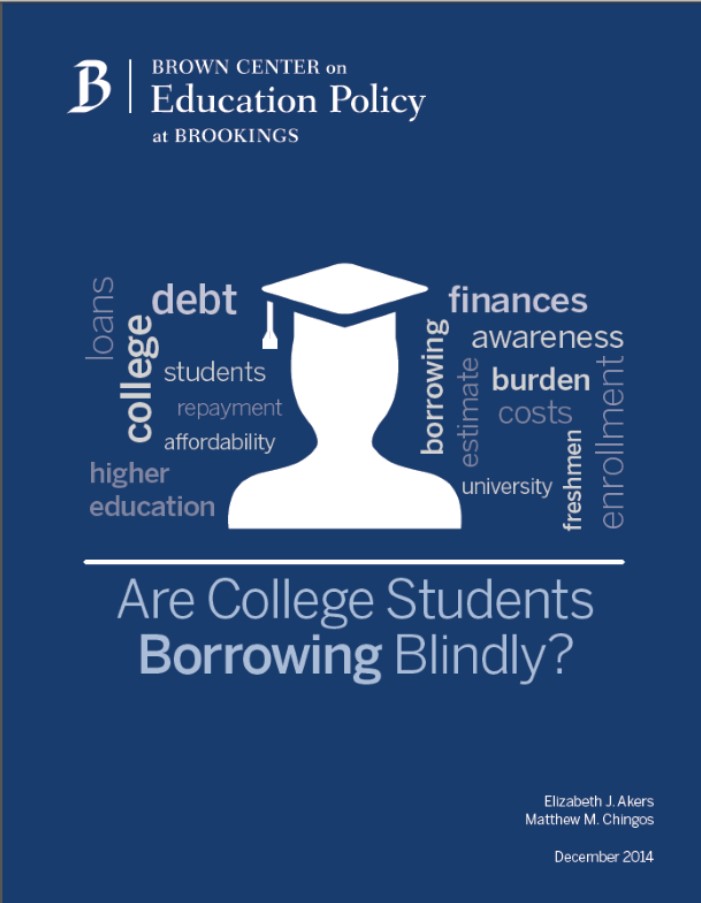
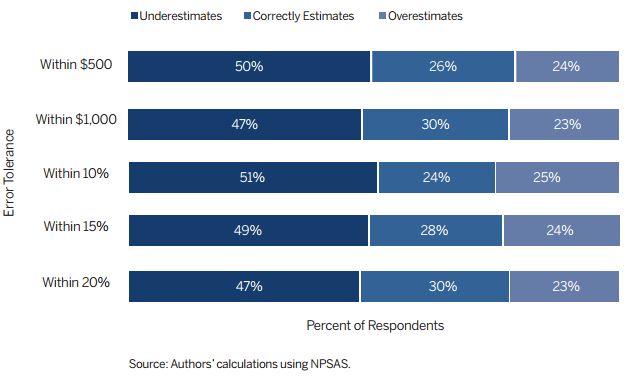
 The report also concludes by noting that “many students look back on their educational experiences with some regret about the financial circumstances. Some wish they had not gone to college in the first place, while others wish they had borrowed less or earned a different degree. The lack of literacy about the personal finances of college going is almost certainly leading some students into decisions that they later come to regret. The problem with the lack of financial savvy among enrolled college students is that the consequences of their decisions come as a surprise to them once it’s too late.”
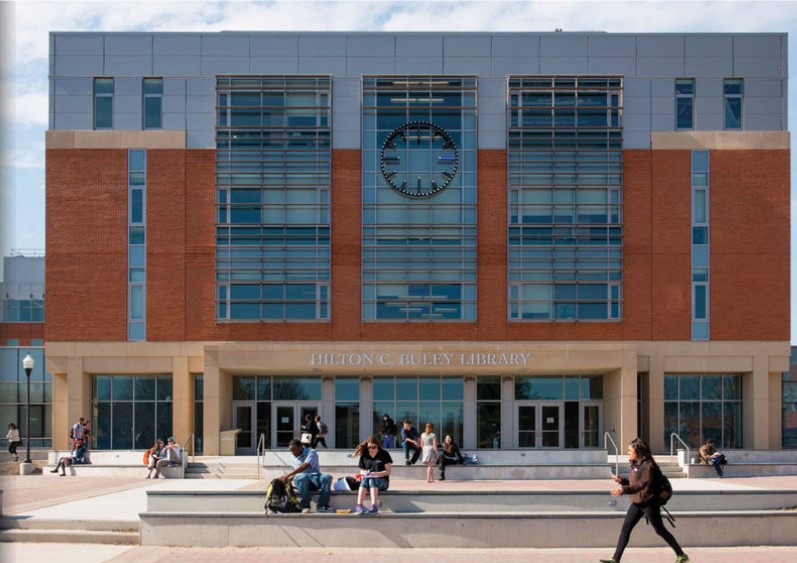 At Southern Connecticut State University in New Haven, students now have a first-rate, 21st century library in which to study, conduct research and meet with their friends and classmates, the university announced this week. A ribbon-cutting ceremony to mark the opening of the “new” Buley Library was held April 20. The event marked the completion of the $31 million project that renovated the original wing of the building. A 12,000-square-foot area that will serve as an atrium has been added to the older 98,000-square-foot wing as part of the project. When combined with the 135,000-square-foot addition that was completed in 2008, the library now encompasses 245,000 square feet.
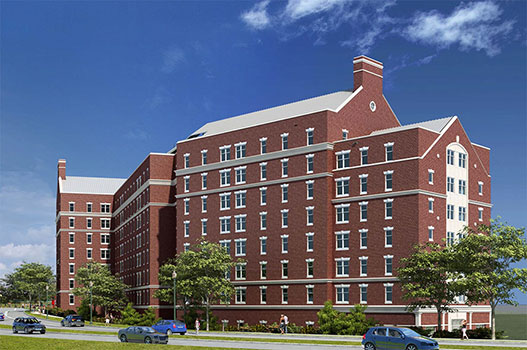 At Central Connecticut State University in New Britain, there is a Fall 2015 target date for completion of a new on-campus residence hall and food services dining facility. That will follow by just two years the opening of a major new classroom building on the CCSU campus. The four-story academic building houses classes and faculty offices for the sociology, history, anthropology, geography and political science departments, according to university officials. It includes 17 classrooms, five seminar rooms, seven labs and 71 offices for faculty and administrators. Now completing construction at the corner of Harold Lewis Drive and Ella Grasso Boulevard, the new $82.3 million, eight-story 220,000 square foot residence hall "will keep CCSU in the vanguard of higher education in operations and facilities," points out CCSU President Jack Miller, noting its ideal fit into the university's strategic plan for the recruitment and retention of new students.
 Opening this fall on the campus of Eastern Connecticut State University in Willimantic is a Fine Arts Instructional Center - a 118,000 square foot building that will contain three main performance venues; an auditorium; a procenium theater and a black box theater. In addition to the performance spaces there will be instructional labs and other spaces in support of the Performing Arts Department. There will be design studios for the Visual Arts Department including Printmaking, Sculpture, Painting and Drawing. The building will also have three general purpose classrooms and a gallery. Construction has been underway for the past two years.
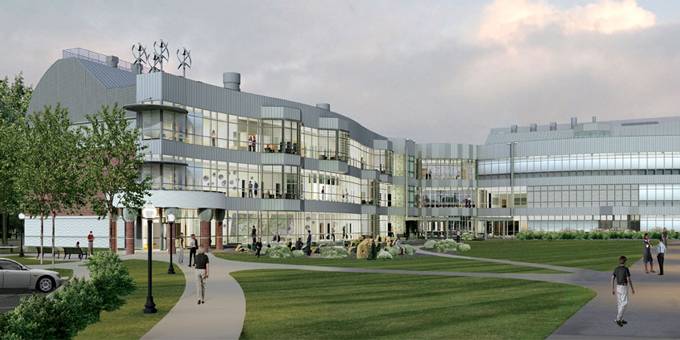 The next major opening among the CSCU institutions will likely be a Science and Laboratory Building at Southern Connecticut, due later this year. Southern's ongoing expansion of its science programs will be greatly enhanced with the construction of a 103,608-square-foot, four-level academic and laboratory science building. Situated adjacent to Jennings Hall, the current home for the sciences, the new building will enhance the ongoing expansion of Southern’s science programs and the university’s capacity to educate more students in the STEM disciplines – science, technology, engineering and mathematics.

 In Meriden, students at Casimir Pulaski, John Barry, and Roger Sherman elementary schools receive an additional 100 minutes of instruction each day with technical and financial support from a public-private partnership known as the TIME Collaborative.
 sitioning Meriden—a majority-minority district—at the forefront of a national movement to increase student achievement and well-being through longer, more enriching school days.”

 re recognized as category winners; there are two winners in both the Research and Collegian categories: Academic Innovation and Leadership: Medria Blue-Ellis, Principal, Engineering & Science University Magnet School; Collegian Innovation and Leadership (two winners): Sapna Gupta, Ph.D. Student, University of Connecticut, Monika Weber, Ph.D. Student, Yale University; Community Innovation and Leadership: Keshia Ashe, Co-Founder & CEO, ManyMentors; Entrepreneurial Innovation and Leadership: Christina Lampe-Onnerud, Founder & CEO, CLOTEAM LLC; Large Business Innovation & Leadership: Yu-Hui Rogers, Site Director, The Jackson Laboratory for Genomic Medicine; Research Innovation and Leadership (2 winners): Serap Aksoy, Professor, Yale School of Public Health, Radenka Maric, Connecticut Clean Energy Professor in Sustainable Energy, University of Connecticut; Small Business Innovation and Leadership: Lisa Braden-Harder, CEO, Appen; and Youth Innovation and Leadership: Anubhuti Mathur, High School Student, Glastonbury High Sch
 ool.
ool. These expos offer girls exposure to STEM fields, as well as the opportunity to participate in hands-on experiments. The next G2O Girls & STEM Expo to be held
 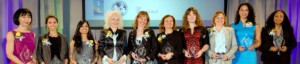 2015 Women of Innovation
 S. approximately 48 people will have a cardiac arrest event outside of the hospital. Nine out of ten people will not survive. However, if lifesaving CPR is performed, a victim’s chance of surviving can double, or even triple, according to the American Heart Association.
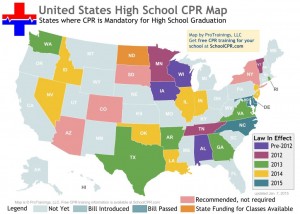 national initiative.


 poll analysis, it is pointed out that connecting with another parent who is awake in the middle of the night can help to counteract feelings of isolation. Asking for other parents’ recommendations can facilitate the choice of a new childcare provider. And hearing about strategies used by other parents can offer practical tips to deal with a toddler’s behavior problem.