Aging Issues in CT Highlighted for White House Conference
/When the White House Conference on Aging is held later this year, there will be no shortage of anecdotal stories accompanied by demographic information, comprehensive reports and recommendations, and a treasure-trove of data emanating from Connecticut, with the nation's 7th oldest population. Officials received a preview this week at a public hearing that included these sit-up-and-take-notice items:
- Connecticut is undergoing a “permanent and historic transformation” in its demographics
- Between 2010 and 2040, Connecticut’s population of people age 65 and older is projected to grow by 57%, with less than 2% growth for people age 20 to 64 during the same period
- Residents born in Connecticut today can expect to live to be 80.8 years old—the third highest life expectancy in the nation.
- In Connecticut’s 65 to 69 year-old age group, 39% are in the labor force, as are 21% of Connecticut residents aged 70–74, and 7% of those 75 years and over. These rates are among the highest in the country
Those were among the facts highlighted by Julia Evans Starr, Executive Director of Connecticut’s Legislative Commission on Aging, which also explained that Connecticut, with the nation’s 7th oldest population, will see that population grow dramatically in the coming decade. By 2025, virtually every town in Connecticut will have 20 percent or more of its residents over age 65 – the largest percentage in state history. 
The White House Conference on Aging is held every 10 years, and has served as a key platform for the development of aging policy for the past 50 years. Organizers are now holding a series of regional public forums around the country. New England’s session will be in Boston later this month, and the testimony presented at the Connecticut State Capitol, in a forum sponsored by the state Department of Aging and the Legislative Committee on Aging, will be passed on to officials there.
Among those speaking in Hartford were Lieutenant Governor Nancy Wyman, State Aging Department Commissioner Betsy Ritter, and George Kuchel, Director of UConn’s Center on Aging. AARP Connecticut Director Nora Duncan and Chris Fishbein of the Area Agencies on Aging also provided presentations.
Wyman, noting that life span is increasing, said "we have quantity of life, we want to make sure there is a quality of life." In a theme that was repeated by others during the session, Wyman said that "we can change the way people are viewing people who are aging."
Nora Duncan, state director of AARP-CT, said the organization's focus will be on short-term actions that can have a more immediate impact, such as preventing exploitation, fraud and scams and providing information on financial products and improving retirement security. Rose Biaggi of the state Department of Public Health pointed to the health disparities among the aging population, noting that 60% of older adults with the highest incomes indicate that their health is very good or excellent, while only one-quarter of those with lowest income feel that their health is very good or excellent.
Kuchel, who suggested that the nation may be at a “tipping point” regarding a national policy on aging, said the future focus needs to be:
- Proactive: There must be a focus on prevention and improvements in health and function across the lifespan.
- Predictive: We need tools to predict individual risk, target therapies and monitor success of interventions.
- Personalized: We must address differences at the level of each individual and time point in life as regards personal aging trajectories.
- Gerontology: Health care must always be defined by patient needs first, driven by science and supported by evidence

Common themes that have begun to emerge nationwide as the hearings have progressed, according to officials, include: how to ensure we prepare for financial needs in retirement; how to remain healthy as we age; what types of services and supports can help older Americans remain independent in the community as we age; and how to support this care and the caregivers who provided it; and how to protect older Americans from financial exploitation, abuse and neglect.
The co-chairs of the legislature’s Committee on Aging, Sen. Mae Flexer and Rep. Joe Serra, were to lead the session, with Flexer noting that “Older individuals want to remain in Connecticut and be active, independent members of their community. How we accomplish this, how we fund it, what services we need to have in place – these are some of the questions we are seeking input on today.”
In testimony provided to the committee, the state’s Permanent Commission on the Status of Women indicated “women, who make up 58% of residents age 65 and over, are disproportionally impacted by economic insecurity as they age and are therefore much more likely to live in poverty than their male counterparts. In fact, 10.7% of women age 65 and over live in poverty compared with 6.2% of men.” PCSW also cited data that found Connecticut women are more likely to work in part-time jobs that don’t qualify for a retirement plan.
The legislative Commission on Aging also pointed out that “the comparatively low rate of older adults in poverty (8 percent) provides evidence that programs like Social Security and Medicare have been extremely effective at reducing poverty among this population and serves as a testament that these programs warrant continued support and modernization.” Federal officials have noted that this year’s White House Conference on Aging takes place as the nation marks the 50th anniversary of Medicare, Medicaid and the Older Americans Act, as well as the 80th anniversary of Social Security.
CT-N coverage of the Connecticut forum on May 5, 2015.
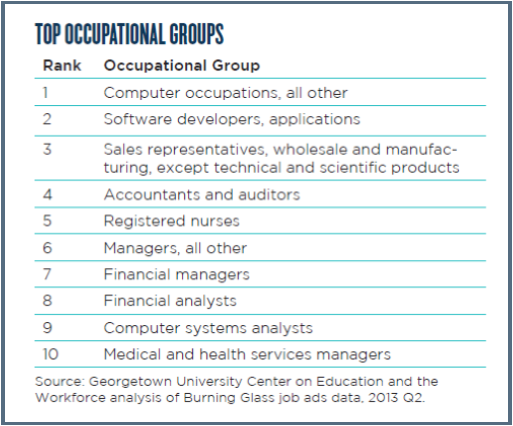 The top occupational groups reflected in the online job ads were 1) computer occupations, 2) software developers, 3) sales representatives,4) accountants and auditors, 5) registered nurses, 6) managers, 7) financial managers, 8) financial analysts, 9) computer system analysts and 10) medical and health services managers.
 The Georgetown University Center on Education and the Workplace is affiliated with the McCourt School of Public Policy. The study was done by Anthony Carnevale, Tamara Jayasundera, Dmitrirepnikov and Artem Gulish.
 The top 15
 Factors considered in the analysis include:
 Among
Among 


 Often referred to as a Tech Ethicist,
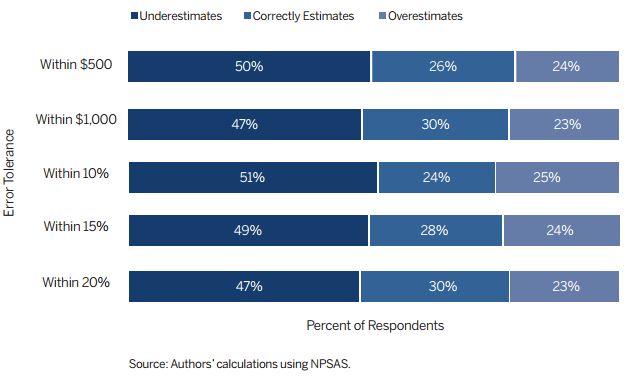
 The report also concludes by noting that “many students look back on their educational experiences with some regret about the financial circumstances. Some wish they had not gone to college in the first place, while others wish they had borrowed less or earned a different degree. The lack of literacy about the personal finances of college going is almost certainly leading some students into decisions that they later come to regret. The problem with the lack of financial savvy among enrolled college students is that the consequences of their decisions come as a surprise to them once it’s too late.”
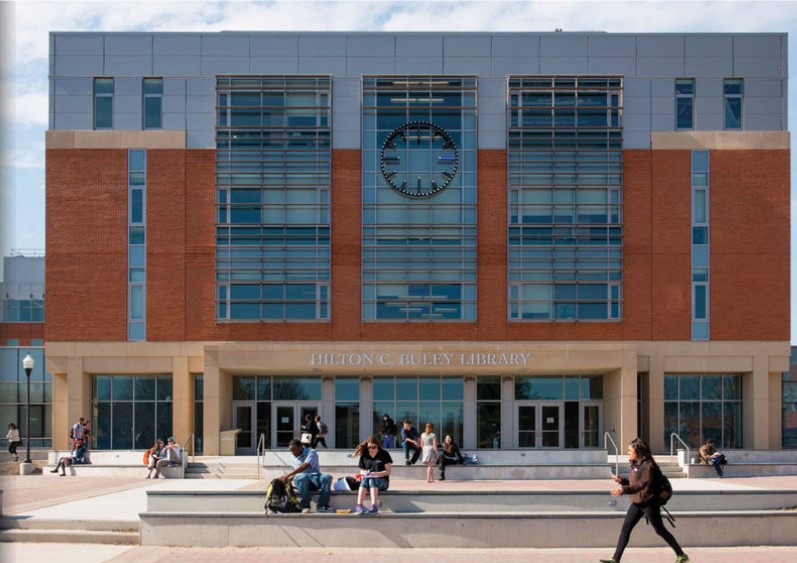 At Southern Connecticut State University in New Haven, students now have a first-rate, 21st century library in which to study, conduct research and meet with their friends and classmates, the university announced this week. A ribbon-cutting ceremony to mark the opening of the “new” Buley Library was held April 20. The event marked the completion of the $31 million project that renovated the original wing of the building. A 12,000-square-foot area that will serve as an atrium has been added to the older 98,000-square-foot wing as part of the project. When combined with the 135,000-square-foot addition that was completed in 2008, the library now encompasses 245,000 square feet.
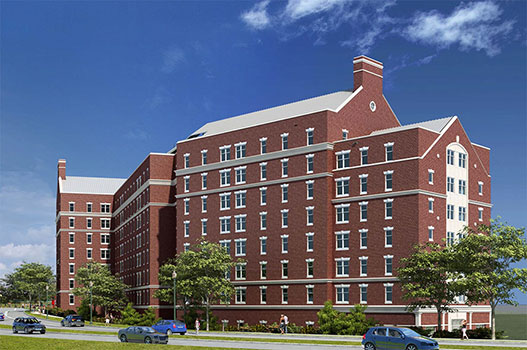 At Central Connecticut State University in New Britain, there is a Fall 2015 target date for completion of a new on-campus residence hall and food services dining facility. That will follow by just two years the opening of a major new classroom building on the CCSU campus. The four-story academic building houses classes and faculty offices for the sociology, history, anthropology, geography and political science departments, according to university officials. It includes 17 classrooms, five seminar rooms, seven labs and 71 offices for faculty and administrators. Now completing construction at the corner of Harold Lewis Drive and Ella Grasso Boulevard, the new $82.3 million, eight-story 220,000 square foot residence hall "will keep CCSU in the vanguard of higher education in operations and facilities," points out CCSU President Jack Miller, noting its ideal fit into the university's strategic plan for the recruitment and retention of new students.
 Opening this fall on the campus of Eastern Connecticut State University in Willimantic is a Fine Arts Instructional Center - a 118,000 square foot building that will contain three main performance venues; an auditorium; a procenium theater and a black box theater. In addition to the performance spaces there will be instructional labs and other spaces in support of the Performing Arts Department. There will be design studios for the Visual Arts Department including Printmaking, Sculpture, Painting and Drawing. The building will also have three general purpose classrooms and a gallery. Construction has been underway for the past two years.
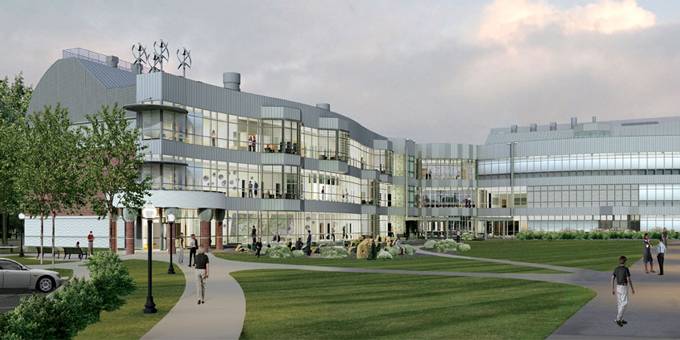 The next major opening among the CSCU institutions will likely be a Science and Laboratory Building at Southern Connecticut, due later this year. Southern's ongoing expansion of its science programs will be greatly enhanced with the construction of a 103,608-square-foot, four-level academic and laboratory science building. Situated adjacent to Jennings Hall, the current home for the sciences, the new building will enhance the ongoing expansion of Southern’s science programs and the university’s capacity to educate more students in the STEM disciplines – science, technology, engineering and mathematics.

 In Meriden, students at Casimir Pulaski, John Barry, and Roger Sherman elementary schools receive an additional 100 minutes of instruction each day with technical and financial support from a public-private partnership known as the TIME Collaborative.
 sitioning Meriden—a majority-minority district—at the forefront of a national movement to increase student achievement and well-being through longer, more enriching school days.”

 re recognized as category winners; there are two winners in both the Research and Collegian categories: Academic Innovation and Leadership: Medria Blue-Ellis, Principal, Engineering & Science University Magnet School; Collegian Innovation and Leadership (two winners): Sapna Gupta, Ph.D. Student, University of Connecticut, Monika Weber, Ph.D. Student, Yale University; Community Innovation and Leadership: Keshia Ashe, Co-Founder & CEO, ManyMentors; Entrepreneurial Innovation and Leadership: Christina Lampe-Onnerud, Founder & CEO, CLOTEAM LLC; Large Business Innovation & Leadership: Yu-Hui Rogers, Site Director, The Jackson Laboratory for Genomic Medicine; Research Innovation and Leadership (2 winners): Serap Aksoy, Professor, Yale School of Public Health, Radenka Maric, Connecticut Clean Energy Professor in Sustainable Energy, University of Connecticut; Small Business Innovation and Leadership: Lisa Braden-Harder, CEO, Appen; and Youth Innovation and Leadership: Anubhuti Mathur, High School Student, Glastonbury High Sch
 ool.
ool. These expos offer girls exposure to STEM fields, as well as the opportunity to participate in hands-on experiments. The next G2O Girls & STEM Expo to be held
  2015 Women of Innovation