Award-Winning Start-Up Accelerator to Launch Largest Class of Social Enterprises, Fledgling Businesses
/When the Hartford-based Social Enterprise Trust, known as reSET, was among the winners of the U.S Small Business Administration’s Growth Accelerator Competition last year – the only Connecticut organization to do so and one of 80 nationwide – it was not known what earning that designation, and the $50,000 that came with it, would mean for reSET’s Impact Accelerator program. Now, the picture is becoming clearer – and boosting Hartford’s reputation as a city for socially committed entrepreneurial start-up businesses. The expanding initiative is attracting not only home grown companies, but start-ups from elsewhere across the country, including as far away as California.
Tailored for impact-driven businesses but available to all early-stage ventures, reSET’s Impact Accelerator, now beginning its fourth year, has as its primary objective to test and hone entrepreneurs’ models, and to connect them to networks, mentors, customers, and resources.
A cohort of 22 businesses have been accepted to the program and most of their models are impact focused, serving the educational technology, health and health tech, energy, and agriculture industries. More than 60 percent of them are already generating revenue. It is the largest group of companies to take part in the accelerator program at reSET, and the first to include a handful of out-of-state participants.
Running from January 20 to June 2, reSET’s accelerator will feature a more flexible program designed for busy, full-time entrepreneurs, as well as a ‘pay what you can’ model. Entrepreneurial teams will attend five weekend summits, with 30+ optional workshops, mentor office hours, and consultations with an Entrepreneur in Residence conducted during the week.
At program’s end, a $25,000 accelerator funding pool will be available to the cohort, and they'll have priority access to reSET’s investment fund as well, via mentors and advisors that can help them put their best foot forward with their applications, according to reSET officials.
The 2016 cohort includes: Agyncy (www.agyncy.com), AmRide (www.amride.com), Asarasi (www.asarasi.com), BLT Robotics (www.bltrobotics.com), Doors to Explore (www.doorstoexplore.com), DopaFit (www.mydopafit.com), Enviro Power, LLC (www.enviropowertec.com), Keep Sight (www.keepsight.com), Lion’s Heart (www.lionsheartservice.org), Mivy (www.mivyapp.com), Movia Robotics (www.moviarobotics.com), Muni (www.muni.info), myHomeProNetwork (https://myhomepronetwork.com), Plucked (www.pluckedadmissions.org), RepVisits (www.repvisits.com), ScripFlip (www.scriptflip.org), SnapSeat (www.snapseatbooths.com), Tainted Inc. (www.tainted-beauty.com), Text Engine (www.textengine.info), The TubieGuard (the-tubieguard.myshopify.com), Trekeffect (https://trekeffect.com), and Untapped Potential (www.upotential.org).
“We’ve made a strategic shift with our accelerator model so it can accommodate more participants at one time, which we feel will really encourage more collaboration,” said Rosie Gallant, reSET’s Director of Programs. “The shift will help tee up the accelerator for our annual Impact Challenge as well, since the program will wrap in the spring right around when applications will open for the competition in which participants will vie for this year’s $100,000 prize purse.”
reSET is a non-profit organization whose mission is to advance the social enterprise sector. Its strategic goals are threefold: to be the “go-to” place for impact entrepreneurs, to make Hartford the Impact City, and Connecticut the social enterprise state. reSET aims to inspire innovation and community collaboration, and to support entrepreneurs in creating market-based solutions to community challenges. reSET’s goal is to meet entrepreneurs wherever they are in their trajectory and to help them take their businesses to the next level.
 Since entering the Connecticut market in the summer of 2014, the company has been aggressively growing its customer base in a competitive market while working diligently to grow and expand its network of doctors. Harvard Pilgrim Health Care announced recently that its Connecticut membership has grown to more than 24,000, exceeding expectations for 2015. It now serves more than 800 Connecticut businesses. Twenty-nine of the state’s 30 hospitals are now in-network.
 With more than 500 business leaders in attendance at an annual Economic Summit & Outlook last week, brought together by the Connecticut Business and Industry Association and MetroHartford Alliance, Schmitt spent some time touting a new model launched in the state of New Hampshire that he believes may be a glimpse into the direction the industry is moving. Harvard Pilgrim Health Care’s footprint in New England now covers “where 90 percent of New Englanders live,” in Massachusetts, Connecticut, Maine and New Hampshire.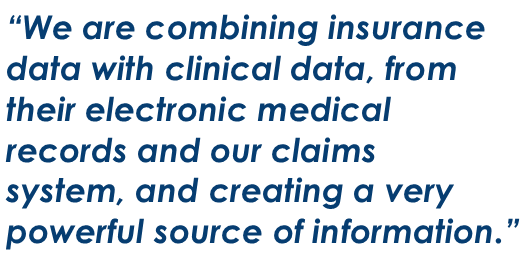
 Launched

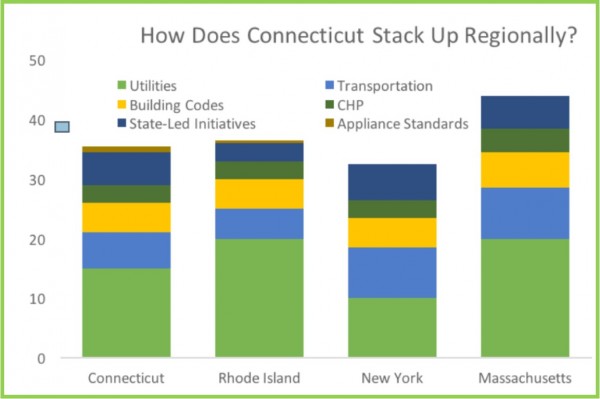
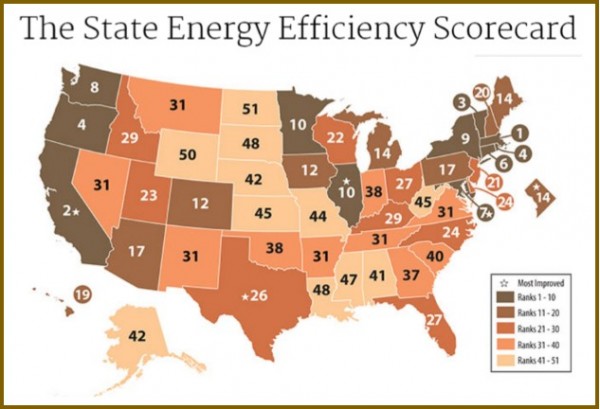 nd compliance efforts, earned 3 points out of 4 for its combined heat and power policies and programs, 5.5 out of 7 points for state-led energy efficiency initiatives, and 1 point out of 2 for appliance standards.
 olar power in Connecticut has grown 221 percent per Capita since 2012, ranking the state 13th in the nation, the report points out. The top solar growth states in the nation, like Connecticut, have adopted renewable energy requirements, strong laws allowing solar customers to sell their excess power to the electric grid, and other policies encouraging growth of the industry, the report indicates. The industry is also adding jobs much faster than the overall economy, employing 1,600 people in Connecticut last year, according to
  ."
."
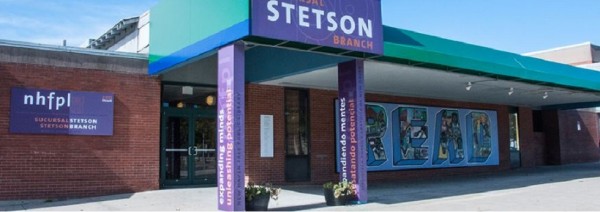
 Diane Brown is branch manager of the New Haven Free Public Library’s Stetson Branch. Known as the “urban librarian” to her patrons, Brown develops valuable programs and services to meet the needs of the underserved residents in a community with high rates of poverty, crime and low literacy levels. Under Brown’s leadership, the library has been transformed into a true community center. She brings residents together by hosting cultural and educational events such as an international “pop up” festival, art exhibits, lectures and health fairs, according to officials. She has been praised for facilitating an afterschool tutoring program for K-8 students and providing opportunities for children and their families to spend time together by establishing history and game nights.
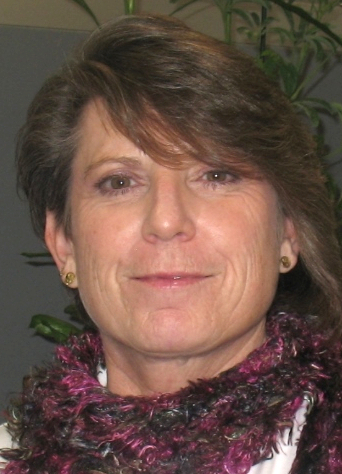 Elizabeth G. Rumery, library director for the Avery Point Campus Library at the University of Connecticut in Groton, has “transformed the library into a welcoming and dynamic place for students by modernizing the facility to meet the needs of 21st century learners.” Officials indicate that she worked with contractors and school administrators on renovating the library, with improvements including new media rooms and collaborative study spaces for students and faculty.
 The librarians join “an esteemed group of award recipients who are recognized as being catalysts for powerful individual and community change.” Only 80 librarians have received the national award since its inception in 2008, including six from Connecticut. In 2012, the recipients were Rachel Hyland, Tunxis Community College Library in Farmington, and Rae Anne Locke, Saugatuck Elementary "Secret Garden" Library in Westport. The 2011 winners included Jennifer O. Keohane, The Simsbury Public Library and Michelle Luhtala, New Canaan High School Library.
 The news came just weeks after it was announced that Laurencin is the recipient of the 2016 Founders Award, the highest honor of The Society For Biomaterials. He will be honored at the 2016 World Biomaterials Congress in Montreal, Canada on May 18, 2016.


 This summer, Shemitz was among those appointed to serve on the state’s Commission on Economic Competitiveness, created by the legislature amidst concerns in the state’s business community about the perceived lack of competitiveness. The Commission is considering steps to improve Connecticut’s employment and business climate including measures to support workforce development and family and economic security. Recommendations are anticipated for legislative action next year.

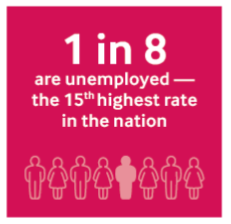 The action plan is spurred by clear concerns: “When young people are not attending school or working, they cannot attain necessary education or work experience, support themselves, save for their future, or contribute to the economy. What future do they face? What future does Fairfield County face?”


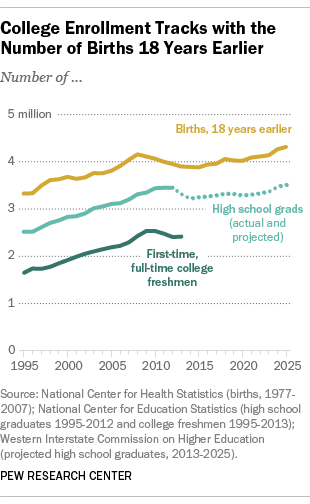
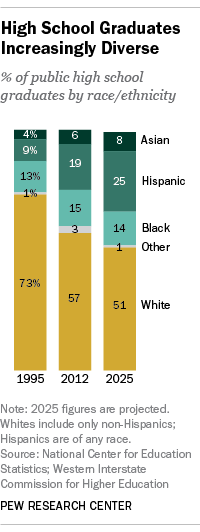
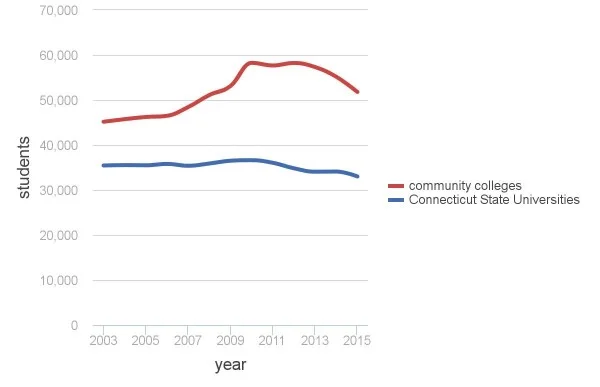


 in 1997. At that time, the college had approximately 2,700 students enrolled and immediately experienced a significant enrollment increase, according to the college. But the peak years now appear to be in the rear view mirror.