
Connecticut Earns A+ in Government Data Transparency
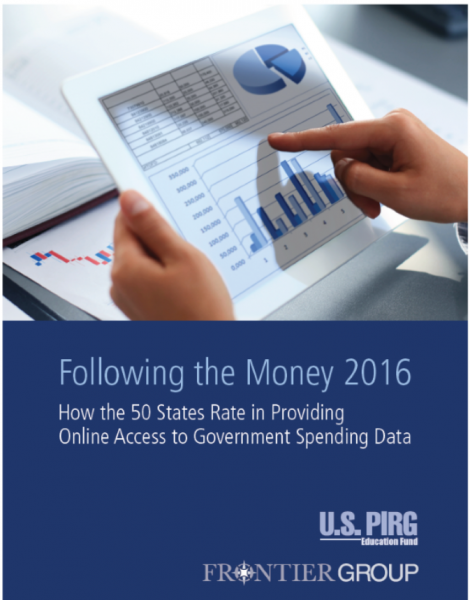
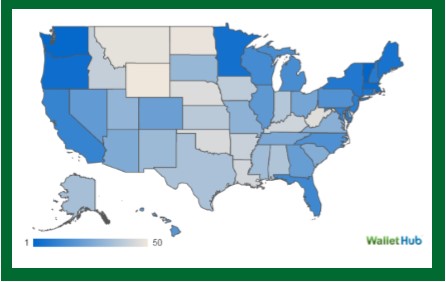
/Connecticut is one of five states providing state residents with the most comprehensive online access to government spending data, according to an analysis by the U.S. Public Interest Research Group (USPIRG). Nationwide, government spending transparency is improving, but many states still lag far behind, according to “Following the Money 2016: How the 50 States Rate in Providing Online Access to Government Spending Data,” the sixth annual report by the organization’s Education Fund. Some states have improved their spending transparency web portals significantly, earning perfect scores in this year’s report, while others are still barely achieving the minimum standards.
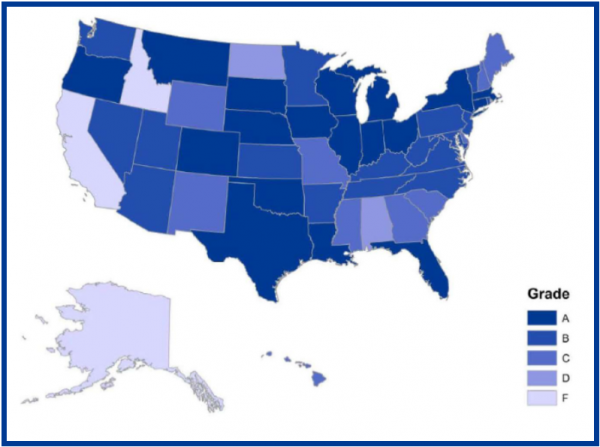
 Based on an inventory of the content and ease-of-use of states' transparency websites, the report assigns each state a grade of “A+” to “F.” The leading states with the most comprehensive transparency websites are Ohio, Michigan, Indiana, Oregon, and Connecticut, with each receiving an A+ grade.
“This A+ is great news – and comes at an important time as Connecticut navigates new fiscal challenges and prickly public policy debates. Facts and truth – not shadowy special interests – should be driving our discussions here at the capitol. The only way to ensure an honest discussion about our financial future is to open government and deliver the truth to the public," said State Comptroller Kevin Lembo. "We are doing everything we can to deliver state financial information in bigger and better ways each year. With a few keystrokes, all of us can find out where state money is going and where it came from. Most recently we have been working to extend that transparency to our quasi-public agencies, as well as towns and cities across the state. We are grateful that ConnPIRG recognized our efforts – and promise that we will treat this grade as a starting point, not a finish line, in making Connecticut the most open and accountable state in the country.”
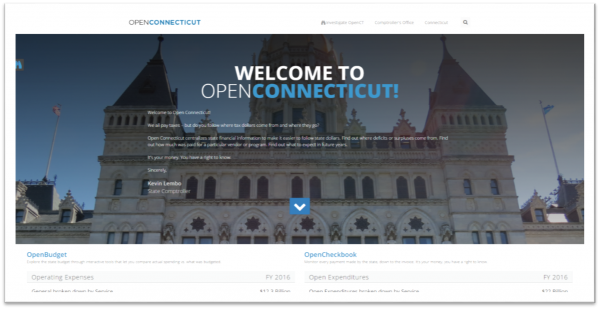
The Comptroller’s Office website providing state government financial data is www.osc.ct.gov/openCT
The report indicates the cost to maintain the website at $18,000, with start-up costs from existing budgetary resources. Among the state programs cited as providing easily accessible data to the public are the Enterprise Zone and Urban Jobs Tax Credit, Film and Digital Media Tax Credits, Jobs Creation Tax Credit, Manufacturing Assistance Act, and Small Business Express programs.
Connecticut’s most significant improvements include the addition of a page that details what data is excluded from the site, allowing citizens to better understand the universe of information the state is providing, according to the state Comptroller's Office. The state also added more information about the projected and actual public benefits of some of its largest subsidy programs. The state could continue to improve its transparency efforts by expanding its site to include spending information from municipalities and more local government bodies, the report noted.
USPIRG officials point out that states that have created or improved their online transparency have typically done so with little upfront cost. Top-flight transparency web portals can save money for taxpayers, while also restoring public confidence in government and preventing misspending and pay-to-play contracts.
“Citizens deserve to be able to follow their tax dollars, from the most minor state expenditures to the most major development subsidies,” said Michelle Surka, program associate with U.S. Public Interest Research Group Education Fund. “This year, it’s clear that several states made a commitment to meeting the high national standards for spending transparency. Other states continue to lag behind, unable to overcome some of the barriers that prevent comprehensive spending disclosures.”
“States’ online spending transparency efforts are paying off in better informed citizens and a more efficient government,” said Elizabeth Ridlington, policy analyst with Frontier Group and co-author of the report. “Our research found that top-ranked states have been making steady improvements to their transparency websites over the years, giving citizens in most states unprecedented access to information on where their tax money goes.”
While many states cont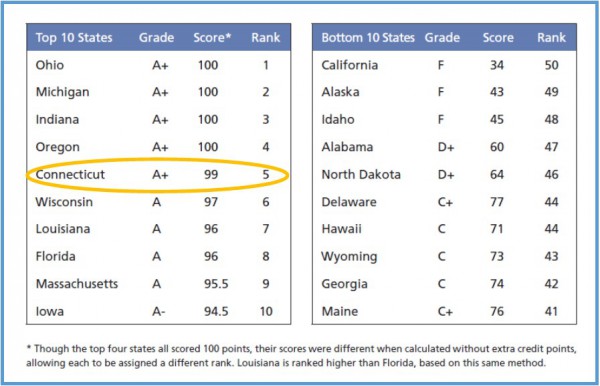 inue to improve, the states that most distinguished themselves as leaders in spending transparency are those that provide access to types of expenditures that otherwise receive little public scrutiny. Only 11 states- including Connecticut - provide checkbook-level information that includes the recipients of each of the state’s most important subsidy programs.
This year, most states have met basic standards for providing online access to information about state contracting and an increasing number provide information about economic development subsidies and off-budget agencies. Several states have made substantive upgrades to their transparency sites or added new features that give the public unprecedented ability to monitor how their government allocates resources. Of particular note, as highlighted in the report:
- Michigan streamlined its transparency data and added functionality to its transparency website, including allowing bulk download of all its data.
- West Virginia launched a new site with data on projected and actual public benefits of the state’s major subsidy programs.
- Utah and Arizona have joined several other states in adding data from localities, municipalities and school districts to their state transparency portals. This provides an inexpensive way to improve the transparency of the spending that often affects ordinary citizens most directly.
- Indiana, Minnesota, Nebraska, New Hampshire and Washington now prominently feature data on quasi-public entities with web pages dedicated solely to these agencies, boards, authorities and commissions.
State spending transparency is a non-partisan issue, USPIRG stressed. The report compared transparency scores against party control of Governors’ offices and the state legislatures. For neither measure did higher levels of spending transparency correspond to Republican or Democratic control, according to the report.

 impact of a seller’s race in a field experiment involving baseball card auctions on eBay. The results, according to the researchers, left little doubt.

 e first total was larger.”
 e Gordon Bradford Tweedy Professor at Yale Law School and the Director of the Law and Economics Program at the National Bureau of Economic Research (NBER) with headquarters in Cambridge, Massachusetts.

 Stamford has a public park named in his honor, recalling that Robinson represented tolerance, educational opportunity, and the confidence that inspires personal achievement and success. A life-size bronze statue of Jackie Robinson with an engraved base bearing the words “COURAGE,” “CONFIDENCE,” AND “PERSEVERANCE” stands in the park located on West Main Street, the gateway to downtown Stamford.
 “It brought back very personal memories of my father talking about his trip to Cuba in 1947, when the Brooklyn Dodgers trained in Havana. At the time, dad was a member of the Dodgers' farm team, the Montreal Royals. Branch Rickey arranged for him to fly to Cuba for an exhibition game, just a couple of months before he broke down baseball's color barrier in the United States. To me, this connection to my father almost brought me to tears. I was watching a baseball game in the same stadium nearly 70 years later.”

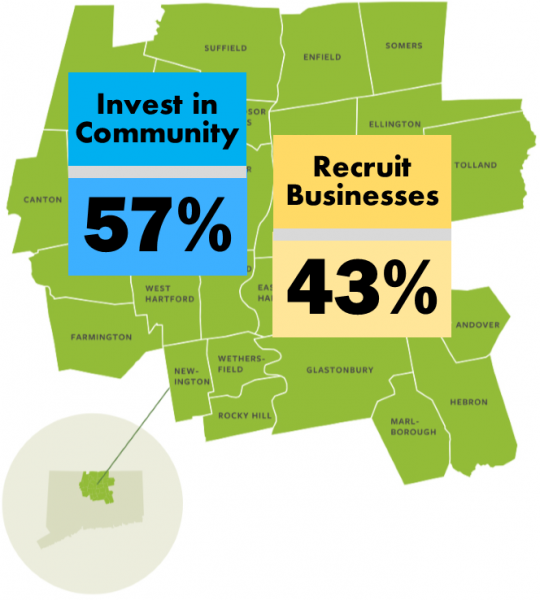 The data from the survey reflect a difference of opinion among older residents of the region. Individuals over age 46 took the opposite view from younger residents, with a majority expressing a preference for spending skewed toward recruiting companies. The reversal was dramatic, with two-thirds of those age 36-45 preferring investing in communities, by a margin of 67%-33%, and individuals age 46-55 expressing a preference for resources to be aimed at recruiting companies, with two-thirds holding the opposite view, 63%-38%.

 Chinese made up 35 percent of the 92,000 foreign secondary school students in the United States in 2015, according to the US Department of Homeland Security, by far the largest group studying here, the Boston Globe


 In Connecticut, a person is guilty of trafficking in persons when such person compels or induces another person to engage in sexual contact or provide labor or services by means of force, threat of force, fraud or coercion. Anyone under the age of 18 engaged in commercial sexual exploitation is deemed a victim of domestic minor sex trafficking irrespective of the use of force, threat of force, fraud or coercion.