Mattress Recycling Has Solid First Year in Connecticut
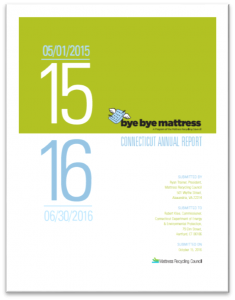
/Saying bye-bye to a used mattress in Connecticut has changed dramatically during the past year-and-a-half, as Connecticut became one of only three states in the nation to institute a statewide mattress recycling program. The initiative, approved by the state legislature two years ago and underway since May 2015, has gained a solid foothold here, according to its first annual report.  The Mattress Recycling Council (MRC), a non-profit organization established by the mattress industry that created and manages the program in Connecticut, California and Rhode Island, presented its inaugural Annual Report of the Connecticut Bye Bye Mattress Program to Connecticut municipal leaders and state regulators last month. The report summarized the Program’s performance from its inception through the end of the state’s 2016 fiscal year (June 30).
The Connecticut program has “exceeded, met or is on pace to achieve nearly all benchmarks” set in its plan, which was approved by the state in 2014. Highlights include:
- Recycled 150,000 mattresses.
- Recovered more than 2,800 tons of steel, foam and other materials that will be made into new useful products.
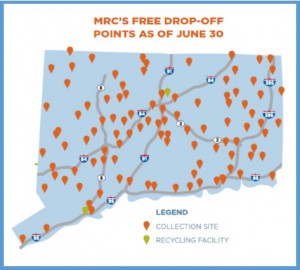
- Expanded the collection network to 101 free drop-off sites throughout the state.
 “We are pleased with the program’s productive start and will continue to work with city leaders, businesses and the state to improve the program, expand the number of communities served, and increase the volume of mattresses recycled,” said Ryan Trainer, President of MRC and the International Sleep Products Association.
Bye Bye Mattress allows Connecticut residents to drop-off used mattresses at participating collection sites, collection events and recycling facilities free of charge. This collection network is made possible by the $9 recycling fee that Connecticut consumers pay when they buy a new mattress or box spring. The fee provides for collection containers, transporting the discarded mattresses and recycling costs.
Industry-led recycling programs like Bye Bye Mattress will play an important part in helping Connecticut reach its goal to divert 60 percent of materials from disposal by 2024, officials indicated in the 59-page report.
“We applaud the mattress industry for developing a successful statewide program under the mattress stewardship law that has already recycled thousands of mattresses in an environmentally sound manner,” said Robert Klee, Commissioner of Connecticut’s Department of Energy and Environmental Protection. “This program has created jobs, recovered vast quantities of resources to be reused, saved municipalities $1.5 million in disposal costs and given residents an easy way to recycle a cumbersome item.”
MRC is also working with more than 130 other public and private entities, including mattress retailers, hotels, military bases, universities and healthcare facilities in Connecticut to divert their discarded mattresses from the solid waste stream. The MRC website indicates that the organization continues to enroll interested municipal transfer stations in the program and work with those interested in hosting recycling events.
Connecticut’s Public Act 13-42 (enacted in 2013 and amended in 2014) required the mattress industry to create a statewide recycling program for mattresses discarded in the state. Connecticut residents can find their nearest participating collection site, collection event or recycling facility at www.ByeByeMattress.com.
 explains. “Anyone can become a victim of abuse, but vulnerable older Americans — especially those who are women, have disabilities and rely on others for care or other type of assistance — are among the easiest targets for such misconduct.”
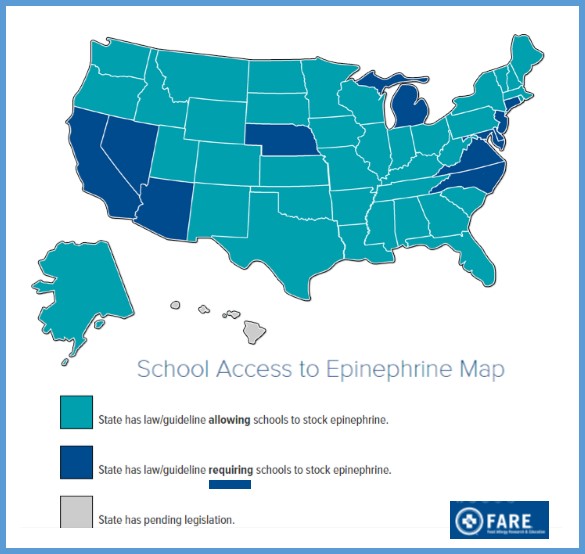
 In 2015 the legislature considered, but did not pass, a bill requiring the insurance commissioner to study and report on health insurance coverage of and out-of-pocket expenses for EpiPens, according to the OLR report. The 2014 legislation requires (a) schools to designate and train nonmedical staff to administer EpiPens to students having allergic reactions who were not previously known to have serious allergies and (b) the public health and education departments to jointly develop an annual training program for emergency EpiPen administration.
 Quality of life in the United States is heavily dependent on financial status, the survey summary points out. As a consequence, the nation’s best states to live in often report very high incomes. With a median household income of $71,346 a year, fifth highest of all states, Connecticut is the second
 the right of abused and neglected children and children with disabilities. She was appointed by Governor Dannel Malloy to serve as Connecticut's Child Advocate on August 1, 2013. As Child Advocate, she sets priority reviews for the OCA, manages office operations, and publishes vital information regarding the well-being of children and recommendations for system reform. Prior to this appointment, she served for several years as the Director of the Child Abuse Project at the Center for Children's Advocacy in Hartford.
 his important issue and help animals by organizing fundraisers in Connecticut communities. The announcement of her election, after more than 4,000 ballots were cast earlier this month by 5th graders, was made at her school in Milford. She was one of seven candidates on the ballot; only 5th graders were eligible to vote.
 many others,” Stuart added.


 ACM comprises one of the largest, most experienced concentrations of world-class aerospace companies, the world's AEROSPACE ALLEY! ® The organization points out that member firms grew up where aerospace was born. Today, precision components manufacturer in the state take to the skies every day, in every corner of the globe, as they have since the inception of powered flight.

 The STSI's 107 individual indicators are sorted into five composites: Research and Development Inputs, Risk Capital and Entrepreneurial Infrastructure, Human Capital Investment, Technology and Science Workforce, and Technology Concentration and Dynamism. The report indicated that "Connecticut showed major improvement in the Technology Concentration and Dynamism index, going from 21st to 10th. This dramatic rise marks one of the larger overall changes on this index. While modest increases were seen in the Research and Development Inputs index and Human Capital Investment index, these two indices have a much heavier focus on stock measures, and Connecticut’s aerospace and defense sectors help anchor the state’s performance in these areas."
 In the Human Capital Investment composite index, Connecticut ranked third, as it did in 2014 and 2012, after ranking fifth in 2010. In Research & Development, Connecticut placed eighth, its second highest finish, after ranking tenth, seventh and seventh in previous indexes. Connecticut ranked 11th in Risk Capital and Entrepreneurial Infrastructure, up from 14th two years ago, but not as high as sixth place in 2012 and third in 2010.