
Bringing Science to the Masses, Total Eclipse and So Much More
/You may have heard, that the first total solar eclipse visible from the United States in 26 years will be seen in much of the country on August 21. While Connecticut is not in the prime viewing path, interest and anticipation is rising even in the Land of Steady Habits due to the unusual nature of the occurrence.
 For the uninitiated, an article appearing in the latest on-line edition of the website Massive explains that “During a total solar eclipse, the moon covers the bright disk of the sun. If the sun were a perfect sphere, it would disappear entirely, plunging the viewer temporarily into full darkness. But beyond the surface of the sun extends the corona. Full of beautiful loops and streamers, the corona is normally invisible against the blinding light of the full sun.”

The article was written by Jesse Feddersen, a 4th year PhD Candidate in the Department of Astronomy at Yale University. In addition to his academic research and teaching work, for the past two years he has been presenting live planetarium shows to the public at Yale University's Leitner Family Observatory.
Feddersen notes that “because of its path over populated areas, the August eclipse will likely be the most viewed in history. Two teams plan to exploit this fact to coordinate observations across the United States,” in order to “combine images from 60 telescopes along the track of the eclipse.” It can best be seen along a path from Oregon to South Carolina.
“The continuous view of the darkened Sun,” he adds, “will create a data set for researchers to study.”
It is precisely that connection – between regular citizens and scientific experts – that is behind the launch of the Massive website late last year. As the founders describe their mission, “we work directly with researchers to transform papers in their field from complex, technical documents into stories that anyone – including other scientists – can understand and enjoy. We focus on eliminating jargon, adding storytelling and perspective, and teasing out the big questions the research is asking without sacrificing depth.”
 Put most succinctly, the website headlines, “Everyone should have access to science.” Towards that end, they’re in the midst of enlisting “a group of scientists dedicated to making science accessible to everyone,” by forming the “Massive Science Consortium.”
Recent articles include contributions from a molecular pharmacologist, a genetics expert, a biochemist, and a botanist. The site offers free subscriptions to its newsletter, which highlights contributions from scientists in a range of fields worldwide.
The three founders – Nadja Oertelt, Gabe Stein and Allan Lasser – have added a veteran journalist who got her start in Connecticut to work directly with scientists in editing their work for a mainstream audience. Kira Goldenberg, who had stints with the Hartford Courant and New London Day earlier in her career, has more recently been a leading staffer at The Guardian and Columbia Journalism Review. She joins Massive as Editorial Director, energized by the potential of the fledgling venture.
“I’ve helped academics and reporters edit and hone their writing for the public as an editor at The Guardian and at the Columbia Journalism Review. I love working with people to make their writing the best it can possibly be,” she says on the Massive website.
Massive is a for-profit company funded by Bloomberg Beta, General Electric, and individual investors. The founders explain the motivation that inspired the venture: “We believe the world would be a better place if more people understood and trusted science, and used scientific reasoning to make sense of their world. With notable exceptions, we think that most of today’s science journalism and science communication efforts fall short of advancing this goal.”
The Massive team aims to combine “the storytelling and audience development techniques of a media company with the accuracy and authority of professional scientists and science communicators.”
That the first total solar eclipse visible in the U.S. in a quarter-century happens to occur during their first year of operations was, although not unexpected, largely coincidental.
 iven the nation’s key public health target of limiting added sugars in children’s diets, flavored milk has come under scrutiny in the context of school nutrition, UConn Today recently reported.

 Among adults who admit to not always using safety belts in the back seat, 4 out of 5 surveyed say short trips or traveling by taxi or ride-hailing service are times they don't bother to use the belt. Nearly 40 percent of people surveyed said they sometimes don't buckle up in the rear seat because there is no law requiring it. If there were such a law, 60 percent of respondents said it would convince them to use belts in the back seat. A greater percentage said they would be more likely to buckle up if the driver could get pulled over because someone in the back wasn't buckled.

 The Governors Highway Safety Association issued a report in 2015, "Unbuckled In Back," analyzing the difference in highway fatalities between states that require rear seat passengers to buckle up and those that do not, the Hartford Courant reported. At a Connecticut legislative hearing that year, the paper noted, state Transportation Commissioner James Redeker said that everyone in a passenger vehicle should buckle up, saying statistics show "people become projectiles because they're not strapped in a safety device."
 A pilot partnership between the AGP and CCSU establishes a new base of operations for the

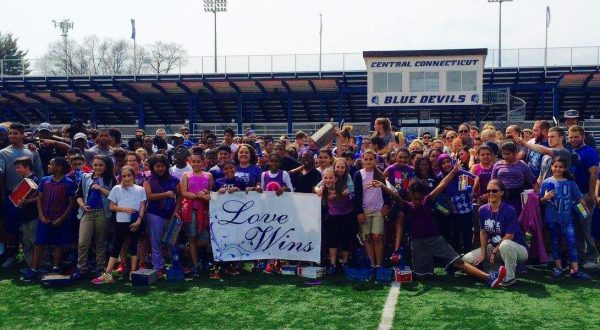 Márquez-Greene will also work with the School of Education & Professional Studies to establish a Center for Social & Emotional Learning to provide education, training, and research to the campus, community, and state. Other expected collaborations include the training of CCSU undergraduate and graduate students in the Marriage & Family Therapy, Psychology, and Counseling programs in the use of social-emotional curriculum in the classroom.
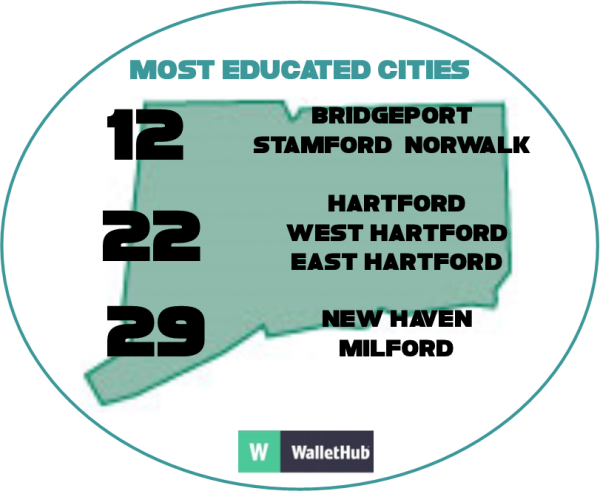
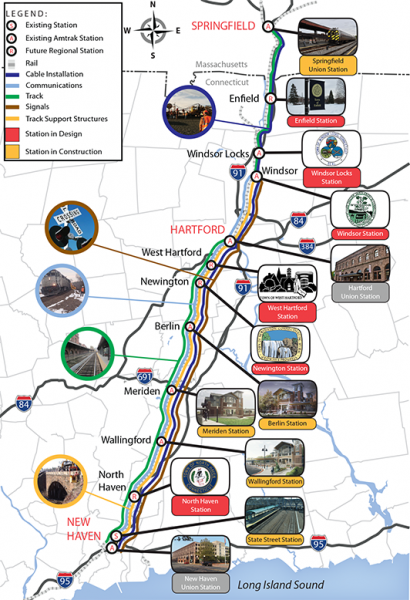 The Hartford Line will act as a regional link with connections to existing rail services, including Metro-North, Shoreline East, and Amtrak Acela high-speed rail services on both the New Haven Line to New York and on the Northeast Corridor to New London and Boston. There will also be direct bus connections to the Bradley Airport Flyer and to CTfastrak. With a heightened level of direct and connecting service linking the region, the hope is that towns along the future Hartford Line will become magnets for growth – ideal places to live and to relocate businesses that depend on regional markets and travel.
 Also, very much a part of the strengthening transportation options with the potential to spur economic development is
 Program organizers point out that “young children are naturally curious and full of life. Provided a supportive environment, they will joyfully splash, build and smash, pretend, sing, and dance.” While they are having a ton of fun, they are also making sense of the world and learning through exploration, experimentation and social interaction.


 Manchester’s Supervisor of Student Development, Karen Gray, says it became “obvious how developmentally appropriate it is for children to play, and to have fun, and to smile and to laugh.” As they did, teachers would “see them develop cognitively," although "they are not necessarily aware of the skills that they are actually developing.”


 A sweeping mandate for these manufacturers to cover all labor and replacement costs associated with warranty claims would have led to higher prices, they explain, along with weakened consumer protections, and fewer products available to consumers. The legislation would have also required manufacturers to address warranty claims within 30 days’ receipt of a claim – which industry officials say would have been “an unreasonable timeframe” to comply with.

 In Connecticut, April 5, 2017, was the Connecticut SAT School Day administration. SAT scores are used by the Connecticut State Department of Education (CSDE) for school and district accountability purposes, state Education Commissioner Diana Wentzell explained in a
 Hyman found that, prior to the policy, a substantial number of Michigan’s low-income students didn’t take the ACT even though they would have scored at or above the standard for college readiness. That might been due to financial or logistical barriers, like the cost of the test (between $30 and $50) or difficulties traveling to an exam center on a Saturday. (Both the SAT and ACT offer fee waivers to low-income students, but the study notes that the waivers are underused.)
 search has helped establish the field of quantum computation with solid-state devices. The Connecticut Medal of Science is the state’s highest honor for scientific achievement in fields crucial to Connecticut’s economic competiveness and social well-being.