Constitution Day in the Constitution State - Celebrate?
/Constitution Day, celebrated this year on Sunday, is a national holiday to commemorate the signing of the U.S. Constitution on Sept. 17, 1787. Connecticut is known as the Constitution State, but that designation has its roots more than a century earlier.
Congress first established “Constitution Week” in 1956. It became a national holiday 44 years later when Sen. Robert Byrd (D-W.V.) introduced an amendment to the omnibus spending bill that made the observance a national holiday, and to require that all schools receiving federal funding, as well as all federal agencies, to provide relevant programming to celebrate the Constitution.
Written in 1787, ratified in 1788, and in operation since 1789, the United States Constitution is the world's longest surviving written charter of government, according to the U.S. Senate website. Its first three words –– "We the People" –– affirm that the government of the United States exists to serve its citizens.
The National Constitution Center (NCC) devotes space on its website to the question of whether the "constitution" celebrated by Connecticut really a constitution?
The site explains that although the Connecticut Compromise at the 1787 convention in Philadelphia was a critical part of the process of agreeing to and ratifying the U.S. Constitution, Connecticut celebrates – and its nickname is derived - from an event that happened in 1639.
On January 14, 1639 (in the old Julian calendar), the residents of three Connecticut towns - Wethersfield and Hartford - approved a list of rules for running local government called the Fundamental  Orders. Most historians agree the Fundamental Orders are significant, but the state of Connecticut decided in 1959 to call itself the Constitution State based on the premise that the Fundamental Orders were the first constitution in North America.
The Fundamental Orders document has a structure that is similar to a constitution, the NCC explains. There is a preamble and a list of powers about local government, taxation and voting rights.
Prior to the legislature determining in 1959 that Connecticut would be known by the official nickname of the Constitution State, it was known as the Nutmeg State. Before that, in the post-Revolutionary War era, Connecticut was known as the Provisions State.
Officially, the state is not known as the Land of Steady Habits, but that too is commonly used. A Dictionary of Americanisms on Historical Principles, published in1951, defines “Land of Steady Habits” as “1. Connecticut, applied in allusion to the strict morals of its inhabitants.”


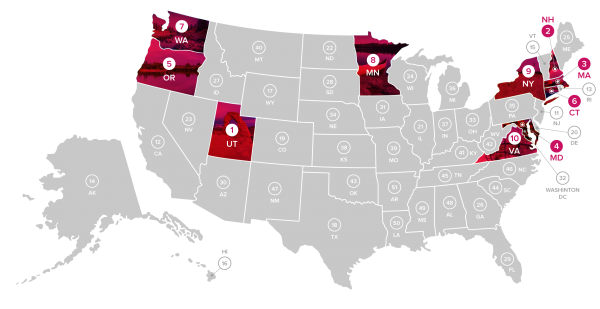
 The analysis points out that a main reason why people don’t have access to broadband internet is due to a lack of income. Cited is a Pew Research poll that found 23 percent of people making under $30,000 per year don’t use the internet, possibly because of the high price for something they don’t consider a basic need. Most rural schools across the country still lack access to fiber and pay more than twice as much for bandwidth.

 There are a series of steps that your body goes through to develop immunity through vaccination, the


 In Stamford, CHDI assisted in training school social workers and psychologists to deliver

 The National Institutes of Health estimates that between six to 17 percent of school-age children have some form of dyslexia, although not all of those students have been identified by their schools.


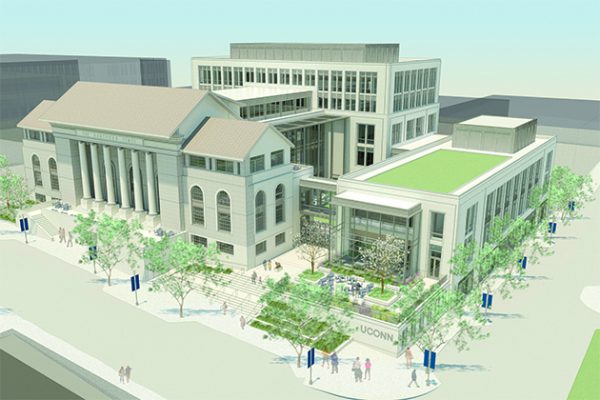 In Hartford, the university intends to “interweave top-tier academic programs with the vitality and unique educational and service opportunities offered by Connecticut’s capital city.” The campus – at a cost of $140 million - is anchored by the historic former Hartford Times building as part of a neighborhood campus that includes nearby cultural institutions and state and city government offices, including Hartford Public Library, which will house 12,000 square feet of UConn classrooms, a library collection, and study areas.
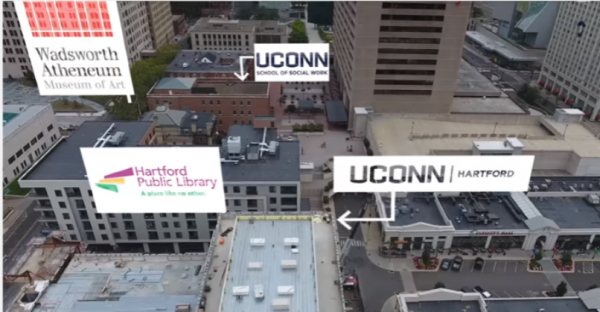 go, the Board of Trustees voted to extend the Graduate Business Learning Center’s (GBLC) lease at 100 Constitution Plaza, and to add two additional floors to the existing space, allocating a total of six floors of classroom, meeting and office space.
 The building is six stories tall and will have 116 apartment units. the school's website explains. The maximum occupancy of the building is approximately 350 students, but because some of the bedrooms will be single occupancy, the target occupancy is 290 students. Plans call for 100 designated parking spaces for students will be available for a small additional charge.

 The report noted that “Medicaid beneficiaries are prescribed opioids at twice the rate of the rest of the population, and research indicates they are at 3 to 6 times greater risk of a fatal overdose.” The report also observed the impact of the epidemic on the nation’s prison population: Eighty percent of prisoners have a history of drug abuse; 50 percent are addicted to drugs; 60 to 80 percent of prisoners abusing drugs commit a new crime after release; and approximately 95 percent of addicted prisoners relapse when they’re released, according to National Association of Drug Court Professionals (NADCP) data.