Organizations Focused on Progress for Women and Girls Form Statewide Collective
/It began as a casual conversation between Kate Farrar, Executive Director of the Connecticut Women's Education and Legal Fund (CWEALF) and Sharon Cappetta, Director of Development at The Community Foundation for Women and Girls, during the 2016 United State of Women Summit. Now, it is a full-fledged and far-reaching network aimed at providing support and collaboration for organizations serving women and girls across Connecticut.
The Connecticut Collective for Women and Girls (CCWG), launched last month with more than 20 members and six funders, gathered at Fairfield County’s Community Foundation to celebrate the beginning of the Collective. Members range from Girl Scouts to Planned Parenthood and the Commission on Women, Children and Seniors; the YWCA to The Alliance to End Sexual Violence and Connecticut Women’s Hall of Fame.
The Collective is a supportive network that unifies organizational members, facilitates collaboration, and bolsters their collective power to advance rights and opportunities for women and girls in Connecticut. CWEALF is the initiative's organizer.
“Now is the moment to come together to make progress for women and girls,” said Kate Farrar, Executive Director of CWEALF. “As the state’s leading champion for women and girls, CWEALF is thrilled to convene organizations across the state to increase our impact.”
Organizers say that while many organizations are doing critical work to transform the lives of women and girls in the state, too often, these organizations operate separately, leading to silos. The CCWG aims to “expand our strength as a collective force. It builds on participants’ individual assets with a community network of organizations that uplift and amplify each other’s work. The very act of coming together in this way increases each organization’s impact to advance rights and opportunities for women and girls in Connecticut.”
"Fairfield County’s Community Foundation’s Fund for Women & Girls is pleased to support the newly launched Collective. Collaboration, Diversity and Inclusion are core values of the Community Foundation’s. Through the Collaborative, partner organizations will develop a common language and requisite understanding of what is needed to advance gender equity," said Tricia Hyacinth, Director, Fund for Women & Girls. "Moreover, members, from all regions of the state, currently working independently, will achieve greater impact through their collective efforts." 
“The Community Fund for Women & Girls and The Community Foundation for Greater New Haven are delighted to support the Connecticut Collective for Women and Girls,” said Sharon Cappetta, Director of Development. “This emerging network of committed program providers are already doing great work with women and girls in the state. Together, working collectively, they strengthen their individual organizations and connect to potential partners, as well as bring attention and audiences to the gender implications of public policy in Connecticut. Our communities and our state benefit from targeted investments in nonprofit organizations, especially those who are working directly to advance women and girls.”
Other funders of the Collective are the Aurora Foundation for Women and Girls; The Community Foundation of Eastern Connecticut's Women and Girls’ Fund; the Women’s Fund at Connecticut Community Foundation; and the Main Street Community Foundation's Women & Girls’ Fund. The Connecticut Collective for Women and Girls is guided by the following principles of gender equity, racial justice, LGBTQIA rights, civil rights, disability rights, ending and preventing violence, economic justice, reproductive rights, and immigrants’ rights.

 The paper appears to be the first to document the long-term reach of the role model effect, UConn Today reported. The researchers previously found that having at least one black teacher in elementary school reduced their probability of dropping out by 29 percent for low-income black students – and 39 percent for very low-income black boys.

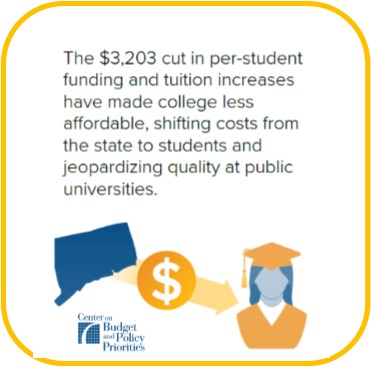
 Overall state funding for public two- and four-year colleges in the school year ending in 2018 was more than $7 billion below its 2008 level, after adjusting for inflation, according to the study.

 The University of Saint Joseph (USJ)


 “Girl Scouts is one of our nation’s most powerful leadership training grounds for young women,” said Openshaw. “We’re thrilled to support Girl Scouts as it seeks to modernize and remain relevant for young women in the new global economy.”
 t have increased as much in comparison to other states, but isn’t the real question, ‘Why is it increasing at all?’” Luis Perez, president and CEO of
 The analysis, by the financial services website WalletHub, was based on 40 key indicators of livability, ranging from housing costs to school-system quality to restaurants per capita. The indicators were grouped into five categories – affordability, economic health, education & health, safety, and quality of life.

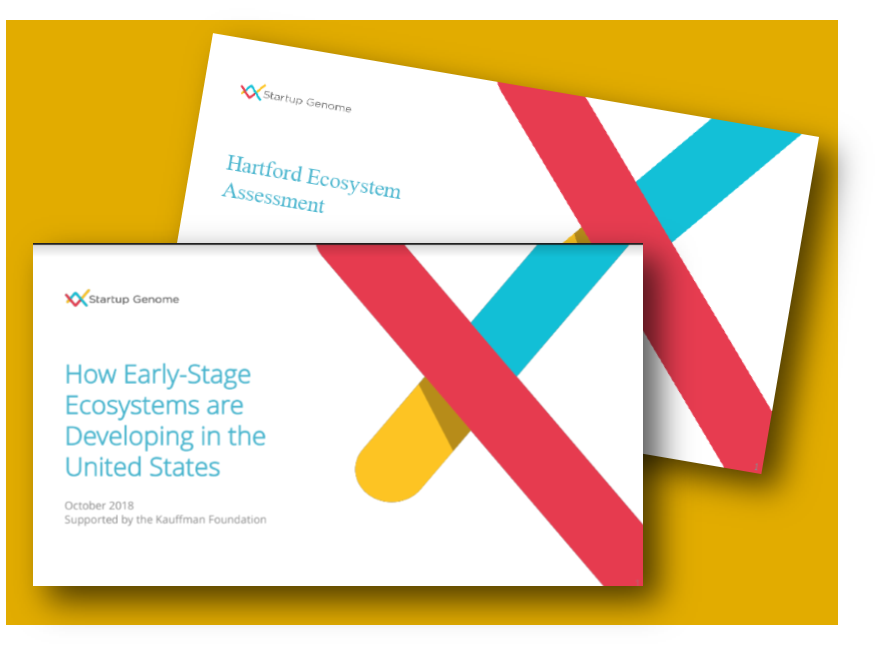

 The comprehensive assessment of Hartford’s ecosystem also noted that “Hartford’s [startup] founders claim to have the right ambition to go global,” concluding that “Hartford’s startups have more potential to strengthen Global Market Reach and Global Connectedness.” In a number of areas analyzed in the assessment, Hartford is seen as having potential to strengthen the local startup community, its reach beyond Hartford, and the demographic of startup teams.

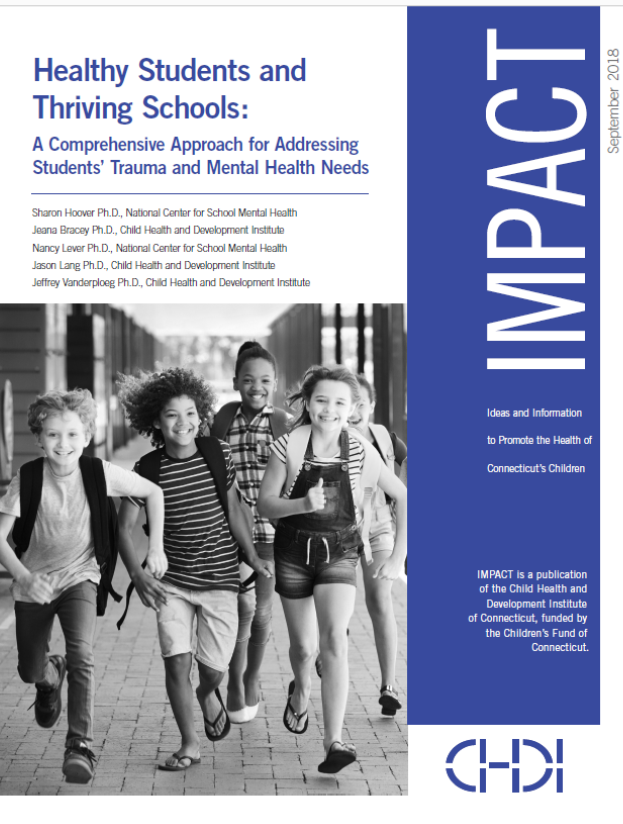 The 40-page report, developed by The Child Health and Development Institute of Connecticut (CHDI), a subsidiary of the Children’s Fund of Connecticut, in partnership with the national Center for School Mental Health at the University of Maryland, provides a framework for policymakers and school districts interested in improving outcomes by addressing the mental health and trauma needs of students. The report indicates that “in a typical classroom of 25 students, approximately five will meet criteria for a mental health disorder but most of them are not receiving appropriate mental health treatment or support. Among those who do access care, approximately 70 percent receive services through their schools.”
 “Approaching student mental health with a comprehensive lens that integrates health promotion, prevention, early intervention, and more intensive treatments leads to better school, student and community outcomes," said Dr. Sharon Hoover, Co-Director of the Center for School Mental Health at the University of Maryland and lead author of the report.