New Haven Is Among Most Walkable Cities in America, Ranks #8 Nationwide

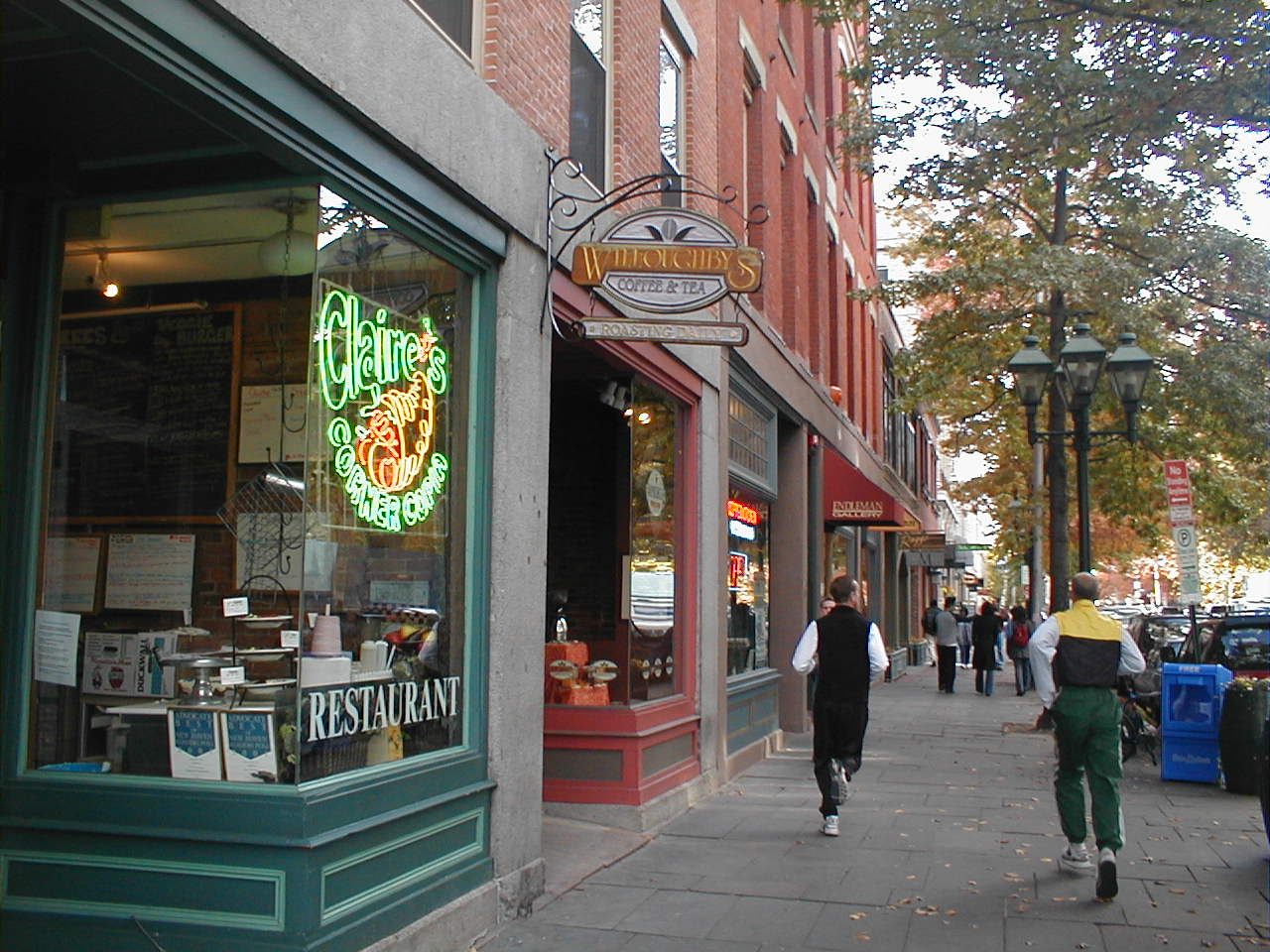
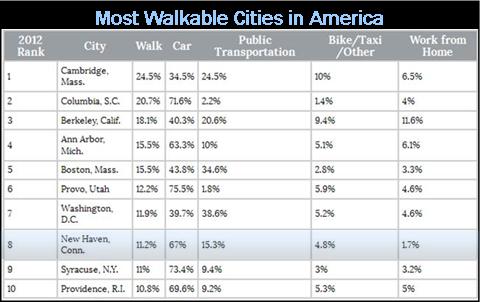
New Haven is one of America’s most walkable cities, with 11.2 percent of commuters walking to work, the 8th highest percentage in the nation, among cities with populations of at least 100,000.  The top 10 list of Most Walkable Cities, published by GOVERNING magazine, notes that many of top communities are in the Northeast, and that communities across the country are stepping up efforts to enhance alternative ways of commuting from home to work. New_Haven_downtown_mapThe top cities were Cambridge, MA (24.5%), Columbia , SC (20.7%), Berkeley, CA (18.1%), Ann Arbor, MI (15.5%), Boston, MA (15.5%), Provo, UT (12.2%), Washington, DC (11.9%), New Haven, CT (11.2%), Syracuse, NY (11%) and Providence, RI (10.8%).OLYMPUS DIGITAL CAMERA

Overall, 67 percent of New Haven commuters use their car, 11.2 percent walk, 4.8 percent bike or use other modes of transportation, and 1.7 percent work from home., according to the data developed from the U.S. Census Bureau's American Communities Survey, which included 300 metropolitan areas.

Nationally, only 2.8 percent of workers primarily commuted by walking last year, a figure that remains mostly unchanged from recent annual estimates, GOVERNING reported.

Among the New Haven walkers, 36 percent are age 16-24, 52 percent are age 25-44, 9 percent are age 45-64 and 2 percent are age 65 or older.  The median age of walk commuters is 27.8, according to the date.  In categorizing individuals, a person’s longest distance traveled is used, so those walking tp transit stations are designated as public transportation commuters, even though a portion of their daily commute involves walking.

Among Connecticut’s most populous cities, in Bridgeport 4.3 percent of commuters walk to work; in Stamford the figure is 4.7 percent, in  Hartford 7.9 percent, and in Waterbury 2.6 percent.

walkable chart

Newtown High School Students Win International Public Health Education Contest

Each year, about 3.5 million children die before their 5th birthday due to preventable diseases, mainly diarrhea and acute respiratory diseases.   According to survey data from the Global School-based Student Health Survey, over 15 percent of schoolchildren in some countries say they rarely or never wash their hands before eating.

Those facts spurred a group of Newtown High School student to action.  They participated in the World Health Organization’s Touching Lives School Talent International Contest.  The onewtown highne-minute educational video they produced was selected by a jury of international experts as the winning entry in the middle/high school age category (age 10-16) and was the only United States-based entry to win its category.

The Newtown Public Health class submitted the video at the start of the school year, and it was selected this fall among the winners in various age categories.  Their video now appears on the website of the Pan American Health Organization, and has begun to appear on other public health websites, including the Connecticut Public Health Association.  It was designed, written and pan americanproduced in the opening weeks of school, just prior to  the mid-September entry deadline.

Experts point out that “just rinsing your hands is not washing.” In order for hands to be clean, soap and water must be used, for at least 20 seconds. Handwashing with soap is the most effective and inexpensivsinke way to prevent diarrheal and acute respiratory infections. Together, they are responsible for the majority of all child deaths, officials report.

Turning handwashing with soap before eating and after using the toilet into an ingrained habit could save more lives than any single vaccine or medical intervention, cutting deaths from diarrhea by almost half and deaths from acute respiratory infections by one-quarter, experts predict.  They also point out that a vast change in handwashing behavior is critical to meeting the Millennium Development Goal of reducing deaths among children under the age of five by two-thirds by 2015.

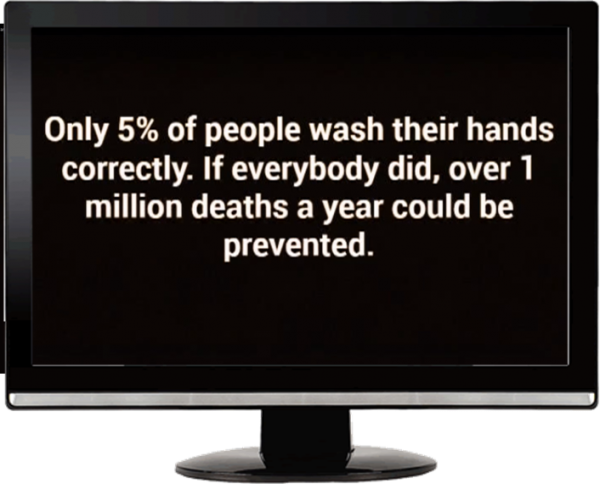
The educational video is preceded with the words “A Message from Newtown High School’s Public Health Class” filling the screen. It then begins with a male student gently singing over a strumming guitar, reminding viewers of the importance of hand-washing in rhyming lyrics, including urgintv monitorg viewers to “always think, 20 seconds at the sink.”  The video then features a variety of voices repeating “20 seconds” in nearly a dozen world languages.  It concludes by suggesting “don’t be part of the problem, be part of the solution.”

The video was edited by Amylee Anyoha.  Students in the Newtown High Public Health Class included Jess Amante, Maddie Erhardt, Enea Musaka, Sarah Craig, Kelly O’Connell, Chris Beaurline, Sydney Allen, Gabby Durkin, Tim Krapf, Amanda Paige, Taylor Strolli and Heather McKeown.

In the 2013 #TouchingLives School Talent International Contest, students could work individually or in a group, and all the countries in the Americas, were eligible and encouraged to develop songs, videos, illustrations, written compositions or any other expression of art promoting hand washing. The contest was, according to organizers, “about giving your personal touch to change the world.”

Pediatrician’s Invention to Stop Pain of Injections Could Improve Public Health

Many parents bring their infants and young children to the doctor for injections and leave muttering “there’s got to be a better way,” their child in tears or traumatized by the shot – or shots – administered to prevent illness and disease.  When Amy Baxter left the pediatrician’s office with her youngster, she resolved to find that better way.

Baxter, who attended Yale University as an undergraduate, Emory Medical School, and is now an emergency pediatrician, pain researcher and inventor in Atlanta, successfully developed  - with financial support from the National Institute of Health – a game-changing  device that combines high frequency, low amplitude vibration and a unique reusable ice pack a combination sAmy Baxter ATLpecifically designed to remove pain from the injection.

By stimulating competing sensations, nerve transmission of sharp pain, itching, or burning is blocked.  Simply put, the shots don’t hurt – and independently verified research indicates that it works.

As inventor of the unique needle pain blocking device - called Buzzy - Baxter founded a company that manufactures and distributes the product nationwide.  It is now in 1,200 children’s and adult hospitals across the country, including Yale-New Haven Hospital, Connecticut Children’s Medical Center, and Lawrence & Memorial Hospital in New London,  and it is being used in Connecticut, with varying frequency, by about 100 physicians in medical practices all across the state, from Ashford to Westport.

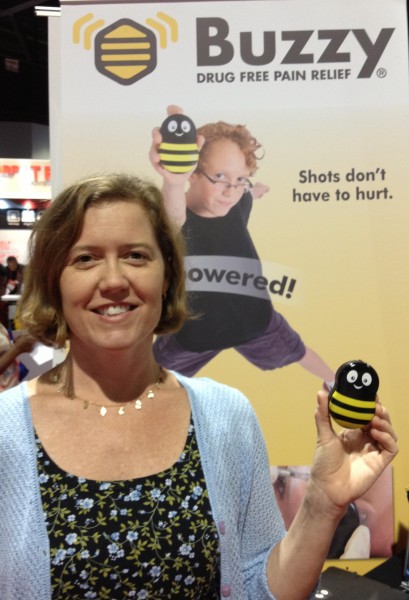
Buzzy is a bee-shaped palm sized device (wings included) that appears as cute as a toy but has a more important mission – to alleviate pain, thus eliminating the onset of fear. Baxter’s company, Georgia-based MMJ Labs, produces the fast, effective solution– which has applications beyond children, and beyond injections, to other ailments and sources of quick, sharp pain.

Since its launch in 2009, Buzzy has amassed more than 36,000 users, $1 million in annual revenue, and rapidly increasing sbuzzy shotales.  Baxter is one of Inc. Magazine’s Top Women in Tech to Watch, and is asked all over the world to educate physicians, nurses, Child Life specialists, and others about the importance of pain management.

“I invented Buzzy after experiencing first-hand the indifference of the healthcare system to the pain and suffering of children. As a pediatric emergency physician and pain researcher, I have learned that pain relief is not just a luxury; it actually improves the outcomes of procedures,” Baxter explains.

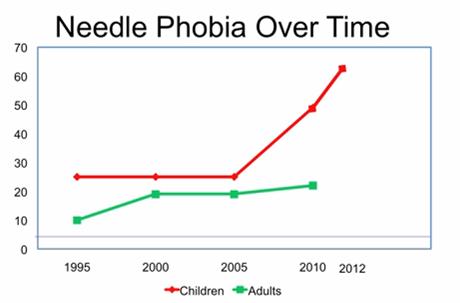
Data indicates that fear of needles is growing among children and the general population, and Baxter says that’s reason for concern.  Especially troubling is the long-term impact of a growing population oneedle phobia over timef needle-averse adults will have on their own health and the health care system.

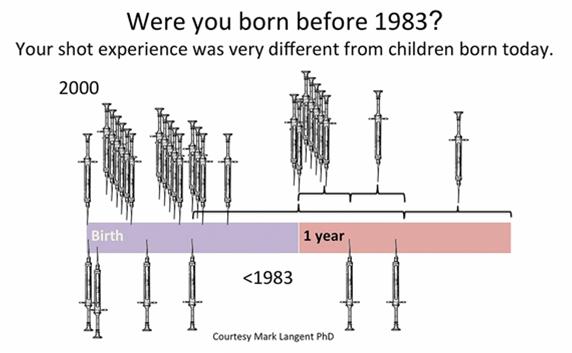
She cites statistics that reflect a dramatic increase in the number and frequency of shots children receive as youngsters – as much as four times higher than 50 years ago – and sometimes as many as four or five shots in a single doctor’s office visit.  And she stresses that pediatricians generally do little or nothing to try to diminish the pain that accompanies those injections.  That, Baxter says, has dramatic and long-lasting effects, on children as well as their parents.   The youngsters come to view the visits as more about pain than health, and the parents begin to have second thoughts about continuing to inflict the pain of needles on their children, often regardless of the potential benefits.

In a TEDx talk in Atlanta last month, Baxter discussed the public health repercussions of having populations whose fear of vaccinations could turn them shotsaway from the very remedies that can improve their individual health and the health of entire populations, warning that “by ignoring pain we’re endangering the future of health care.”

In the talk, titled “Pain, Empathy and Public Health,” Baxter warned that “the number and the way were giving shots is causing needle fear” which may lead to today’s children electing to stay away or delay visits to doctor’s offices as adults – at considerable potential health peril.

In the face of a potential “public health tsunami,” Baxter says “the solution is not to stop vaccinating, it’s to start making the shots better— vaccines shouldn't have to hurt.”

Bullying Presents Ongoing Danger; Efforts to Educate Intensify As Incidents Continue

"From a young age, we teach children to say, 'Sticks and stones will break my bones, but names will never hurt me.' But this isn't true. Bullying hurts so much not because one individual is rejecting us but because we tend to believe that the bully speaks for others that if we are being singled out by the bully, then we are probably unliked and unwanted by most. Otherwise, why would all those others watch the bully tease us rather than stepping in to help support us? Absence of support is taken as a sign of mass rejection.”

That observation, in Social: Why Our Brains Are Wired to Connect, a new book by Matthew D. Lieberman, Director of the UCLA Social Cognitive Neuroscience laboratory, Socialpublished by Random House, provides insight into why bullying has such dramatic impacts, including incidents in Connecticut.

A Hartford Courant review of state education records, published this fall, found more than 1,250 incidents of school bullying were reported to the state from 2005 to 2012. The state's largest cities — Hartford, Bridgeport and New Haven — reported the most incidents, with Hartford reporting 91 verified incidents.

A quarter of the state's high school students — and 35 percent of the state's ninth-graders — report having been bullied or harassed on school property, according to the state Commission on Children. The Connecticut School Health Survey shows that state high school students who report being bullied are more likely to get less sleep, miss school because they feel unsafe, feel depressed, or attempt suicide, the Courant reported.

New Recommendations Anticipated

The state Department of Education plans to make a series of recommendations to the 2014 General Assembly “to address current conditions in Connecticut.”  Those recommendations may include an examination of the terminology regarding bullying and climate in an attempt to signal increased and focused attention on improving school climate in addition to, or rather than, exclusively reacting to bullying incidents, as well as addressing the relationship between the definitions of bullying and harassment and the implications for actions that the district or state should take regarding reported incidents.

The Department prepared “Bullying and Harassment in Connecticut:  A Guide for Parents and Guardians” a year ago, in December2012.

Programs Respond and Teach

The Anti-Defamation League (ADL) is one of the leading organizations providing information and training for individuals who work with students on a daily basis, and anti-bias and anti-bullying programs for students ranging in age from fourth grade through seniors in high school. Such programs include “Names Can Really Hurt Us,” “Step Up!” and “Becoming an Ally.” The Connecticut ADL hosted two parent workshops in Greenwich this fall, just weeks after a 15-year-old Greenwich student took his own life on the first day of school this fall, and friends said bullying may have been a factor in the death.

The programs, which had been planned since the spring, sought to give parents strategies for bullying prevention and intervention. As part of the program, Greenwich High School students who had been trained by ADL talked to those in attendance about their experiences with bullying and cyber-bullying, Greenwadllogoich Time reported. “We offered strategies and resources that the parents found very valuable. It was a unique opportunity for parents and high school students to have an open and honest dialogue about bullying and cyber-bullying issues that face today’s youth,” said Marji Lipshez-Shapiro, ADL Connecticut’s Director of Education.

The ADL programs explore stereotyping, prejudice, discrimination and scapegoating through the lens of students' experiences, and include student testimony, skits, videos and discussion groups. The ADL’s Names Can Really Hurt Us is described as a powerful, student-centered assembly program designed to give a voice to the targets of bullying and prejudice, build empathy in the perpetrators and inspire bystanders to become allies. ADL works with a team of students and school staff who participate in six hours of training and assist ADL in putting on a full-day program consisting of a morning assembly, break-out groups and a closing assembly.  During the morning assembly, student participants share their personal experiences with bullying, name-calling and prejudice in a safe forum. Students then participate in small group discussions led by student-teacher teams. The program culminates with a report of “next step” ideas, generated by students, to help create a welcoming and supportive school community.

Incidents Continue Despite Law

Stamford police arrested a 12-year-old girl and charged her with disorderly conduct for bullying another girl this fall. Police said an investigation began in September when the target's parents contacted police and said another student had repeatedly bullied the 13-year-old at school. When the bullying worsened and the targeted girl made comments about committing suicide, police saidstop bullying they immediately got involved. School administrators in Manchester last month suspended four Manchester High School students suspected of creating and posting degrading descriptions of female students, The Hartford Courant reported.

In Connecticut, the state legislature unanimously passed an anti-bullying law in 2011 that speeds school response, expands staff training, makes all school employees mandated reporters of bullying, addresses cyber bullying and launches statewide school climate assessments.  Under the state legislation, schools must report acts of bullying to the state. The state's definition of bullying includes "the repeated use by one or more students of communication, a gesture or a physical act directed at or referring to another student in the same district that causes physical or emotional harm or fear of such harm."

A 2011 U.S. Department of Justice survey shows that 54 percent of Asian-American teenagers, 38.4 percent of black students and 34.3 percent of Hispanics reported being bullied in the classroom. The survey found that 31.3 percent of white students reported being bullied.

In September, Michelle Pincince, Project Director of the Connecticut ADL’s A World of Difference Institute met with about 25 school resource officers from throughout Connecticut. The program, which took place at Redding Elementary School, was organized by Redding Police Chief Doug Fuchs, according to published reports.  A school resource officer is a law enforcement officer who is assigned to a school in his town, and who protects the students in the school and works to promote positive relationships between students and law enforcement. ADL runs 200 education programs and reaches over 20,000 individuals in Connecticut annually.  Since the school year began this fall, 31 Connecticut schools have participated in ADL programs. 

Nation of Coffee Drinkers, Across Every Demographic

Thanksgiving may be all about turkey, but odds are that most people around the table will wash it down with a cup of coffee.  According to the latest National Coffee Drinking Trends (NCDT) market research study, 63 percent of adults age 25-39 report drinking coffee every day, an increase of five percent from 2012 and a sizable jump from 44 percent who reported drinking coffee daily during 2010.  The study also found that just over 83 percent of U.S. adults drink coffee, and those who drink coffee at least once per week grew slightly to 75 percent of the population.

Coffee drinkers outnumber tea drinkers in the U.S.: 183 million coffee drinkers to 173.5 million tea drinkers.

coffeeYoung people are drinking more coffee than in recent years, according to the data compiled by the National Coffee Association:  41 percent of 18-24 year olds are drinking coffee each day —up from the 31 percent of this age group who said they had a daily cup of coffee during 2010. Overall daily consumption of coffee among those 60+ rose to 76 percent from 71 percent last year, and for those 40-59 to 69 percent from 65 percent in 2012.

Most adult coffee drinkers said their lifelong habit began during their teenage years. In fact, 54 percent said they began drinking coffee between 13 and 19.  Another 22 percent reported their coffee cravings started between the ages of 20 and 24. This means that 76 percent of adult coffee drinkers began drinking coffee by the time they were 24, the report pointed out.

Analysts indicate that U.S. Coffee consumption is expected to increase through 2015 at an average annual rate of 2.7 percent, while tea consumption is expected to increase through 2015 at an average annual rate of 3.1 percent, the organization reported.

In a breakdown of ethnic groups, tncdtCoverWEB_SMALL_FINALhe National Coffee Association data indicates that 76 percent of adult Hispanic-Americans said they drank coffee yesterday, 13 percentage points ahead of the total population. By comparison, 47 percent of African-Americans and 64 percent of Caucasian-Americans said they drank coffee yesterday.

With holiday gift giving now in full swing, the data regarding single-cup brewing systems is of note.  The data, from earlier this year, indicates that 13 percent of the U.S. population drank a coffee made in a single-cup brewer yesterday - up from just 4 percent in 2010.  That number is expected to climb when 2013 year-end numbers are compiled.

So-called “gourmet coffee” is also heating up. Nearly one third (31 percent) of the population say they drink gourmet coffee every day. At the same time, consumption of traditional coffee declined by seven percentage points to 49 percent.

NCA's National Coffee Drinking Trends (NCDT) study has been conducted annually by NCA since 1950. It is the longest available statistical series of consumer drinking patterns in the U.S. The study engaged a nationally representative sample of 2,840 people 18 and older.  The 2014 report is due to be issued early next year. The National Coffee Association of U.S.A, Inc. (NCA), established in 1911, is the leading trade organization for the coffee industry in the United States.

Worldwide consumption of coffee in calendar year 2012 was estimated at around 142 million bags by the International Coffee Organization, an increase of 2.1 percent from 2011.  The U.S. remains the largest consuming country, although consumption in non-traditional markets has increased 50 percent since 2003, according to the report issued in August.

Earlier this year, USA Today reported that a study published online in the journal Mayo Clinic Proceedings, indicated that men younger than 55 who drank more than 28 cups of coffee a week (four cups a day) were 56% more likely to have died from any cause. Women in that age range had a twofold greater risk of dying than other women. The study looked at 43,727 men and women ages 20-87 from 1971 to 2002.  However the publication also noted a 2012 study that found that coffee drinkers ages 50-71 had a lower risk of death than their peers who did not consume coffee. In that study, researchers from the National Cancer Institute, part of the National Institutes of Health, and AARP found that the more coffee consumed, the more a person's death risk declined.

Connecticut Residents Are Extroverts, Neurotic and Open, National Study Finds

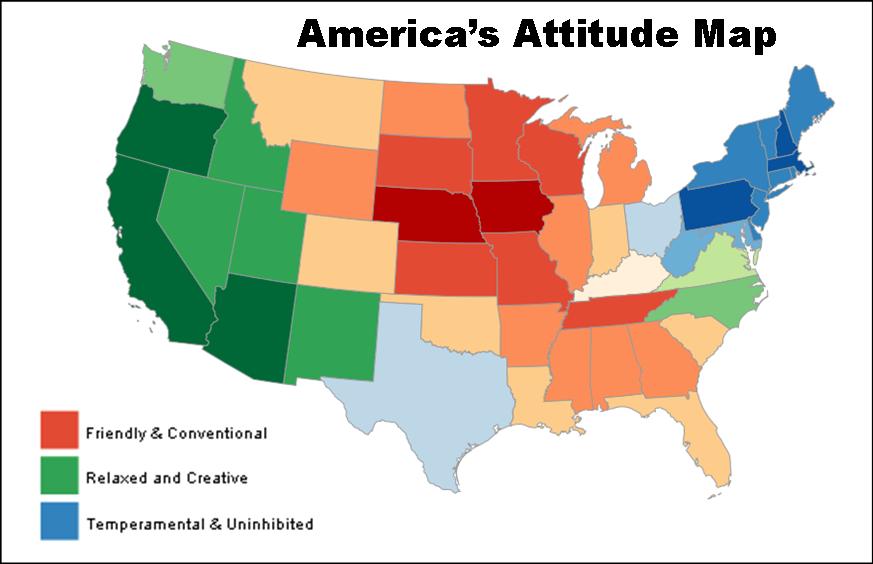
Connecticut ranks 47th among the states in conscientiousness, but #12 in extroversion and #16 in neuroticism, according to a new study published in a scientific journal and reported in TIME magazine.  Overall the state falls into the “temperamental and uninhibited” category, as does much of the Northeast, led by Vermont, Massachusetts and Pennsylvania.

Using personality test data from over one million people compiled over a decade, researchers identified three distinct personality regions in the country, and the degree to which each state reflected those characteristics.  The study was conducted by a multinational team of researchers led by psychologist and American expatriate Jason Rentfrow of the University of Cambridge in Great Britain.  big 5

The study, which maps the American mood state-by state, found that West Virginia is the most neurotic state, Utah is the most agreeable (Washington D.C. – not surprisingly – is the least agreeable) and the Wisconsin has the country's most extroverted residents. The most conscientious state in the nation?  That would be South Carolina.

The Connecticut Scoreboard indicates that state residents are above the national average in three characteristics - extroversion, neuroticism and openness, but lag in agreeableness and conscientiousness. (rank among states in parentheses; a score of 50 is the national average in each category:

  • Extroversion (12)  57.6
  • Neuroticism (16)  53.4
  • Openness (21)  53.9
  • Agreeableness (43)  38.6
  • Conscientiousness (47)  34.2

(sample size was 17,769)psp-150

The study, published in the Journal of Personality and Social Psychology, spanned 13 years and including nearly 1.6 million survey respondents from the 48 contiguous states and Washington, D.C.. (Alaska and Hawaii were excluded because not enough people responded to the researchers’ questionnaires.)

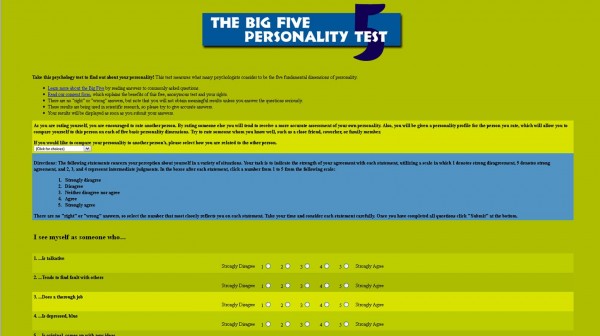
The subjects, recruited via websites and advertisements in the academic community as well as through platforms like Facebook, were asked to take one of three different personality surveys, though the most relevant one was what’s known as the Big Five Inventory, TIME reported. The survey measures personality along five different spectra: Openness, Conscientiousness, Extroversion, Agreeableness and Neuroticism.

(If you’d like to take the test, it is available online from TIME.)

Each of those categories is defined by more-specific personality descriptors, such as curiosity and a preference for novelty (openness); self-discipline and dependability (conscientiousness); sociability and Picture1gregariousness (extroversion); compassion and cooperativeness (agreeableness); and anxiety and anger (neuroticism). The inventory gets at the precise mix of those qualities in any one person by asking subjects to respond on a 1-to-5 scale, from strongly disagree to strongly agree, with 44 varied statements.

When the returns were tallied, TIME reported, the country broke down into three macro regions: New England and the Mid-Atlantic states, which the researchers termed “temperamental and uninhibited”; the South and Midwest, which were labeled “friendly and conventional”; and the West Coast, Rocky Mountains and Sun Belt, described as “relaxed and creative.”

One Month, Many Causes: Health & Wellness Lead the Way in November

If supporting a cause – whether with time, energy or resources - is on your to-do list, November is a great month to start if you’d like to focus on health and wellness efforts.

November is American Diabetes Month (American Diabetes Association), Diabetic Eye Disease Month (Prevent Blindness America), National Alzheimer’s Disease Awareness Month (Alzheimer’s Disease and Related Disorders Association) and National Epilepsy Awareness Month (Epilepsy Foundation of America).  In addition, it is National Child Mental Health Month, National Family Caregivers Month (National Family Caregivers Association), and National Healthy Skin Month (American Academy of Dermatology).

November is also National Home Cnov calendarare Month (National Association for Home Care & Hospice) and National Hospice Month (National Hospice and Palliative Care Organization), as well as Great American Smokeout Month.  November 21 is designated by the American Cancer Society as the Great American Smokeout Day.

The week before Thanksgiving, November 17-23, is American Education Week, as designated by the National Education Association.

The previous week features World Kindness Day on November 13, World Diabetes Day on November 14, and National Philanthropy Day (Association of Fundraising Professionals) and America Recycles Day (National Recycling Coalition), both on November 15.  November 22 is National Family Health History Day, set by the U.S. Department of Health and Human Services, and November 23 is International Survivors of Suicide Day (American Foundation for Suicide Prevention).

Mothers Against Drunk Driving will highlight their Tie One On For Safety Campaign, between November 21 and January 1, coinciding with the holiday season.

Subway Reaches 40,000 Locations; Growth Continues for World’s #1 Fast Food Chain

The Connecticut-headquartered SUBWAY® restaurant chain, which has been providing franchising opportunities to entrepreneurs since 1965 and is approaching its 48th year in business, has opened its 40,000th location at an Apple Green petrol station in Ipswich, England.

The opening reflects the consistent growth of the Subway brand, which has opened nearly 2,000 new locations around the world since the start of the year. In 1965, Subway was founded by 17 year-old Connecticut high school graduate Fred DeLuca, along with family friend Dr. Peter Buck. The first restaurant opened in Bridgeport in 1965 and was called Pete’s Super Submarines. The first franchised Subway unit opened in 1974 in Wallingford.

“This is certainly a testament to the dedication and hard work of the entire Subway team, who I often refer to as The Greatest Team in Franchising History,” said DeLuca. “I am proud to be part of a team that provides thousands of jobs for people at our restaurants, field, offices, headquarters and partner offices around the world.  Our franchisees are a diverse group of small business owners who take a great deal of pride in serving their customers.” subway-logo

CNN Money has reported that the “home of the $5 foot-long sub” is the most popular franchise (ahead of Quiznos, the UPS Store and Cold Stone Creamery) and biggest fast-food chain in the world, with an initial franchise fee startup is $15,000, a fairly low sum compared to other brands. With fewer than 8% of SBA-backed borrowers defaulting on their loans, Subway has a better track record than similar brands -- rival sub shop Blimpie has a 46% loan failure rate, and Quiznos is also well into the double digits, according to CNN Money.

This latest milestone puts the Subway brand far ahead of its competitors in the Quick Service Restaurant industry. Of the top restaurant chains, the next closest is more than 5,500 locations behind. Beyond that, the next three are between 21,000 and 33,000 behind, the company reported.

The combination of global branding, minimal upfront outlay of cash, and low loan default rates have made Subway the most popular brand in the last decade for entrepreneurs looking to open a franchise, the CNN website reported, based on the SBA's lending data.

The U.K. is the brand’s third largest Subway_6-inch_Ham_Submarine_Sandwichmarket, behind the U.S. and Canada, with more than 1,500 locations.  In all, there are 14,000 International locations in 102 countries outside the U.S.  The Eastern European nation of Estonia recently witnessed the opening its first Subway franchise.

The company headquarters remains in Milford, with additional regional and country offices in Amsterdam, Beirut, Brisbane, Miami and Singapore, employing about 1,000 people in total. Worldwide, its franchisees provide more than 300,000 jobs in the communities where they are located. With a robust social community of over 25 million, Subway engages daily with consumers from around the world.

In 2012, Subway became the first quick service restaurant to meet the American Heart Association's Heart Check Meal Certification Program nutritional criteria.  Earlier this year, the Connecticut Post reported that DeLuca plans to reach 50,000 sandwich shops in four years. The chain, which has attracted customers with lower-calorie and reduced-sodium sandwiches, is competing with Yum! Brands in India, China and Japan, as it proceeds with plans to open 300 stores in each nation in the next three years, DeLuca told the Post.

Mental Health and Community Well-Being Is Focus of Initiative Honoring Memory of Ana Grace Márquez-Greene

The  parents of Ana Marquez-Greene, one of the students whose life was tragically ended at Sandy Hook Elementary School nearly a year ago, have announced plans to convene "Love Wins,"  a day-long conference for those concerned with mental health and community well-being to help build connections that prevent and cope with trauma.

 To be held on December 2 at the University of Hartford, the conference is the inaugural initiative of The Ana Grace Project, and is designed to “promote love, community and connection for every child and family,” and a day dedicated to honoring Ana Grace.

Nelba Márquez-Greene and Jimmy Greene have dedicated themselves to creating real solutions to the kind of violence that took their daughter’s life.  They have developed The Center for Community and Connection in partnership with the Klingberg Family Centers as a transformational initiative of The Ana Grace Project to identify the most effective ways to build community and interpersonal connection to prevent violence and promote recovery. The Center aims to accomplish this objective through research, practical tools, professional development and public policy.

The Center was inspired by the heart and soul of Ana Grace’s mother, Nelba Márquez-Greene, LMFT, a licensed Marriage and Family Therapist employed by Klingberg Family Centers. Nelba Márquez-Greene and Jimmy Greene “believe that love and community are the antidotes for violence and are spurred on not onAna Gracely by their loss but by their faith and the belief that it is always best to “Overcome Evil with Good,” according to the organization’s website.

Nelba Márquez-Greene and Jimmy Greene are both alumni of the University of Hartford.

The program on Dec. 2 will feature Bruce Perry, MD, Ph.D., as its keynote speaker and is a collaboration of the resources of Western Connecticut State University, Central Connecticut State University, the University of Hartford, Klingberg Family Centers and Stanley Black and Decker.  Perry is the Senior Fellow of The Child Trauma Academy, a not-for-profit organization based in Houston, TX, and adjunct Professor in the Department of Psychiatry and Behavioral Sciences at the Feinberg School of Medicine at Northwestern University in Chicago.

A workshop on Creating Compassionate Communities by Christopher Kukk will address weaving compassion into the fabric of learning (schools) and living (cities and towns) communities, drawing upon ideas from neuroscience, psychology, evolutionary biology, economics and other social sciences. Dr. Kukk is Professor of Political Science at Western Connecticut State University and founding Director of the Center for Compassion, Creativity and Innovation.

A session to be led by Alice Forrester will describe New Haven's efforts to reduce the impact of adverse childhood experiences using a two-generational approach.  Participants will discuss how collaboration and grass roots activism can impact children and families facing mental health challenges.  Dr. Forrester is the Executive Director of the Clifford Beers Child Guidance Clinic in New Haven, a community-based, mental health center for excellence for the treatment of children and families.  She was appointed by Governor Malloy to sit on the Sandy Hook Commission and has served as the Project Director of two National Child Traumatic Stress Network grants.

“For anyone whose child has been the victim of senseless violence it can seem almost impossible to go on. Grappling with anger and despair, you search for a way to redeem what has been lost, said Nelba Márquez-Greene on the organization’s website.  “And here we stand, knowing we must do something, something meaningful, to help all of us turn the page and begin the next chapter. Our hope as a family is to invest in creating solutions that will draw these individuals away from violence and replace it with the powerful love and connection that can only be found in a healthy community of caring.”

Additional session topics include the human cost of unmet mental needs in our cities, Mental Health First Aid, Circle of Security Parenting and Teaching and Learning with Compassion.

Conference participants will learn about and contribute to best practices in building community and interpersonal connections to prevent violence and promote recovery. Organizers anticipate that conference outcomes will contribute to a shared body of knowledge for community members, parents, and professionals to create their own roles in building connections that “will enable love to win.”

The program will also include presentations by Steven Girelli, Ph.D., President & CEO, Klingberg Family Centers; Bryan Gibb, M.B.A., National Council of Behavioral Health; Deborah McCarthy, O.T., Mindfullness Collaborative for Youth and Schools; Adi Flesher, M.Ed., Garrison Institute; Isabel Pacheco Logan, L.C.S.W., Office of the Public Defender;  Keith Gaston, M.S.W.,  Village for  Families and Children;  Charlie Slaughter, M.P.H., R.D., Department of Children and Families; Geoffry Scales, Hartford Juvenile Probation;  Karl Koistein, L.C.S.W., DCF;  and Iran Nazarrio, COMPASS Youth Collaborative.

There will also be a performance piece about gun violence by Janis Astor del Valle and Lara Herscovitch, and a performance by the Connecticut Children’s Chorus.  CEUs will be available for teachers.  Registration and additional information is available at

http://events.constantcontact.com/register/event?llr=kdmy5ioab&oeidk=a07e8bf8e4yaa208d5f

Founded in 1903, Klingberg Family Centers is a private nonprofit charitable organization offering an array of treatment programs. The organization’s programs are designed to serve children and families whose lives have been affected by trauma in its various forms, family difficulties, and mental health issues.

Connecticut “Ideas Worth Spreading” Resonate in Massachusetts in TED Talks

TED came to Springfield, Massachusetts this month with a decidedly Connecticut flavor, as a quarter of the featured speakers offering “ideas worth spreading,” hailed from the “still revolutionary” state.

Of the 16 “TED talks” on the agenda during a day-long program sponsored by and held at the headquarters of Mass Mutual, four of the speakers were from Connecticut, and left the specially selected audience intrigued, impressed and inspired.

keishaWell known worldwide, TED is a nonprofit which began decades ago with a conference bringing together people from three worlds: Technology, Entertainment, Design. Since then its scope has become considerably broader, and “TED Talks” – widely available on the web – have become a global phenomenon, watched by tens of millions.

TED conferences “bring together the world's most fascinating thinkers and doers, who are challenged to give the talk of their lives.”  That’s precisely what occurred at TEDx in Springfield, where in addition to speakers touting the possibilities for that post-industrial urban center, a wide array of innovative subjects were featured under the theme “Driving innovation through diversity and inclusion.”

The Connecticut quartet at TEDx Springfield:

  • Keisha Ashe is co-founder and CEO of ManyMentors, a nonprofit science, technology, engineering and math STEM) mentoring organization that connects minority and female middle and high school students with encouraging and suppormaureen connolly phototing near-age mentors in the STEM fields.  “If they never know, they’ll never go,” is the guiding phrase of the initiative, reflecting the fact that many women and minority students are not encouraged to pursue the STEM fields, and are often unaware of the career potential or their own aptitude for the STEM careers.  Ashe is a Ph.D. candidate in Chemical Engineering at UConn.
  • Maureen Connolly is an event planning professional with extensive national and international experience across diverse markets, and a visionary and passionate leader skilled at creating high impact programs with measurable results.  She is the foremost advocate for utilizing public celebrations as a means of extending social capital by having the community, rather than the event, at the core of planning.  She has written on the enduring transformational potential of public celebrations, and offers that “now is the time to harness that collective energy and accumulated social capital as a catalyst for social change” that will develop collaborations with the potential to breathe new life into hard-pressed cities.david ryan polgar
  • David Ryan Polgar is a Connecticut-based writer/attorney/educator and highly regarded tech ethicist who speaks on the topics of information overload, digital diets, and creativity.  He is an award-winning columnist for Seasons magazine, and has been featured in national media. Polgar speaks and writes about the ethical, legal, sociological, and emotional issues surrounding our relationship to technology.  He has created a “Mental Food Plate” as an approach to achieving deeper levels of thinking, and explores the imperative for an industry to develop that will serve as a counterbalance to the burgeoning technologies that “we can’t stop consuming.”
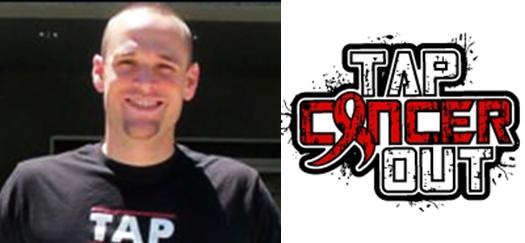
  • Jon Thomas is the founder of Tap Cancer Out, a Brazilian Jiu-Jitsu nonprofit and host of the most philanthropic martial arts events in the world.  Jon Thomas and his wife Becky run the Stratford-based nonprofit “in the slivers of spare time between their jobs in advertising.”  The nonprofit was founded out of a desire to respond to the devastation of cancer through a sport that Thomas was deeply involved with.  The organization raises funds – all donated to the Leukemia & Lymphoma Society - through hosting fundraising tournaments, direct donations, merchandise sales and sponsorships.tap cancer out

The TED website points out that “TED is best thought of as a global community, welcoming people from every discipline and culture who seek a deeper understanding of the world.”  TEDx Springfield was organized by Jae Junkunc of Hartford, from Mass Mutual's Enterprise Risk Management Group, with support of a 15-member team that developed the program over six months.

TED includes the award-winning TED Talks video site, the Open Translation Project and TED Conversations, the inspiring TED Fellows and TEDx programs, and the annual TED Prize. The TEDx program gives communities, organizations and individuals the opportunity to stimulate dialogue through TED-like experTEDx logoiences at the local level. The TED Conference provides general guidance for the TEDx program, but individual TEDx events are planned and coordinated independently.

A TEDx session in Hartford in June included talks by David Fink of Partnership for Strong Communities, Steven Mitchell of East Coast Greenway, Donna Berman of Charter Oak Cultural Center, and Rich Hollant of CO:LAB, among sixteen local speakers.