CT Ranks 4th in Participation in Summer Meal Programs for Low-Income Children
/Participation in Summer Meal Programs for low-income children increased in Connecticut in 2013 as compared with the previous summer, with 26.4 percent of low-income children receiving summer meals on an average day in July 2013. This represents an increase of 2.4 percent from the previous summer and ranks CT 4th in the nation for participation.
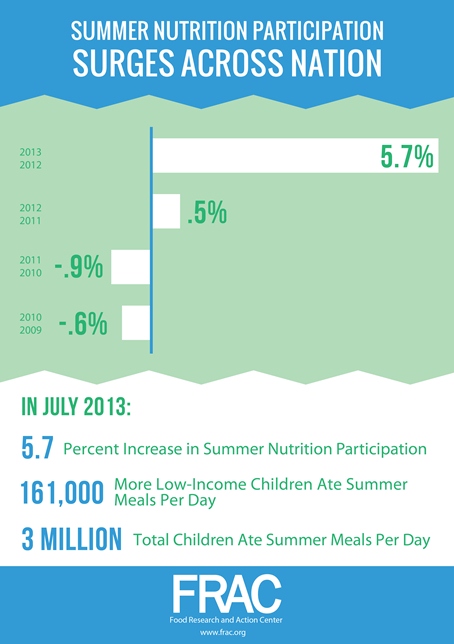
 The numbers are increasing nationally as well as in Connecticut. In 2013, for the first time in a decade, the number of low-income children eating summer meals saw a substantial increase year-over-year, according to a report by the Food Research and Action Center (FRAC). Nearly three million children participated in the Summer Nutrition Programs in July 2013, an increase of 161,000 children, or 5.7 percent, from July 2012.
FRAC measures the success of Summer Nutrition Programs at the national and state levels by comparing the number of children receiving summer meals to the number of low-income children receiving school lunch during the regular school year. The programs grew to serve 15.1 children for every 100 low-income children who participated in school lunch during the 2012-2013 school year, a modest increase from the 14.3 per 100 served in the 2011-2012 school year.
End Hunger Connecticut! noted that summer meals in Connecticut still only reached 26.4 students for every 100 low-income children who received regular school year school meals in the 2012-2013 school year. The number of sites increased slightly, from 217 to 236.
“When the school year ends, millions of low-income children lose access to school meals, including about 147,587 in Connecticut. It is in Connecticut’s best interest to ensure that such children have adequate nutrition during the summer so they stay healthy, active and return to school in the fall ready to learn,” Lucy Nolan, Executive Director, End Hunger Connecticut!, said. “While we are extremely proud of our place nationally, we still have a lot of work to do.”
Ranked just above Connecticut in participation were the District of Columbia, New Mexico and New York. Rounding out the top 10 were Vermont, Arkansas, Idaho, Delaware, Maine and Massachusetts.
To further increase the number of Connecticut children who participate in summer meals programs, End Hunger Connecticut! convened partners, community leaders and volunteers to distribute multilingual flyers, posters and other promotional materials at the start of the summer to promote Connecticut’s federally funded free summer meals program.
This year marks the third consecutive year that End Hunger Connecticut! has coordinated ‘blitz days’ in communities across the state to drive summer meals participation. Results of the initiative will be known later this year.
Increasing participation means more nutritious food for hungry children, but it also means more federal funding for communities, officials noted. If every state had reached the goal of 40 children participating in Summer Nutrition in July 2013 for every 100 receiving free or reduced-price lunch during the 2012-2013 school year, an additional 4.8 million children would have been fed each day, and states would have collected an additional $365 million in child nutrition funding in July alone, they point out.
 The Summer Nutrition Programs, which include the Summer Food Service Program and the National School Lunch Program, are designed to fill the food gap for the thousands of low-income Connecticut children who rely on school breakfast and lunch during the school year. These programs provide free meals at participating summer sites at schools, parks, other public agencies, and nonprofits for children under 18.
Connecticut families can find nearby summer meal sites at www.ctsummermeals.org, by calling toll free2-1-1 or by texting ‘CTMeals’ to 877-877.These tools are instrumental for families to find the closest free meals in their communities.
FRAC measures national summer participation during the month of July, when typically all children are out of school throughout the month and lose access to regular school year meals. The national report, including Connecticut data, is available online at www.frac.org




 vable Communities
 rcent, with less than 2 percent growth for people age 20 to 64 during the same period.

 asier to walk and bike by implementing "complete streets" in cities and towns across Connecticut. Complete streets make it easier and safer for people to get around on foot or by bike, in order to become more physically active.
 ut the
  nd Connecticut Coalition of Mutual Assistance Associations. The project was also supported by the Asian American Studies Institute at UConn, the UConn School of Pharmacy and the UConn School of Social Work. It focused on housing, education, language access, employment, access to public resources, and medical and mental health.
 Healthcare Concerns
 d education, promoting preventative care, actively recruiting APA members in various professional fields, creating diversity in the workforce, translating materials into the most common APA languages, and raising awareness among the APA population regarding their rights.


 In addition, it calls for creation of a consent form for parents of student athletes to sign on the warning signs, symptoms and treatment of SCA and relevant school policies. Similar legislation has already been adopted in Pennsylvania, several other states are also considering SCA bills, according to the SCAF. The provisions of the new law take effect a year from now, with the school year that begins in the fall of 2015.
 Raising Expectations 2014: A State Scorecard on Long-Term Services and Supports for Older Adults, People with Physical Disabilities, and Family Caregivers – an update of the inaugural 2011 Scorecard –
  lex medical tasks – so that their loved ones don’t end up back in the hospital and can continue to live independently at home, according to AARP officials.
 “When it comes to helping older Connecticut residents live in the setting of their choice, this silent army of family caregivers assumes the lion’s share of responsibility,” explains Duncan. “Many juggle full-time jobs with their caregiving duties; others provide 24/7 care for their loved ones. With every task they undertake, these family caregivers save the state money by keeping their loved ones out of costly nursing homes – most often paid for by Medicaid. They have earned some basic support.”
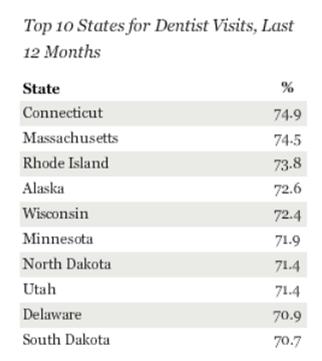
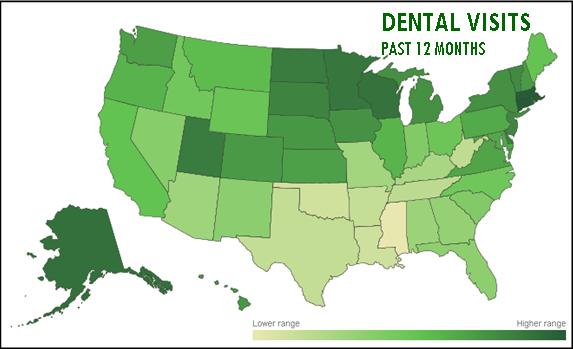
 These findings are based on interviews with more than 178,000 American adults conducted during 2013 as a part of the Gallup-Healthways Well-Being Index. Respondents were asked whether they visited the dentist in the last 12 months.