CT Ranked #1 in Exceeding Goal in Year One of Affordable Care Act
/An analysis of how states fared in the inaugural year of the Affordable Care Act, based on targets for enrollment developed by the Obama Administration, shows that Connecticut leads the list. According to the analysis published by the Wall Street Journal using data from the Department of Health and Human Services, Connecticut ranked #1, attaining 140 percent of the sign-up goal. The only other states that did better than expected were Rhode Island (137%), New Hampshire (112%) and Florida (106%).
Rounding out the top dozen states, based on their performance compared with expectations, were Maine (92%), Idaho (90%), North Carolina (87%), Wisconsin (77%), Delaware (76%), New York (70%), Virginia (70%), New Jersey (69%), Michigan (69%).
The Journal reported that the lessons learned in the first roll-out of the health care program will be utilized when the next enrollment period begins on November 15. The newspaper noted that more than eight million people got private insurance for 2014 through the law's insurance exchanges, which were plagued with technical problems when they opened in October 2013 but stabilized toward the end of the six-month sign-up period.
The next enrollment period runs through February 2015, and it is expected that marketing campaigns will stress testimonials from real people, more emphasis on deadlines, and an increased focus on in-person help. Individuals can sign up at the federal website,  healthcare.gov, to receive updates, focused by individual states.
Connecticut’s official health insurance marketplace, Access Health CT, is reminding state residents that Enrollment in Medicaid (HUSKY) and the Children's Health Insurance Plan (CHIP) is open year round for eligible persons and families.
The website points out that individuals may also still be eligible to enroll in coverage throughout the year “if you or a member of your household has experienced a Special Enrollment Qualifying Life Event in the past 60 days or you will in the next 60 days.” Qualifying Life Events may include: child birth, adoption, death of a member of the household, marriage, loss of current health care coverage, loss or reduction in employer insurance contributions, new legal CT or U.S. residency, or U.S. lawful presence. Individuals that qualify may not need to wait until November to enroll, and can call 855-805-4325 for additional information.
Earlier this month, Access Health CT CEO Kevin Counihan took his Connecticut experience to Washington, accepting a position overseeing the federal health exchange. Counihan joined the federal Centers for Medicare & Medicaid Services team as Marketplace Chief Executive Officer, where he will lead the federal Marketplace, manage relationships with state marketplaces and run the Center for Consumer Information and Insurance Oversight, which regulates health insurance at the federal level. He'll be in position when the next enrollment period gets underway later this fall.
“We are proud of what we’ve accomplished here—we’re a national leader with more than 280,000 people enrolled in affordable health insurance,” said Lieutenant Governor Nancy Wyman, Chair of the Access Health CT Board.
At the other end of the spectrum, according to the analysis, the states that fared well below expectations were Massachusetts (-87%), Oregon (-71%), Kentucky (-62%), Nevada (-61%) and New Mexico (-61%).


 ber 1, 2013, to March 31, 2014, the federal government was the major funder of in-person assistance, providing over $2.5 million in funding to the program. The reported noted that “This level of funding is no longer available, yet, the need for assistance, both for the upcoming open enrollment period (November 15, 2014, to February 15, 2015) and beyond, is great.” Plans for continuing in-person assistance, offered at store-front facilities, are under consideration according to
 r recent study found that nursing homes under private equity ownership are cited for more deficiencies and have fewer registered nurses on staff than other for-profit facilities.
 The “number of students with non-English home language” according to data on the website of the
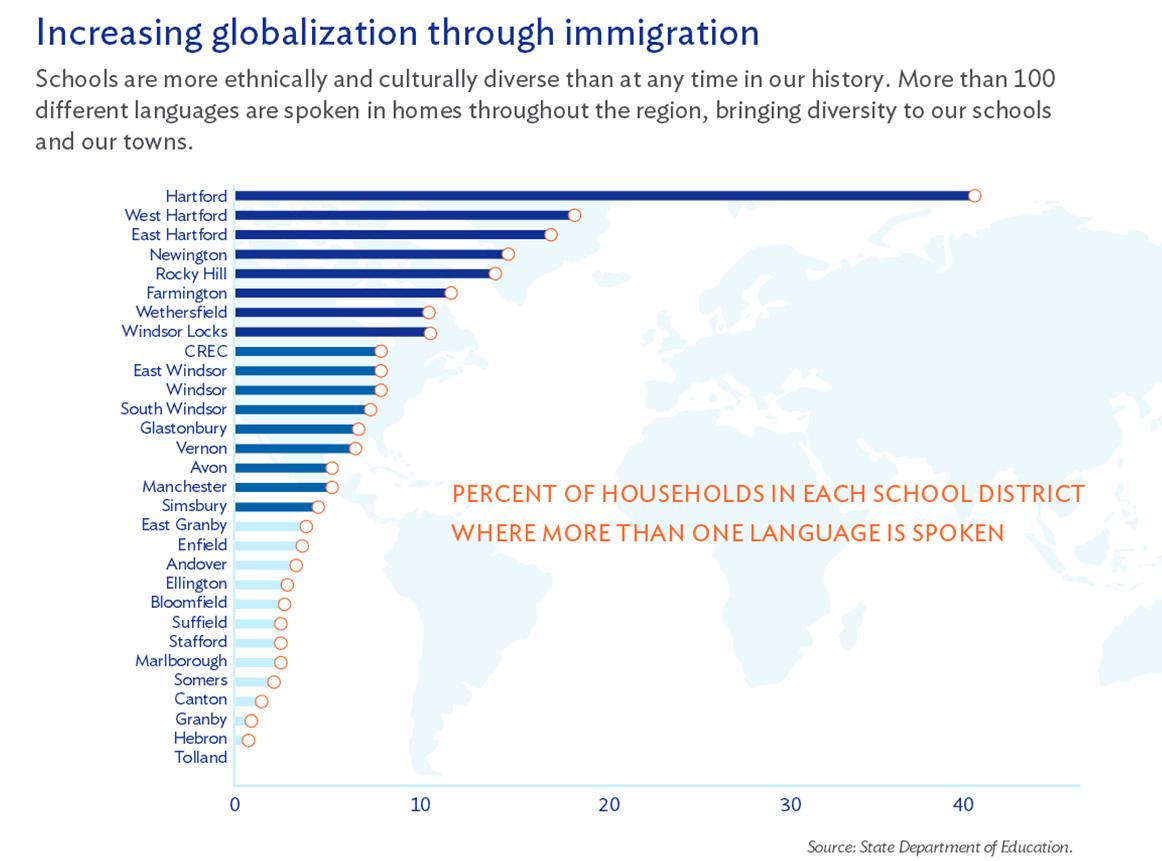 tudents.
 h school students - participants in week-long journalism workshops at UConn, Quinnipiac and Yale universities led by C-HIT - have been producing news stories that target issues facing a demographic they are not only familiar with, but, in most cases, part of. The students are learning research methods intrinsic to journalism and the results of their work have been eye-opening. Some of the highlights:
 Of the young people who reported cyber bullying incidents against them, one in three reported that they experienced threats online. Well over half of young people do not tell their parents when cyber-bullying occurs, the website says. Surveys show that girls are twice as likely as boys to be both victims and perpetrators of cyber bullying.
 ht) Mackenzie Brayman, a student at North Stonington High School; Julyanna Schreider and Shamoya Hanson, students at the Journalism & Media Academy, Hartford; Talon Cooper, a student at Hillhouse High School, New Haven; and Conner Fritchley, a student at Wilton High School. Information included in this article was researched and developed by the students for their news stories.
 was
was  The numbers are increasing nationally as well as in Connecticut. In 2013, for the first time in a decade, the number of low-income children eating summer meals saw a substantial increase year-over-year, according to a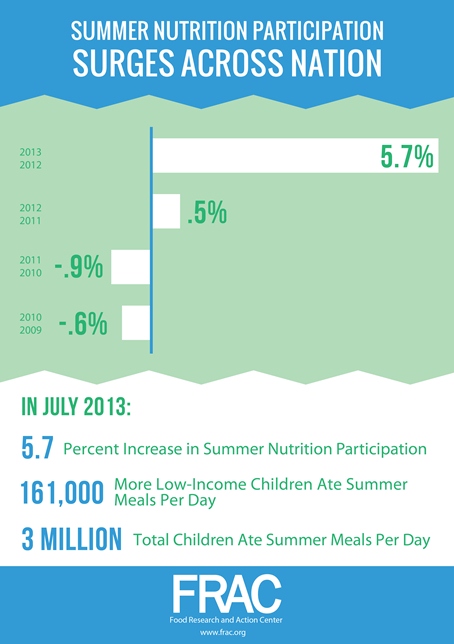
 The Summer Nutrition Programs, which include the Summer Food Service Program and the National School Lunch Program, are designed to fill the food gap for the thousands of low-income Connecticut children who rely on school breakfast and lunch during the school year. These programs provide free meals at participating summer sites at schools, parks, other public agencies, and nonprofits for children under 18.