Cellphone Likely Won’t Tell 911 Operator Your Location
/The Federal Communications Commission has estimated that about 70 percent of 911 calls are placed from wireless phones, and that percentage is growing. For many Americans, according to the federal agency, “the ability to call 911 for help in an emergency is one of the main reasons they own a wireless phone.” Yet, in an emergency, a cell phone may provide potential first responders with less information than one would expect.
The National Emergency Number Association (NENA),which represents dispatchers, supervisors and private-sector service providers, points out that “when 9-1-1 calls are made from wireless phones, the call may not be routed to the most appropriate 9-1-1 center, and the call taker doesn't receive the callback phone number or the location of the caller. This presents life threatening problems due to lost response time, if callers are unable to speak or don't know where they are, or if they don't know their wireless phone callback number and the call is dropped.” The organization’s motto is “emergency help, any time, anywhere, any device.”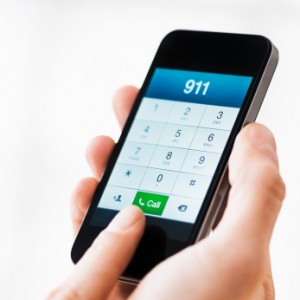
Recent published reports in Governing magazine indicate that “when you check movie times on your cellphone, search for a restaurant or hail a ride, the device automatically knows exactly where you are and can suggest things nearby. So it’s understandable that many people assume the same holds true when they call 911 for emergency assistance. But the fact is, 911 call centers frequently receive imprecise locations of callers from wireless carriers -- and some don’t get any location information at all. Calls from landline phones are linked to addresses.”
The FCC website explains that “since wireless phones are mobile, they are not associated with one fixed location or address. While the location of the cell site closest to the 911 caller may provide a general indication of the caller's location, that information is not always specific enough for rescue personnel to deliver assistance to the caller quickly.”
More reliable and specific location information could save lives, advocates say, and earlier this year an order from the Federal Communications Commission (FCC) set targets for companies to improve both the availability and accuracy of location information. But those upgrades remain a long way off.
Under the new rules, carriers will have to provide caller location info within 50 meters 80 percent of the time by 2021, along with vertical location information, if the call is being made from an apartment building or high rise office tower -- that would have to be in place in major markets by 2023.
Some have said the industry needs to provide those capabilities much sooner. While 911 dispatchers routinely ask callers for their location, callers at times hang up before providing that information, for any number of reasons. And, they argue, if a cell phone knows where you are, that information should be instantly made available to 911 dispatchers as well.
The latest FCC guidelines are available for public review. “We would have liked to have seen a more compressed timetable,” NENA CEO Brian Fontes told Governing.
Published reports in Connecticut indicate that some communities are moving forward with new technology. The town of Wolcott, according to reports, has begun using a system that will allow police to pinpoint the location of emergency calls made from cell phones. The Republican-American newspaper reports the town was the first in the state to use the next-generation system in a pilot program that was slated to include the New Britain, Wilton, Enfield, Newington, Valley Shore, Fairfield, Middletown, Mashantucket and Shelton police departments . The new system shows dispatchers the caller’s location within a 50-foot radius, compared with the old system which would indicate the location of a wireless 911 call within a quarter-mile radius.
Plans are also in the works that would permit individuals to text 911 from their cell phones. The CT Post reported last month that about 24 dispatch centers out of 110 statewide are being upgraded to the text-to-911 system. Stratford and Fairfield will be among the first towns in the state to get the texting capability. Officials hope the entire state will have text-to-911 by late 2016 or early 2017, the newspaper reported.


 MassChallenge, an independent nonprofit organization, envisions “a creative and inspired society in which everyone recognizes that they can define their future, and is empowered to maximize their impact.” They note that “novice entrepreneurs require advice, resources and funding to bring their ideas to fruition. Currently there is a gap between the resources these entrepreneurs need and the ability of the entrepreneurial ecosystem to provide them.” To bridge that gap, the organization’s primary activities include running an annual global accelerator program and startup competition, documenting and organizing key resources, and organizing training and networking events. They “connect entrepreneurs with the resources they need to launch and succeed immediately.”
 The news came just weeks after it was announced that Laurencin is the recipient of the 2016 Founders Award, the highest honor of The Society For Biomaterials. He will be honored at the 2016 World Biomaterials Congress in Montreal, Canada on May 18, 2016.

 The APNA Annual Conference delivers more than 100 varied educational sessions and invaluable networking opportunities to the more than a thousand psychiatric-mental health RNs and APRNs who attend each year. The organization has more than 10,000 members nationwide.
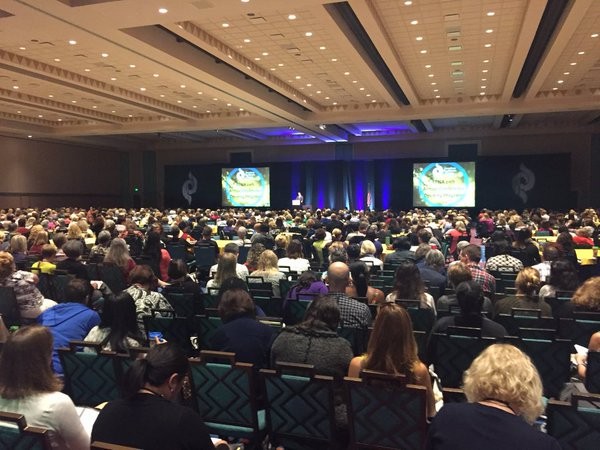
 In Florida last month, more than 1,800 attendees were on hand for a program “packed with psychiatric-mental networking, updates, and continuing education targeted to psychiatric-mental health nurses.” Session recordings from the Annual Conferences are made available in the APNA eLearning Center in podcast form, along with up-to-date session slides and other relevant materials.

 In Connecticut, the average rate between 1999 and 2001 was 4.1 per 100,000. Between 2010 and 2013, the drug overdose rate had risen to 8.3, above the national aver
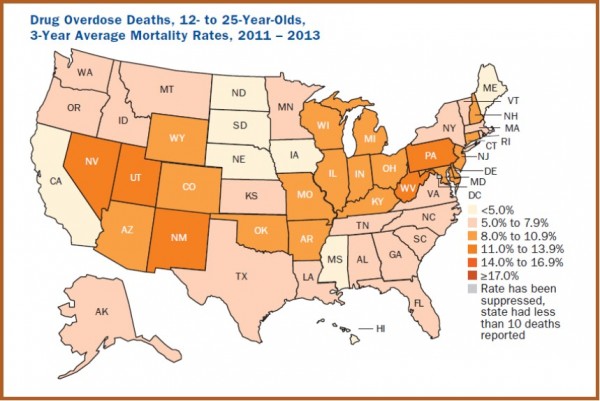 age but unchanged from a previous three-year period, 2005-2007. The data was compiled from the Centers for Disease Control and Prevention. Males are 2.5 times as likely to overdose as females (10.4 vs. 4.1 per 100,000), according to the report.

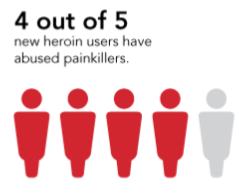
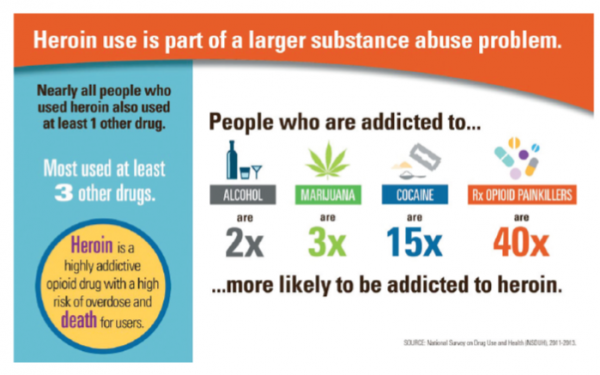 s to help practitioners identify potential abuse that leads to over prescribing by requiring them to check patient history to verify if patients seeking certain prescriptions have recently received these medications from multiple other prescribers or pharmacists.


 Instead,
 l bus injuries in the U.S. every year — two to three times National Highway Traffic Safety Administration estimates, which use only a sampling of data and exclude field trips like the one on which Vikas Parikh died. Seat belts work best in rollover and side-impact collisions in which students are thrown out of their seats, as Vikas was. The American Academy of Pediatrics supports restraints on buses.”
 In

 sustainable lifestyle beverate brand for teens and tweens. The company's goal is to inspire young people to realize the power of consumer choices to effect social and environmental change.
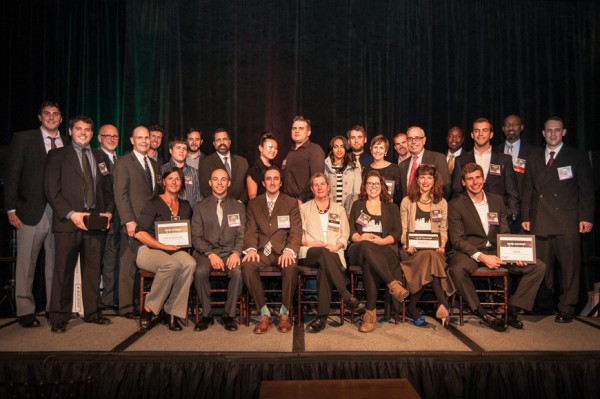
 The five awards judges - Sherrell Dorsey of Uber and Triple Pundit, Adam Dotson of Ironwood Capital, Claire Leonardi, an advisor to reSET's Social Enterprise Investment Fund and former CEO of Connnecticut Innovations, Anthony Price of LootScout and Paul Witinski of Ironwood Capital - narrowed down more than 100 applicants to 12 honorees. The People’s Choice winner was selected via more than 1,800 online votes.

 The organization is driven by volunteers – food donors, food runners and partner agencies. One such agency in Connecticut is the Manchester Area Conference of Churches, which indicates there are 8,000 food-insecure people in the greater Manchester area.