Indiana Insurance Department to Hold Hearing on Anthem Acquisition of CIGNA on April 29

The Indiana Insurance Department will consider the proposed acquisition of Bloomfield-headquartered CIGNA Health Care by Indianapolis-based Anthem, Inc. at a public hearing on Friday, April 29 in Indianapolis.indiana “Any member of the public interested in the proposed acquisition of control may attend the hearing,” indicates a public notice of the hearing. In addition, “Any policyholder of Cigna HealthCare of Indiana, Inc., or other person whose interests may be affected by the proposed acquisition of control shall have the right to appear and become party to the proceeding.”

Officials indicated that written testimony could be mailed in lieu of an in-person appearance, and would be considered. Members of the public may make written submissions  without appearing in person at the hearing. Length of submissions should not exceed 5 pages, double-spaced. Officials indiated that submissions should be sent to John Murphy, outside counsel to the Commissioner in this matter, by close of business on April 26, 2016. Contact information is: John T. Murphy, ICE MILLER LLP, One American Square, Indianapolis, IN  46282, (317) 236-2292, john.murphy@icemiller.com  [this information was updated on 4/19]


Consumer Groups, State Comptroller Call for Full Review

Among those aligned in opposition to the acquisition is the American Medical Association, noting that the deal would make the combined firm the nation’s largest insurer by membership and also give the company a tremendous amount of leverage when negotiating with providers.  In a press release, AMA President Steven J. Stack, MD, said such proposed mergers threaten to reduce competition and choice. “To give commercial health insurers virtually unlimited power to exert control over an issue as significant and sensitive to patient health care is bad for patients and not good or the nation’s health care system.”

Anthem and CIGNA suggested that the deal will create new efficiencies that will make the healthcare market function more efficiently.  A website, www.betterhealthcaretogether.com, has been established to highlight the companies commitment to “drive health care innovation.”

Last month, a coalition of consumer and medical organizations in Connecticut called for greater public input into the Connecticut Insurance Department’s review of the proposed Anthem-CIGNA  mega-merger, expressing concerns about the potential “negative impact on both the cost and quality of care in Connecticut” of that acquisition and the proposed Aetna-Humana merger. The groups – Universal Health Care Foundation, Connecticut Citizen Action Group and the Connecticut State Medical Society – formed the “Connecticut Campaign for Consumer Choice” coalition and urged state Insurance Commissioner Katherine Wade to “ensure an open, transparent hearing process in Connecticut, where policy holders, physicians and other interested parties are given maximum opportunity to share their views.” The coalition has been conducting public information sessions, including one in Mansfield this week, to provide state residents with information on "what the proposed health care mergers will mean for Connecticut consumers."

A week ago, State Comptroller Kevin Lembo, in a letter to the Department, urged an open and thorough review in order to address significant concerns raised by health care consumers and providers.  Lembo expressed his support for the efforts of the Connecticut Campaign for Consumer Choice, noting that a merger between Anthem and Cigna would increase the Connecticut health insurance concentration over 40 percent.   Lembo indicated that only Georgia is expected to experience a more significant increase in market concentration.

CIGNA Questions Anthem; Feds Question CIGNA

A week ago, Modern Healthcare, a web publication focused on healthcare business news, raised questions about the absence of detail in the year since Anthem disclosed “what was by far the largest data breach in healthcare history.  The cyberattack—in which hackers stole the names, birth dates, Social Security numbers, home addresses and other personal information of 78.8 million current and former members and employees – caused consumers to question “whether Anthem and other healthcare organizations could manage the volumes of data they had,” according to the news report. anthem-cigna-logos-thumb-400

The publication also questioned whether state regulators would consider not only the breach, but CIGNA’s reaction to it at the time:

“Trust with customers and providers is critical in our industry, and Anthem has yet to demonstrate a path towards restoring this trust,” CIGNA CEO David Cordani and former Board Chairman Isaiah Harris Jr. wrote in a June 21, 2015 letter: “We need to understand the litigation and potential liabilities, operational impact and long-term damage to Anthem's franchise as a result of this unprecedented data breach, as well as the governance and controls that resulted in this system failure.”  It was estimated that in Connecticut, about 1.7 million people were affected.

In January, published reports indicated that U.S. regulators temporarily banned CIGNA-HealthSpring from offering certain Medicare plans to new patients after a probe uncovered issues with current offerings, citing that CIGNA’s deficiencies “Create a Serious Threat to Enrollee Health and Safety.”  CIGNA disclosed that the U.S. Centers for Medicare and Medicaid Services (CMS) had suspended the company from enrolling new customers or marketing plans for CIGNA Medicare Advantage and Standalone Prescription Drug Plan Contracts. CIGNA acquired HealthSpring in 2012.CMS_logo

In an enforcement letter, CMS accused CIGNA of "widespread and systemic failures," including the denial of health care coverage and prescription drugs to patients who should have received them. The actions "create a serious threat to enrollee health and safety," said CMS, which required CIGNA to appoint an independent monitor to audit its handling of the matter.

“Cigna has had a longstanding history of non-compliance with CMS requirements. Cigna has received numerous notices of non-compliance, warning letters, and corrective action plans from CMS over the past several years. A number of these notices were for the same violations discovered during the audit, demonstrating that Cigna has not corrected issues of non-compliance,” said the 12-page enforcement letter from the Director of the Medicare Parts C and D Oversight and Enforcement Group.

CIGNA, First in Connecticut

Nearly five years ago, in July 2011, CIGNA announced it was to receive $50 million in economic benefits from the Connecticut Department of Economic and Community Development with the promise of adding at least 200 jobs the following two years, which would increase the company’s employment in the state to more than 4,000.  CIGNA also declared Bloomfield its corporate headquarters in the United States, replacing Philadelphia which had been the company’s corporate headquarters since 1982.gov_first_five_a

CIGNA was the first company to receive economic incentives under Governor Dannel Malloy’s “First Five” program, which was designed to spur job growth and support Connecticut businesses in becoming more competitive in the global marketplace. “CIGNA is proof that these tools work and that Connecticut is open for business,” Malloy said at the time.

“Through this partnership with the Governor and the state, we are building upon our long history in Connecticut,” added CIGNA Chief Executive Officer David Cordani.

Anthem's application states it has "no current plans or proposals to reduce in any material respect the number of employees employed by the Cigna companies."  The $54 billion merger would increase Anthem's membership from 38 million to 53 million members nationwide.

Approval in Florida, Concerns in California

“There are no meaningful adverse impacts resulting from the acquisition,” Florida’s Insurance Commissioner said last week in approving the acquisition in his state. “The companies, individually or in combination, are an important part of, but not a dominant factor in, the Florida market, and their combination does not noticeably increase the market concentration across the broadly measured market on a statewide basis.”

In California, the combined membership of Anthem Blue Cross and Cigna would make it the largest insurer in the state with more than 8 million members.  At a public hearing in California last month convened by that state’s Insurance Department, consumer advocates and the AMA opposed the acquisition.

"This merger would create the nation's largest insurer, which could have a significant impact on California's consumers, businesses, and the healthcare marketplace," said California’s Insurance Commissioner. "I am considering what is best for consumers and the overall marketplace. Anthem and Cigna bear the burden of demonstrating this proposed merger is in the best interest of California consumers and the health-care marketplace."

Shareholders of Anthem and Cigna voted overwhelmingly in favor of the merger plan late last year, and regulators in 26 states where the companies operate are at various stages of considering the acquisition.  Attorneys General in a number of those states, including Connecticut, are looking into the proposed acquisition on anti-trust grounds, and the U.S. Department of Justice has the final authority to approve the deal, published reports indicate.California_Department_of_Insurance_seal

The news site Business Insurance reported soon after the acquisition was announced that “viewed in tandem with rival Aetna Inc.'s recent $37 billion merger agreement with Humana Inc.— as well as St. Louis-based health insurer Centene Corp.'s proposed acquisition of Woodland Hills, California-based Health Net Inc. for $6.3 billion — experts said regulators may be more stringent in examining the Anthem/Cigna deal's potential to dampen health insurer competition.”

CT Medical Examining Board Website Ranked 15th in US

If you’re looking for information about your doctor, you may find yourself searching the website of the state medical board.  In states across the country, those are the agencies that license physicians and also discipline them for offenses including sexual misconduct, substance abuse, and negligent care. But the accuracy and completeness of the information you find varies from state to state, according to a new analysis from Consumer Reports, which ranked the Connecticut Medical Examining Board as 15th in the nation for the information readily available to the public from the agency website.

Consumer Reports Safe Patient Project partnered with the nonprofit Informed Patient Institute to evaluate the websites of state medical boards in all 50 states. They found that most are difficult to navigate and the information on them varies widely.

consumerOverall scores were based on eight categories:  Search Capabilities, Complaint and Board Information, Identifying Doctor Information, Board Disciplinary Actions, Hospital Disciplinary Actions, Federal Disciplinary Actions, Malpractice Payouts and Convictions.

Connecticut, with an overall score of 58, was rated good in four categories, very good in two, and excellent in one category.  Only one category was given a poor rating.

The highest rated state medical board websites were in California (84), New York (79), Massachusetts (78), Illinois (76), North Carolina (76), Virginia (72), New Jersey (70), Florida (70) and Texas (68).medical examining board

The Federation of State Medical Boards, which represents the boards and facilitates communication among them, acknowledges that variation is a potential issue. “Consistency is certainly a worthy goal,” Lisa Robin, chief advocacy officer for the organization told Consumer Reports. “Looking at the disciplinary trends to make improvements in the system … we would always encourage that.” Still, she also says that, “the rate of discipline alone is probably not a good picture of really what the boards do and how well they’re able to protect patients in their state.”

But, as Consumer Reports’ analysis found, those state boards fall short in other measures, too. In fact, in many instances, physicians who have been severely disciplined continue to practice while their offenses remain relatively hidden, buried deep on the boards' websites or unavailable entirely online.

The Connecticut Medical Examining Board website includes a listing of disciplinary actions taken by the Connecticut Medical Examining Board or the Connecticut Department of Public Health but notes that “information is not intended for licensure verification purposes.”  Actions taken – ranging from reprimands to civil penalties to license suspension or revocation are listed.  Board meeting minutes are also available on the site, as well as procedures for individuals to file complaints.

states

Gender Identity in Schools Among Topics at Connecticut School Health Issues Conference

The keynote address “When Boys Will be Girls: Getting A Grip on Gender” will greet attendees – school nurses and school health officials from across Connecticut - attending the 38th Annual School Health Conference on Thursday in Cromwell. “Critical Issues in School Health 2016,” a two-day conference, will have expert presentations on issues ranging from absenteeism to infectious diseases, food allergies to mental health.  But no issue has grown in attention and interest recently than how to respond to LGBT students in the school setting.

The conference is coordinated by the Connecticut chapter of the American Academy of Pediatrics with the assistance of the Association of School Nurses of Connecticut.  school-health

The keynote will be given by Robin McHaelen, MSW, founder and executive director of True Colors, a Hartford-based non-profit organization that works with social service agencies, schools, organizations, and within communities to ensure that the needs of sexual and gender minority youth are both recognized and competently met. McHaelen is co-author of several books and articles on LGBT youth concerns, and has a national reputation as a thought leader in LGBT youth concerns, programs and interventions.

In her presentation, titled “When Pink and Blue Are Not Enough,” McHaelen offers suggestions on working with LGBT students, and seeks to increase “understanding, knowledge and cultural competency regarding LGBT students,” while identifying issues of “risk, challenge and strengths specific to LGBT youth.”  She also will point to “opportunities for intervention that will ensure appropriate care within a safe, affirming environment.”

Among the recommendations:  offer gender-neutral bathroom options, always use the patients’ chosen name and chosen gender pronouns, and “recognize that there are additional stressors (and that there may be significant feat on the part of) transgender patients.” logo

McHaelen will be offering a similar presentation at the New England School Nurse Conference, to be held in late April in Mystic, hosted by the Association of School Nurses of Connecticut.  The president of the Association is Suzanne Levasseur, Supervisor of Health Services for the Westport Public Schools.  The New England affiliates include Massachusetts, Vermont, New Hampshire and Maine.  The conference theme is “Waves of Change, Oceans of Opportunity.”

Lesbian, gay, bisexual, and transgender students are the targets of bullying, harrassment, and disproportionately high discipline rates at school, researchers have pointed out. But without consistently collected, reliable, large-scale sources of data, it's difficult to track the extent of those problems or the effectiveness of proposed solutions, a group of researchers at Indiana University said in a briefing paper released this week.

Expanding existing federal surveys on youth safety and well-being to include more questions about gender identity and sexual orientation could provide a clearer picture, according to the researchers, noting that “if you don’t measure it, you can’t improve it.”  They suggest addressing the data gap by adding discipline and harassment items to existing health surveys that currently include measures of sexual orientation and gender identity, such as the Youth Risk Behavior Survey, collected by the Centers for Disease Control and Prevention.logo

“Although these measures provide more specific information about sexual orientation and in some cases gender identity, they do not provide sufficient information about the specific negative outcomes experienced by LGBT students,” the research paper points out.  They conclude: “the availability of data documenting the experiences of LGBT students is a civil rights concern, and the expansion of data collection efforts to include sexual orientation and gender identity is a critical next step in ensuring the rights of LGBT and all students to participation and protection in school.”

The mission of the Association of School Nurses of Connecticut is to support, assist and enhance the practice of professional school nurses in their development and implementation of comprehensive school health services that promotes students' health and academic success.  The Connecticut Chapter of the American Academy of Pediatrics has over 600 active members committed to both improving the health and safety of Connecticut's children and supporting those who provide care to these children.


Survey Says: Parents Don't Trust On-line Doctor Ratings, But Use Them

As the annual observance of National Doctors’ Day approaches this week, a new national survey indicates that nearly one-third (30%) of parents report looking at online doctor ratings for themselves or a family member in the past year, with mothers (36%) more likely than fathers (22%) to visit such sites. Among these parents, two-thirds say they selected or avoided a doctor based on the ratings they viewed. Among parents who choose doctors based on the ratings, most (87%) say the online ratings accurately reflect their experience with the doctor. The survey was conducted for C.S. Mott Children’s Hospital at the University of Michigan.logo-2016

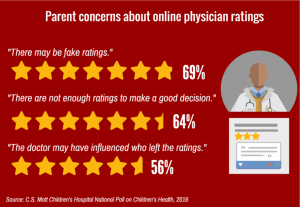
The survey also found, however, that a majority of parents have concerns about doctor rating websites in general. About two-thirds of parents believe some ratings may be fake; slightly fewer feel there are not enough ratings on the websites to make a good decision. More than half of parents feel doctors may influence who leaves ratings. Among parents in this survey who had ever left an online rating about a doctor (11% overall), nearly one-third (30%) reported that the doctor or office staff had asked them to do so.mouse doc

National Doctors’ Day was established to recognize physicians, their work, and their contributions to society and the community. National Doctors’ Day is observed on March 30 each year.  The holiday was officially signed into U.S. law in the early 1990s by President George H. W. Bush, although since the early 1930s patients and healthcare organizations across the country have been celebrating their physicians on this day.

In the on-line ratings survey, older parents generally had more concerns than younger parents. Of parents age 30 and older, 71 percent were concerned about the possibility of fake reviews compared to 59 percent of parents under age 30. Older parents (65%) also were more concerned about the low number of ratings compared to younger parents (55%).doctor

The survey analysis pointed out that “while the use of online physician rating sites is expected to keep rising, their growth may be limited by concerns from parents about accuracy and authenticity.”

In recognition of National Doctors’ Day, Connecticut Children’s Medical Center in Hartford has urged patients to post a message to their doctor, and many of the messages have been displayed on the hospital’s web site.  Other organizations around the state also take note of the contributions of physicians to the well-being of the population.

Legislature to Examine Why Zero Convictions for Human Trafficking, Even As Incidents Increase in CT

Human trafficking is a form of modern-day slavery. This crime occurs when a trafficker uses force, fraud or coercion to control another person for the purpose of engaging in commercial sex acts or soliciting labor or services against his/her will.  It is happening in Connecticut. Connecticut’s Permanent Commission on the Status of Women (PCSW) is convening a Joint Informational Forum with the state legislature’s Judiciary, Public Safety and Security, and Children’s Committees on Thursday, March 31 at the Legislative Office Building to examine the issue, the response of law enforcement and other agencies in Connecticut, and where changes in state law need to be made.

A decade ago, in 2006, Connecticut enacted Public Act 06-43, which created the felony charge of trafficking in persons.

“And yet, since then, only 10 arrests have been made and there have been no convictions,” according to PCSW, which noted that during that same time, the Department of Children and Families has received more than 400 referrals of individuals with high-risk indicators for human trafficking that demanded a collaborative response, including the participation of law enforcement.  Those numbers have climbed each year, with 133 referrals in 2015, according to the Governor’s office. human trafficking

“We decided to convene trafficking experts because, as we learn more about human trafficking, in particular sex trafficking of adults and minors, we need to ensure that victims are supported and that law enforcement and prosecutors have the tools to adequately punish traffickers, those buying sex, and those permitting and facilitating the sale of sex in Connecticut,” said Jillian Gilchrest, senior policy analyst for the PCSW, and chair of the state's Trafficking in Persons Council.

“Although the legislature has made great strides to increase awareness and enhance training programs against human trafficking, and especially the sex trafficking of minors – the truth is that this modern-day slavery is a national issue,” said State Rep. Noreen Kokoruda, the ranking member of the General Assembly’s Committee on Children. “Connecticut must take the critical steps necessary to combat human trafficking and to make sure that the legislation we passed is enforced. In order to proactively address this issue, we need a collaborative effort from all agencies; this issue is simply too important to ignore.”

Data from the National Human Trafficking Resource Center (NHTRC) indicates that in 2015 there were 120 calls made and 39 human trafficking cases reported in Connecticut – the highest numbers in the past three years. The statistics are based on phone calls, emails, and webforms received by the NHTRC that reference Connecticut. The NHTRC works with service providers, law enforcement, and other professionals in Connecticut to serve victims and survivors of trafficking, respond to human trafficking cases, and share information and resources.

Since 2007, the NHTRC has received more than 600 calls to their hotline that reference Connecticut.  As Connecticut’s felony crime of trafficking in persons, Connecticut Statute §53a-192a approaches its 10-year- anniversary, members of the Judiciary, Public Safety, and Children’s Committees are interested in understanding why no one has been convicted under §53a-192a and what policy or legislative changes can help remove current barriers to prosecution in these cases, officials said.

chartIn Connecticut, a person is guilty of trafficking in persons when such person compels or induces another person to engage in sexual contact or provide labor or services by means of force, threat of force, fraud or coercion. Anyone under the age of 18 engaged in commercial sexual exploitation is deemed a victim of domestic minor sex trafficking irrespective of the use of force, threat of force, fraud or coercion.

In a January report to the state legislature, the Trafficking in Persons Council pointed out that “Connecticut is not unique; there are many states that have yet to prosecute a trafficking case. In fact, according to the U.S. Department of State, as of 2011 only 18 states brought forward human trafficking cases under state human trafficking statutes.”

A series of proposals are now being considered by the state legislature.  In recent testimony, the PCSW pointed out that “the demand side of human trafficking and prostitution has all but been ignored in Connecticut. Arrests have been concentrated first on prostitutes, and secondarily on those buying sex. In fact, in the last 10 years in Connecticut, prostitutes were convicted at a rate of 7 times that of those charged with patronizing a prostitute It’s a basic premise of supply and demand: if you reduce the demand, you reduce the supply, which in this case, is the purchase of women and children for sex.”

In legislative testimony last month, the PCSW pointed out that “more and more trafficking and prostitution are being arranged online and taking place at hotels and motels throughout Connecticut. According to the National Human Trafficking Resource Center (NHTRC), Hotels and Motels are among the top venues for sex trafficking in Connecticut.”  PCSW stressed that “as we learn more about human trafficking, and what the crime looks like in Connecticut, we must ensure that our policies keep pace with that reality.”  Among the proposals is one designed to “give more tools to investigators,” Gov. Malloy and Lt. Gov. Wyman recently told a legislative committee.

The Trafficking in Persons (TIP) Council is chaired and convened by the Permanent Commission on the Status of Women and consists of representatives from State agencies, the Judicial Branch, law enforcement, motor transport and community-based organizations that work with victims of sexual and domestic violence, immigrants, and refugees, and address behavioral health needs, social justice, and human rights.

The report recommended that “Connecticut must ensure the creation of laws that address the continuum of exploitation, the implementation of laws, and the pursuit of criminal punishments for such cases. Sentences should take into account the severity of an individual’s involvement in trafficking, imposed sentences for related crimes, and the judiciary’s right to impose punishments consistent with its laws.”

Regarding victims of trafficking in Connecticut, the report recommended that “Key victim protection efforts include 3 "Rs" - rescue, rehabilitation, and reintegration. It is important that human trafficking victims are provided access to health care, counseling, legal and shelter services in ways that are not prejudicial to victims’ rights, dignity, or psychological well-being. Effective partnerships between law enforcement and service providers mean victims feel protected and such partnerships help to facilitate participation in criminal justice and civil proceedings.”

According to Rep. Rosa C. Rebimbas, ranking member of the Judiciary Committee, “Connecticut has made great strides to protect vulnerable women and children with strong laws against human trafficking, and resources to help them escape from the horrors of human trafficking, yet we are still behind when it comes to prosecution of the criminals who perpetrate such heinous offenses. We will continue to press for stronger laws to protect Connecticut residents, and to bring justice on their behalf.”

Coalition Calls for Public Input, Comprehensive Analysis, Greater Scrutiny of Cigna-Anthem Merger

A coalition of consumer and medical organizations is calling for greater public input into the Connecticut Insurance Department’s review of the proposed Anthem-Cigna health insurance mega-merger, and is expressing concerns about the potential “negative impact on both the cost and quality of care in Connecticut” of that merger and the proposed Aetna-Humana merger. The groups – Universal Health Care Foundation, Connecticut Citizen Action Group and the Connecticut State Medical Society – formed the “Connecticut Campaign for Consumer Choice” coalition and urged state Insurance Commissioner Katherine Wade to “ensure an open, transparent hearing process in Connecticut, where policy holders, physicians and other interested parties are given maximum opportunity to share their views.”

In a letter to Wade, the organizations urged a series of actions as part of the Anthem-Cigna review “to protect our health care options in Connecticut” – that a public hearing be held at a time and place that “allows for maximum public participation,” that interested parties be granted intervenor status (which would allow witnesses to be called and cross examined), and that a department commission a study that will “analyze the potential impact on cost, access, and the Connecticut economy, including jobs,” as part of the agency’s deliberations on the merger proposal. coalition

Bloomfield-based Cigna and Indianapolis-based Anthem are two of the nation’s five largest health insurance companies.  It is anticipated that a hearing would be held sometime this spring, but plans have not yet been announced. The coalition leaders indicated that “all eyes from around the country will be on Connecticut,” as home of two of the nation’s leading health insurance companies.

They also launched a new website, www.consumerchoicect.org, which will provide the public with information about the proposed mergers.  The site states that “what’s really happening is that fewer choices mean higher costs for consumers and employers. With fewer insurers for the remaining three national companies to compete against, there will be less of an incentive to keep costs low or develop innovative servchoiceices to bring in new customers.”

Connecticut Insurance Department spokeswoman Donna Tommelleo said the department "is reviewing the proposed acquisition in accordance with all applicable  Insurance Holding Company Statutes. The Form A application is posted on Home Page of the Department’s Web site for public view and the site is updated frequently as more documents are filed. After the application is fully reviewed and deemed complete by the Department there will be public hearing held within 30 days. The public will be given ample opportunity to provide both written and oral comment."  She indicated that "the Department respects the coalition’s interest in the matter.” The Anthem-CIGNA merger was filed with the state Insurance Department last September.

In advocating for the merger, Anthem has established a website that highlights the company’s views on the benefits of a merged company, at www.betterhealthcaretogether.com  The site indicates that “the combined companies will operate more efficiently to reduce operational costs and, at the same time, further our ability to manage what drives costs, helping to create more affordable health care for consumers.”

Matthew Katz, executive director of the Connecticut State Medical Society, said that the merger “could be the demise of already struggling private practices,” and will aanthemdversely impact patient costs and access to care.  "Goliaths will not  benefit consumer choice," he said.   The Society opposes the merger, as do the other organizations in the coalition.  They indicated that a fair, open, transparent review process would make it more difficult for the merger to be approved as being in the public interest.

Noting that Wade serves as chair of the National Association of Insurance Commissioners working group on the Anthem-Cigna mercer, and that the working group’s proceedings are not open to the public, the coalition leaders stressed the importance of an open and comprehensive process in Connecticut.

The letter to Commissioner Wade, dated March 22, was signed by Frances Padilla, president of the Universal Health Care Foundation of Connecticut, Tom Swan, executive director of the Connecticut Citizen Action Group, and Matthew Katz, Chief Executive Officer of the Connecticut State Medical Society.

The Connecticut State Medical Society is a federation of eight component county medical associations, with total membership exceeding some 7,000 physicians. Universal Health Care Foundation of Connecticut is an independent, non-profit philanthropy, supporting research-based policy, advocacy and public education that “advances the achievement of quality, affordable health care for everyone in the state.”  CCAG, founded four decades ago by consumer advocate Ralph Nader,  has "created change on the issues members care about including quality, affordable health care, protection of consumers, the environment, and democracy."

Combatting Childhood Obesity Starts From Day One; Wide-Ranging Policies Proposed

Less “screen time,” more physical activity, more nutritional foods and fewer sugary beverages – that’s the formula to prevent obesity from taking root in infants and toddlers in the formative years of childhood, according to new recommendations by the Child Health Development Institute (CHDI) of Connecticut.  A series of “science-based policy opportunities” for Connecticut, outlined this week, also include support for breastfeeding in hospitals and child care centers.scale The need for stronger action is underscored by recent statistics.  In Connecticut, one of every three kindergartners is overweight or obese, as is one of every three low-income children. Children who are overweight or obese are more likely, according to the policy brief, to have:

  • risk factors for future heart disease, such as high cholesterol and high blood pressure
  • a warning sign for type 2 diabetes called “abnormal glucose tolerance,” although many children are being diagnosed with the full-blown disease in increasing numbers
  • breathing problems such as asthma
  • gallstones, fatty liver disease, and gastroesophageal reflux (acid reflux and heartburn)
  • problems with their joints

“Recent research shows that obesity may be very difficult to reverse if children are not at a healthy weight by 5 years of age,” the policy brief indicated. “Investing early in preventing childhood obesity yields benefits for all of us down the line by fostering healthier children, a healthier population overall and greatly reducing obesity-related health care costs over time.”

The policy brief recommends five ways Connecticut’s child care settings and hospitals can help our youngest children grow up at a healthy weight:

  1. Support breastfeeding in hospitals and in child care centers and group child care homes.
  2. Serve only healthy beverages in all child care settings.
  3. Help child care centers and group child care homes follow good nutrition guidelines.
  4. Increase physical activity time for infants and toddlers in all child care settings.
  5. Protect infants and toddlers in all child care settings from “screen time.”

The recommendations stress that “talking, playing, singing and interacting with people promotes brain development and encourages physical activity,” and urges that healthy infant and toddler development be encouraged by:

  • Never placing them in front of televisions, computers, or tablets to occupy them
  • Never allowing infants and toddlers to passively watch a television, computer, mobile phone or other screen that older children in the same room are watching

“Healthy lifelong weight begins at birth,” said Judith Meyers, President and CEO of CHDI and its parent organization the Children’s Fund of Connecticut. “Investing in obesity prevention policies makes sense for Connecticut.”  Meyers added that “the numbers are staggering,” and it has become clear that “to really address this problem we need to prevent it in the first place.”

If Connecticut were to implement the five recommendations highlighted in the policy brief, it would be the first state in the nation to do so, officials said. 1-5 A number of the proposals have been successfully implemented in other jurisdictions, including states and cities.  Marlene Schwartz, Director of UConn's Rudd Center for Food Policy and Obesity, noted that Connecticut has long been a leader in providing nutritional lunches in schools, and said that now the state’s attention needs to move to the earlier years of childhood.  “The field has realized that we need to start even earlier,” she said.  Rudd also indicated that determining "policy changes that might help reduce the disparities" in Connecticut, which are apparent in race, ethnicity and socioeconomic data, is also essential.

Legislation now pending at the State Capitol, which is not as comprehensive as the policy brief recommendations, is designed to "increase the physical health of children by prohibiting or limiting the serving of sweetened beverages in child care settings, prohibiting children's access to certain electronic devices in child care settings, and increasing children's participation in daily exercise."  The proposed legislation, HB 5303, was recently approved by a 10-3 vote in the Committee on Children, but has an uncertain future before the full legislature.

Dealing with childhood obesity has been a challenge because of the “many different systems and programs that impact childhood development – which can also provide “many different places for opportunities to influence what happens.”  Officials said that some of the policy proposals can be realized through legislative action, others by regulatory changes, and others through voluntary initiatives.  They indicated that since Connecticut established the Office of Early Childhood in recent years, coordination of oversight and services has improved, which is an encouraging development.  Child care settings provide an opportunity to impact a large proportion of the state’s pre-kindergarten children, but plans to disseminate the message more broadly, including through pediatrician’s offices, are being considered. obesity consequences

The recommendations call for “allowing toddlers 60-90 minutes during an 8-hour day for moderate to vigorous physical activity, including running, and “adherence to federal nutrition guidelines” including more whole grains and low-sugar cereals, no sugary drinks, and fewer fried foods and high-sodium foods.  Through 11 months, infants should be served “no beverages other than breast milk or infant formula, and those 12 months through 2 years old should be served no beverages other than breast milk, unflavored full-fat milk water, and no more than 4 ounces of 100% fruit juice.”

The CHDI policy brief indicates that “childhood obesity can contribute to poor social and emotional health because overweight and obese children are often bullied and rejected by their peers as a result of their weight. That stress can affect every part of their development, interfering with their learning (cognitive), health (physical and mental), and social well-being.”

k obeseThe recommendations, described as “affordable, achievable, common sense measures,” were prepared for CHDI as part of a grant to the UConn Rudd Center for Food Policy and Obesity, funded by the Children’s Fund of Connecticut.  The author was public health policy consultant Roberta R. Friedman, ScM.

CHDI began focusing on strategies to promote healthy weight in children from birth to age two after publishing thechdi_logo IMPACT “Preventing Childhood Obesity: Maternal-Child Life Course Approach” in 2014. The report reviewed scientific research on the causes of obesity and explored implications for prevention and early intervention. In 2015, the Children’s Fund of Connecticut funded four obesity prevention projects in Connecticut that addressed health messaging, data development, policy development and baby-friendly hospitals.
CT Obesity Rate is 43rd in US; Steadily Increasing, But Among Lowest Rates

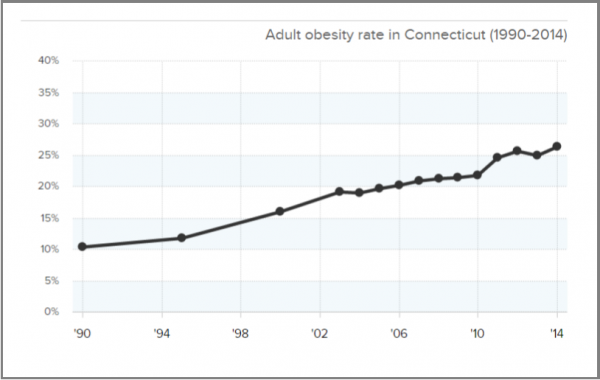
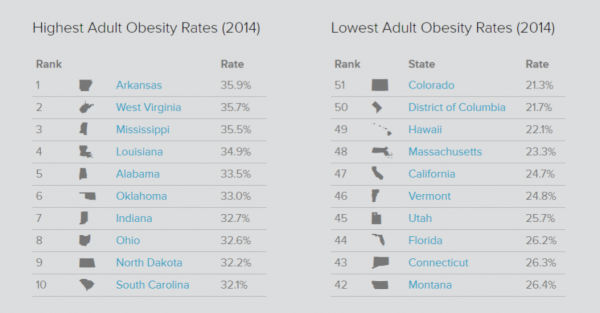
Connecticut’s obesity rate has increased dramatically during the past two decades, but the state has among the lowest adult obesity rates in the country, ranking 43rd among the states in an analysis of obesity rates. According to the most recent data, rates of obesity now exceed 35 percent in three states (Arkansas, West Virginia and Mississippi), 22 states have rates above 30 percent, 45 states are above 25 percent, and every state is above 20 percent. Arkansas has the highest adult obesity rate at 35.9 percent, while Colorado has the lowest at 21.3 percent.CT rates

Connecticut now has the ninth lowest adult obesity rate in the nation, according to The State of Obesity: Better Policies for a Healthier America. Connecticut's adult obesity rate is currently 26.3 percent, up from 16.0 percent in 2000 and from 10.4 percent in 1990.

U.S. adult obesity rates remained mostly steady — but high — in 2014, the most recent full year data available, increasing in Kansas, Minnesota, New Mexico, Ohio and Utah and remaining stable in the rest.

The analysis also found that 9.2 percent of adults in the state have diabetes, an obesity-related health issue, ranking 35th in the nation as of 2014. It is the highest rate in the state in the past 25 years. The number of diabetes case is projected to increase from 267,944 in 2010 to 412,641 by 2030, at the current pace of increase.obesity rates

The adult hypertension rate, 31.3 percent, ranks Connecticut 27th among the states.  The number of hypertension cases is projected to increase from 708,945 in 2010 to 941,046 by 2030.  Heart diseases is projected to increase from 214,986 people in 2010 to 1,014,057 in 2030, and obesity-related cancer is projected to more than double in 20 years, from 58,115 in 2010 to 147,883 in 2030.

The state-by-state analysis is a project of the Trust for America’s Health and the Robert Wood Johnson Foundation.

73 Local Health Departments Serve CT's 169 Municipalities

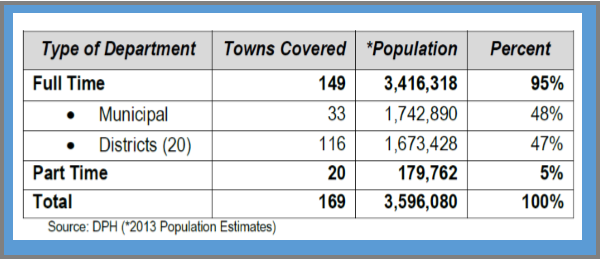
Connecticut has 73 local health departments serving the state’s entire population – individuals residing in the state’s 169 cities and towns. Data compiled by the state Office of Legislative Research breaks down the health departments by full-time and part time, as well as their geographic coverage. Of the 73 local health departments across the state, 53 are full-time departments, while the remaining 20 are part-time. The full-time departments include 33 individual municipal health departments and 20 health district departments (multi-town departments serving from two to 20 towns).numbers

By law in Connecticut, a town may have a part-time health department if: (1) it did not have a full-time department or was not part of a full-time district before January 1, 1998, (2) it has the equivalent of one full-time employee, and (3) the Department of Public Health commissioner annually approves its public health program and budget.

According to the Department of Public Health (DPH), based on the state’s 2013 estimated population, full-time health departments (both municipal and district) serve about 95 percent of the state’s population, while part-time departments serve the remaining 5% percent, OLR reports.

Connecticut’s local public health system is decentralized and a local health department falls under the jurisdiction of its respective municipality or district. Staff are hired and employed by the municipal or district health department.

The law requires towns, cities, and boroughs to nominate a municipal health director, who must be approved by their respective legislative bodies and DPH. The DPH commissioner may remove the director for cause. The town, city, or borough may also take such action with the commissioner’s approval.public health

Municipal and district health departments enforce the state’s public health laws, rules, and regulations, including the Public Health Code. Responsibilities include jurisdiction to:

  • examine and remediate public health hazards, nuisances, and sources of filth;
  • levy fines and penalties for Public Health Code violations;
  • grant and rescind license permits (e.g., for food service establishments or septic systems);
  • establish fees for health department services;
  • submit to DPH reports on reportable diseases from health care providers and clinical laboratories; and
  • provide for sanitation services (district directors may serve as sanitarians as practical).

Full-time municipal and district health departments receive state funding. The legislature eliminated funding for part-time health departments in 2009, according to OLR.


Focus Shifts from Veterans to Children in Efforts to Combat Homelessness

As progress is being made in Connecticut and across the country to end homelessness among veterans, greater attention appears to be turning next to homelessness among families with children. Families with children under age 6 are the fastest growing segment of the homeless population in the United States, Myra Jones-Taylor, Commissioner of Connecticut’s Office of Early Childhood, told state legislators recently.

In Connecticut, an estimated 3,000 to 9,000 families with young children are homeless, Jones-Taylor said. Of that estimate, approximately 1,125 families experienced homelessness in 2015 with 2,022 children impacted. Of those children, 43 percent were under the age of 5 and 42 percent were between the ages of 5 and 12.quote

Governor Malloy announced last month that the federal government has certified Connecticut as having effectively ended homelessness among veterans.  Just the second state in the nation to accomplish the milestone, Connecticut has implemented a comprehensive, unprecedented system to target homelessness among veterans.  Connecticut was one of the first states to join a national initiative that sought to secure commitments from communities across the country to end veteran homelessness by the end of 2015.

Nationally, between 2009 and 2015, there has been a 35 percent reduction in the number of homeless veterans, according to a Governing magazine’s review of data from the Department of Housing and Urban Development, published this month.  In addition to Connecticut, major cities including New Orleans, Houston and Las Vegas have indicated that “they’ve effectively eliminated homelessness among veterans.”

“But most people who are homeless are not veterans.  And in many of the nation’s large cities, homelessness among the general population appears to be getting worse,” the magazine points out.  Between 2014 and 2015, overall homelessness in the nation’s 50 largest urban areas increased by 3 percent.  The numbeyouth hr of unsheltered individuals in those cities went up 10.5 percent and the number of unsheltered people in homeless families grew by 18.8 percent, Governing revealed.

Many attribute the success in reducing the veteran homeless population to an aggressive well-planned effort initiated at the federal level, and are looking for similar efforts focused on homeless youth.

In President Obama’s budget plan submitted to Congress this year, he requested $10.967 billion for the purpose of reaching and maintaining the goal of ending family homelessness by 2020. The National Alliance to End Homelessness emphasizes that “should this request be enacted by Congress, it would give communities what they need to end homelessness for families with children.”

Connecticut Child Advocate Sarah Healy Eagan has said that “research has shown that homelessness puts children at increased risk of health problems, developmental delays, academic underachievement, and mental health problems.”

According to the National Low Income Housing Coalition (NLIHC), the federal Department of Housing and Urban Development (HUD) is asking Congress to provide sufficient funding for 10,000 new housing choice vouchers for homeless families with children, funding for 25,000 new permanent supportive housing units, and funds to provide 8,000 families with rapid rehousing assistance.

In addition, HUD announced a legislative proposal where it will seek $11 billion in mandatory spending over the next 10 years to serve a total of 550,000 families with additional vouchers, permanent supportive housing, and rapid rehousing assistance.

At a February public hearing at the State Capitol focused on proposed Senate Bill 10, which focuses on child care for homeless families with children.  It would create a “protective services” category for children experiencing homelessness, making them “categorically eligible” for child care subsidies regardless of the parent’s work status; and, ensure immediate access to child care for all children by creating a 90-day grace period for providing documentation of health and immunization records when enrolling in a child care center, group children care home, or family child care home.youth

The executive director of the Partnership for Strong Communities, Alicia Woodsby, testifying in support of the legislation, expressed the hope that its passage would “assist providers in resolving each case of family homelessness more quickly,” noting that families experiencing homelessness lack employment and are struggling with extreme instability.  The lack of child care makes it even more challenging for them to participate in worker training or secure new employment.”

The coalition of organizations and agencies led 2016 Homelessness & Housing Advocacy Days on March 2 and 3 at the State Capitol, drawing attention to the issue of homelessness, including homelessness among children and families.

There are wide estimates of just how many young people are homeless nationwide, according to the Child Welfare League of America, ranging from half a million to 1.6 million with estimates that up to 40 percent are gay, lesbian, questioning or transgender. Many of these young people have been kicked out of their own homes and are responsible for their own survival and are frequent targets of exploitation, trafficking and abuse while living on the streets CWLA points out.

The White House has pointed out that three years ago, in February 2013, the U.S. Interagency Council on Homelessness (USICH) issued a  Framework to End Youth Homelessness detailing the steps necessary to achieve the goal of ending youth homelessness by 2020, and strategies to improve outcomes for children and youth experiencing homelessness.

Officials noted that “the framework articulates the need for government, non-profit, civic, and faith community partners to focus together on the overall well-being of youth experiencing homelessness — addressing not just their need for stable housing, but also their educational and employment goals, and the importance of permanent adult connections in their lives.”

The conclusion of that report stated flatly that “we can end youth homelessness in America by 2020.”  The report emphasized that “Reaching this goal will require more resources at all levels and sectors, but resources are not enough. At all levels of policy and programming, we have to continuously challenge ourselves to gather and use better data, to leverage existing resources available to us, to implement more deliberate service strategies informed by good data and stakeholder input, and to coordinate systems and services around those strategies.”

“Access to high quality early care and education is extremely important for all children, but especially for children in vulnerable circumstances,” Rachel Leventhal-Weiner, Education Policy Fellow at Connecticut Voices for Children, told legislators.  “We consider homeless children to be among the most vulnerable.”