Cigna Looks to Invest in Start-up Insurance Ventures, Establishes $250 Million Fund
/Health services organization Cigna has launched Cigna Ventures, a corporate venture fund with an infusion of $250 million in capital to be invested in healthcare technology startups and early-stage companies.
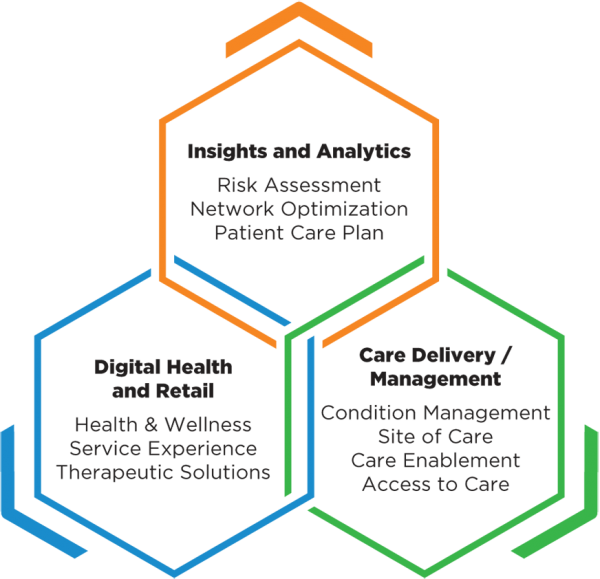
Cigna has committed $250 million of capital to Cigna Ventures, according to officials, to invest in promising startups and growth-stage companies that are unlocking new growth possibilities in health care and will bring improved care quality, affordability, choice, and greater simplicity to customers and clients. Cigna Ventures is focused on companies across three strategic areas: insights and analytics; digital health and retail; and care delivery/management.
“Cigna’s commitment to improving the health, well-being and sense of security of the people we serve is at the front and center of everything we do,” said Tom Richards, senior vice president and global lead, strategy and business development at Cigna. “The venture fund will enable us to drive innovation beyond our existing core business operations, and incubate new ideas, opportunities and relationships that have the potential for long-term business growth and to help our customers.”
Cigna Ventures was created to help Cigna identify, assess and sponsor early-stage innovation ideas that warrant deeper exploration through focused pilot and test-and-learn activities with the goal of realizing meaningful business value. The initiative’s newly launched website suggests that “Cigna Ventures is the strategic corporate venture capital partner of choice in the health care industry. We work closely with entrepreneurs to accelerate growth and innovation through strategic use of capital and deep partnerships.”
 Companies in the portfolio, according to published reports, include Omada Health, a digital therapeutics company treating chronic diseases; Prognos, a predictive analytics company for healthcare; Contessa Health, a home-patient care service; Mdlive, which provides remote health consultations; and Cricket Health, a special kidney care provider.
CIGNA’s interest in the rapidly-evolving health care field is also reflected in the company’s membership, presence, and investment in insurance technology start-ups at Upward Hartford, the co-working and innovation center in Hartford that was the site of the city’s inaugural Insurtech Hub earlier this year, and is now home to the winning participants in Hartford’s first annual insurance accelerator, held in April.
Amidst the start-ups are a number of Hartford’s longstanding insurance giants, including Cigna.
Bloomberg reported last week that overall investment in health-care startups has increased this year. According to the MoneyTree Report from PricewaterhouseCoopers and CB Insights, $10.6 billion was invested in health-care deals in the first half of this year. Two of the seven largest venture-capital rounds in the second quarter involved health-care firms, the report shows.
“Our partnership with Cigna has been about so much more than capital,” said Sean Duffy, co-founder and CEO of Omada. “The ability to collaborate with, learn from, and integrate deeply with a health services company so dedicated to delivering a 21st-century care experience to its customers and clients has enabled us to accelerate innovation, advance our capabilities, and grow our customer base.”
Cigna Corporation and Express Scripts received approval this week from the Antitrust Division of the United States Department of Justice for their pending $50 billion plus merger, which is expected to close by year’s end. “Quality health care and competitive pricing for health care services and pharmaceutical drugs is critical to U.S. consumers,” said Makan Delrahim, the head of the antitrust division, in a statement announcing approval of the deal.


 Obesity is a problem in virtually every city and town, and every income and social sector. But its impact is most serious in communities where conditions make access to healthy foods and regular physical activity more difficult, such as lower income and rural areas, including many communities of color. The national costs of obesity are enormous, officials point out. Obesity drives an estimated $149 billion annually in directly related healthcare spending, and an additional $66 billion annually in lowered economic productivity. Also, one in three young adults is ineligible for military service, due to being overweight, officials noted.
 Among the report’s other key findings:
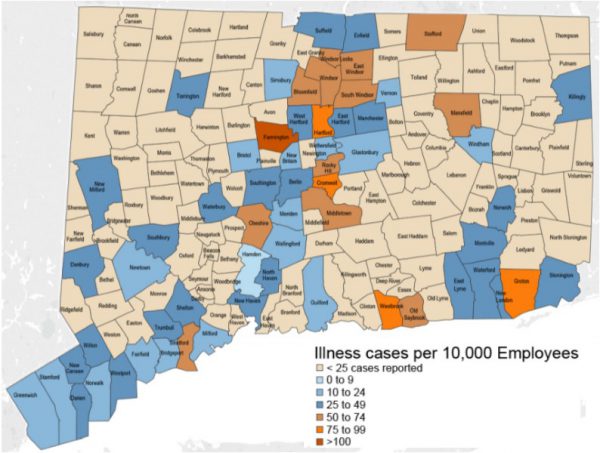
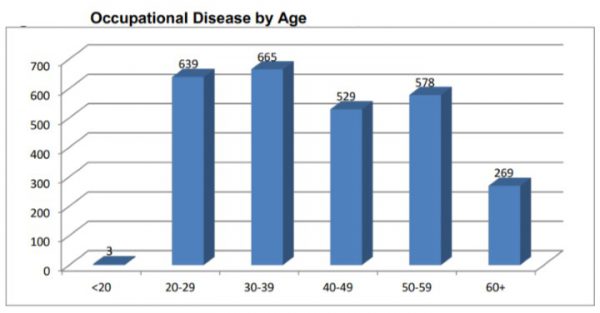 These higher town rates often reflect the locations of large employers in higher hazard industries, and may also reflect better reporting of cases, since cases of occupational illness are often not reported, the study points out.

 Pagoto is also Director of the UConn Center for mHealth and Social Media. She is also a licensed clinical psychologist her research focuses on leveraging technology in the development and delivery of behavioral interventions targeting diet, physical activity, and cancer prevention behaviors. She has had federal funding for her program of research for 14 consecutive years, totaling over $11 million, and has published over 170 papers in peer-reviewed journals, according to the UConn website.
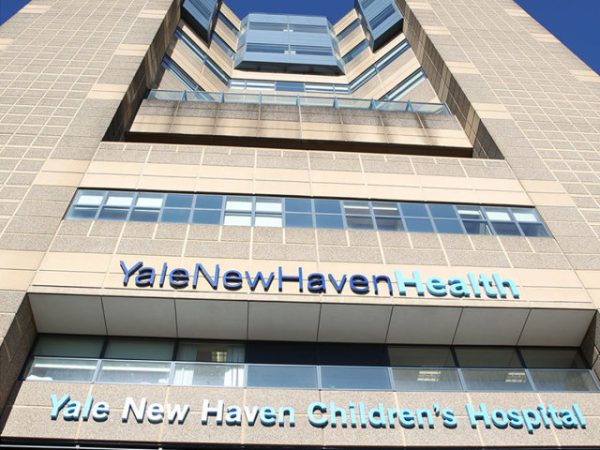
 Atop the rankings in the pediatric specialty were Children’s National Medical Center (Washington, DC), Children’s Hospital of Philadelphia, Boston Children’s Hospital, Children’s Hospital Colorado, Cincinnati Children’s Hospital Medical Center, Rainbow Babies and Children’s Hospital (Cleveland), UCSF Benioff Children’s Hospital of San Francisco and Oakland, New York-Presbyterian Morgan Stanley-Komansky Children’s Hospital, St. Louis Children’s Hospital-Washington University, and C.S. Mott Children’s Hospital – Michigan Medicine (Ann Arbor).
 e, infection rates in the NICU and other data collected from a detailed U.S. News clinical survey of children's hospitals, produced 85 percent of each hospital's score. The other 15 percent reflects nominations from pediatric specialists and subspecialists who responded to surveys in 2016, 2017 and 2018 and recommended the hospital for serious cases in their specialty.





 According to the Nature Conservancy, Bridgeport currently has a 19% tree canopy cover, for example. If all open spaces, vacant lots and parking lots could be planted, the city would have a 62% tree canopy cover. The ramifications would be substantial, impacting various health and quality of life factors.

 The survey analysis is administered for the Points of Light Foundation by True Impact, a company specializing in helping organizations maximize and measure their social and business value, and analyzed by VeraWorks. The survey instrument consists of quantitative and multiple-choice questions that inform the Civic 50 scoring process. It is the only survey and ranking system that exclusively measures corporate involvement in communities.

 In its Corporate Social Responsibility
 prise 31 percent of Aetna’s employees, which was a key driver of our new program to provide up to $10,000 to qualified recent college graduates to help them repay education loans.”