

Stress in CT Comes Mostly at Work, National Analysis Shows
/
Connecticut ranked #8 in work-related stress,#22 in family related stress, #34 in money-related stress, and #47 in health & safety related stress.
Read MoreConnecticut ranked #8 in work-related stress,#22 in family related stress, #34 in money-related stress, and #47 in health & safety related stress.
Read MoreResponding to greater awareness of the stresses facing high school students that reveal mental health concerns, Hartford-based Jordan Porco Foundation has developed a high school initiative building on successful college programs.
Read MoreThe time is right to embrace a new way of funding, organizing, and delivering child health services, as states reform payment and delivery systems
Read MoreEnsuring that all Connecticut residents and households are food secure is a critical public health goal, and a new University of Connecticut study highlights how much work remains ahead to achieve that goal.
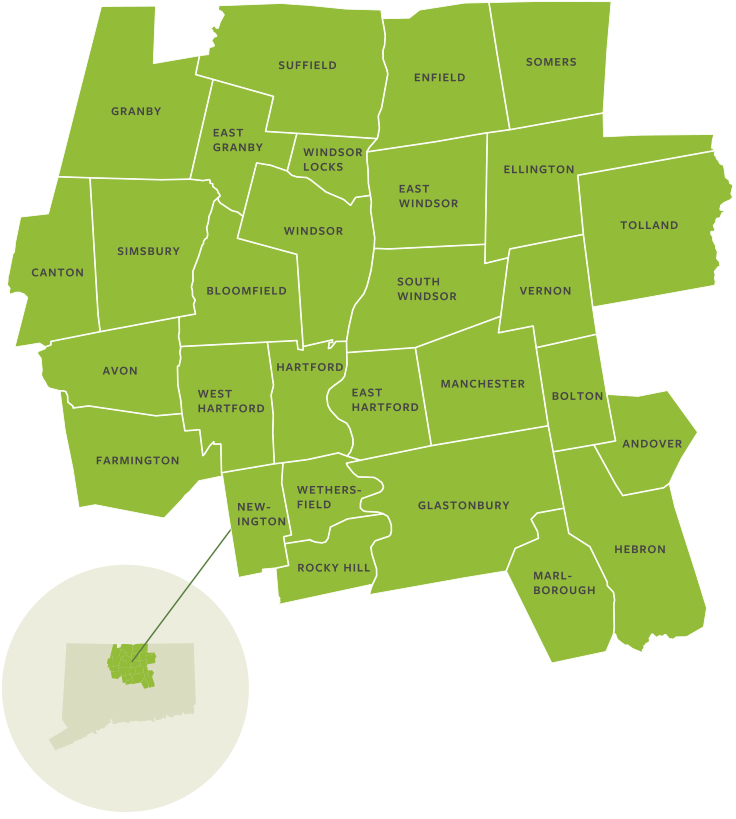
Read MoreThe Hartford Foundation for Public Giving, the community foundation for 29 communities in Greater Hartford, awarded more than $38 million in grants to the region’s nonprofit agencies and educational institutions in 2018.
“At a time when our state and many of our communities face significant fiscal challenges, the Hartford Foundation was able to award a record breaking number of grants this past year,” said Hartford Foundation president Jay Williams. “We continue to look for ways to work together with our donors, nonprofits, and community partners to ensure Greater Hartford residents have access to opportunities that enrich their lives and secure a better future for our region.”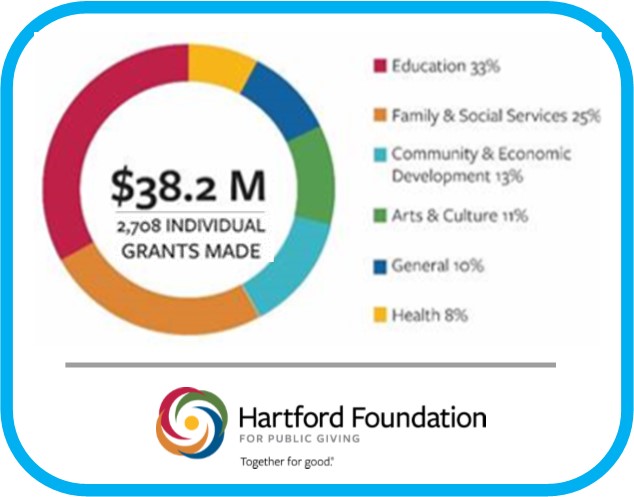
According to the latest estimated, unaudited numbers, the Foundation ended 2018 with total assets of $933 million in 1,230 funds. The Foundation received gifts totaling $13.1 million and opened 22 new funds.
“Greater Hartford is fortunate to have so many generous residents who truly want to make a lasting difference in their community,” Williams said. “The historic amount of resources we have been able to provide to hardworking and dedicated nonprofit organizations is a testament to our donors’ level of commitment to the region and the work the Hartford Foundation supports.”
Officials noted that the Foundation’s 2018 grantmaking - with a total of 2,708 individual grants made - was based on the recognition that "a vibrant and strong Greater Hartford region requires that all residents, especially those with the greatest need, have equitable access to opportunities to achieve and flourish." The largest percentage of grants were in education (33%), followed by family & social services (25%), communication and economic development (13%), and arts & culture (11%).
 Among the grants, in each program area:
Education
Family and Social Services
Community and Economic Development
Arts and Culture
Health
Nonprofit Capacity Building
Since its founding in 1925, the Foundation has awarded more than $758 million in grants.
Connecticut Innovations (CI) has landed on Forbes magazine’s list of the ten top venture capital firms making the most investments in healthcare start-ups during 2018. With 20 deals done during the year, CI ranked at number seven.
CI is Connecticut’s strategic venture capital arm and the state’s leading source of financing and ongoing support for innovative, growing companies. The two largest CI deals were with locally headquartered Arvinas, a $56 million investment, and Rallybio, a $37 million investment. 
Leading the way among venture capital firms in the U.S. were California-headquartered Alexandria Venture Investments (38 deals), Maryland-based New Enterprise Associates (28), Keiretsu Forum of California (27), OrbiMed, headquartered in New York (24), and ARCH Venture Partners (22) of Illinois. Just ahead of CI was SV Health Investors, with 21 deals. The venture capital firm is based in Massachusetts.
Nationally, startups in the sector have raised more money in 2018 than any previous year in the past decade.
Rallybio, based in Farmington at the University of Connecticut’s Technology Incubation Program, was co-founded in January 2018 by Martin Mackay, PhD, Stephen Uden MD, and Jeffrey Fryer, CPA, recognized leaders from the biopharma industry. The company’s focus: identifying and accelerating the development of transformative breakthrough therapies for patients with severe and rare disorders. They aim to develop innovative drug candidates against mechanisms that have strong biological rationales. Rallybio’s focus is on antibodies, small molecules and engineered proteins.
Last month, the company was named by FierceBiotech as one of 2018’s Fierce 15 biotechnology companies, designating it as one of the most promising private biotechnology companies in the industry.
Arvinas, headquartered in New Haven, is a biopharmaceutical company dedicated to improving the lives of patients suffering from debilitating and life-threatening diseases through the discovery, development, and commercialization of therapies to degrade disease-causing proteins.
Building on groundbreaking research at Yale University by Craig Crews, Ph.D., Arvinas’ Founder and Chief Scientific Advisor, Arvinas has developed a broad technology platform “focused on high-value targets, with the potential to deliver safer, more potent treatment than small molecule inhibitors, and to address up to 80% of proteins that evade inhibition and are currently undruggable.” Among the company’s Board members is Ted Kennedy, Jr., a health care policy and disability activist, regulatory attorney, and former Connecticut state senator.
Connecticut Innovations is located in Rocky Hill.
The collective response to America’s opioid crisis has opened a new front in Connecticut in an unlikely location – the public library. Driven by a desire to be prepared to save a life, a growing number of libraries – in communities large and small – now have the opioid reversal drug naloxone on hand, with librarians trained in how to use it. Naloxone is a medication that can reverse and block the effects of other opioids. It can very quickly restore normal respiration to a person whose breathing has slowed or stopped as a result of overdosing with heroin or prescription opioid pain medications.
The U.S. Surgeon General has issued a nationwide public health advisory, to “urge more Americans to carry a potentially lifesaving medication that can reverse the effects of an opioid overdose.” That office reports that an estimated 2.1 million people in the U.S. struggle with an opioid use disorder.
For Marlborough’s Richmond Memorial Library, the decision to train three staff members to administer the medication was wholly consistent with what a library is all about, as director Nancy Wood explains.
“I liken it to the defibrillator that we brought in to the library two years ago. If you are saving a life for one reason, you can save a life for another. And it is a cultural thing for librarians to want to help people. It is what we do.”
As a significant public place in Marlborough, open more hours than just about any other building in town, Wood says that although “hopefully we never have to use it,” she and her staff felt it was important to be trained and ready. The AHM Youth & Family Services organization provided the training last March.
Rates of opioid overdose deaths are rapidly increasing nationwide and in Connecticut. Since 2010, the number of opioid overdose deaths in the U.S. has doubled from more than 21,000 to more than 42,000 in 2016. Overdose deaths in Connecticut have nearly tripled in a six-year period, from 357 in 2012 to 1,038 in 2017. Of those 1,038 deaths, 677 involved fentanyl — a synthetic opioid drug 30 to 50 times more powerful than heroin — either by itself or with at least one other drug, according to published reports.
 According to the U.S. Center for Disease Control and Prevention, between June 2017 and June 2018, there were 1,056 reported cases of drug overdose deaths, based on provisional data, in Connecticut. An analysis by the Kaiser Family Foundation concluded that the opioid overdose death rate in Connecticut was the 10th highest in the nation, and the percentage increase between 2016 and 2017 was 17th highest in the U.S., exceeding the national average.
Hartford recently announced a $10,000 grant from CIGNA Foundation that will train librarians in the city and cover the purchase of naloxone for city libraries.
“As a public institution, we see that our entire community is impacted by the opioid crisis; it was clear that a rapid and robust response to the problems caused by the opioid drug crisis was imperative,” said library CEO Bridget Quinn-Carey as the grant was announced earlier this month. Library officials also plan to provide information about opioid abuse awareness and host education and information forums.
When the town of Canton made training available for department heads last year, library director Sarah McCusker took the one-day session. Like Wood, she views it as an extension of first aid training that can help a patron in distress.
“It’s the same as knowing CPR or having an AED on-site. We call 911 immediately, but we see everything, and we’d like to be prepared,” McCusker explained. She also believes employees in public spaces should be “widely trained” to assist in emergency situations. And she anticipates that if her town government makes training in the use of naloxone available again this year, although it is not mandated, additional staff members will choose to attend.
The Connecticut Library Consortium indicates that while official figures are not available, reports of libraries having naloxone available, along with official policies governing its use and trained staff members, are increasing. Hartford, Marlborough, Canton and Avon are among them. Other libraries have librarians on staff who have sought and received individual training. For many libraries, it is a major health issue that their municipalities and local governing boards are reviewing, and one that impacts cities and small towns.
The naloxone brand NARCAN® Nasal Spray is a pre-filled, needle-free device that requires no assembly and is sprayed into one nostril while patients lay on their back. Those prepared to administer it have been trained on the signs of an opioid overdoes, and how to respond immediately as 911 is called for a local ambulance response.
“Public libraries are responsible for meeting the wide-ranging needs of their communities. Yes, libraries offer books and storytime programs and research help that goes beyond Google. But they are also the place to turn to find a job, become a citizen, discover a new app, find quality healthcare information, make art, or learn a new skill,” said Jennifer Keohane, Executive Director of the Connecticut Library Consortium. “Having library staff who are trained to administer NARCAN is another way that libraries are evolving with their communities and are ready to provide help whenever and however it is needed.”
The Quell Foundation seeks to reduce number of suicides, overdoses, and incarcerations of people living with a mental illness. The Massachusetts-based nonprofit organization, which spent some time in Connecticut in 2018, continues to impact lives across the country, raising over one million dollars last year toward their mission to remove the stigma of mental health and to fund the next generation of mental health care professionals.
The Foundation came to the Wadsworth Atheneum in May to show a new documentary, Lift the Mask, which featured the first-person stories of individuals impacted by suicide. Among those featured in the film was a Vice President at Aetna and a recent college graduate from Middletown. It was the first time the documentary was shown outside a college campus. It was also shown at the University of Connecticut in September.
Following the film's showing in Hartford, a panel discussion was held before a packed auditorium, featuring both the Aetna executive and the former Middletown resident and her parents, who movingly told the story of their brother/son’s suicide.
“The generous support of our sponsors and individual donors is overwhelming,” said The Quell Foundation CEO, Kevin Lynch. “This outstanding growth comes to us at a pivotal time for mental health in America and our journey as an organization. We are deeply grateful and look forward to continuing our work in the years to come.” Lynch’s wife, Karen, is Executive Vice President of CVS Health and was recently named President of the Aetna Business Unit following the company’s merger.
The Foundation awards scholarships to students living with the challenges that come with having a mental health diagnosis, students who have endured the loss of a parent or sibling to suicide, and to students pursuing a career in the mental health field. Lynch and his team have distributed over $835,000 to young adults representing forty states and 118 colleges across the country since the Foundation’s establishment in 2015.
“The scholarship program is one of the most important tools we have in normalizing the conversation around mental health while also addressing the dearth of mental health providers,” said Lynch. “We are developing a pipeline of professionals to offset the aging population and high-demand of mental health care providers we have in this country.”
The Quell Foundation works to reduce the number of suicides, overdoses, and incarcerations of people with mental illness by encouraging people to share their story, increasing access to mental health services, and supporting first responders in recognizing the mental health warning signs among their own.
“The Quell Foundation’s Bridge the Gap award to students pursuing degrees in the mental health care field are most strongly facilitated through The Quell Foundation’s long-term partnerships,” said Renee Wilk, Executive Director of The Quell Foundation. “We invest in their students and the unique, mental health, degree-awarding programs offered at these institutions to promote and sustain workforce development in this critical space.”
The Quell Foundation is currently accepting applications for the 2019-2020 scholarship cycle.
Connecticut’s Insurance Department has issued its 2018 Consumer Report Card on Health Plans in Connecticut, providing consumers with an updated snapshot of 12 health carriers in the Connecticut marketplace. The goal: to help consumers make informed choices when choosing a health plan.
“The Department’s annual Report Card is designed to deliver side-by-side comparisons of health carriers across a variety of quality measures, including coverage for mental health and substance abuse treatment,” Commissioner Katharine L. Wade said recently. The analysis includes health claims, mental healthcare, pregnancy coverage and preventative care, and reviews the reasons cited in instances of denial of coverage. 
Among the trends identified in the latest annual report care are:
The 72-page data-filled report card also notes that there was an increase in the number of primary care providers, specialists and pharmacies participating in health plan networks. There was a decline in the number of participating hospitals, officials indicated, but attributed it “primarily due to consolidations in the industry and not facilities closing.”
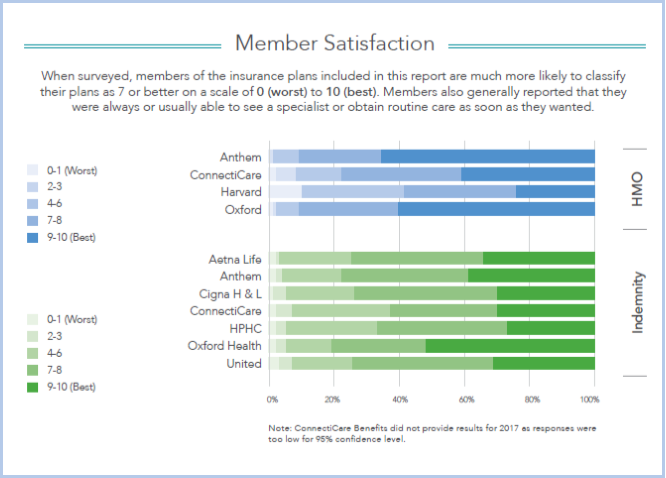
Customers surveyed said they were always or usually able to see a specialist or get routine care as soon as they wanted. The enrollment breakdown in Connecticut is lopsided. Among HMO's, Anthem has 81% of the market, ConnectiCare 17%, Oxford 2%. Among indemnity enrollments, Anthem has 42%, followed by Aetna's 20%, CIGNA's 19%, United's 7% and ConnectiCare's 5%.
The report card, issued this fall, includes “terms” that consumers should know, a series of frequently asked questions and answers, and results of a member satisfaction survey for HMO’s Anthem, ConnectiCare, Harvard Pilgrim and Oxford Health. Indemnity insurers Aetna Life, Anthem, CIGNA, ConnectiCare, Harvard Pilgrim, United Health and Oxford Health also had members surveyed on a range of “satisfaction” queries.
This report includes three years of data, where available, to be informative for consumers, officials said. The data utilized was through 2017.
The mission of the Connecticut Insurance Department is to protect consumers through regulation of the industry, outreach, education and advocacy. The Department recovers an average of $4 million yearly on behalf of consumers, according to officials, and regulates the industry by ensuring carriers adhere to state insurance laws and regulations and are financially solvent to pay claims.
Each year, the Department returns an average of $100 million a year to the state General Fund in license fees, premium taxes, fines and other revenue sources to support various state programs, including childhood immunization. The Department’s annual budget is funded through assessments from the insurance industry.
Individuals with questions or seeking further information may contact the Department at insurance@ct.gov or 860-297-3900.
Connecticut Attorney General George Jepsen has initiated a lawsuit against Stamford-based Purdue Pharma and several current and former members of Purdue's management and board of directors alleging that they designed, financed and waged a pervasive and aggressive campaign to mislead doctors and patients, claiming that prescription opioid medications manufactured and marketed by the company were safe and effective and strategically downplaying risks of addiction that they knew were inherent in their opioid products.
 The state alleges that Purdue "peddled a series of falsehoods" to push patients toward its opioids, reaping massive profits from sales while opioid addiction skyrocketed to the crisis level that is currently impacting Connecticut and states across the country.
"For a number of months, Connecticut and our multistate partners have been engaged in intensive negotiations with opioid manufacturers and distributors in the hope of resolving potential legal claims in a way that would avoid protracted litigation and would bring opioid treatment resources to those who are desperately in need," said Attorney General Jepsen. Jepsen, who leaves office next month, currently serves as part of the leadership of a multistate coalition of attorneys general who are investigating opioid manufacturers and distributors. "I expect those negotiations to continue, and I remain hopeful they will bring a resolution that helps to address this ongoing crisis."
In Connecticut, 1,038 people died of accidental drug overdoses in 2017, the vast majority from opioid-related overdoses. The Connecticut Office of the Chief Medical Examiner has projected that 1,030 more people will die of overdoses in 2018. From 2013 to 2016, Connecticut experienced a fourfold increase in deaths from prescription opioid overdoses, and the estimated economic cost of the opioid epidemic in Connecticut in 2016 was $10.27 billion. Nationwide from 2002-2017 there was a 4.1-fold increase in the total number of deaths involving opioids, according to the National Institute on Drug Abuse. 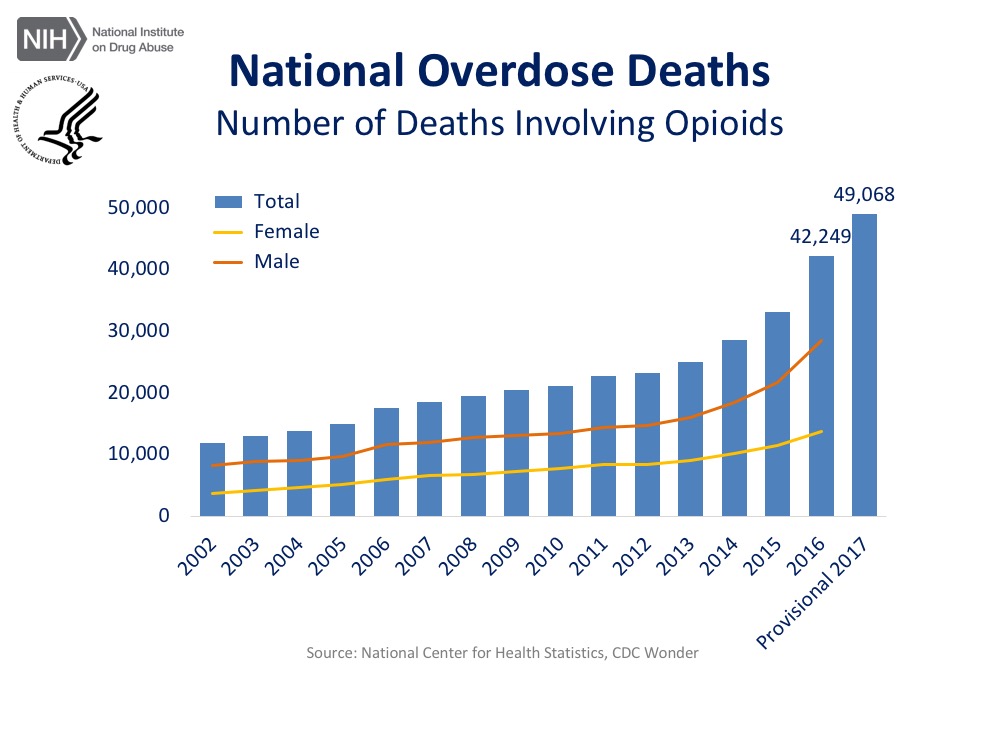
The Attorney General said that Purdue Pharma “has not demonstrated to me that it is serious about addressing the states' very real allegations of misconduct and coming to a meaningful settlement. It is my hope that, in filing this lawsuit at this time, Connecticut can assist in the collective effort to hold this company and responsible individuals accountable.
Jepsen said the state alleges that “Purdue knowingly put its own exorbitant profits first when it purposefully and systematically misled doctors by not just downplaying the terrible risks of addiction, but by forcefully asserting that opioid products were safe, that the risk of addiction was low, and that patients experiencing symptoms of addiction should actually be prescribed higher and greater doses of Purdue's opioid drugs. We allege that this behavior was endorsed and promoted by the highest leadership of the company and that it was in violation of Connecticut law."
The state alleges that Purdue misinformed patients and doctors to get more and more people taking its premier opioid drug, OxyContin, and its two other opioid medications, Hysingla and Butrans.
The lawsuit will be filed in Superior Court in Hartford. It alleges four counts of violations of the Connecticut Unfair Trade Practices Act and seeks damages, civil penalties, forfeiture of ill-gotten profits and restitution as well as permanent injunctive and other relief. The suit indicates that Purdue allegedly:
The company did not tell doctors that higher doses of opioids carried heightened risk of addiction, overdose and death, the state alleges, and the company funded and distributed publications that misrepresented the addictive nature of prescription opioids and made claims that were not supported by scientific evidence.
The state further alleges that Purdue promoted the idea of "pseudoaddiction," suggesting that patients who appeared to be addicted were instead receiving inadequate doses and needed more prescription opioid drugs.
In addition to the company, the state's lawsuit names current and former board members as defendants, alleging that they tracked sales representatives and oversaw the tactics used to push opioid drugs. The individual defendants include: Richard Sackler, Jonathan Sackler, Mortimer D.A. Sackler, Kathe Sackler, Ilene Sackler Lefcourt, Beverly Sackler, David Sackler, Theresa Sackler, Cecil Pickett, Paulo Costa, Ralph Snyderman, Frank Peter Boer and Judy Lewent. The lawsuit also names past CEOs John Stewart and Mark Timney as defendants.




















To see more Connecticut illustrations, visit christycoreyart.com

© 2026 Connecticut By The Numbers [TM] 557 Prospect Avenue - 1st Floor, West Hartford, CT 06105
Designed by RDK Design & Photography


