Structural Problems Seen in the Connecticut Economy
/In an analysis highlighted by the Connecticut Institute for the 21st Century, well-known economist Don Klepper-Smith, in a newsletter to clients of economic forecasting consultancy DataCore Partners, is voicing concerns about Connecticut’s economic prospects, short and long-term. His views come as the legislature grapples with approximately a billion dollars in projected deficit, and the Institute is signaling a heightened profile in the state, with a new director visibly sharing the organization’s economic concerns.
Klepper-Smith’s latest findings, headlined “Troubling Trends,” are the result of comparisons between economic activity in different parts of Connecticut and Massachusetts conducted over the last several years, the Institute website reports. Although both states share many of the same characteristics, Klepper-Smith notes the Massachusetts labor market is notably healthier than the Connecticut market and that seems to be a key factor holding back the Connecticut economy.
The job recovery rate in Connecticut since 2006 is 76.6 percent, according to DataCore, compared with the Massachusetts job recovery rate of 240.3 percent. The significantly lagging job recovery rate in Connecticut has “led to negative impacts in other parts of the Connecticut economy.” Examples cited include that the median price for single family homes in Connecticut dropped 3 percent in 2015, while it went up by 3 percent in Massachusetts during the same period.
Similarly, over the last six months, Connecticut’s unemployment rate has edged upwards, while the Massachusetts rate has dropped slightly. Technically, according to DataCore, this is a sign of a growth recession in which the local economy is not strong enough to prevent a rise in the jobless rate, the Institute indicates.
The website goes on to state that “The DataCorp findings, when combined with other recently published reports, provides continuing evidence of a fundamental shift in the basic foundations of the Connecticut economy.”
Scott Bates, a Connecticut native, has recently been named as executive director of the Connecticut Institute for the 21st Century. He previously served in the administration of Virginia’s Governor, for the U.S. House Select Committee on Homeland Security, and as president of The Center for National Policy in Washington.
 In an article appearing in this week’s Hartford Business Journal, Bates describes Connecticut’s fiscal dilemma as both a spending problem and revenue problem, indicating that “our state will only return to a sustainable fiscal model when incremental changes - taken together – substantially reduce the cost of government.”
Bates adds that “the tax problem is a major issue that may take years to sort out,” suggesting that available savings be pursued immediately. Among the suggestions, moving to embrace a policy of “aging in place,” a change in approach that could save more than $650 million over the next 20 years according to a recent report from the Institute and the Connecticut Economic Resource Center.
The Connecticut Institute for the 21st Century is a non-partisan non-profit organization of businesses and civic groups dedicated to identifying effective and efficient ways for state and local government to deliver services while reducing cost to the taxpayer and making Connecticut’s economy strong.
The organization researches best practices, publishes reports, and educates policymakers and the public on key spending and policy issues including transportation, public pensions, smart growth and social service spending.
 Chinese made up 35 percent of the 92,000 foreign secondary school students in the United States in 2015, according to the US Department of Homeland Security, by far the largest group studying here, the Boston Globe

 The states with the largest Latino population are California, Texas, Florida, New York, Illinois, Arizona, New Jersey, Colorado, New Mexico, Georgia and North Carolina. With the smallest Latino populations are two New England states – Maine and Vermont – along with North and South Dakota and West Virginia. Another New England state, New Hampshire, is among the ten states with the smallest Latino population.
 The new network would dramatically extend televised and online coverage and “on-demand access” to all legislative hearings and debates, as well as public policy conferences, regulatory hearings, executive agency meetings, and state Supreme Court and Appellate judicial proceedings.
 Giguere pointed out that “there are 10 hearing rooms, but CT¬N’s physical plant limits us to covering only two events concurrently. That means up to 80% of the Legislative committee process at any given time goes unseen. Our capacity to cover the Executive and Judicial Branches is even more limited.”
 currently funded, CFOG notes, “the new entity would be monitored and accountable to the public, but independent from government itself.”
 When asked to think about overall business conditions in Connecticut versus 6 months ago, respondents – for the first time in three quarters – said conditions are better now than 6 months ago. The margin was narrow - with 27 percent saying “better” and 25 percent saying “worse”, but that’s a reversal from the past two quarters, when more people were of the view that business conditions has worsened (22%-24% and 24%-28% in the two previous quarters).
 In a survey of states nationwide, Illinois was at the bottom of the list, with only one in four Illinois residents indicating confidence in their state government, the lowest among the 50 states by a significant margin. Rhode Island (33%) and Connecticut (39%) join Illinois as states with less than 40 percent government confidence, according to data compiled by Gallup. North Dakota residents are the most trusting; 81 percent say they are confident in their state government.
 ts are based on Gallup's 50-state poll, conducted March through December 2015. Gallup asked respondents whether they do or do not have confidence in their state's "government in general."
 When Connecticut voters go to the polling places on Tuesday, April 26, voters in nearly two-thirds of the states will already have made their preferences known. The same day as Connecticut, presidential primaries will also be held in Delaware, Maryland, Pennsylvania and Rhode Island. The previous week, primaries will be held in New York, a state called home, at various times, by three of this year’s leading contenders – Hillary Clinton, Bernie Sanders and Donald Trump.
 diana, New Mexico, California, New Jersey, Nebraska, West Virginia, Oregon and Montana. Most states have their Democratic and Republic primaries on the same day, although a handful hold party primaries on different days. South Carolina’s Republican primary will be on February 20, for example, and its Democratic primary on February 27.
 The final
 On July 13, 2015, President Obama hosted the sixth White House Conference on Aging, joining older Americans and their families, caregivers, and advocates at the White House and virtually through hundreds of watch parties across the country.



 ave the Whale” season-ticket drive resulted in 8,300 season tickets sold, about 3,000 more than the previous year. In the aftermath of the season ticket drive, and heading into the 1996-97 season, the Whalers management said they would remain in Hartford for two more years, in accordance with their lease.
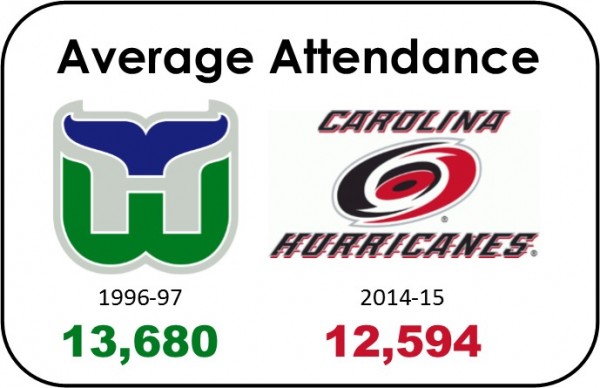 efore management moved the team from Hartford. (To 10,407 in 1993-94, 11,835 in 1994-95, 11,983 in 1995-96 and 13,680 in 1996-97.)