CT’s Cuban-American Population Is Centered in Bridgeport, As Immigration to U.S. From Cuba Grows
/The number of Cubans entering the U.S. has picked up dramatically since former President Barack Obama announced a renewal of ties with the island nation in late 2014, a Pew Research Center analysis of government data shows. The U.S. has since opened an embassy in Havana, a move supported by a large majority of Americans, and public support is growing for ending the trade embargo with Cuba, according to Pew surveys.
Outside of Florida, the New York metropolitan area – including Connecticut - is home to the most Cuban Americans. More than 10,600 Cuban-Americans call Connecticut home, according to U.S. Census 2014 data. The city with the largest Cuban population is Bridgeport, with more than 1,000 residents of Cuban heritage, according to published reports.
According to the website ZipAlas, the Connecticut communities with the largest percentage of Cuban residents among local their residents include Bridgeport, Hartford, Stratford, Westport, New Britain, Bolton, Stamford, Weston, New Haven, and West Hartford.
Overall, 56,406 Cubans entered the U.S. via ports of entry in fiscal year 2016, up 31 percent from fiscal 2015 when 43,159 Cubans entered the same way, according to the U.S. Customs and Border Protection data reported by Pew. Fiscal 2015 saw an even larger surge, as Cuban entries jumped 78 percent over 2014, when 24,278 Cubans entered the U.S.
There are 2 million Hispanics of Cuban ancestry living in the U.S. today, the fourth largest Hispanic origin group behind Mexicans, Puerto Ricans and Salvadorans. But population growth for this group is now being driven by Cuban Americans born in the U.S. The share of foreign born among Cubans in the U.S. declined from 68 percent in 2000 to 57 percent as of 2015, Pew reported. The Cuban population in the United States has steadily grown, accelerating from 737,000 in 1990 to 1,144,000 in 2013, according to the Migration Policy Institute.
According to the 2014 American Community Survey (ACS), 923,111 foreign-born Hispanics of Cuban origin lived in Florida, 47,016 in New Jersey, 30,398 in Texas, 28,436 in California, and 24,898 in New York, the Center for Immigration Studies reported.
 The Cuban Lyceum of Bridgeport -- Liceo Cubano de Bridgeport- celebrated its 60th year in 2014, the Connecticut Post reported. Founded in 1954 on the East Side of Bridgeport, the organization continues as the longest running Hispanic social club in all of New England, according to local leaders. The Lyceum was officially incorporated on July 21, 1954, created to “promote unity, understanding and friendship among all Cuban and others Spanish-speaking people,” and “provide a welcomed place for newly relocated Cubans in the United States,” to continue the traditions of Cuban culture.
Bridgeport Police Chief A.J. Perez was born in Cuba migrated with his family as a youngster to the United States in 1968, according to published reports. He joined the Bridgeport Police Department in 1983 and became Chief of Police last year, the first Cuban-American police chief in the state’s history.


 Eligibility Requirements for Book Awards to be made in 2017:


 As of January 9, 2017, 920 participants from across the country had submitted more than 6,300 articles from their local newspapers. The articles were published in newspapers located in all 50 states and the District of Columbia, and represent news articles, editorials, letters to the editor, political cartoons, and advertisements.
Individuals are urged to check with their local museum, historical society, or library to see if they will be hosting a research group. A classroom or school, a temple or church, a museum or library, or other community organizations can participate. Individuals can also participate. Organizations
As of January 9, 2017, 920 participants from across the country had submitted more than 6,300 articles from their local newspapers. The articles were published in newspapers located in all 50 states and the District of Columbia, and represent news articles, editorials, letters to the editor, political cartoons, and advertisements.
Individuals are urged to check with their local museum, historical society, or library to see if they will be hosting a research group. A classroom or school, a temple or church, a museum or library, or other community organizations can participate. Individuals can also participate. Organizations  can email Liz Shapiro at


 The top 12 among millennials were: Sept.11; Obama election; Iraq/Afghanistan wars; Gay marriage; the tech revolution; Orlando shooting; Hurricane Katrina; Columbine shooting; Bin Laden; Sandy Hook; Boston Marathon bombing; Great Recession.
 Also this month, the State Treasurer’s office is closing the year with a push urging consumers to check the agency’s CT Big List to determine if misplaced assets can be claimed. State Treasurer Denise L. Nappier said the special online publication is one component of the Treasury’s efforts to reunite rightful owners with their unclaimed property and is available through its homepage, www.ott.ct.gov.
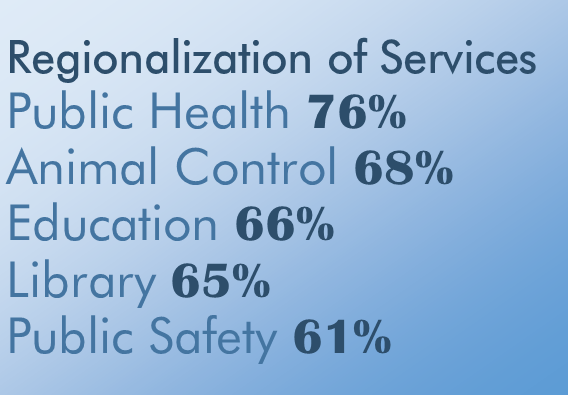 “Increasingly, towns will not be able to afford to sustain the level of services to which they have become accustomed, as budget pressures increase along with a reluctance to raise taxes. Residents showed concern, and a willingness to consider regionalism as a partial solution,” said Robert W. Santy, who serves as Board Chair of Inform CT and is President & CEO of the Connecticut Economic Resource Center (CERC) Inc.
 That is the highest number of states falling short of revenue projections since 36 states budgets missed their mark in 2010, according to the NASBO report and