With Continued Funding in Doubt, Gov. Rell, Former Legislators to Reprise Campaign Finance Reforms
/Former Governor M. Jodi Rell, who supported and signed Connecticut’s landmark campaign finance reforms into law just over a decade ago, will be the keynote speaker later this month at a day-long conference that will bring many of the key players in that debate together again. The October 26 event at Central Connecticut State University (CCSU) comes the same week that the state legislature may be voting on a new state budget for the fiscal year that began on July 1, with the continued existence of public financing of state political campaigns – a core component of the reforms - in serious doubt. Among the panelists will be former Senate President Pro Tempore Don Williams, former House Speaker James Amann, former Senate Minority Leader John McKinney, and former House Minority leader Lawrence Cafero. They will be joined by former House member Tim O’Brien, who served on the Government Administration and elections Committee, and Senate Co-Chair of that committee, Sen. Michael McLachlan.
In addition to the legislators, key players in the debate including Karen Hobart Flynn, President and CEO of Common Cause, Jeffrey Garfield, former Executive Director of the Connecticut State Elections enforcement Commission Tom Swan, Executive Director of the Connecticut Citizen Action group, will be part of a second panel.
 A week ago, in an op-ed published in Connecticut, Flynn criticized those who would now eliminate public funding of campaigns, known as the Citizens Election Program (CEP), which she described as “a remarkably successful alternative to the corrupt system that earned our state the unfortunate moniker ‘Corrupticut’ in 2004.” A budget narrowly approved by the legislature and vetoed by Gov. Malloy late last month would have eliminated funding. It has been estimated that $40 million would be disbursed to statewide office and legislative candidates in 2018, surpassing the $33.4 million distributed to qualifying candidates in 2014. Recent studies suggest that the program has been effective in reducing special interest money in campaigns.
 Flynn added that the law, passed in 2005, “allows candidates and officeholders to look out for the interests of all their constituents rather than being consumed with the needs of their major campaign contributors. It gives talented, motivated citizens who've never had the money or the connections traditionally required for success in politics a chance to seek and win public office with neither big money nor connections. Now, nearly 80 percent of all candidates for legislative and state offices use the program.” Qualifying candidates must raise $5,000 to $250,000 — depending whether they are seeking a statewide office or legislative seat — in $100 increments or less in order to receive a grant of public funds from the CEP.
Rell, in signing the plan into law at an Old State House ceremony flanked by legislators from both political parties in 2005, said "This is the bipartisan spirit that people want. It takes special interests out of elections and is putting elections where they should be, in the hands of the people."
At the time, Connecticut was the first state to pass a public financing system that affects all statewide races including the legislature. The law took effect on Dec. 31, 2006. Additional reforms were passed by the legislature in 2008, designed to strengthen the 2005 law by expanding the authority of the State Elections Enforcement Commission (SEEC) and enabling the state’s public financing system to operate more smoothly, Gov. Rell’s office said at the time.
The Oct. 26 program is coordinated by the Center for Public Policy and Social Research (CPPSR) at CCSU. The CPPSR has been designated a Connecticut Higher Education Center of Excellence, and is noted for offering innovative academic research and outreach programs which promote a greater understanding of the history, structure, processes, personnel and policies of State government. The center incorporates the Governor William A. O'Neill Endowed Chair in Public Policy and Practical Politics.
The program, "Campaign Finance Reform in Connecticut," will be held in the Constitution Room of Memorial Hall on the CCSU campus in New Britain, from 8:30 to 1: 30.

 t Hartford also looks forward to entering.
 District teams identify one exemplary teacher from within their teaching populations. Each district nominee completes the state application in the ensuing months and submits it to the State Department of Education. Applications are distributed to members of a reading committee, and the results are tabulated to identify approximately fifteen semi-finalists.


 The U.S. Census Bureau’s
  ensus officials are necessary to obtain more accurate population and demographic counts. If those visits are reduced in order to cut costs, the accuracy of the census itself is likely to diminish, observers say. Connecticut, which does not have independent counts of its entire population, depends heavily on data derived from the U.S. Census for a host of policy and funding decisions.

 Orders. Most historians agree the Fundamental Orders are significant, but the state of Connecticut decided in 1959 to call itself the Constitution State based on the premise that the Fundamental Orders were the first constitution in North America.



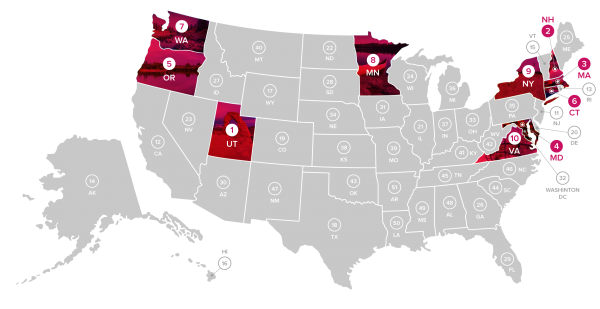
 The analysis points out that a main reason why people don’t have access to broadband internet is due to a lack of income. Cited is a Pew Research poll that found 23 percent of people making under $30,000 per year don’t use the internet, possibly because of the high price for something they don’t consider a basic need. Most rural schools across the country still lack access to fiber and pay more than twice as much for bandwidth.
 Joining the WFSB sports team in 1980 at age 27, Marshall spend five years at channel 3, moving from the nation’s number 23 TV market to number 13 when he relocated to Miami in 1985. At the time, he became the first black sports anchor in South Florida, according to published