Colorado's Hickenlooper Reconnects to Middletown Years, Discusses Key Healthcare Issues
/John Hickenlooper, mentioned in national political circles as a potential presidential candidate in 2020, is a graduate of Wesleyan University in Middletown, class of 1974, and the incumbent Governor of Colorado.
His current career and Middletown roots come full circle this week, as Hickenlooper is the guest on the weekly podcast hosted by the leaders of Middletown-based Community Health Center, Mark Masselli and Margaret Flinter.
The podcast, Conversations on Health Care, has a national following and is also aired on more than a dozen radio stations across the country, including Atlanta, Chicago, Michigan and Minnesota. The program focuses on the opportunities for reform and innovation in the health care system. In addition to health care headlines, the centerpiece of each show is a feature story and conversation with an innovator in the delivery of care from around the globe. Guests are drawn from healthcare organizations, policy makers, researchers, educators, nonprofit leaders and individuals breaking new ground in scientific research and the delivery of health care services in the U.S. and abroad.
 Hickenlooper, who took office in 2011 and is term-limited and in his final year as Governor, discusses how expanded coverage under the Affordable Care Act has improved access to health care in his state, how embedding behavioral health in primary care is improving outcomes, and how they're fighting the opioid crisis in Colorado. He addresses lessons learned from the state's marijuana legalization, and his bipartisan campaign with Governor John Kasich of Ohio, a past presidential hopeful, to promote sound health policies on the federal level including funding for CHIP, Community Health Centers and expanded coverage. Kasich is a Republican; Hickenlooper a Democrat.
“States are the laboratories of democracy,” Hickenlooper said on the program. “We’re the ones that have to be doing the experiments and coming up with the innovations and then finding out whether they work or not.”
Masselli, founder and president/CEO of CHC, and Margaret Flinter, Senior Vice President and Clinical Director, each bring four decades of experience in overcoming the barriers that block access to care in their work at community health centers. Their conversations with “creative thinkers and doers from all parts of the field” are aimed at “all who believe that Health Care is a Right, Not a Privilege,” according to the podcast’s website.
The program is recorded at WESU at Wesleyan University, and is underwritten by Community Health Center, Inc. Conversations on Health Care episodes are also broadcast by ReachMD, which can be heard on iHeartRadio. Past guests with Connecticut connections include former Middletown Mayor Paul Gionfriddo, CEO of Mental Health America; Save the Children CEO Carolyn Miles; and Aetna Foundation President Dr. Garth Graham. Topics in recent months have include cancer therapy breakthroughs, telemedicine, innovations in caring for an aging population, obesity and efforts to transform healthcare through big data.
Hickenlooper graduated from Wesleyan University with a bachelor’s degree in English and a master’s degree in geology. He began his career as a geologist and later opened a series of restaurants and brewpubs across the country, including the Wynkoop Brewing Co. in downtown Denver, which helped spark the revitalization of the city’s now-thriving Lower Downtown (“LoDo”) district. He served as the mayor of Denver, Colorado, from 2003 to 2011. He is a past chair of the National Governor’s Association.
CHC serves 145,000 patients statewide, providing medical, dental and behavioral health services, and is a nationally recognized innovator in the delivery and the development of primary care services to special populations.

 The consolidation plan was subsequently approved by the Board of Regents of CSCU in December, with only one member of the Board abstaining and others unanimously supporting the plan, developed to save money across the system by eliminating staff positions, many said to be duplicative, that would not adversely impact students. Student and faculty groups at the campuses have raised questions about the ultimate effectiveness of the plan, or have opposed it outright.

 Compared with other states, the percentage of women in Connecticut’s legislature has been dropping, in real numbers and as compared with other states. In 2015, the percentage was 28.3 percent; in 2013 it was 29.4 percent; in 2011 Connecticut’s legislature was 29.9 percent women. In 2009, Connecticut’s legislature included 31.6 percent women, which was the seventh highest in the nation.
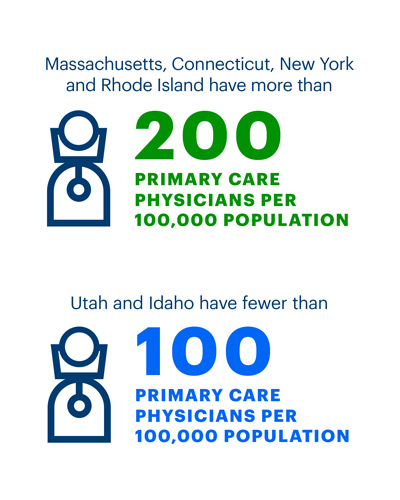 The model reflects that determinants of health directly influence health outcomes. A health outcomes category and four categories of health determinants are included in the model: behaviors, community & environment, policy and clinical care.

 The article points out that “the connection between climate change and hurricanes has become hard for anyone to ignore.”

 CPAN’s most recent contact expired in September, was extended through October, and was on a day-by-day basis this week. The 33-person staff worked with an annual operating budget that was unexpectedly reduced by
 Among the panelists will be former Senate President Pro Tempore Don Williams, former House Speaker James Amann, former Senate Minority Leader John McKinney, and former House Minority leader Lawrence Cafero. They will be joined by former House member Tim O’Brien, who served on the Government Administration and elections Committee, and Senate Co-Chair of that committee, Sen. Michael McLachlan.
 A week ago, in an op-ed
  Flynn added that the law, passed in 2005, “allows candidates and officeholders to look out for the interests of all their constituents rather than being consumed with the needs of their major campaign contributors. It gives talented, motivated citizens who've never had the money or the connections traditionally required for success in politics a chance to seek and win public office with neither big money nor connections. Now, nearly 80 percent of all candidates for legislative and state offices use the program.” Qualifying candidates must raise $5,000 to $250,000 — depending whether they are seeking a statewide office or legislative seat — in $100 increments or less in order to receive a grant of public funds from the CEP.

 t Hartford also looks forward to entering.
 District teams identify one exemplary teacher from within their teaching populations. Each district nominee completes the state application in the ensuing months and submits it to the State Department of Education. Applications are distributed to members of a reading committee, and the results are tabulated to identify approximately fifteen semi-finalists.


 The U.S. Census Bureau’s
  ensus officials are necessary to obtain more accurate population and demographic counts. If those visits are reduced in order to cut costs, the accuracy of the census itself is likely to diminish, observers say. Connecticut, which does not have independent counts of its entire population, depends heavily on data derived from the U.S. Census for a host of policy and funding decisions.