Supreme Court Justices Who Overturned CT Death Penalty Were Appointed by Three Different Governors, As Were Opponents
/The four Justices of the Connecticut State Supreme Court who overturned Connecticut’s death penalty law this month were appointed to the high court by former Governor Lowell P. Weicker (Justices Richard Palmer and Flemming Norcott), former Governor M. Jodi Rell (Justice Dennis Eveleigh) and current Governor Dannel P. Malloy (Justice Andrew McDonald). The vote abolishing the death penalty in Connecticut was 4-3, with Justice Palmer joined in the majority by Justices Eveleigh, Norcott and McDonald. None are household names in the state – at least they were not before the decision – which was both widely criticized and highly praised by proponents and opponents of the death penalty, as well as legal observers and legislators.
Three dissenting opinions were written or signed by Chief Justice Chase T. Rogers, appointed to the Court by former Gov. Rell; Justice Peter Zarella, appointed by former Gov. John G. Rowland, and Justice Carmen Elisa Espinosa, appointed by Gov. Malloy.
Thus former Gov. Rell and her successor, Gov. Malloy, each appointed a Justice on each side of the controversial opinion. Two Justices on the majority opinion were appointed by former Gov. Weicker. Former Gov. Rowland's Supreme Court appointee was among the dissenters.
Justice Flemming L. Norcott Jr., who retired at age 70 in October 2013 after sitting on the case in April 2013, was the first African American appointed to the state Appellate Court, in 1987, and five years later was appointed to the state Supreme Court by Gov. Weicker. Justice Carmen Elisa Espinosa became a justice of the Supreme Court on March 6, 2013, having been appointed to the position by Gov. Malloy about six weeks before the case was heard. Justice Espinosa is the first Hispanic Supreme Court Justice in Connecticut. Norcott and Espinosa were on opposite sides of the decision.
Chief Justice Chase T. Rogers, appointed to the Court by former Gov. Rell, was initially nominated to the Superior Court by Rowland in 2006. Associate Justice Peter T. Zarella was nominated by Rowland in 2001. Judge Dennis G. Eveleigh was nominated for the state Supreme Court by Gov. Rell in 2010, after having initially been appointed to the Superior Court in October 1998 by Gov. Rowland.
The majority decision, written by Justice Palmer, found flaws in the 2012 death penalty law, which banned "prospective" death sentences, those imposed after the effective date of the law. But the majority wrote that it chose to analyze capital punishment and impose abolition from a broader perspective, according to published reports.
Justice Palmer graduated from Wethersfield High School, attended Trinity College in Hartford, and received his Juris Doctor from the University of Connecticut School of Law. He served as an Assistant United States Attorney for Connecticut from 1980 to 1982 and from 1987 to 1990. In 1991, Justice Palmer was appointed as United State’s Attorney for Connecticut and he was later the Chief State’s Attorney for Connecticut.
Justice Eveleigh received his J. D. from the University of Connecticut School of Law. Upon graduation from law school, Justice Eveleigh served on active duty in the U.S. Army as a First Lieutenant.
Justice McDonald began his public service career in 1993 as a member of the Stamford Board of Representatives, where he served until 1995, prior to his election to the state legislature. McDonald was later Legal Counsel to Gov. Malloy, and was nominated by Malloy to the Supreme Court in 2013, the same year as Espinosa, and a year after the legislature passed the non-retroactive death penalty ban, which was signed into law by Gov. Malloy.
In the case, State v. Santiago, Eduardo Santiago was tried for murder for hire, convicted, and sentenced to death. He appealed his sentence, and while the Court did not find that putting him to death was unconstitutional at the time, it did find that there were issues in his original trial that warranted a new sentencing hearing. While his appeal was pending, the 2012 legislation passed, abolishing the death penalty for crimes committed after April 24, 2012—which Santiago argued was grounds to remove death as a possible penalty. The Court then examined his claim that “the death penalty is no longer consistent with standards of decency in Connecticut and does not serve any valid penological objective.”
Four Justices on majority opinion, L to R, above: Richard Palmer, Flemming Norcott, Dennis Eveleigh and Andrew McDonald.
CT Supreme Court: Seated, L to R, below: Justice Richard N. Palmer, Chief Justice Chase T. Rogers, Justice Peter T. Zarella. Standing, L to R: Justice Carmen E. Espinosa, Justice Andrew J. McDonald, Justice Dennis G. Eveleigh, Justice Richard A. Robinson, Senior Justice Christine S. Vertefeuille. Justice Robinson was appointed to the Court after the Santiago case was heard.


 15 states where the number of traffic fatalities has dropped in the first six months of 2015, compared with a year ago. The others were Alabama, Alaska, Delaware, D.C., Hawaii, Kansas, Montana, New Jersey, New Mexico, Oklahoma, Rhode Island, South Dakota, Tennessee and Texas.
 Writing in the

 Also this week, an official at the FCC indicated that the "enforcement hold" status of the station’s license renewal was "unchanged," and the station continues to operate until a decision is made, as is customary with delayed renewal applications. The WTIC-AM license renewal application has been on enforcement hold at the FCC since the license expiration date of April 1, 2014, as the agency’s Enforcement Bureau continues to consider “an alleged violation of FCC rules,” according to an FCC official. The renewal application was filed by the station almost 16 months ago, on November 27, 2013. Stations must file an application for license renewal) four months prior to the expiration date of the station’s license.
 WTIC-AM, which is licensed to Hartford but operates from studios in Farmington and has its broadcast tower on Avon Mountain, can continue broadcasting under the license that expired on April 1, 2014, until the FCC acts on its renewal application. Until the enforcement hold is lifted the FCC Media Bureau cannot proceed with a decision on whether or not to renew the station’s broadcast license. The Enforcement Bureau must first determine whether or not a violation of FCC rules has occurred. If the allegation is substantiated, the agency has a range of options, such as warning that the violation not be repeated or imposing a monetary fine on the station, officials said.
 The
The 
 The Mayors will engage with Administration officials, Congressional leaders business leaders to “ensure the health and economic recovery of America’s cities,” according to program organizers. Vice President Joe Biden is scheduled to address the Mayors on Thursday.
 ttending from Connecticut are Bridgeport Mayor Bill Finch, Bristol Mayor Ken Cockayne, Danbury Mayor Mark Boughton, East Hartford Mayor Marcia Leclerc, Hartford Mayor Pedro Segarra, New Britain Mayor Erin Stewart, New Haven Mayor Toni Harp, Norwich Mayor Deberey Hinchey, Shelton Mayor Mark Lauretti, Stamford Mayor David Martin, Stratford Mayor John Harkins, Trumbull First Selectman Timothy Herbst and Waterbury Mayor Neil O’Leary.
 cut
cut
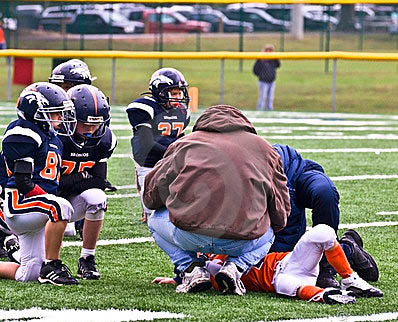
 e filled out by your physician when a concussion occurs, our procedures for concussion management, and our Return to Play protocol that will be followed by all athletes before returning to competition after sustaining a concussion.”





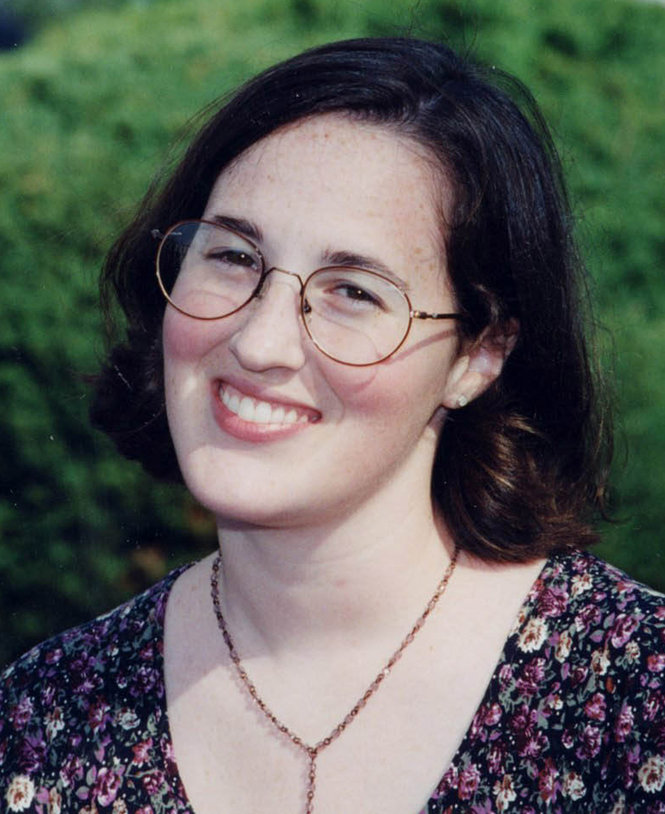 d met Ms. Toyen, who grew up in Avon, Connecticut, at their alma mater, Bentley College in Waltham, Mass., and had managed to pull off an elaborate proposal.
 .
.