CT’s Cuban-American Population Is Centered in Bridgeport, As Immigration to U.S. From Cuba Grows
/The number of Cubans entering the U.S. has picked up dramatically since former President Barack Obama announced a renewal of ties with the island nation in late 2014, a Pew Research Center analysis of government data shows. The U.S. has since opened an embassy in Havana, a move supported by a large majority of Americans, and public support is growing for ending the trade embargo with Cuba, according to Pew surveys.
Outside of Florida, the New York metropolitan area – including Connecticut - is home to the most Cuban Americans. More than 10,600 Cuban-Americans call Connecticut home, according to U.S. Census 2014 data. The city with the largest Cuban population is Bridgeport, with more than 1,000 residents of Cuban heritage, according to published reports.
According to the website ZipAlas, the Connecticut communities with the largest percentage of Cuban residents among local their residents include Bridgeport, Hartford, Stratford, Westport, New Britain, Bolton, Stamford, Weston, New Haven, and West Hartford.
Overall, 56,406 Cubans entered the U.S. via ports of entry in fiscal year 2016, up 31 percent from fiscal 2015 when 43,159 Cubans entered the same way, according to the U.S. Customs and Border Protection data reported by Pew. Fiscal 2015 saw an even larger surge, as Cuban entries jumped 78 percent over 2014, when 24,278 Cubans entered the U.S.
There are 2 million Hispanics of Cuban ancestry living in the U.S. today, the fourth largest Hispanic origin group behind Mexicans, Puerto Ricans and Salvadorans. But population growth for this group is now being driven by Cuban Americans born in the U.S. The share of foreign born among Cubans in the U.S. declined from 68 percent in 2000 to 57 percent as of 2015, Pew reported. The Cuban population in the United States has steadily grown, accelerating from 737,000 in 1990 to 1,144,000 in 2013, according to the Migration Policy Institute.
According to the 2014 American Community Survey (ACS), 923,111 foreign-born Hispanics of Cuban origin lived in Florida, 47,016 in New Jersey, 30,398 in Texas, 28,436 in California, and 24,898 in New York, the Center for Immigration Studies reported.
 The Cuban Lyceum of Bridgeport -- Liceo Cubano de Bridgeport- celebrated its 60th year in 2014, the Connecticut Post reported. Founded in 1954 on the East Side of Bridgeport, the organization continues as the longest running Hispanic social club in all of New England, according to local leaders. The Lyceum was officially incorporated on July 21, 1954, created to “promote unity, understanding and friendship among all Cuban and others Spanish-speaking people,” and “provide a welcomed place for newly relocated Cubans in the United States,” to continue the traditions of Cuban culture.
Bridgeport Police Chief A.J. Perez was born in Cuba migrated with his family as a youngster to the United States in 1968, according to published reports. He joined the Bridgeport Police Department in 1983 and became Chief of Police last year, the first Cuban-American police chief in the state’s history.
 Traffic safety topics being tracked nationwide include: Aggressive Driving, Automated Enforcement/Photo Monitoring, Child Passenger Protection, Distracted Driving, Driver’s Licensing, Impaired Driving, Motorcycle Safety, Pedestrian and Bicycle Safety, School Bus Safety, Seatbelts and Occupant Protection, Senior Drivers Issues, Slow-Medium speed vehicles, Speed Limits, and Teen Driver Issues.


 Tammy Sneed, Director of Gender Responsive Adolescent Services at Department of Children and Families and co-chair of DCF’s Human Anti-Trafficking Response Team, said: “Reports of children suspected to be victims of domestic minor sex trafficking are increasing every year -- and, in 2016, there were just under 200 such referrals. For every child victim, the number of buyers on a given day in Connecticut is unfathomable. Some children report 10 to 15 buyers per night, which leads us to estimate that a minimum of 2,000 buyers in Connecticut bought sex from children last year.”
 “Demand keeps sexual exploitation and trafficking profitable,” says Beth Hamilton, associate director of the Alliance to End Sexual Violence (formerly CONNSACS). “We’ve started seeing the criminal justice system hold traffickers responsible, but we do not often see the people who purchase sex being held accountable for their role in keeping the industry thriving. If we want to end commercial sexual exploitation, we need to focus on ending demand and creating survivor-centered services.”
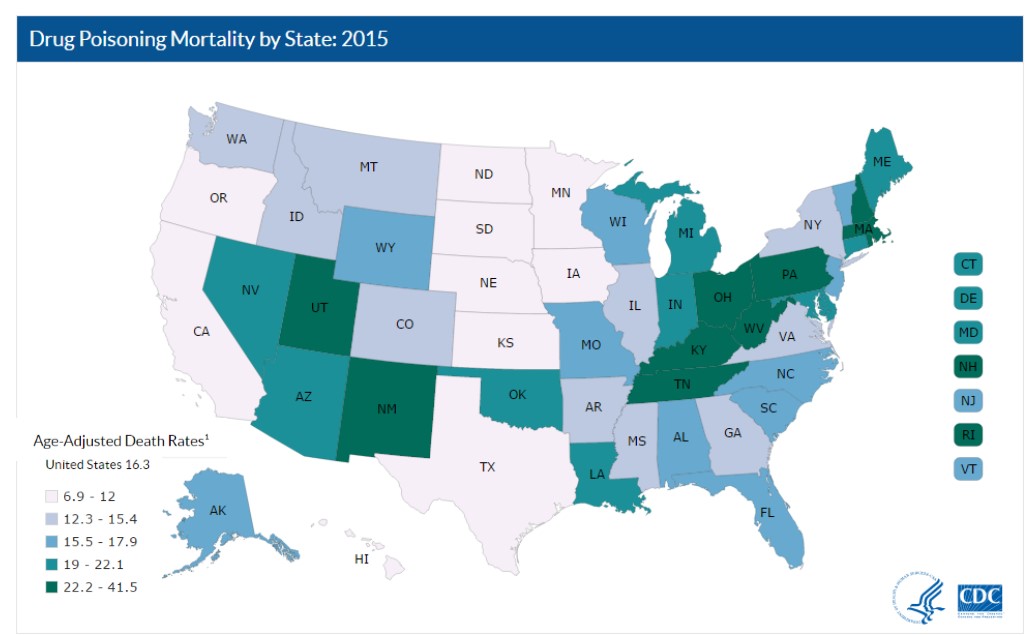 The five states with the highest rates of death due to drug overdose were West Virginia (41.5 per 100,000), New Hampshire (34.3 per 100,000), Kentucky (29.9 per 100,000), Ohio (29.9 per 100,000), and Rhode Island (28.2 per 100,000).
 The
The  The purpose of the CTCDR is to provide members of the traffic-safety community with timely, accurate, complete and uniform crash data. The CTCDR allows for complex queries of both datasets such as, by date, route, route class, collision type, injury severity, etc.
 The review and analysis found at least seven areas in Connecticut, based on zip code geography, where the percentage of children found to have elevated lead levels exceeded – more than doubled – the percentage in Flint.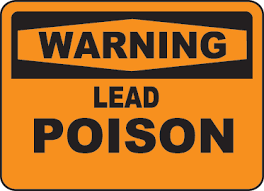
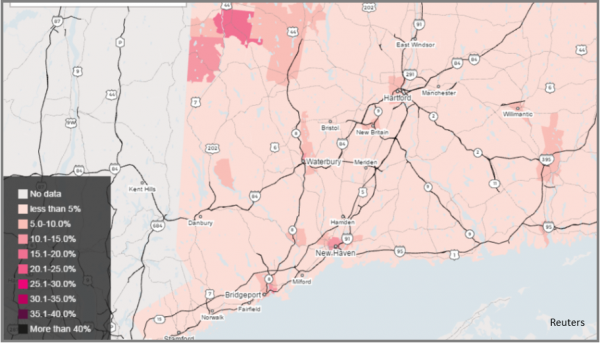
 each year, the report indicated.

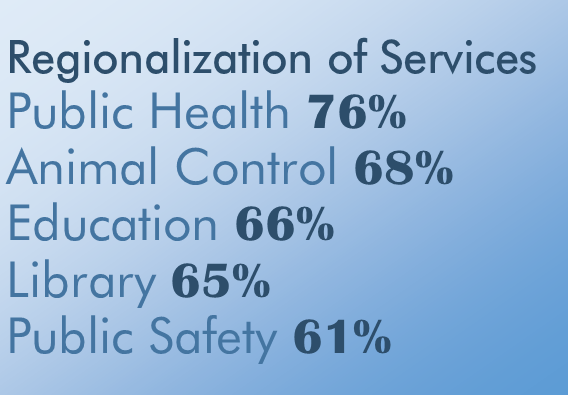 “Increasingly, towns will not be able to afford to sustain the level of services to which they have become accustomed, as budget pressures increase along with a reluctance to raise taxes. Residents showed concern, and a willingness to consider regionalism as a partial solution,” said Robert W. Santy, who serves as Board Chair of Inform CT and is President & CEO of the Connecticut Economic Resource Center (CERC) Inc.
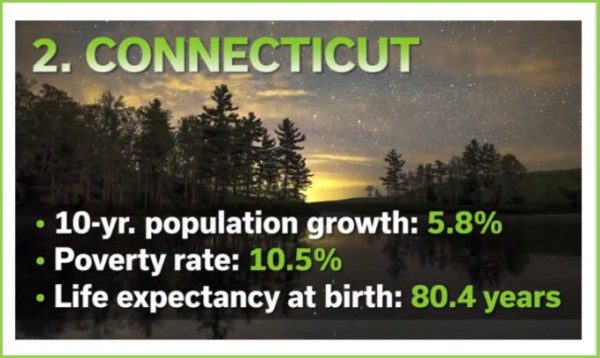 Quality of life in the United States is heavily dependent on financial status, the survey summary points out. As a consequence, the nation’s best states to live in often report very high incomes. With a median household income of $71,346 a year, fifth highest of all states, Connecticut is the second