Innovation and Impact of Manufacturing Companies in CT Is Focus of New CPTV Documentary

With Election Day less than two weeks away amid intensifying discussion of job growth in Connecticut, CPTV zeroes in on modern manufacturing and the role of innovation in companies. The CPTV Original documentary Made in Connecticut premieres Thursday, Oct. 23 at 8 p.m. on CPTV. Twelve businesses that exemplify the diversity of successful manufacturing “located and thriving right here in Connecticut” are featured in the program.made in CT
The documentary is part of a three-year, multi-platform initiative by Connecticut Public Broadcasting that celebrates Connecticut’s manufacturing future, from high-tech to hand-made.  The initiative includes additional special programming airing on CPTV and WNPR/Connecticut Public Radio.

Against the backdrop of such timely issues as outsourcing and a global economy, the Made in Connecticut documentary explores topics including:

  • the value that manufacturing provides to the state’s economy;
  • how the manufacturing sector is contributing to the creation of jobs in Connecticut;
  • how advances in technology have changed the nature of manufacturing and the skills needed to work successfully in the manufacturing environment; and
  • how science, technology and innovation are transforming manufacturing endeavors around the world, the nation and the state.

Featured in the documentary are:

  • Barnes Group headquartered  in Bristol, which started as a spring company in 1857 to supply the clock industry and has now exploded into a global leader in industrial and aerospace manufacturing;
  • Curtis Packaging in Sandy Hook, a nearly 170-year-old family-owned company that has reinvented itself as a world leader in luxury packaging and environmental stewardship;
  • Ola! Granola in Norwalk, where a mother of three produces hand-made granola in mouth-watering flavors such as vanilla almond, cranberry orange pecan and chocolate banana-chip;
  • Oxford Performance Materials in South Windsor, a plastics company on the edge of science fiction-like technology, using 3-D printing to create cranial implants for people who have suffered traumatic brain injury;
  • Pratt &Whitney in East Hartford, the industry leader in aerospace, creating breakthrough technology with its PurePower jet engine that will revolutionize air travel;
  • Protein Sciences in Meriden, which has a game-changing flu vaccine that takes just weeks to mass produce to fight pandemics worldwide;
  • Severance Foods in Hartford, a snack food company founded by three friends who invested in a tortilla-making machine in the 1980s, and now employs more than 85 people to produce 40,000 pounds of tortilla chips a day;
  • Tucci Lumber, which makes baseball bats in South Norwalk and was founded by a former Major leaguer.

Connecticut’s unemployment rate dropped to 6.4 percent last month as nonfarm jobs reached a new recovery high point. The unemployment rate last month was the lowest it has been in the state since November 2008, according to a state Department of Labor report.  The employment gain of 11,500 jobs in September is the largest since April 1994, the seventh monthly nonfarm employment gain this year and a "vigorous bounce-back" from the revised decline of 1,200 jobs in August, the Department of Labor said.  As the state takes proactive steps to ensure people are trained for manufacturing jobs, employment numbers are simultaneously rising. In the most recent data, manufacturing jobs increased from 163,500 last year to 164,100 this year, Fairfield County Business Journal reported.  The manufacturing industry plays a crucial role throughout Connecticut communities, U.S. Sen. Chris Murphy's office pointed out recently, noting that Connecticut’s 4,602 manufacturers account for 10.2% of the state’s jobs and 87% of the state’s total exports.

To prepare future workers, Manchester Community College will lead the state's 12 community colleges and Charter Oak State College in a federally funded effort to expand manufacturing education in the state as part of a $15 million grant from the U.S. Department of Labor, announced this month.  The grant  will support an expansion of the Connecticut Advanced Manufacturing Initiative, which trains students for jobs in the field. The grant will pay for equipment to provide hands-on training, new teachers and educational assistants and the development of registered apprenticeship programs for high-demand manufacturing occupations, among other investments.

CPTV_Logo

“In recent years, technological advances, as well as human innovation and creativity, have put Connecticut on the forefront of a manufacturing revolution. This revolution is not only exciting, it’s important to the local economy, as it’s helping to create jobs. Manufacturing has always been an important part of Connecticut’s culture and economy,” said Jerry Franklin, President and CEO of CPBN, who is to be honored next week by Hartford Business Journal with the publication’s Lifetime Achievement Award for his leadership in the broadcast industry.

The documentary Made in Connecticut is produced and hosted by Emmy Award-winning journalist Christina DeFranco. Funding was made possible by Founding Sponsor, KBE Building Corporation. KBE Building Corporation is a full-service, single-source commercial construction company strategically positioned to serve the Eastern and Mid-Atlantic, with offices in Connecticut and Maryland.

“We’re passionate about fostering innovation in Connecticut’s manufacturing and technology spaces, and we just happen to have built more technical high schools around the state than anyone else.  We’re thrilled to shine light on this critical aspect of the state’s current and future economy,” said Mike Kolakowski, KBE Building Corporation’s President and Principal Owner.

See preview on You Tube.   

Tri-State Weather Conference at WestConn Features Local Meteorologists

For weather experts and enthusiasts, all roads lead to Danbury on Saturday. The Fifth Tri-State Weather Conference will be held on from 8:45 a.m. to 5 p.m. in the Science Building on the mid-town campus of Western Connecticut State University on White Street in Danbury. The conference is presented by the Meteorology Program at Western Connecticut State University and co-sponsored by the WestConn Student Chapter of the American Meteorological Society (AMS), the New York City/Long Island Chapter of the AMS, NOAA/National Weather Service/Upton, N.Y and NOAA/National Weather Service/Taunton, MA.5th-tristate-weather-conference-final[1]

The purpose of the conference is to enhance education, professional development and communication among private and public sector meteorologists, researchers, educators, students, emergency management officials, and weather enthusiasts.

Research posters highlighting high impact weather events that affected the Tri-State region of New York, New Jersey, and Connecticut will be on display.

The master of ceremonies for the conference will be Lonnie Quinn, the chief weathercaster of CBS 2 News at 5, 6 and 11 p.m. weekdays. He also serves as the national weather anchor for “CBS This Morning” Saturday. Quinn is a native of Cheshire, who joined WCBS-TV in 2007 after a five year run at WTVJ in Miami.

Among the presenters at the conference will be Ryan Hanrahan, a Connecticut native from Guilford who joined the NBC 7a680fafcf844b6b1245b9dc1e0ecf3cConnecticut First Alert Weather Team in December 2005 and currently serves as the weekend evening meteorologist and as a general assignment reporter on weekdays. His interest in the weather was sparked by the 1989 Hamden tornado, hurricanes Gloria and Bob, along with the blizzards of '93 and '96, according to the station’s website.

Topics of presentations during the conference include:

Doppler Radar Signatures Associated with Connecticut Tornadoes 1995 – present. Ryan Hanrahan, NBC Connecticut – West Hartford, CT

Exploring Tri-State Climate Variability and Change Dr. David A. Robinson, New Jersey State Climatologist, Rutgers University

Hurricane Sandy - Boundary Layer Structure Affects on Winds and Storm Surge  Jeffrey S. Tongue, NOAA/National Weather Service, Upton, NY

NWS Weather Ready Nation initiative and how science is a critical and integral partradar Dr. Jason Tuelll, Director, Eastern Region NWS, Bohemia, NY
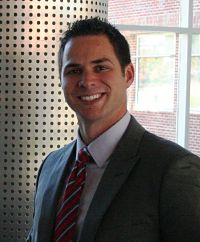
Operational Applications of GIS - The Development of A Flash Flood Potential Index for the Tri-State Area Nancy L. Furbush and Adrienne Leptich, NOAA/National Weather Service, Upton, NY

The GOES-R Satellite:  A New Eye in the Sky Eleanor Vallier-Talbot, NOAA/National Weather Service, Taunton, MA

Tornado Outbreak Quincy Vagell, Freelance Meteorologist – Naugatuck, CT

Tracking Hurricanes and Saharan Dust Storms from Space Jason Dunion, NOAA Hurricane Research Division in Miami, FL

Winter 14-15...Will Our Long Standing Ideas Win Out? Joe D'Aleo, Weatherbell Analytics LLC

Conference registrations are open to the public and may be submitted online atwww.wcsu.edu/weatherconference. The registration fee is $30 per person, and includes a continental breakfast, lunch and refreshments during breaks.

Quinn is not the only Cheshire native to handle weather forecasting on local television in the region.  The Western Connecticut campus is familiar turf for meteorologist Dan Amarante, who has been with FoxCT since January 2011.  He remembers being 8 years old and venturing outside during thunderstorms, much to his mother’s dismay, according to the station’s website. He spent a good chunk of his childhood reading weather books and watching tornado chasing videos.Dan_Amarante_Pic_opt

Dan graduated from Western Connecticut State University with a Bachelor of Science in Meteorology. While at WCSU, he produced and anchored many school run weather broadcasts for the University’s website, as well as forecasts for the school’s radio station. After college, he began working at WGGB ABC40/FOX6 in Springfield, MA, where he was the weekend weather anchor. He also has filled in as a weather producer at CBS 2 in New York City, and became snowed in at the station during the Blizzard of 2010.

CT’s 40 Fastest Growing Tech Companies Achieve Statewide Recognition

Connecticut’s fasted growing technology companies will be the center of attention Thursday evening as the Connecticut Technology Council (CTC) and Marcum LLP spotlight the 2014 Marcum Tech Top 40. Now in its 7th year, the annual list features privately and publicly held companies, including some newcomers to the top 40. The 2014 winners are predominantly privately held companies, but 12 public companies also made the list, including Rogers Corporation, Gartner Inc. and Alexion Pharmaceuticals. That’s a slight drop from a year ago, when 14 public companies made the list.

Geographically, Fairfield County is home to 16 winning companies this year, followed by Hartford County and New Haven County, both with ten companies. For Fairfield and New Haven counties, the count increased by two businesses from a year ago; for Hartford County, the number was unchanged from last year. top 40 logo

The selected companies have at least $3 million in annual revenue and a demonstrated record of growth in each of the preceding four years.  Four of the businesses have over $1 billion in revenue.

The Marcum Tech Top 40 recognizes technology leaders in six industry sectors, including Advanced Manufacturing, Energy/Environmental, Life Sciences, New Media/Internet/Telecom, IT Services, and Software. This year’s winners range from newcomer VRSim, Inc., a creator of virtual reality training tools for industrial and manufacturing applications, to Priceline.com, a leader in mobile travel.

Bruce Carlson, CTC’s President and CEO added, “Connecticut is proud of its remarkable heritage of innovation and invention. Job growth in Connecticut is going to come from the technology sector and these Tech Top 40 companies are a great example of the range of technology companies that are growing substantially in Connecticut.”

Among the names on this year’s list:  Frontier Communications, based in Stamford, providing communications services to residential and business customers across the country (in the news this year for the proposed purchase of AT&T’s business in Connecticut); and Bolt Technology Corporation, based in Norwalk, the leading worldwide developer and manufacturer of seismic energy sources, synchronizers and underwater connectors used in offshore seismic exploration for oil and gas; and Fitlinxx, based in Shelton,  an industry leading provider of wellness applications, wireless activity monitors, and health tracking devices that motivate people to live active and healthy lifestyles.

The city with the largest number of companies on the Top 40 list this year is Stamford, with six, followed by Norwalk with four, Shelton with three, and Wallingford, South Windsor, Simsbury and New Haven, each with two businesses on the list.  Other towns with a top 40 high tech busineconnecticut-technology-councilss are Torrington, Danbury, West Hartford, Cheshire, Guilford, Greenwich, Plainville, Middlebury, New London, Killingly, Middletown, Fairfield, Madison, Branford, Farmington, Glastonbury, Windsor, Orange and East Hartford.


“Technology companies have a set of shared challenges that range from capital-raising and complex revenue reporting to intellectual property management and international expansion.  Whether they are private enterprises or Fortune 500 companies, this year’s Marcum Tech Top 40 winners all demonstrate management excellence and market foresight,” said Alex Discepolo, a Tax Partner in Marcum’s New Haven office and Practice Leader of the Firm’s High Technology Services Group.

The October 2 awards program, being held at the Oakdale Theater in Wallingford, will include an exhibition featuring the Marcum Tech Top 40 companies. Six category winners will be announced, and one company will be named overall winner for demonstrating the greatest percentage growth in revenue across all the technology verticals.

The Connecticut Technology Council is a statewide association of technology oriented companies and institutions, providing leadership in areas of policy advocacy, community building and assistance for growing companies. Speaking for 2,500 companies that employ some 200,000 residents, the Connecticut Technology Council seeks to provide a strong and urgent voice in support of the creation of a culture of innovation.

 The Tech Top 40:

Advanced Manufacturing

  • APS Technology Inc – Wallingford
  • Bolt Technology Corporation – Norwalk
  • Dymax Corporation – Torrington
  • Revolution Lighting Technologies Inc. – Stamford
  • Rogers Corporation – Rogers six categories

Energy/Environmental/Green Technology

  • FuelCell Energy, Inc – Danbury
  • Proton OnSite – Wallingford

 IT Services

  • Cervalis LLC – Shelton
  • Datto Inc. – Norwalk
  • Gartner Inc. – Stamford
  • Information Services Group Inc. – Stamford
  • IT direct, LLC. – West Hartford
  • VLink Inc. – South Windsor

Life Sciences

  • Alexion Pharmaceuticals, Inc. – Cheshire
  • Bio-Med Devices, Inc. – Guilford
  • Metrum Research Group LLC. – Tariffville

 New Media/Internet/Telecom

  • Chief Executive Group – Greenwich
  • EasySeat, LLC – Plainville
  • Frontier Communications – Stamford
  • HealthPlanOne LLC – Shelton
  • iSend, LLC – Middlebury
  • Job Target, LLC – New London
  • M2 Media Group – Stamford
  • Priceline.com, Inc. – Norwalk
  • Reality Interactive, LLC. – Middletown
  • TVEyes Inc. – Fairfield

Software

  • Clarity Software Solutions, Inc. – Madison
  • Core Informatics, LLC – Branford
  • Evariant, Inc. – Farmington
  • Evolution1, Inc. – Simsbury
  • Fitlinxx, Inc. – Shelton
  • Higher One, Inc. – New Haven
  • KenCast, Inc. – Norwalk
  • Link Systems Inc. – Stamford
  • Shoptech Corporation – Glastonbury
  • Square 9 Softworks Inc. – New Haven
  • SS&C Technologies Holdings Inc. – Windsor
  • Tangoe Inc. – Orange
  • TicketNetwork - South Windsor
  • VRSim, Inc. – East Hartford

Anti-Texting Enforcement Intensifies as Study Indicates Law Can Save Lives

An unprecedented anti-texting enforcement effort by the Connecticut Department of Transportation’s Highway Safety Office, part of the “U Drive. U Text. U Pay.” campaign, concludes this week on September 24.  The nearly month-long enforcement mobilization marked the first time the state has used dedicated federal funds to curb texting while driving. Connecticut was the only state in the nation to receive $2.3 million in federal Distracted Driving prevention funds from the National Highway Traffic Safety Administration (NHTSA). The joint effort by state and local police enforces Connecticut’s law that prohibits motorists from texting and/or using hand-held cell phones while driving. Under Connecticut’s cell phone and texting law, violations involve heavy fines, ranging from $150 for a first offense and $300 for a second violation to $500 for each subsequent violation.u-drive-u-text-u-pay-logo

Using data from the Governor’s Highway Safety Administration, the National Conference of State Legislatures summarizes state cellular phone use and texting while driving laws.

  • Hand-held Cell Phone Use Ban: 13 states, D.C., Puerto Rico, Guam and the U.S. Virgin Islands prohibit all drivers from using hand-held cell phones while driving.
  • All Cell Phone ban: No state bans all cell phone use for all drivers, but 37 states and D.C. ban all cell phone use by novice or teen drivers, and 20 states and D.C. prohibit any cell phone use for school bus drivers.
  • Text Messaging ban: 44 states, D.C., Puerto Rico, Guam and the U.S. Virgin Islands ban text messaging for all drivers. Four states prohibit text messaging by novice or teen drivers and three states restrict school bus drivers from texting.

cell photoTexting bans can reduce teen traffic fatalities by as much as 11 percent, according to a new study of the effect of such state laws.  Texting bans aimed at teens and that allow primary enforcement of the law —they don’t require officers to have another reason for the traffic stop — have had the most dramatic effect, a team of researchers at the University of Alabama at Birmingham School of Public Health found in a study published in the August edition of the American Journal of Public Health.

“[O]ur results provide strong evidence that the primarily enforced texting laws seem to be reaching the intended subpopulations who are most at risk for texting while driving,” the researchers indicated.

According to the website distraction.gov, the official U.S. government website for distracted driving, Connecticut law includes:

  • Handheld ban for all drivers (Primary law)
  • Ban on all cell phone use (handheld and hands-free) for bus drivers (Primary law)
  • Ban on all cell phone use (handheld and hands-free) for novice drivers (Primary law)
  • Ban on texting for all drivers (Primary law)

Connecticut defines novice drivers as those under the age of 18 or with a learner's permit.public health

In the recently published research, the team examined 11 years of data from the 48 contiguous states. They controlled for other factors that may influence crash risk, such as economic, legal and population-specific indicators. (Unemployment, for example, can influence risk because fewer workers means fewer drivers on the road. Income and gas prices can affect how much people drive, again exposing them to more risk.)

Just having a texting law was linked to a 2.3 percent decline in overall traffic fatalities for all drivers.

“Our results indicate that states that have not enacted any primarily enforced texting bans are missing out on opportunities to prevent avoidable roadway deaths,” said one of the authors, Alva O. Ferdinand.ferdinand-alva175

The first of the researchers’ three main findings was that primary enforcement really matters.  At the time of this study, Alva O. Ferdinand, Nir Menachemi, Bisakha Sen, Justin L. Blackburn, and Michael Morrisey were with the Department of Health Care Organization and Policy, University of Alabama at Birmingham. Leonard Nelson was with the Cumberland School of Law, Samford University, Birmingham, AL.

While the focused enforcement mobilization will end Sept. 24, the Transportation Department says enforcing Connecticut’s tough hand held mobile phone ban remains a priority.

Nation's First Black Astronaut in Space Calls for More Diversity in Science, Engineering Ranks

“A first class education is not just a requirement, it is a civil right,” America’s first African American astronaut, aerospace engineer Guion Bluford, told an attentive and appreciative audience at the University of Hartford, speaking as part of the university’s week-long “Empowering Change” initiative marking the 50th anniversary of the Civil Rights Act. Bluford, who flew on four space shuttle missions (in 1983, 1985, 1991 and 1992) and had a distinguished career with NASA and in private industry afterwards, told a standing-room-only audience of students, faculty and local residents that the caliber of the education at the high school he attended in Philadelphia has diminished to the point that area residents can’t imagine a graduate being  adequately prepared to pursue college-level engineering.

“Minorities of all kinds are seriously underrepresented in the science and engineering workforce of 5 million in this country.  Only 2.7 percent of African Americans and 2.2 percent of Hlogo Empowering Changeispanics have science or engineering degrees.  This disparity needs to be addressed,” Bluford said.

Bluford, 71, also noted that “534 astronauts have flown in space, but only 14 African Americans and 15 Hispanics have flown in space.  If America is going to maintain its scientific competitiveness, we must encourage more African Americans and Hispanics to pursue careers in science and technology.”

Bluford urged math and science at the high school level be mandatory with a focus on college preparation and career development, and called on colleges to “make an extra effort” to insure that minority students succeed, citing statistics indicating that approximately 60 percent of students who enter college majoring in STEM subjects end up graduating in a non-STEM field.guy bluford

He called for greater collaboration between colleges, professional organizations and industry, and with associate-degree institutions and high schools to better prepare and support students in science and math for work at the college level, and into careers.

“Success in these programs will provide a more diverse workforce with the skills they need to meet the technical demands of the 21st century,” Bluford said.  “America needs more underrepresented minorities in its talent pool if we are going to be competitive in tomorrow’s world.”

Bluford earned a bachelor of science degree in aerospace engineering from Pennsylvania State University in 1964; a master of science degree with distinction in aerospace engineering from the Air Force Institute of Technology in 1974; a doctor of philosophy in aerospace engineering with a minor in laser physics from the Air Force Institute of Technology in 1978 and a master in business administration from the University of Houston. In addition to his 688 hours in space on shuttle missions, he has logged more than 5,200 hours jet flight time, including 1,300 hours as a T-38 instructor pilot. He also has an FAA commercial pilot license and is a certified scuba diver.

Describing his parents as role models, Bluford said he was fortunate not to have suffered the injustices suffered by many African Americans in the South, having been raised “in an environment where everything was possible. They taught me the importance of working hard, aiming high, chasing my dream, never giving up, and being true to myself.”  He emphasized that in attending public schools, he had “excellent teachers who set high standards for achievement – teachers that were willing to stay after school to help their students.  My teacheblufordrs were demanding, my parents were relentless,” Bluford recalled.

Bluford said he “never thought he would be part of the space program,” but applied, and was selected, after witnessing with his generation the space program’s remarkable accomplishments in the 1960’s, including the first manned lunar landing.  He urged that interest in science be nurtured early in children – as early as kindergarten - and with after-school activities, such as traveling to "museums, scouting, summer camp, chemistry sets, robots... We need to close the education gap that exists between students attending schools in the poor  inner cities and students attending schools in the affluent suburbs," Bluford said.

“For African Americans growing up in the inner cities, a rich tapestry of activities focused on math and science is essential for success. Exposing these experiences to minority students gives them a feeling that they can also do it – be pilots, scientists, and even astronauts.”  As for the future, Bluford has no doubt that space exploration will continue, explaining that “curiosity will drive us to Mars and beyond.”

In-Person Explanations of New Health Insurance Program Outperform Web, Phone

In an era increasingly dominated by technology, a new study has underscored the importance of person-to-person assistance in a critical realm:  health insurance for chronically underserved populations. Consumers found it easier to get and use information from in-person assistance, and rated information from in-person assistance significantly better compared to information from a telephone helpline or the website of Access Health CT, Connecticut’s health insurance marketplace. In-person assisters played a crucial role in enrolling hard-to-reach, underserved populations, according to a study conducted by the Community Alliance for Research and Engagement at the Yale School of Public Health for the Universal Health Care Foundation of Connecticut.capture1

The evaluation examined the enrollment experiences of people from underserved urban areas of Connecticut, and sought to evaluate the outreach and enrollment process from the perspective of consumers and the in-person assisters and navigators who worked with them.  In-person assistance provided a critical service for consumers who were unable to navigate the helpline and website, the study found.

As trusted resources in the communities where they worked, assisters were clearly valued by their customers.  The study shows high rates of satisfaction overall with the enrollment process and emphasizes that in-person assistance was preferred by customers when they were asked to compare it to their interactions with the website or helpline.

Consumers mostly heard about AHCT through ‘word of mouth’ and ‘family and friends’.  Other sources of initial awareness, cited less frequently, were news programs, tv commercials, newspaper ads, library, internet and radio commercials. heard about

Satisfaction with the application and enrollment processes was high among survey participants. Ninety-five percent of respondents reported that the application and enrollment process was "definitely" or "somewhat" easy.  Twenty-nine percent reported some dissatisfaction with the amount of time required to enroll in a health plan.

The study found thta 90 percent would "definitely" recommend Access Health CT (AHCT), and an additional 9 percent would "probably" recommend AHCT.

During the open enrollment period of Octogetinfober 1, 2013, to March 31, 2014, the federal government was the major funder of in-person assistance, providing over $2.5 million in funding to the program.  The reported noted that “This level of funding is no longer available, yet, the need for assistance, both for the upcoming open enrollment period (November 15, 2014, to February 15, 2015) and beyond, is great.”  Plans for continuing in-person assistance, offered at store-front facilities, are under consideration according to published reports, with specifics uncertain.

Consumers most often wanted to learn about the cost of plans and the availability of financial assistance for insurance premiums. Of consumers who did not enroll, the most common reason was the need for more information, according to the study.

The report also noted that "because Connecticut is a national leader in the implementation of the US health insurance marketplace, the Connecticut experience may inform policy in other states and at the federal level."

New Haven Leads the Way in Major Transportation Infrastructure Projects Underway

There’s a decidedly New Haven bend to the state’s largest ongoing transportation infrastructure projects.  A listing of the largest Department of Transportation (DOT) projects indicates that of the top 20 projects, eight of them are in New Haven, including four of the top six. The largest project is the construction of the Pearl Harbor Memorial Bridge, better known ats the Q-bridge, which carries I-95 over the Quinnipiac River.  The $417 million project began in 2009 and is slated for completion in 2015.

The second largest project is less than a stPearl Harbor Memorial Bridge Projectone’s throw away.  The reconstruction of the I-95/I-91/Route34 interchange in New Haven began in 2011 and is estimated to be completed in 2016, at a cost of $359.9 million.
Ranked as the third largest DOT infrastructure project now underway is the reconstruction of the Moses Wheeler Bridge, which brings I-95 over the Housatonic River in Stratford.

It’s back to New Haven for the fourth largest ongoing project, the facilities improvements to the New Haven Rail Yard, including construction of a component changeout shop.  The estimated cost is $160.9 million, with the project due to be completed next April.

The Hartford-New Britain area of central Connecticut has the fifth largest project, the construction of the CTfastrack bus corridor.  The I-95 West River Bridge replacement in New Haven is number six, followed by catenary replacement in Bridgeport (number 7) and New Haven (number 8).catenary

There are approximately 200 track miles of overhead catenary lines powering trains in Connecticut.  Officials have described the job of replacement those lines “while still operating the nation’s busiest commuter rail services, as a “monumental task.”  The original lines were put in place at the turn of the century – the 20th century – more than 100 years ago.

The full list of the top 20 projects currently underway in Connecticut was compiled by Hartford Business Journal with data provided by the state Department of Transportation.

Celebrated DJ Who Started at WCCC Going Strong as Station's Rock Era Ends

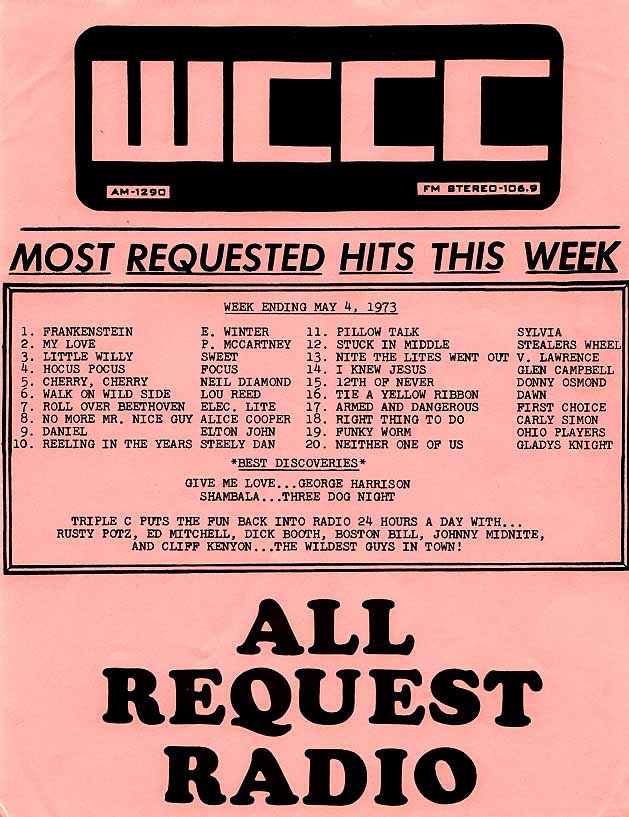
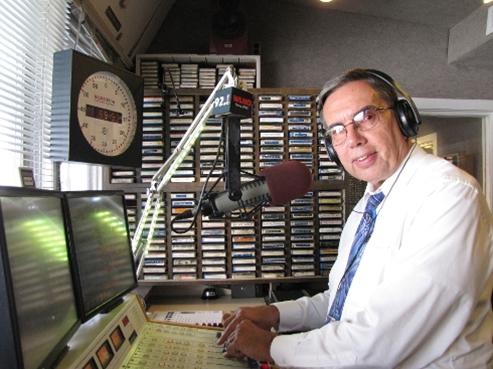
There were two milestones in radio broadcasting during the past 12 months that connected to the career of on-air personality and Hartford native Rusty Potz. Last week, Potz’ former radio home, WCCC in Hartford, was sold to new owners who abruptly ended the station’s decades-long rock-n-roll format. It was in the early ‘70’s that Potz was a leading DJ at the Hartford station, which later that decade featured a DJ named Howard Stern. Potz was well known in Hartford, moving on, like Stern, to new opportunities. That’s where the other milestone draws attention. Potz didn’t move too far – to radio station WLNG in Sag Harbor on Long Island. And he has been there ever since – from 1975 though the station’s 50th anniversary celebration last year, and continues on the air six days a week.

As WCCC has slipped away, WLNG is going strong. The station’s oldies format, local news coverage, and community orientation has loyal listeners in high places, as was evident in March this year.

The Sag Harbor Exprrusty potzess reported this spring that WLNG was the prime topic of conversation on the Tonight Show with Jimmy Fallon. Mr. Fallon asked Mr. Joel to join him in crashing Sag Harbor’s oldies station WLNG 92.1 and the singer, a longtime resident of Sag Harbor, enthusiastically agreed, the newspaper reported. The celebrities plugged the small station in front of a nationwide audience—over four million— resulting in a flood of listeners and website traffic for WLNG.

“We’re a nostalgia station,” Potz told the Sag Harbor Express last year. He is the executive vice president and has been with the station for 38 years. “We’re a part of people’s lives… People like a station that’s familiar. They want to know what they can expect. The oldies we play, we have just about every hit that ever came out.”WCCC All Request Radio

Potz earned his degree from the University of Hartford, and has been in radio since 1963 - on 20 different radio stations, most of them in Hartford, New Haven, and Springfield, MA.  At one time, he worked at four stations simultaneously.

In 1967, at WPOP Rusty's show was the top rated evening show in Connecticut, his station biography reports.  In 1969 WAVZ in New Haven received the TV-RADIO MIRROR award for Rusty's show as the top show on the east coast. Rusty was the program director at WCCC in Hartford for many years, including the years when the station featured the "All Request Radio" format, and came to WLNG on September 1, 1975.

The history of WCCC counted numerous broadcasters who went on to enduring careers. Howard Stern is perhaps the best known nationally. But for listeners in Eastern Long Island, Rusty Potz remains a household name.

An additional Connecticut connection was apparent recently. One of Potz’ guests on his WLNG program last month was former Channel 8 newscaster and ESPN broadcaster George Grande. Both were quite prominent on the Connecticut broadcast scene in the ‘70’s. Grande hosted the first edition of SportsCenter on ESPN in 1979, going on to a sportscasting career in New York, Cincinnati and as host of the annual Baseball Hall of Fame induction ceremony for more than two decades.


Greater Hartford Ranked #19 Among Best Places for Graduates in STEM Fields

If you’ve graduated college with a solid background and degree in hand in one of the in-demand STEM fields (science, technology, engineering and mathematics), there are some regions in America that are better than others to pursue your career. A new comparison of metropolitan areas across the country has ranked Greater Hartford as the 19th most desirable area in the country for college graduates who studied one of the STEM fields.

Hartford-West Hartford-East Hartford finished just ahead of San Diego – Carlsbad – San Marcos, California. One slot above Hartford in the rankings was Columbus, Ohio. Boston and Hartford were the only northeast cities to make the top 20 list.

Of all the jobs in the Hartford-West-Hartford-East-Hartford metropolitan area — which covers Hartford, Tolland and Middlesex counties — 6.6 percent were in STEM fields. That fact alone accounted for 50 percent of the total score Nerd Wallet assigned to the metro area, Hartford Business Journal reported. It also accounted for the area's $81,932 median annual wage for STEM jobs and itstem logos median gross apartment rent of $948.

The website Nerd Wallet determined the best places for STEM graduates by analyzing the following factors in the 75 largest U.S. metropolitan areas:

  • Income levels for STEM jobs: They looked at the annual mean wage for STEM occupations in each metro area, and factored in median gross rent as a cost of living metric to see how far the average income goes in each place.
  • Size of STEM industries: They included STEM occupations as a percentage of all jobs in a city to measure the robustness of the STEM industries and gauge availability of STEM jobs.

According to data from the Bureau of Labor Statistics, the annual mean wage for a STEM job is $79,395 — nearly 71% higher than the national annual average wage across all occupations and industries.  The top 10:

  1. San Jose – Sunnyvale – Santa Clara, California
  2. Seattle – Bellevue – Everett, Washington
  3. Washington, DC – Arlington, VA – Alexandria
  4. Houston – Sugar Land – Baytown
  5. San Francisco – San Mateo – Redwood City, California
  6. Austin – Round Rock – San Marcos, Texas
  7. Boston – Cambridge – Quincy, Massachusetts
  8. Raleigh – Cary, North Carolina
  9. Denver – Aurora – Broomfield, Colorado
  10. Dayton, Ohio

The analysis used U.S. Bureau of Labor Statistics data from May 2013 and rent data from the 2012 U.S. Census.

The region's focus on the STEM fields begins well before college graduation.  One recent example:  earlier this year, the CREC Academy of Aerospace and Engineering was ranked 15th in the nation and first in Connecticut in U.S. News & World Report's latest "Best High Schools" edition. The Connecticut International Baccalaureate Academy in East Hartford ranked 31st nationally and second in the state.

Nearly Two-Thirds of Americans Would Consider Coworking, If Only They Knew What It Was

Good news, bad news. That might be the best way to describe the results of a national survey by CoworkCT into public awareness of, and interest in, coworking. Nearly two-thirds of Americans (63%) said they would consider working in a collaborative work environment once they understood the concept (good news), but 60% said they had never heard of it (bad news). CoworkCT, a network of coworking communities whose members include small businesses, entrepreneurs, freelancers, and contractors who share space, resources, and ideas, conducted the national survey to better understand how familiar Americans are with coworking. Answer:  they're not.

A new website will be launched next week at www.coworkct.org, with more information about coworking in Connecticut.  Additional data, links and information will be added to the current test site, to assist in explaining the coworking concept to what the study suggests will be a receptive public.

According to the survey, the demographic groups most inclined to consider a coworking environment were 18 to 34 year olds (75%) and residents of the Northeast (72%). That is certainly true of ConneCoworkCT-Purple1-513x515cticut, which has seen growth in the concept in recent years, with coworking locations established in communities across the state, including Danbury Hackerspace, reSET (Hartford), the Grove (New Haven), B-Hive (Bridgeport), Stamford Innovation Center and Axis 901 (Manchester).  Each will have a presence on the news website, reflecting their growing community presence.

CoworkCT reports that the average cost of a coworking membership is $200 per month and the average cost of a private desk or office in a coworking facility is $350. The data from the survey showed that on average, people think the monthly cost of an individual coworking membership is $1,300.  Not even close.

Other key findings from the research include:

  • Nearly 40% of respondents said that collaboration with other professionals (not necessarily within their organization) was the most attractive feature of a coworking space, followed by 19% of respondents who chose affordability
  • Forty percent of respondents thought small businesses with fewer than 10 employees were best-suited for coworking, followed by 21% of respondents who said entrepreneurs wctnext-logo-finalould be the best fit

  • More than half of respondents (55%) said they thought it costs more than $500 per person per month for an individual space in a coworking environment

CoworkCT is a network of Connecticut coworking communities where members share space, resources, and ideas. The goal of the network is to educate the public on the benefits of coworking and increase general awareness for the collaborative work style.

CoworkCT is coordinated by CT Next, Connecticut’s innovation ecosystem supporting the success of companies and entrepreneurs by providing guidance, resources and networks to accelerate their growth. The statewide network “connects promising companies to mentors, collaborative work spaces, universities, vendors, suppliers and other like-minded entrepreneurs to help facilitate the growth and scalability of their business.”  CT Next is a program of CT Innovations, the leading source of financing and ongoing support for Connecticut’s innovative, growing companies.

Among the other coworking sites in Connecticut that are expected to be invited to the new CoworkCT website are SoNo Spaces in South Norwalk, Group 88 in Simsbury , and The Soundview, Colodesk and Comradity, all in Stamford.

The national data in the report was based on an ORC International telephone CARVAN® Omnibus survey conducted among a sample of 1,006 adults 18 and older living in the continental U.S. Interviews were completed from April 24 to 27, 2014. coworking