University of Hartford Students Develop First-of-Its Kind Prosthetic Hand, Patient Testing To Begin
/Five graduate students and their professor in the Prosthetics and Orthotics program at the University of Hartford have reached a significant milestone in the development of a first-of-its-kind prosthetic hand. The prototype of the potentially revolutionary device, after more than two years in development, is now ready to be tested on patients. Currently, amputees have a limited selection of sizes and designs for a prosthetic hand. The groundbreaking project, which has come to be known as the “Hartford Hand,” has a unique design that allows each patient to receive a custom-made hand that fits his or her exact needs. Because of the students’ technological ingenuity, the hand can be adjusted as the patient grows.
“It is the only hand at this time known to be completely customizable in terms of size and proportion,” said faculty advisor Michael Wininger, Assistant Professor of Prosthetics and Orthotics. (see video, below)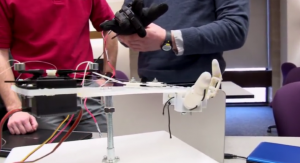
The five graduate students, due to graduate from the program in May, have spent thousands of hours on this project since 2013, with the goal of making the world’s first prosthetic hand that can be fully customized to patients’ needs. The students have joined the project through many pathways, either as part of their formal requirements for research in their master’s curriculum, though undergraduate honors theses, elective Independent study enterprise, or as extra-curricular collaborators in a not-for-credit research immersion.
“This has been one the best opportunities I have had in my life to design,” said Christopher Welch, one of the stud ents currently working on the Hartford Hand initiative. Each week, Welch and colleagues Yonathan Moshayev, Jake Green, Amber Sayer, and Stephen Sousa, spend several hours improving the current design to make the unique Hartford Hand a reality for patients.
The University of Hartford’s College of Education, Nursing and Health Professions collaborates with Hanger Clinic to offer the Master of Science in Prosthetics and Orthotics (MSPO). It is one of only 13 accredited programs in the United States. The curriculum provides students with strong foundational coursework in biomechanics, neuroscience, and kinesiology.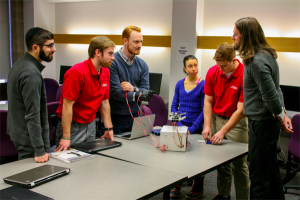
More than a great learning experience, the project has the potential to change lives as it prepares students for future career success. “They have more training than any other students in the country,” Wininger said, “which makes them competitive for their residencies. This is a good chance for students to train on cutting-edge technology.”
Two of the students presented the Hartford Hand at a national conference in San Antonio, Texas last year. “We were able to get professional feedback and network with people in our field,” said Sousa. Welch adds that everyone they talked with confirmed that there is a huge need for this hand. Both of them are planning to use the skills they have learned with this project to work in clinics after they graduate. “I am very grateful to have had this opportunity,” Sousa said. “I could not imagine a program without this great experience.” Previous students have presented at national conferences in Las Vegas, and have entered the Hartford Hand design into national engineering design competitions.
Wininger indicated that he anticipated tests with human subjects would begin by the end of the University’s spring semester.
The professions of prosthetics and orthotics are specialized allied health professions which combine a unique blend of clinical and technical skills. Professionals in this field design, fabricate, and fit orthopedic braces and artificial limbs for a broad range of clients from pediatric to geriatric.
PHOTO (at right): Yonatan Moshayev, Jake Green, Christopher Welch, Amber Sayer, Steve Sousa, and Assistant Professor Michael Wininger.
https://youtu.be/uxyeoi3G9ks


 Also making the list were Evariant of Farmington, a software developer, at number 272, and HP One, a software company in Trumbull at number 307. Biopharmaceutical company Alexion, in the midst of moving its headquarters from Cheshire to New Haven, was ranked at number 349, and etouches, a Norwalk software company ranked at number 357. Rounding out the Connecticut companies on the list is Wallingford oil extraction technology company APS Tecnhology, at number 466.
 rough technology’s continued disruption and proliferation across industries,” said Sandra Shirai, principal, Deloitte Consulting LLP and US technology, media, and telecommunications leader.
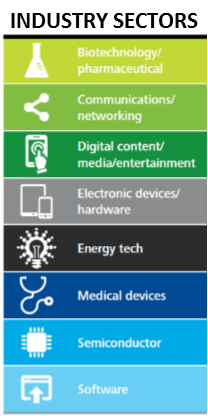 Overall, 283 of the 500 companies were in the software sector, and 67 percent of the 500 companies have received venture capital funding at some point in their company’s history. Topping the list was StartApp, with a growth rate of 21,984 percent from 2011 to 2014. Based in New York and founded in 2010, StartApp provides a free monetization and distribution platform that integrates with applications on mobile devices.
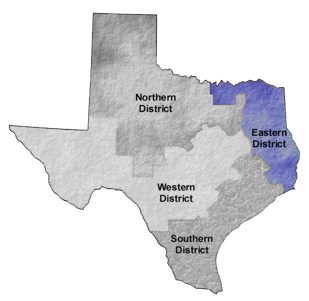 While action to combat the rapidly escalating challenge to businesses of every size has been unable to navigate through a divided Congress, the problem is growing. One jurisdiction in particular is a hospitable home for the legal attacks. Federal court in the Eastern District of Texas is the epicenter of patent troll litigation, and nearly 50 Connecticut companies are among those hauled into court there under dubious circumstances.


 MassChallenge, an independent nonprofit organization, envisions “a creative and inspired society in which everyone recognizes that they can define their future, and is empowered to maximize their impact.” They note that “novice entrepreneurs require advice, resources and funding to bring their ideas to fruition. Currently there is a gap between the resources these entrepreneurs need and the ability of the entrepreneurial ecosystem to provide them.” To bridge that gap, the organization’s primary activities include running an annual global accelerator program and startup competition, documenting and organizing key resources, and organizing training and networking events. They “connect entrepreneurs with the resources they need to launch and succeed immediately.”
 nd compliance efforts, earned 3 points out of 4 for its combined heat and power policies and programs, 5.5 out of 7 points for state-led energy efficiency initiatives, and 1 point out of 2 for appliance standards.
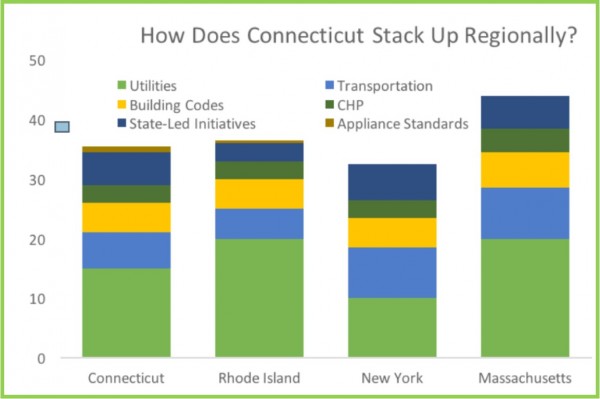 olar power in Connecticut has grown 221 percent per Capita since 2012, ranking the state 13th in the nation, the report points out. The top solar growth states in the nation, like Connecticut, have adopted renewable energy requirements, strong laws allowing solar customers to sell their excess power to the electric grid, and other policies encouraging growth of the industry, the report indicates. The industry is also adding jobs much faster than the overall economy, employing 1,600 people in Connecticut last year, according to
  ."
."


 The news came just weeks after it was announced that Laurencin is the recipient of the 2016 Founders Award, the highest honor of The Society For Biomaterials. He will be honored at the 2016 World Biomaterials Congress in Montreal, Canada on May 18, 2016.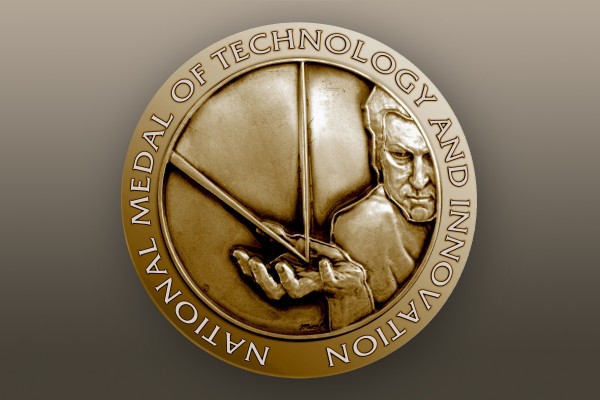


 The
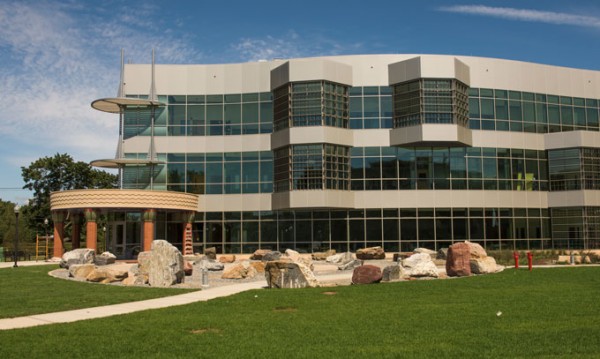
The  Plans for the new Academic Science & Laboratory Building at Southern began back in 2007 with a comprehensive 10-year capital improvement plan, dubbed CSUS 2020, for upgrading the four institutions of the Connecticut State University System. Approved by the state legislature and signed into law by Gov. M. Jodi Rell, the plan was developed during the administration of Chancellor David G. Carter. It included upgrades and repairs to existing facilities, as well as construction of a new Visual & Performing Arts Center at Western Connecticut State University, which