SeeClickFix is Only CT Business to Reach GovTech 100

New Haven-based SeeClickFix is the only Connecticut business to make the 2018 GovTech 100, an annual compendium of 100 companies focused on, making a difference in, and selling to state and local government agencies across the United States. SeeClickFix was launched ten years ago this month, according to co-founder Ben Berkowitz: “It began as a ‘nights and weekends’ project between friends with a goal of fixing some small problems locally and a big problem globally. SeeClickFix has become something much bigger than I could have ever imagined.”

Described as “a service to make communities stronger,” the key benchmarks the company points to include: a full time job for 33 employees, a platform that has helped facilitate the resolution of 4 million issues, a space for aspirations in tens of thousands of communities, and the official digital channel for service request resolution for hundreds of governments and tens of millions of their residents.

The annual list, compiled and published by Government Technology,  highlights leaders in the government technology sector – a marketplace that the publication says has ”brought bigger deals, more investment, new companies and many fresh new innovations that moved the needle in the public sector.”

Overall, 32 of the 100 companies are based in California, seven are based in New York, and six are headquartered in Massachusetts.  Rhode Island placed one company, Providence-based software company Utilidata.  There were no other companies based in New England.

“State and local governments have become more willing to try implementing new systems using agile methodologies that fit better with the modern tech world,” the publication pointed out. “They are striking up pilot projects and demonstration agreements that let them try out new ideas before taking the kind of big-dollar risks that government is not amenable to taking.”

“It is no secret that SeeClickFix was built from a place of distrust in the existing bureaucratic process that existed in 2007 for handling citizen concerns,” Berkowitz noted. “The three hundred governments and the thousands of officials that leverage SeeClickFix daily to engage in transparent and responsive communication has more than reversed our distrust.”

SeeClickFix is proving effective in small towns as well as big cities.  The town of Wilton in Southern Connecticut went live with SeeClickFix this past fall and used it at a Winter Carnival and Ice Festival in town this week.

The SeeClickFix blog highlighted the town, explaining that “They are a model town — they have done everything right! They have sustainable marketing, well-crafted goals and benchmarks, a responsive set of municipal departments, a champion in town leadership, and the flexibility necessary to add in request categories when citizens underscore a need.”

SeeClickFix co-founders include Miles Lasater, Kam Lasater, Jeff Blasius.  The company holds an annual User Summit every fall in New Haven, drawing local government customers from throughout the country to share best practices.

https://youtu.be/NYKo5koU_jI

Norwalk, New Haven Among Communities Receiving Free Home Smoke Alarms

With the Connecticut Home Fire Campaign, the American Red Cross is working to reduce death and injury from home fires by 25% by 2020.  “Sound the Alarm. Save A Life.”, a series of home fire safety and smoke alarm installation events in Connecticut and nationwide, is deploying volunteers will install 100,000 free smoke alarms in high risk neighborhoods. In Connecticut, the initiative has been to 76 cities and towns, replacing nearly 1,000 smoke alarm batteries and installing more than 12,000 smoke alarms.  The program has conducted more than 700 in-home visits, making an estimated 4,400 households safer, according to officials.

Norwalk was the center of activity last month, and New Haven is next in line. 

Teams make visits to homes sharing fire safety and preparedness information and install smoke alarms in homes as requested. Volunteers help families understand the importance of fire safety and help them develop personalized family escape plans to use in the event a fire breaks out in their home.

The program was in Norwalk in December in conjunction with the City of Norwalk, and will be in New Haven in the spring.  A large-scale event is scheduled for New Haven to install 1,000 smoke alarms in and around the city on April 28, 2018.

“Our mission at the American Red Cross is to prevent and alleviate human suffering caused by disasters,” said Mario Bruno, CEO, American Red Cross Connecticut and Rhode Island Region. “Home fires are the biggest disaster threat faced in the U.S. On average, in our region, we respond to about two home fires each day. Our goal is to reach as many homes as we can with this program to help ensure people know what to do and are prepared in the event they experience a home fire. We want people to be safe.”

Nationally, the Red Cross just installed its one millionth smoke alarm last fall.  Since October of 2014, the Red Cross has worked with fire departments and community groups across the country as part of a multi-year campaign to reduce the number of home fire deaths and injuries.

Officials indicate that 60 percent of house fire deaths occur in homes with no working smoke alarms. The campaign initiative is in direct response to that “dire threat,” with the Red Cross committing to install 2.5 million free smoke alarms in neighborhoods at high risk for fires, and to educate those residents about fire prevention and preparedness.

Officials estimate that as of November 2017 the Red Cross and partners have saved more than 285 lives nationwide as part of the campaign.  In Connecticut, individuals can make an appointment by visiting http://www.redcross.org/local/connecticut/home-fire-safety-visit or by calling 877-287-3327 and choosing option 1 on the menu to request a smoke alarm installation.

Hartford Rail Line May Bring Jobs, Opportunity for Key Populations, Study of Public Transit Suggests

As Connecticut moves closer to a significant increase in rail service connecting communities from New Haven to Springfield, MA, with the introduction of the Hartford line, anticipated in May, a report by Demos underscores the potential impact on economic opportunity and segments of the state’s population. The report, “To Move is to Thrive:  Public Transit and Economic Opportunity for People of Color,” which looked at public transportation in metropolitan areas across the country, presents a series of findings on the use of public transit by people of color and on the potential jobs benefits that people of color can gain from investments in public transit.

Its key findings on the use of public transit are:

  • Racial, ethnic, and class inequities in the access to and funding of public transit continue today.
  • Latino and Asian-American workers are twice as likely as white workers not to have a vehicle at home. African American workers are three times as likely. These disparities are heightened in certain metropolitan areas; Latino and black workers lack a private vehicle at as much as six times the rate of white workers in some areas.
  • Asian-American and African-American workers commute by public transit at nearly four times the rate of white workers. Latino workers commute by public transit at nearly three times the white rate.
  • Workers of color are overrepresented among public transit commuters with “long commutes”—one-way commutes of 60 minutes or longer.

The key findings on the jobs benefits from investment in public transit are:

  • America’s employment rates are still low relative to 2000, and there is a strong racial hierarchy in employment rates.
  • The majority of the jobs created from infrastructure investments can be non-construction jobs.
  • All racial and ethnic groups gain jobs from large infrastructure investments and, generally, the larger the investment, the more jobs for each group.
  • Investments in public transit show good returns in terms of the shares of the total jobs going to workers of color.

The report also noted that “growing numbers of Americans rely on public transit in their daily lives. In 2015, passengers took 10.5 billion trips on transit systems, up 33 percent from 20 years ago. Public transit ridership has grown faster than the population. But our public transit infrastructure, like much of our infrastructure generally, is old and decrepit. And many of our transit systems were not designed to handle such heavy use.”

While Connecticut’s cities are not as large as many of the nation’s largest metropolitan areas, they do have populations with larger numbers of people of color than mnay surrounding suburbs.  Providing greater ease of mobility to station stops along the Hartford line could offer impacts suggested by the study.

The Hartford line, which is focused on increasing the frequency of station stops from Springfield to New Haven, will also see additional stations constructed in the coming years.  When the CTrail Hartford Line service launches in May, it will consist of both expanded Amtrak service and new regional trains operated by the Connecticut Department of Transportation and will offer more frequent, convenient and faster passenger rail service between New Haven, Hartford and Springfield.

Plans call for an increase in the number of round trip trains from six daily Amtrak intercity and regional trains to a total of 17 round trip trains a day to Hartford, and 12 trains per day to Springfield. In addition, trains will operate at speeds up to 110 mph, reducing travel time between Springfield and New Haven. Stops are to include rail stations in Windsor Locks, Windsor, Hartford, Berlin, Meriden, Wallingford and New Haven.   New stations are to be added, refurbished or relocated in North Haven, Newington, West Hartford, Windsor, Windsor Locks and Enfield by 2020.

Projections include more than 4,500 construction related jobs and over 8,000 total jobs, including both direct and indirect jobs.  Transit-oriented development, including housing is also anticipated along the route. Recently, plans to convert a long-vacant factory into housing was announced in Windsor Locks.

The national data indicates that workers of color are roughly 2 to 3 times as likely as white workers not to have a private vehicle at home: only 2.8 percent of white workers do not have a vehicle at home, but 6.9 percent of Asian-American workers, 7 percent of Latino workers, and 9.5 percent of African-American workers do not have a vehicle at home.

Nationally, 3.1 percent of white workers use public transit, while 7.8 percent of Latino workers, 11 percent of Asian-American workers, and 11.1 percent of African-American workers commute using public transit. In other words, Latino workers are almost 3 times as likely, and Asian-American and African-American workers are almost 4 times as likely as white workers to commute by public transit, the report indicated.

Based in New York, Boston and Washington D.C., Demos is a public policy organization “working for an America where we all have an equal say in our democracy and an equal chance in our economy.”

Cybercrime Attacks on CT Residents, Businesses Ranked Midway Among States

Connecticut is among the 25 states that have seen residents lose the most as targets of criminal activity on Cyber Monday, the busiest on-line day of the year, according to a new analysis released just before this year’s edition of the annual on-line shopping spree known as CyberMonday. OpenVPN, Inc. released details on a groundbreaking study that ranks how age, sex and where an individual lives could predict their likelihood to become a target of criminal activity on Cyber Monday.

"Connecticut is generally thought of as a very safe state with low crime rates. That's the unique thing about cybercrime and identity theft - you can live in the nicest house on the block and still be very vulnerable," says Francis Dinha, CEO of OpenVPN.

California is ranked the worst state in the country for total reported cybercrimes, fraud, and identity theft per capita in 2015 and 2016.  Connecticut was the 21st worst in the analysis, just about in the middle of the pack.

The study data was culled from the FBI’s IC3, or Internet Crime Complaint Center, as well as the federal government’s Consumer Sentinel Network (CNS) databases.

In 2016, the state’s residents lost $6,960,531 total to internet crime, an average of $2,734.98 per person. Overall, 28,595 state residents reported cybercrime of some sort in 2016 — mainly men and people in their 50’s, the study found. Internet crime complaints totaled 2,545, total fraud complaints reached 21,117 and identity theft complaints totaled 4,933, according to the data compiled.

"Connecticut follows national trends in that more men than women are victimized, and older individuals have been more deeply affected,” Dinha added.  “OpenVPN encourages all Connecticut citizens to educate themselves about how cybercriminals gain access to private information and stay safe this Cyber Monday."

“What came as a surprise in this report,” said Gary McCloud, VP of Business Development for OpenVPN, “Is that men actually fall victim to cybercrime 75 percent more often than women.”

Men and women have different shopping habits. The study noted that men actually spend more than women online, so that fact alone may the reason men fell victim to cybercrime more often to women - and may continue to do so. In fact, men fell victim to cybercrime more 75 percent more often than women—falling victim in 38 of America’s 50 states – including Connecticut - and Washington D.C.

The state’s male ranking is seventh worst among the states, female ranking is fourteenth worst.  By age group, the state’s best showing is among those age 20-29, ranking Connecticut 28th among the states; the worst showing, a ranking of 13th, in the 50-59 year old age group.

The safest states cited in the study include South Dakota, North Dakota, West Virginia and Maine, with Vermont ranking as the safest at #51.  The worst states were California, Florida, Nevada, Texas, New Mexico, New York, Arizona and Virginia.

All 50 states and the District of Columbia were ranked from most to least total victims of cybercrime, equally weighted per 100,000 people for the total number of internet crime victims, fraud victims, and identity theft victims.  The study also took into account the average dollar loss per victim of internet crime and average dollar loss per victim of fraud.

Among the recommendations to improve safety and deter cybercrime:

  1. Do NOT use a public wifi signal unless you have a Virtual Private Network (VPN) which will encrypt information on your computer, hiding it from online predators.
  2. If shopping from home, make certain your home wifi signal is password-protected. Otherwise, someone simply driving down the street could access the private information on your computer.
  3. When shopping online, look for verification you’re on a secured site. This may be something as simple as a padlock in your internet window.
  4. When possible, use a credit card as opposed to a debit card which is linked directly to your bank account.

All of the data used for total cybercrime compilations based on age and gender was pulled from the 2015 FBI crime database; 2016 was not available.


University of Saint Joseph School of Pharmacy Reaches to United Arab Emirates for New Academic Partnership

Earlier this decade, the University of Saint Joseph (USJ) took the bold steps of not only launching a Pharmacy doctoral program, but doing so in Downtown Hartford, developing a cutting-edge campus and curriculum above what was once the Hartford Civic Center mall. The program is thriving, driven in part by an innovative, modified-block curriculum that stresses experiential education throughout the three year program. Now, USJ is extending the Pharm.D.degree program connections beyond the United States.

The university has signed a letter of agreement to form a partnership with the College of Pharmacy at Gulf Medical University in the United Arab Emirates. The affiliation between the two schools includes inviting faculty and staff of the partner institution to participate in a variety of teaching, research, scholarship activities, and professional development. In addition, pharmacy students and postdoctoral students from both schools will participate in exchange programs for periods of study, research, and scholarship.

A signing ceremony, was held recently at USJ’s West Hartford campus, led by University of Saint Joseph President Rhona Free, Ph.D., and Dean of its School of Pharmacy Joseph Ofosu, Pharm.D., R.Ph., with Gulf Medical University Chancellor, Professor Hossam Hamdy.

“We are thrilled to create this partnership for the benefit of our respective students, faculty, and communities,” said President Free. “We look forward to a mutually beneficial experience for the Gulf Medical University’s College of Pharmacy and our School of Pharmacy located in downtown Hartford.”

The two institutions will carry out joint research and continuing education programs, and the schools will also organize symposia, conferences, short courses, and meetings on their research and scholarship issues.

Gulf Medical University’s planned Innovation and Research Centre will be the first of its kind in the region and will have devoted state-of-the-art innovation and incubation laboratories that are to include pharma product development, according to the university’s website. The Center aims to foster collaborations and partnerships with international institutions, universities, research labs, pharma companies and the healthcare industry.

Gulf Medical University (GMU), established in 1998, is a leading medical university in the Gulf region, located in Ajman, U.A.E. The campus is in the new Ajman metropolitan area, close to international airports in Dubai and Sharjah.

The USJ School of Pharmacy has an Open House scheduled for November 28, 6-8 p.m., at the school’s Hartford campus, 229 Trumbull Street.

https://youtu.be/p2W-ISsxqPM

Local Museums, CRIS Radio, Collaborate to Bring Audio Narration to the Art

CRIS Radio and the New Britain Museum of American Art (NBMAA) are working together to offer CRISAccess™ at the museum, which offers instant, on-demand audio descriptions of selected masterpieces on display by using a personal smartphone and QR Code reader.  The new initiative launched earlier this month. The goal of CRIS Radio and NBMAA’s collaboration is to provide its museum visitors with disabilities the same experience and access enjoyed by their friends, classmates and family, officials explained.

CRIS (Connecticut Radio Information System) is a 39-year-old nonprofit and is Connecticut’s only radio-reading service, providing audio access 24/7 to news and information for people who are blind or print-challenged, including those unable to read due to a medical condition/treatment, physical, learning, intellectual or emotional disabilities.

The New Britain Museum of American Art’s founding in 1903 entitles the institution to be designated the first museum of strictly American art in the country. The singular focus on American art and its panoramic view of American artistic achievement make the NBMAA a significant teaching resource available to the local, regional, and national public.

CRIS Radio is integrating QR Code technology to instantly “link and play” audio files of information posted on signs or other printed materials for people who are blind or print-handicapped. Visitors can access the audio files with any mobile device downloaded with a QR Code Reader application.

CRISAccess™ is part of CRIS Radio’s new Adaptive Audio Accessibility services initiative that promotes access to information at museums for people who have difficulty reading posted signs. The audio displays are triggered by QR code (Quick Response Codes) apps downloaded onto smartphones. A patron simply captures the QR code with the camera phone. The QR code apps are available for download on most online app stores, like Apple or Google.

Michelle Hargrave, Deputy Director at the NBMAA, said, "The New Britain Museum of American Art is thrilled to partner with CRIS Radio in this endeavor to bring greater accessibility to the institution. The Museum is committed to being a welcoming, dynamic, distinguished, and educationally ambitious art museum, and we are very excited that this opportunity will open our galleries to a broader audience."

CRIS Radio’s state-of-the art broadcast center is headquartered in Windsor, where numerous audio recordings are produced. CRIS also operates regional studios located in Danbury, Norwalk, Norwich, Trumbull, and West Haven.

National studies report that only 11 percent of people with disabilities visit museums. The collaboration between the two nonprofits provide a low-cost and simple approach to enhance the visitor experience for people with visual or other print disabilities. CRIS Radio based its CRISAccess program on the recommendations of a focus group comprised of people with visual disabilities convened by the Smithsonian.

CRIS has already been working with leading museums in the state and region, with more to come.  Plans are underway to add the Mark Twain House & Museum to the QR code portfolio. Those already up and running include:

The recently re-opened Jonathon's Playground, in Bloomfield, is the first outdoor venue to use the technology.  CRIS provided audio descriptions of the playground equipment.

The core of CRIS services is the daily recording of articles featured in more than 70 newspapers and magazines, including the most extensive line-up in the nation of award-winning children’s magazines featuring human narration, all available online and on demand.

CRIS also provides streaming CRIS programs directly to hospitals and other health care facilities through their in-house systems, or through Internet radios installed at assisted living facilities or nursing homes.

The Connecticut Valley Tobacco Museum also recently launched special digital audio guides for the sight impaired, or for patrons who have reading difficulties, as part of the CRIS museum initiative.  The project was funded by the Windsor Lions Club, with the assistance from the Connecticut Radio Information System (CRIS).

Programs powered by CRIS Radio include: CRIS Radio; CRIS Listen Now (online streaming); CRIS Listen On Demand; CRISKids™ and CRISKids™ for Schools;  CRISAccess™ (for museums); and CRIS En Español (featuring Spanish-language newspapers and magazines). CRISKids and CRISKids for Schools offer teachers a low-cost tool to help improve student literacy and reading ability.

CRIS employs a staff of four full-time and three part-time people. Operations rely on approximately 300 volunteers statewide to help with the production, programming and the day-to-day operations of CRIS.

PHOTO:  At left, Michelle Hargrave, deputy director of the New Britain Museum of American Art, watches as Diane Weaver Dunne, executive director of CRIS Radio, demonstrates CRISAccess, which provides audible information about selected masterpieces on display at the New Britain Museum of American Art.

New Wallingford Rail Station Opens Ahead of Next Year's Hartford Line Expansion

The next step in the development of the Hartford line, which will significantly expand daily passenger rail service between New Haven and Springfield, takes place on Monday with the opening of a newly constructed passenger station in Wallingford. The Connecticut Department of Transportation (DOT) will officially open the new CTrail Hartford Line Wallingford Station to the public on Monday afternoon. The new station is located at 343 North Cherry Street, approximately one mile north of the existing station.

It will be opening in advance of the May 2018 launch of CTrail Hartford Line passenger rail service. Gov. Malloy and state officials announced last month that a one-way trip between Hartford and New Haven will run $8 when the expanded commuter service gets underway next spring. A trip along the entire length of the rail line — Springfield to New Haven — will cost $12.75.

The Wallingford station features amenities “aimed at providing a high-quality passenger experience,” officials point out, including high-level platforms on both sides of the track as well as elevators, stairways with an overhead pedestrian bridge to cross the tracks, and canopies covering approximately 50 percent of the platform length. There will be parking for approximately 221 vehicles in two surface parking lots at the station. There is also a passenger information display system, security cameras, electric vehicle charging, and bicycle racks. Limited seating on the platform is also available.

Construction began in December 2014 and cost approximately $21 million.  New rail stations in Meriden and Berlin are under construction, and are expected to come on line prior to the launch of the expanded passenger service in the spring. DOT officials have previously indicated that all stations will be compliant with the Americans with Disabilities Act, and none of the stations will have bathrooms.

Once underway, the new daily service will mean that from New Haven to Hartford, trains will increase from six to 17 per day. Between Hartford and Springfield, trains will increase from six to 12 per day. A new station in North Haven station is currently being designed, and is not due to be built and open until 2020. Stations in Enfield, Newington, West Hartford, Windsor and Windsor Locks stations are also part of the Hartford Line plans. Trains will arrive at stations in New Haven, Wallingford, Meriden, Berlin and Hartford every 45 minutes during peak hours and every 60 to 90 minutes during off-peak periods.

The DOT is accepting comments on the new fares through Nov. 27 by email (dot.hartfordlinecomments@ct.gov) or mail.  In addition, there will be three public comment forums: at 5 p.m. on Nov. 13 at the New Haven Hall of Records; 4 p.m. on Nov. 14 at Capital Community College in Hartford; and 5:30 p.m. on Nov. 15 at the Pioneer Valley Planning Commission in Springfield.

There is more than a rail station at work in Wallingford.  The town has completed a Transit-Oriented-Development (TOD) Plan that features shifting existing industrial development to the north, freeing up space for mixed-use and retail development in Downtown, officials said. The existing Parker Place apartment complex near the station offers a precedent for TOD and is expanding 200 units. The Town is also making efforts to encourage and support TOD by creating a new Town Center zoning district and reducing off street parking requirements. Transit-Oriented-Development refers to a high density, pedestrian oriented, mixed-use development located within a short walk of transit stations. TOD plans are also anticipated at the other stations along the Hartford line.


Longstanding Coverage of State Government to End; Drastic Reduction in Funding, Imposition of Content Limitations Cited

CT-N, which has provided coverage of State Senate and House sessions and all three branches of state government for nearly two decades, will cease operations on Friday, November 3, due to severe budget cuts and limitations on coverage being imposed by the legislature on the network’s operator, the Connecticut Public Affairs Network (CPAN). CPAN has operated the network, under a series of contracts with the legislature’s Joint Committee on Legislative Management (OLM), since March, 1999, and was among the first in the nation to provide comprehensive coverage of state government.

“CPAN was created with a nonpartisan, educational mission to run CT-N as a three- branches network, at arm’s length from the government,” CPAN Executive Director Paul Giguere wrote in a letter notifying the non-partisan OLM that CPAN would be ending coverage. “It was a mission and purpose once supported by the Leadership of the General Assembly. Even the state statute governing CT-N’s revenue intercept refers broadly to coverage of ‘state government deliberations and public policy events.’ The thinking has clearly changed.”

At least one of those contracts, covering November 2003 - October 2006, clearly delineates that CPAN’s operation of CT-N would provide coverage of “the legislature, events of public interest in the Executive and Judicial Branches and other events of statewide interest.”  That contract also indicates that “many of the executive branch events to be covered will be taking place at locations away from the Capitol Complex.”  A subsequent contract, which ran through last year, also stated that “CPAN retains full editorial discretion regarding day-to-day programming.”  CT-N broadcasts seven days a week, 24 hours a day.
CPAN’s most recent contact expired in September, was extended through October, and was on a day-by-day basis this week. The 33-person staff worked with an annual operating budget that was unexpectedly reduced by 65 percent in the budget approved by the legislature this week for the current fiscal year.  At the same time, the legislature sought reductions in coverage of state government outside the State Capitol, limitations on editorial content decisions, and cutbacks on public affairs programming.  Those changes, which were revealed in the RFP for a new five-year in April, drew sharp criticism at that time, which were renewed this week.

“For some time now, we have contended with encroachments on our editorial independence, despite our best efforts to be responsive to concerns while continually working to improve the CT-N service and over-delivering on every contract we have ever signed,” Giguere wrote.

The National Alliance of Public Affairs Networks (NAPAN), points out that while many variations exist in programming and operating models among state public affairs networks, a series of “Best Practices” can be drawn from “the most effective strategies used by highly regarded networks across the country.”
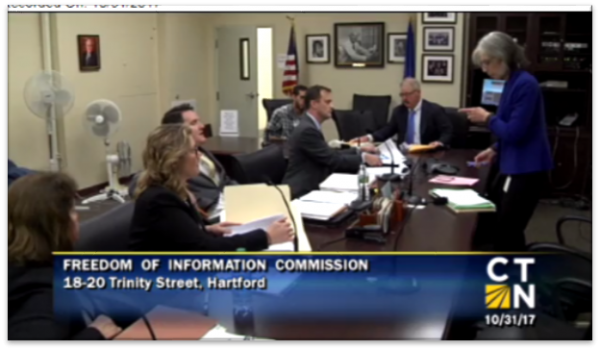
NAPAN points out that “citizens’ trust in all three branches of government is at all-time lows,” and “while the judicial, executive and legislative branches actively operate in states daily, the understanding of what and how decisions are being made at the highest levels go largely unreported and consequently unnoticed by the general public.”  CT-N coverage was available on television and on-line, both live and in archives that are easily accessible to the public.  CPAN also has provided educational materials for classroom teachers and the general public.

In his letter, Giguere, who brought the concept for such a network to the Connecticut legislature in the 1990’s and led its launch and development, said “the scope at which we would be obliged to operate CT-N would cease to provide any meaningful level of transparency:  even less so, if the few coverage decisions we would have the opportunity to make were controlled by the CGA (Connecticut General Assembly) to the extent that recent events convince us they would be.”  He continued:  “at best, CT-N would provide the façade of transparency, cloaked – at least temporarily – in the credibility and reputation that CPAN has spent 18 years building.  We will not abet that course of action by the CGA by participating in it.”

In recent days, CT-N has provided coverage of Gov. Malloy’s news conference announcing he had signed the state budget into law, a news briefing on state infrastructure and resiliency improvements since Super Storm Sandy, meetings of the Connecticut Board of Firearms Permit Examiners and the Governor’s Nonprofit Health & Human Services Cabinet, and a hearing by the legislature’s Judiciary Committee considering nominations of individuals to serve on the State Supreme Court and Appellate Court.

Earlier this year, Danbury State Rep. Bob Godfrey cited the role of CT-N in providing the public with access to government, noting that "The General Assembly itself has provided more public access to lawmaking through both our web site (www.cga.ct.gov) and the Connecticut Television Network (CT-N, at www.ct-n.com)."

-----

Five best practices for state public affairs networks are described on the NAPAN website:

1. Accessible to All: 24/7 programs on a dedicated channel across multiple platforms

A state public affairs network is most effective in connecting citizens to state government when it is available full-time to the maximum number of citizens possible, including a robust online presence with strong searchable streaming and on-demand content, accessibility enhancements such as closed captioning for the hearing impaired and a permanent archive of programming produced.

2. All Three Branches of State Government

A state public affairs network is most effective in connecting citizens to state government when it provides a nonpartisan, unbiased and unfiltered window on all official state business.

3. Operating at Arm’s Length

A state public affairs network is most effective in connecting citizens to state government when it is structured with an independent governing body using a set of agreed-upon operating guidelines to make programming and operational decisions free from political influence.

4. Citizen Engagement

A state public affairs network is most effective in connecting citizens to state government when it seeks to demystify the process of governing by providing additional information and context through on-screen graphics, online reference materials and links to other resources.

5. Programming Breadth

A state public affairs network is most effective in connecting citizens to state government when it provides a broad range of high-quality public affairs programming beyond gavel to gavel coverage of government proceedings, as well as official emergency information from appropriate state public safety agencies.

 

Varied Economic Development Projects, People and Programs to be Celebrated by State

The Connecticut Economic Resource Center, Inc. (CERC) has named top economic development projects, programs and leaders from throughout the state to be honored at the annual CELEBRATE CT! event on November 30, 2017 at The Bushnell in Hartford. The 21 honorees were selected by economic development officials in each of 10 regions across Connecticut for their contribution to the state’s economy – such as consistent or growing employment levels, playing a critical role in changing the character of its community or civic engagement, strong public/private collaboration to encourage new investment, or leadership resulting in growth or improvements.



The honorees include initiatives, businesses, organizations and individuals that are widely known in their communities, and some that are less well-known.  Reflecting the growth of the craft beer industry in Connecticut, the honorees include three breweries: Stony Creek Brewery in Branford,  Beer'd Brewing Company in Stonington, Alvarian Beer Company in New Britain. 

“These awards acknowledge key people, programs and projects that are stimulating new jobs and investment in our economy,” said CERC President and CEO Robert Santy. “They are well earned and well-deserved, and CERC is proud to recognize the 2017 honorees and their noteworthy accomplishments that are having a positive impact on Connecticut’s business environment.”

The 2017 honorees also include the UCONN Hartford Campus, which began operations this fall in downtown Hartford, the long-running Goodspeed Musicals, and the Heirloom Food Company in Danielson, an organic cafe and juice bar.  The state's increased emphasis on rekindling the manufacturing industries is reflected in the selections of Pegusus Manufacturing and Hurley Manufacturing.

This is the eighth year the event is being hosted by CERC, a nonprofit corporation and public-private partnership that provides economic development services, working closely with an extensive network of state, regional, local and utility partners to leverage Connecticut’s unique advantages as a premier business location.

Nearly 200 economic development and business professionals from around the state are expected to attend CELEBRATE CT! (To register or sponsor the event, visit www.cerc.com/celebratect)

The 2017 CELEBRATE CT! award honorees:

  • Capitol Region/Hartford Joining Technologies UCONN Hartford Campus
  • Central/New Britain Alvarium Beer Company Jasko Development LLC
  • South Central/New Haven Stony Creek Brewery Mike Freda (for Amazon Fulfillment Center, North Haven)
  • Southeastern/New London Beer’d Brewing Sean Nugent (for Preston Riverwalk)
  • Lower CT River Valley/Middlesex Goodspeed Musicals Pegasus Manufacturing
  • Naugatuck Valley/Waterbury Basement Systems Bristol Centre Square Project
  • West/Danbury-Fairfield BRT General Corporation Ferguson Library (1 Million Cups) Inspira Marketing Group
  • Metropolitan/Bridgeport Corvus Capital Partners LLC Future Health Care Systems
  • Northeastern/Windham Heirloom Food Company Thompson Branding Plan
  • Northwest Hills/Torrington Hurley Manufacturing Whiting Mills


CT Among States Most Vulnerable to Identity Theft and Fraud, Analysis Finds

Identity theft and Connecticut seem to go hand-in-hand, according to a new analysis of the prevalence of identity theft across the country. Connecticut ranked among the most vulnerable, at number 10 for identity theft and fraud and number 7 in identity theft complaints per capita. The credit-monitoring site WalletHub released a study this month identifying the states most vulnerable to identity theft and fraud. Analysts compared data for all 50 states and the District of Columbia across eight key metrics, ranging from identity theft complaints per capita to average amount lost due to fraud.

"Connecticut ranked #2 when it comes to Identity Theft in particular. It has the 2nd highest combined rate of identity theft complaints per capita and amount of losses per complaint (in dollars),  WalletHub Analyst Jill Gonzalez told CT by the Numbers. The data sets for the study included identity-theft complaints per capita and average loss amount due to fraud.

The most vulnerable top 10: California, Rhode island, Washington DC, Florida, Georgia, Michigan, Nevada, Texas, New York, and Connecticut.

WalletHub noted that according to the Identity Theft Resource Center’s most recent Data Breach Report, 2017 is on track to register the highest number of data breaches since the center began tracking them in 2005.  Major data breaches this year include Equifax, which potentially impacted more than 145 million Americans.

"The metrics which show truly alarming results in Connecticut's case are Identity Theft Complaints per 100,000 Residents (ranking 7th at 137.90) and Average Loss Amount Due to Online Identity Theft, calculated as the Total Reported Amount Paid / Total Number of Complaints Stating the Amount Stolen (ranking 5th at $12,174.48),” Gonzalez said.

A breakdown of the rankings found that Connecticut was:

  • 7th in identity-theft complaints per capita
  • 5th in average loss amount due to online identity theft
  • 25th in fraud and other complaints per capita
  • 23rd in state security-freeze laws for minors’ credit reports
  • 24th in compliance with the REAL ID Act. The REAL ID Act establishes minimum security standards for license issuance and production.

The WalletHub analysis included three areas of data:  Identity Theft (47.5 points), Fraud (47.5 points) and Policy (5 points).

Among the policy measures, the state ranked tied for first in the Identity Theft Passport program metric.

"Identity Theft Passport programs help victims of identity theft reclaim their identity,” Gonzalez explained.  “When presented to a law-enforcement agency, for instance, an “identity-theft passport” allows a victim to prevent his or her arrest for offenses committed by an identity thief."

Data used to create the WalletHub ranking were collected from the Federal Trade Commission, Internet Crime Complaint Center, Federal Bureau of Investigation, Department of Homeland Security and National Conference of State Legislatures.