CT’s Regional Planning Agencies Consolidate, Realign and Disappear
/As the Central Connecticut Regional Planning Agency (CCRPA) prepares to go out of existence, the newly formed Naugatuck Valley Council of Governments is advertising for an Executive Director. It’s all part of a major shake-up of regional planning agencies in central Connecticut, prompted by the state legislature’s decision to reduce the number of regional planning agencies in the state from 15 to 9, as of January 1. Among the by-products: Bristol and New Britain are parting company. The realignment is breaking up long-term relationships going back decades, and forcing municipalities to decide on new partners. Regional planning agencies deal with a range of issues, but generally focus on transportation, land use, brownfield cleanup and environmental projects. For communities between two large cities that serve as anchors of regional planning agencies, it often comes down to deciding it they’d like to align to the east or the west.
The Central Connecticut Region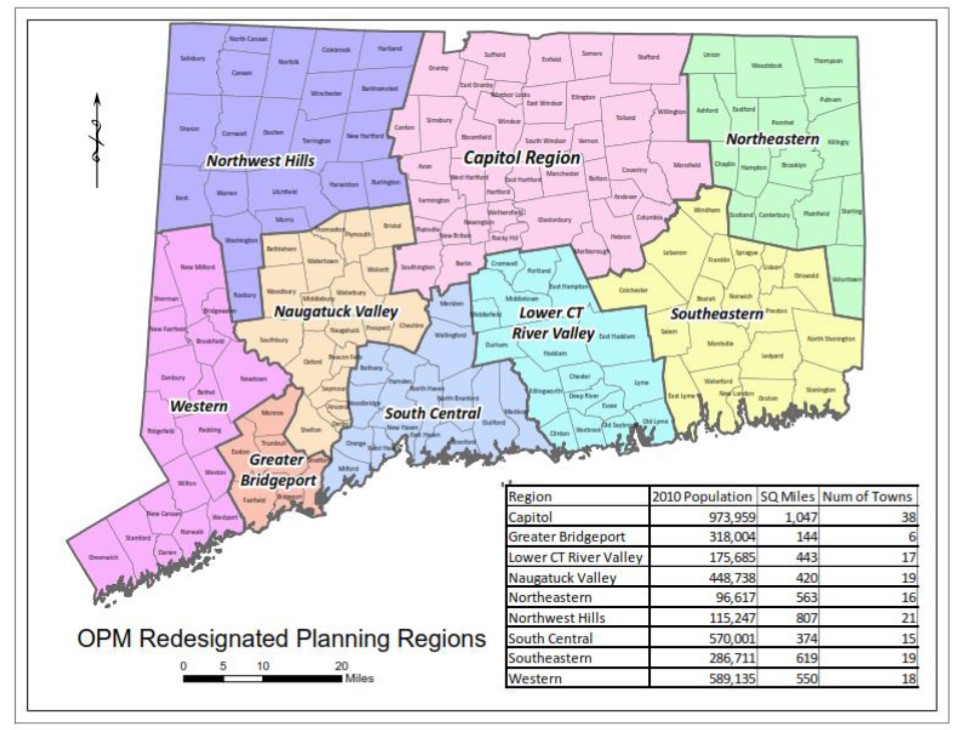 al Planning Agency (CCRPA), for example, has been the regional and metropolitan planning organization for the cities of Bristol and New Britain and the towns of Berlin, Burlington, Plainville, Plymouth, and Southington. For over 45 years, CCRPA has worked with government, business, and the public to develop a vision for the region and resolve its challenges. It will cease to exist at the end of the year.
The newly formed Naugatuck Valley Council of Governments (NVCOG) will replace the Council of Governments of Central Naugatuck Valley and the Valley Council of Governments plus add two towns from the Central Connecticut Regional Planning Agency – Bristol and Plymouth.
The other CCRPA towns, including New Britain, are headed elsewhere. Most of the towns in the CCRPA have opted to join with Hartford area municipalities in the Capitol Region Council of Governments, but Bristol officials decided to join the Waterbury agency instead. New Britain is one of eight municipalities to join CRCOG in recent months, as part of the CCRPA break-up.
CRCOG will have grown to 38 member municipalities, with a total population of just under one million, and 1,047 square miles, the largest of the state’s regional planning agencies. Joining CRCOG since July 1 are Berlin, Columbia, Coventry, Mansfield, Plainville, Southington, Willington and New Britain. The new Naugatuck Valley Council of Governments will represent 19 towns and cities with a population of 448,738, over 420 square miles.
Ed Edelson and Kurt Miller, the current chairmen of the two councils of governments that had been covering the Naugatuck Valley, which will be subsumed by the new Council, said recently that “although our two current organizations have done high-quality work over the past four decades, we recognize they each have had different strengths and areas of focus.”
Edelson, the Democrat first selectman of Southbury, and Miller, the Republican first selectman of Seymour, added “we believe this step to align the 19 cities and towns around the urban center of Waterbury provides the best opportunity for all of our communities to combine resources, and bring significant new investment and cost savings to each of our communities.” NVCOG held its first organizational meeting in late summer, and launched their Executive Director search last week.
Bristol Mayor Ken Cockayne recently said he “looks forward to strengthening existing ties to neighbors and building new relationships and cooperation with communities that share many of Bristol’s priorities and challenges.”
They also said they “recognize the importance of our new region’s major cities — such as Waterbury, Bristol and Shelton — as the economic engines. Their economic and social future is critical to all of the surrounding towns. We are all dynamically linked.”
For those who may be interested in the Executive Director position, topping the list of characteristics for the “ideal candidate” – “honest, trustworthy, diplomatic and ethical.” And leading the “opportunities and challenges” – managing the consolidation, “sensitive to the cultural differences” of bringing the 19 towns together as a new council of governments.
The next challenge for the state, according to Edelson and Miller, is the consolidation of the Metropolitan Planning Organizations (MPOs), which are the federal regions that plan transportation systems and jointly allocate federal funds for these projects with the Connecticut Department of Transportation. There currently are eight MPOs in Connecticut, and the aim is to have fewer MPOs with boundaries that coincide with the new councils of governments’ boundaries.



 one’s throw away. The reconstruction of the I-95/I-91/Route34 interchange in New Haven began in 2011 and is estimated to be completed in 2016, at a cost of $359.9 million.
 tive Director of the

 vable Communities
 rcent, with less than 2 percent growth for people age 20 to 64 during the same period.

 asier to walk and bike by implementing "complete streets" in cities and towns across Connecticut. Complete streets make it easier and safer for people to get around on foot or by bike, in order to become more physically active.
 ut the
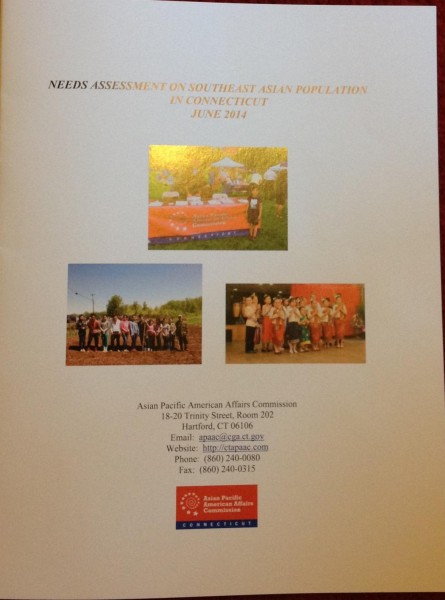
  nd Connecticut Coalition of Mutual Assistance Associations. The project was also supported by the Asian American Studies Institute at UConn, the UConn School of Pharmacy and the UConn School of Social Work. It focused on housing, education, language access, employment, access to public resources, and medical and mental health.
 Healthcare Concerns
 d education, promoting preventative care, actively recruiting APA members in various professional fields, creating diversity in the workforce, translating materials into the most common APA languages, and raising awareness among the APA population regarding their rights.
 ven are “overflowing with impossible ideas and the people who make them happen. We believe connecting to all three -- the place, the thinking, and the people -- can increase the probability of success for others who have impossible ideas.”