CT’s Workforce in Leisure & Hospitality Industries Among Smallest in U.S.

The percentage of Connecticut’s workforce in the leisure and hospitality industries is among the smallest in the country.  New data indicates that the state ranks 45th, with 9.6 percent of all workers employed in  the field.  The national average is 11.4 percent of workers.

The top-ranked state in leisure and hospitality workers is Nevada, with 28 percent, followed by Hawaii with 18 percent and Montana at 14 percent.  Just behind the top three states are Wyoming, Florida, Maine, Colorado, South Carolina, South Dakota, Rhode Island New Hampshire and Vermont, among the 17 states exceeding the national average.  Massachusetts ranks at #23, just under the national average.

Workforce in leisure and hospitality is defined as the percent of employees (on nonfarm payrolls) who are employed in leisure and hospitality, including arts, entertainment, recreation, accommodation and food service.  Earlier this year, published reports indicated that employment in this sector – then at 10.5 percent of the U.S. workforce – was at a record high since the government began tracking such data in 1939.

Connecticut in45 recent years has dramatically stepped up efforts to promote the state to visitors, launching the “Still Revolutionary” marketing campaign slogan and increasing the state’s tourism budget which had been all but eliminated by the previous state administration.  Increased tourism is said to impact the leisure and hospitality industries.

The only states with a smaller percentage than Connecticut in the leisure and hospitality industry are Iowa, Nebraska, Kansas, Arkansas, and North Dakota.

The data on workforce in leisure and hospitality were collected as part of the Current Employment Statistics (CES) program, a monthly survey of about 141,000 businesses and government agencies, in order to provide detailed industry data on employment, hours and earnings of workers on nonfarm payrolls. The workforce data are updated monthly by the U.S. Bureau of Labor Statistics (BLS).  The data used is updated through September 2013 and published by Bloomberg Visual Data.

Nationwide employment in the leisure and hospitality sector rose to 13.66 million jobs in August, based on seasonally adjusted data from the U.S. Bureau of Labor Statistics, the Business Journals reported.

The BLS reports that the arts and entertainment sector generally includes (1) establishments that are involved in producing, promoting, or participating in live performances, events, or exhibits intended for public viewing; (2) establishments that preserve and exhibit objects and sites of historical, cultural, or educational interest; and (3) establishments that operate facilities or provide services that enable patrons to participate in recreational activities or pursue amusement, hobby, and leisure-time interests.

The Accommodation and Food Services sector, according to BLS, comprises establishments providing customers with lodging and/or preparing meals, snacks, and beverages for immediate consumption. The sector includes both accommodation and food services establishments because the two activities are often combined at the same establishment.

Note:  Concerns have been raised regarding the manner in which casino employees are categorized, which may impact the data.

CT Drops Among States But Exceeds National Average in Opportunities Available to Residents

A new report and analysis focusing on four “impact areas” of daily life – opportunity, economy, education and community - has determined that Connecticut exceeds the national average in each category, by at least five percentage points and as much as nearly seven.  Overall, the state ranked 13th in the U.S., with a score of 56.9 out of 100 in the study's index, designed to measure economic, academic, civic and other key factors.  The state ranked 10th a year ago, and is the only state to fall out of the top 10.

The top 10 states in the latest analysis are Vermont, Minnesota, North Dakota, New Hampshire, Nebraska, Iowa, Massachusetts, New Jersey, South Dakota and Maryland.   In addition to Connecticut, three other states (Montana, Oregon and Pennsylvania) dropped as many as three slots in the state-by-state rankings.

According to the report, developed by Measure of America  and Opportunity Nation, Connecticut did better than the national average in  mean household income, the number of banking institutions, and the percentage of households with high speed internet.  The state also exceeded the national average in the percentage of 3- and 4-year olds attending preschool and the percentage of the population (age 25 and older) with an associate degree or higher.  The unemployment rate in Connecticut was higher than the national average, but the percentage of the population with earnings below the poverty line was less than the average nationally.

Perhaps surprisingly, the percentage of students who graduate from high school on time (within four years) is below the national average – 75.1 percent in Opportunity-Nation-LogoConnecticut as compared with 78.2 percent nationally.

The Opportunity Index focuses on the conditions present in different communities and is designed to connect economic, academic, civic and other factors together to help identify solutions to lagging conditions for opportunity and economic mobility.  From preschool enrollment to income inequality, from volunteerism to access to healthy food, expanding opportunity depends on the intersection of multiple factors, Opportunity Nation's website explains.  The Index is designed to provide policymakers and community leaders with a powerful tool to advance opportunity-related issues and work, advocate for positive change and track progress over time.  

In the area of community health and civic life, the level of volunteerism among Connecticut residents exceeds the national average, as does the   number of primary care providers (per 100,000 population) and the percentage of adults who are involved in social, civic, sports and religious groups.  Violent crime is below the national average and the percentage of youth, ages 16-24, not in school and not working is also below the national average, at 12.3 percent as compared with 14.6 percent nationwide.

Nationally, almost 6 million young people are neither in school nor working, according to the study - almost 15 percent of those aged 16 to 24 nationwide who are neither employed or in school, the Associated Press reported.  In Connecticut, 12.3 percent of those aged 16 to 24 are not working either at a job or in class, the study found.

The study also determined that 49 states have seen an increase in the number of families living in poverty and 45 states have seen household median incomes fall in the last year, the AP reported.

13

Social Enterprises Honored at Statewide Event; New Entrepreneurs Lead the Way

Six outstanding new Connecticut-based social enterprises, led by entrepreneurs in a range of businesses and industries, earned public recognition – and cash prizes – at the Third Annual Social Enterprise Awards held by reSET, the Social Enterprise Trust.  Nearly 200 people were in attendance for the awards ceremony, held at The Society Room in Hartford.

There were 54 social entrepreneurs from across the state vying for recognition in the 2013 Social Enterprise Challenge; applicants were narrowed down to 10 finalists who were evaluated by a panel of business experts.

The top five sociresetal enterprises were honored at the Social Enterprise Awards celebration for having the best and most sustainable social enterprise business plans, and for effectively demonstrating that their businesses could improve the community and create jobs, and generate both purpose and profit.

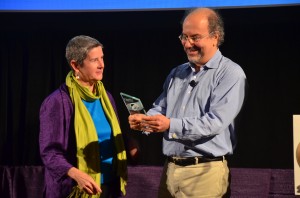
reSET also honored the renowned social enterprise Honest Tea with the reSET Social Enterprise Innovator Award for its community impact and corporate conduct, which has inspired others.  Honest Tea values simplicity, fair dealings, partnerships, the environment, and sustainability.  Dr. Barry Nalebuff, Milton Steinbach Professor of Management at the Yale School of Management, and co-founder of the company, accepted the award on behalf of Honest Tea, and conducted a presentation outlining the company's early years and evolution.

The winners of the Social Enterprise Challenge were:

farmivoreRay Xiong, New Haven, Farmivore (The Boehringer Ingelheim More Health through Innovation Award) Farmivore offers community supported agriculture co-ops with affordable e-commerce and marketing platforms, and provides consumers with an easy way to search, pay for, and join a community supported agriculture program. Ray.xiong@aya.yale.edu

Lon SeidmPageLines- IMN.pngan, Ivoryton, Windsor, and West Hartford, Independent Media Network, LLC (The reSET Community Impact Award) Independent Media Network provides training sessions and informational meetings with community members while providing accurate and valuable information to the community, in order to preserve independent media. lon@imnct.com

Leslie Krumholz, Guilford, Good Streegood streetsts. Good Streets is a social enterprise that brings Main Street businesses on line to help consumers find great local establishments. Neighborhood business owners and customers can use this trusted site and in so doing receive authentic reviews, which helps to create dialogue and collaboration between local businesses and their customers. leslie@imbya.com

Rodger LaChance, East Windsor, Yummy CT.  Yummy CT takes a farmers market and puts it on an old school bus to help distribute fresh, YCTConnecticut- grown fruits, vegetables, and specialty foods to Connecticut communities that are considered food deserts. The objective is to provide fresh healthy foods to communities that otherwise would have limited access. reldistributors@gmail.com

Dr. David Shearer, Old Saybrook, Therapeutic Research Foundation. TRF’s mission is to develop innovative, affordable, and therapeutic medical solutions to address the unmet global health needs of all people, even the solutions considered less profitable by other mainstream medical research companies. dshearer@tr-f.oTRFrg

For the first time this year, reSET added an award to reflect the community’s voice through a People’s Choice Award. The public was able to vote on their favorite among the 10 finalists by viewing videos created by finalists and posted on reSET’s website. The People’s Choice winner was:

David J. Rubin, Simsbury, ElectroSpin University. ElectroSpin University is promoting a healthier, more fit, and eco-friendly culture through a one-of-a-kind group indoor cycling class titled Rage and Recharge that uses electric dance music to make playlists scientifically designed to improve exercise efficiency. The team is also working on ways of recapturing energy expended through exercise and pumping it back into the community’s electrical grid. rubin@electroSpinu.com

“reSET was so pleased to celebrate the accomplishments of entrepreneurs across Connecticut who demonstrate a deep commitment to helping out communities become safer, happier, and healthier places for all of our citizens,” said Program Director Michelle Cote.  “Each awarded business reinforces the idea that it is possible to generate profit and serve a social purpose at the same time.”

In the spirit of growing social enterprise in Connecticut, “A Taste of Social Enterprise” also celebrated locally-grown food and featured local farms and businesses that served up a menu showcasing Connecticut-SEA 2grown foods, from the Kitchen at Billings Forge and The G Stream.

reSET has supported the launch of 19 new social enterprises in Connecticut  and supported the success or growth of nine social enterprises. reSET has also established the Social Enterprise Investment Fund, which will begin to offer loans to investment-ready social entrepreneurs in January 2014.

Photo:  Dr. Barry Nalebuff accepts the reSET Social Enterprise Innovator Award from reSET CEO, Kate Emery.  [Editor's Note:  CT by the Numbers is a member of the Independent Media Network.]

One Month, Many Causes: Health & Wellness Lead the Way in November

If supporting a cause – whether with time, energy or resources - is on your to-do list, November is a great month to start if you’d like to focus on health and wellness efforts.

November is American Diabetes Month (American Diabetes Association), Diabetic Eye Disease Month (Prevent Blindness America), National Alzheimer’s Disease Awareness Month (Alzheimer’s Disease and Related Disorders Association) and National Epilepsy Awareness Month (Epilepsy Foundation of America).  In addition, it is National Child Mental Health Month, National Family Caregivers Month (National Family Caregivers Association), and National Healthy Skin Month (American Academy of Dermatology).

November is also National Home Cnov calendarare Month (National Association for Home Care & Hospice) and National Hospice Month (National Hospice and Palliative Care Organization), as well as Great American Smokeout Month.  November 21 is designated by the American Cancer Society as the Great American Smokeout Day.
The week before Thanksgiving, November 17-23, is American Education Week, as designated by the National Education Association.

The previous week features World Kindness Day on November 13, World Diabetes Day on November 14, and National Philanthropy Day (Association of Fundraising Professionals) and America Recycles Day (National Recycling Coalition), both on November 15.  November 22 is National Family Health History Day, set by the U.S. Department of Health and Human Services, and November 23 is International Survivors of Suicide Day (American Foundation for Suicide Prevention).

Mothers Against Drunk Driving will highlight their Tie One On For Safety Campaign, between November 21 and January 1, coinciding with the holiday season.

MOOCs Started, Not Finished, in Massive Numbers; Rapid Growth Raises Questions

A massive open online course (MOOC) is an online course aimed at unlimited participation and open access via the web.  Even as MOOCs continue to accelerate in popularity - enrollment in all online courses is reportedly up 29 percent since 2010 - and variety of offerings institutions and courses, there are some speed bumps worth considering – led by the very high percentage of courses that are started but not completed.  The reasons why are unclear.

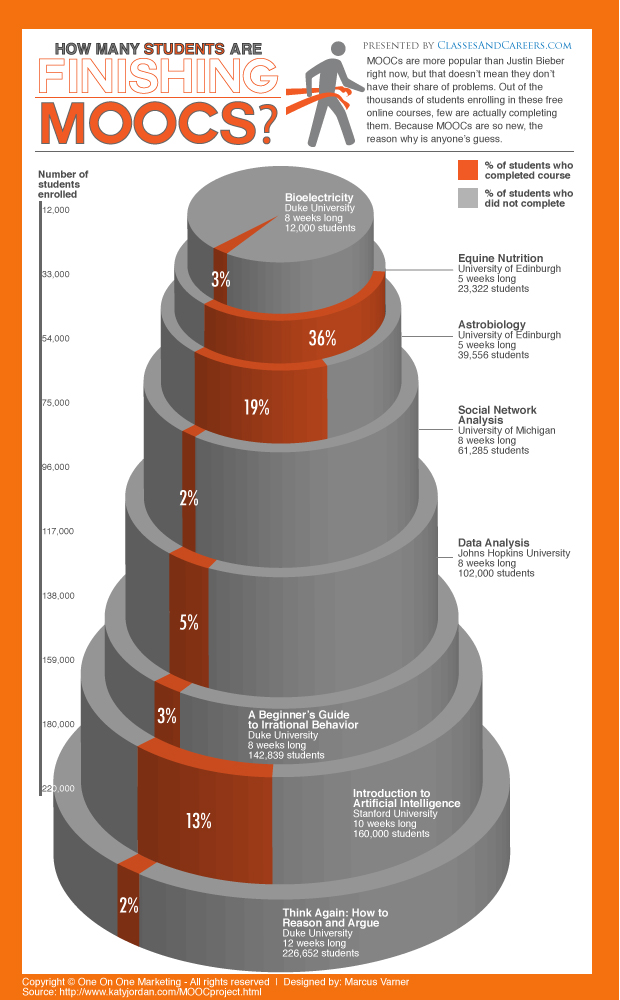
An infographic illustrates the current reality, and suggests that the lack of enthusiasm in some higher education circles for offering MOOCs may have justification – even if data in the relatively new field remains short of robust. Courtesy of the blog Classes and Careers (Marcus Varner) and education blogger Katy Jordan, the completion percentage of extremely popular courses becomes evident – as low as two percent in soMOOC-completion-rate-infographic1me cases.  Given the often massive numbers of enrollees, the small percentage may belie the raw numbers – and the benefits to those students, as well as to those who may have decided not to see a course through to the end.

The recently issued 2013 Campus Computing Survey by The Campus Computing Project, the largest continuing study of the role of computing, eLearning, and information technology in American higher education, found that CIOs and senior campus IT officers “are not overly optimistic about MOOCs as a viable strategy for instruction or for revenue.”  The survey indicated that just over half (53 percent) agree that MOOCs “offer an effective academic model for the effective delivery of online education” while less than a third (29 percent) view MOOCs as offering “a viable business model” for campuses to secure new revenue from online courses.

In Connecticut, Wesleyan University led the way into the MOOC world, announcing last September its partnership with Coursera, one of the leading companies in the field. Wesleyan was Coursera's first small liberal arts college and offered six courses, The Hartford Courant reported earlier this year. Among those teaching a MOOC course was Wesleyan President Michael Roth, who told the Courant that the class "has been a wonderful surprise. I have been so impressed by the level of discourse among the students and by their excellent questions back to me … I will offer the class again for Coursera, and my teaching at Wesleyan in the future will be informed by my online experience."

According to Wall Street Journal reporting by the publication’s deputy technology editor, “Early studies highlight a number of problems with the learning experience in online courses that educators are scrambling to solve. Perhaps most important: Staring at a screen makes some students feel isolated and disengaged, which can lead to poor performance or dropping out altogether. Often, more than 90% of people who sign up for a MOOC don't finish, though many come to online learning with a different intent than would students at a traditional university.”

Writing last year in UConn Today, a publication of the university, Jeremy Teitelbaum, dean of the College of Liberal Arts and Sciences, said of the wave of institutions adding MOOCs:  “I tend to be skeptical of predictions of doom for universities, and I’m especially skeptical of claims that online education will put an end to the classroom experience. After all, the university as an institution has successfully evolved through the inventions of the printing press, the steam engine, the telegraph, radio, television, and the atomic bomb; given that record, it is likely to survive the Internet as well.”

The largest provider, Coursera, has five million participants, and nonprofit provider edX more than 1.3 million, according to the Wall Street Journal.  While the majority are based in the U.S., their learners come from all over the globe: among edX's students, 9% came from Africa and 12% from India, the Journal reported.

The Courant reported that Yale has long had a presence online, most notably with its Open Yale Courses program, which began in 2006 and made free noncredit courses available worldwide. In mid-May Yale announced that it would partner with Coursera to begin offering classes during the upcoming academic year.  Other Connecticut schools — UConn, Quinnipiac, Trinity, the University of New Haven and the University of Hartford — have been exploring and offering various online options but have no immediate plans to offer MOOCs, according to The Courant.

UConn’s view appears not to have substantially changed since Teitelbaum, a year ago, concluded: “For individuals working in higher education, staring at technological change and reading alarming editorials and features in the newspapers, there’s a temptation to panic. That’s a mistake. Good universities confronting technological change should play to their strength: a talent pool with a broad perspective and deep expertise. If we stay current, try new things, and keep a critical, but not overly critical eye on the opportunities, we’ll find that technology only makes us stronger.”

More Children Killed, Wounded by Guns Across US; Study Suggests Handguns in Households Key Culprit

The conclusions and the statistics, in a study presented to the American Academy of Pediatrics were stark and sobering:

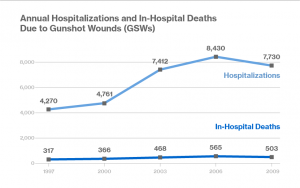
  • Hospitalizations and in-hospital deaths for children with gun shot wounds are increasing in the U.S.  Currently, over 7,500 children are annually hospitalized for gun shot wounds, including over 500 in-hospital deaths.
  • While recent policy proposals to limit military-style semi-automatic assault weapons are important, handguns remain the leading injurious agent and may be a more efficacious target.
  • There was a significant relationship between percentage of household gun ownership and percentage of gun shot wounds occurring in the home.chart_gundeaths_article_0
  • Policies designed to reduce the number of household firearms, especially handguns, may reduce childhood gun shot wounds. Household gun ownership and safety practices vary widely by state.

In “United States Gunshot Violence—Disturbing Trends,” researchers from Boston and Michigan reviewed statistics from the Kids’ Inpatient Database (KID) from 1997, 2000, 2003, 2006 and 2009 (for a total of 36 million pediatric hospital admissions), and estimated state household gun ownership using the most recent Behavioral Risk Factor Surveillance System data (2004).

Between 1997 and 2009, hospitalizatichild, gunons from gunshot wounds increased from 4,270 to 7,730, and in-hospital deaths from 317 to 503, the researchers found.  The study also found a significant association between the percentage of gunshot wounds occurring in the home and the percentage of households containing any firearms, loaded firearms and unlocked loaded firearms.

“Handguns account for the majority of childhood gunshot wounds and this number appears to be increasing over the last decade,” said lead study author, Arin L. Madenci, MD, MPH, University of Michigan Medical School. “Furthermore, states with higher percentages of household firearm ownership also tended to have higher proportions of childhood gunshot wounds, especially those occurring in the home,” Madenci told MSNBC.  Madenci, and his colleague, Dr. Christopher Weldon, a surgeon at Boston Children’s Hospital, conducted the research.

Among homes with childrenacademy_of_pediatrics_logo, rates of gun possession ranged from a national low of 10 percent in New Jersey, for instance, to 62 percent in Montana, the researchers found.

According to the Connecticut Office of Child Advocate, between January 1, 2001 and December 31, 2012 (a 12-year period), 94 children in Connecticut died from gunshot wounds. During that period 924 children were injured by guns. Nearly half, 44 percent, died in Hartford, New Haven or Bridgeport, or towns nearby the report noted.  Just over one-third (36 percent) involved children between 2 and 14 years old.  The datawas issued a month after the murder of 20 school children and six adults in Newtown.  "The circumstances of the other 74 child deaths and the vast majority of injuries from guns in this state," the Child Advocate report said, " are very different - single incidents ... with roots in factors underlying community violence."

“Policies designed to reduce the number of household firearms, especially handguns, may more effectively reduce the number of gunshot injuries in children,” said Dr. Madenci.


Biking, Walking Gain Traction Around Connecticut; Training, Gala Upcoming

November is shaping up to be another busy month for Bike Walk CT, a member-supported non-profit organization making cycling and walking safe, feasible and attractive for a healthier, cleaner Connecticut. Bike Walk CT is owalkit_ct2nce again offering the League of American Bicyclist-designed Traffic Skills 101 program, a day long course to give cyclists the skills, knowledge and confidence to handle on-road cycling in traffic. The program will be held on Sunday, November 10 at Bishops Corner in West Hartford.

Just days later, bicycling and walking enthusiasts will celebrate the progress made by Bike Walk CT at the organization’s Annual Dinner and Silent Auction, to be held on Tuesday, November 12 at Central Connecticut State University.bike lane

During the evening celebration, Department of Economic and Community Development Deputy Commissioner Kip Bergstrom will lead a discussion of the important and growing role of active transportation and bikeable, walkable communities in Connecticut's economy and tourism industry.

Bike Walk CT works locally to increase grassroots efforts to make communities better places to bike and walk; at the state legislature to advance laws that protect the rights of cyclists and walkers, and at the DOT to make sure that policies and engineering practices that will improve conditions for cyclists are implemented. The organization is also active at the federal level, working cooperatively with national organizations to ensure continued funding for biking and walking projects.

Bergstrom has 30 years of experience as a strategist, business executive, economic development professional and place-maker. His DECD portfolio includes the development of the innovation economy, statewide branding, as well as the arts and culture, historic preservation and tourism functions.biking

Bike Walk Connecticut was formed in 2005 as the Central Connecticut Bicycle Alliance (CCBA), with a mission to advocate for bike-friendly facilities and policies in central Connecticut to benefit all bicyclists, both recreational riders and commuters. CCBA received 501walk(C)(3) status in January 2006. In April 2010, CCBA broadened its mission to include walking issues, adopted a statewide focus, and changed its name to Bike Walk Connecticut.

The National Highway Traffic Safety Administration (NHTSA) reports that 618 cyclists were killed in the United States in automobile accidents in 2010 (the last year for which statistics are available). That same year, 32,885 bikers were injured in traffic crashes. Although the numbers have declined since 2005 — when 43,510 bikers were injured, 786 of them fatally — these rates of injuries and deaths highlight cyclists' continued exposure to serious risks.

Stamford is #1 in USA in Workers with College Degree; Geography Key to Job Prospects

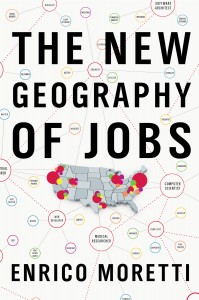
Stamford ranks first in the nation in the percentage of workers with a college degree, according to a  book that features an analysis of  the influences of geography on jobs, highlighting tremendous disparities that exist in cities across the country and citing innovation as a key jobs driver.

 “The sheer size of the differences between American communities is staggering," the book stated. " Stamford, Connecticut, the city with the largest percentage of college-educated workers in the United States, has five times the number of college graduates per capita as the city at the bottom, Merced, California.”

The New Geography of Jobs, written by Enrico Moretti, a professor of Economics and the University of California, ranked 306 of the nation’s metropolitan areas.  In the ranking, Waterbury was among the metropolitan areas with the smallest share of workers with a college degree, at 15 percent.

Stamford, with 56 percent, led the list, topping Washington, DC (49%), Boston (47%), Madison (47%) and San Jose (47%), which rounded out the top five metropolitan areas in the country.  Completing the top 10 metropolitan areas with the largest share of workers with a college degree is Ann Arbor (46%), Raleigh-Durham(44%), San Geograpgy-Jacket-ImageFrancisco-Oakland (44%), Fort Collins-Loveland, Colorado (44%), and Seattle-Everett, Washington (42%).  Yuma, AZ and Merced, CA, both at 11 percent, ranked last.

Moretti’s research and analysis reveals that the “new geography of jobs is benefitting centers of innovation,” and “among the beneficiaries are the workers who support the idea creators.”  He indicates that “for every new innovation job in a city, five additional non-innovation jobs are created, and those workers earn higher salaries than their counterparts in other urban areas.”

According to the book, the average salary of college graduates in Stamford is $133,479 and the average salary of high school graduates is $107,301.  Moretti points out that “the more college graduates there are (in a metropolitan area) the higher the salaries for high school graduates are.”  Overall, “the earnings of a worker with a high school City of Stamfordeducation rise by about 7 percent as the share of college graduates in his city increases by 10 percent,” a statistical analysis indicates.

Morelli also notes that the education level of the workforce not only impact salaries, but also the level of charitable contributions.  “Among large U.S. metropolitan areas, charities in five brain hubs – Stamford, Boston, Raleigh-Durham, Washington, D.C., and New York – receive the highest contributions relative to their population.”

The book also ranks Stamford as the metropolitan area with the second highest cost of living in the nation, behind only San Jose, CA, and just ahead of San Francisco-Oakland-Vallejo, California.  Also in the top 20 cities with the heist cost of living is Bridgeport, at number 17.

The New Geography of Jobs was published by Houghton Mifflin Harcourt in 2012. Moretti is Professor of Economics at the University of California, Berkeley where he holds the Michael Peevey and Donald Vial Career Development Chair in Labor Economics. He is the Director of the Infrastructure and Urbanization Program at the International Growth Centre (London School of Economics and Oxford University).

Subway Reaches 40,000 Locations; Growth Continues for World’s #1 Fast Food Chain

The Connecticut-headquartered SUBWAY® restaurant chain, which has been providing franchising opportunities to entrepreneurs since 1965 and is approaching its 48th year in business, has opened its 40,000th location at an Apple Green petrol station in Ipswich, England.

The opening reflects the consistent growth of the Subway brand, which has opened nearly 2,000 new locations around the world since the start of the year. In 1965, Subway was founded by 17 year-old Connecticut high school graduate Fred DeLuca, along with family friend Dr. Peter Buck. The first restaurant opened in Bridgeport in 1965 and was called Pete’s Super Submarines. The first franchised Subway unit opened in 1974 in Wallingford.

“This is certainly a testament to the dedication and hard work of the entire Subway team, who I often refer to as The Greatest Team in Franchising History,” said DeLuca. “I am proud to be part of a team that provides thousands of jobs for people at our restaurants, field, offices, headquarters and partner offices around the world.  Our franchisees are a diverse group of small business owners who take a great deal of pride in serving their customers.” subway-logo

CNN Money has reported that the “home of the $5 foot-long sub” is the most popular franchise (ahead of Quiznos, the UPS Store and Cold Stone Creamery) and biggest fast-food chain in the world, with an initial franchise fee startup is $15,000, a fairly low sum compared to other brands. With fewer than 8% of SBA-backed borrowers defaulting on their loans, Subway has a better track record than similar brands -- rival sub shop Blimpie has a 46% loan failure rate, and Quiznos is also well into the double digits, according to CNN Money.

This latest milestone puts the Subway brand far ahead of its competitors in the Quick Service Restaurant industry. Of the top restaurant chains, the next closest is more than 5,500 locations behind. Beyond that, the next three are between 21,000 and 33,000 behind, the company reported.

The combination of global branding, minimal upfront outlay of cash, and low loan default rates have made Subway the most popular brand in the last decade for entrepreneurs looking to open a franchise, the CNN website reported, based on the SBA's lending data.

The U.K. is the brand’s third largest Subway_6-inch_Ham_Submarine_Sandwichmarket, behind the U.S. and Canada, with more than 1,500 locations.  In all, there are 14,000 International locations in 102 countries outside the U.S.  The Eastern European nation of Estonia recently witnessed the opening its first Subway franchise.

The company headquarters remains in Milford, with additional regional and country offices in Amsterdam, Beirut, Brisbane, Miami and Singapore, employing about 1,000 people in total. Worldwide, its franchisees provide more than 300,000 jobs in the communities where they are located. With a robust social community of over 25 million, Subway engages daily with consumers from around the world.

In 2012, Subway became the first quick service restaurant to meet the American Heart Association's Heart Check Meal Certification Program nutritional criteria.  Earlier this year, the Connecticut Post reported that DeLuca plans to reach 50,000 sandwich shops in four years. The chain, which has attracted customers with lower-calorie and reduced-sodium sandwiches, is competing with Yum! Brands in India, China and Japan, as it proceeds with plans to open 300 stores in each nation in the next three years, DeLuca told the Post.

From West Hartford to Widespread Acclaim, Local Talent Resonates

On back-to-back nights, an indie/roots rock band and a singer/songwriter, each gaining increasing notoriety, performed just a stone’s throw from the West Hartford – Hartford town line.

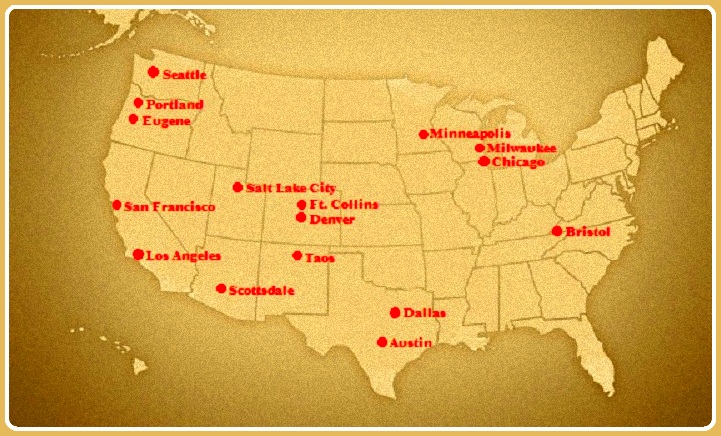
Bronze Radio Return, a six member band that was formed when the musicians were students at the University of Hartford only a handful of years ago, returned to their roots in West Hartford just after completing a 15-city tour that brought them through the West and Southwest, including dates in California, Oregon, Arizona, New Mexico and Texas.  A special performance at their alma mater, as part of the university’s homecoming weekend, was albronze radio returnso a precursor to upcoming performances in Portland, Burlington and Boston.

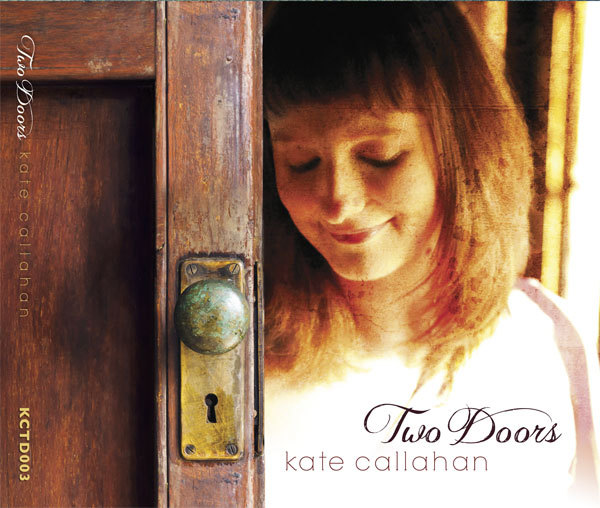
Just a day earlier, singer/songwriter Kate Callahan, fresh from being selected as Best Singer/Songwriter at the Connecticut Music Awards, performed with her band Echo Joy.  The evening performance at the Hartford Seminary was highlighted by songs from her recently released third album, Two Doors, which evokes folk sound with textures of indie, country, and soul.

Callahan took top honors at the 2nd annual Connecticut Music Awards that were held last month at the Bushnell Center for the Performing Arts in Hartford.  Shekate callahanhas been named the Hartford Advocate’s “Best Solo Performer” three times.  Next on her performing schedule is a trip to New York City, followed by local performance dates in Connecticut early next month.

Bronze Radio Return has clearly been on the ascendency, as FOX Sports recently selected their recent single “Further On” for use in the network’s NFL, college football and NASCAR game-day coverage.   During the summer, the band’s “Shake, Shake, Shake” surpassed 500,000 views on YouTube, and their latest album, Up, On & Over reached the Billboard magazine “Heatseekers Albums” list at number 17.

They have performed at music festivals nationwide, and their music has also proven extremely popular for television commercials and programs, among them a worldwide Nissan Leaf commercial and a national Behr Paint/Home Depot ad. In addition, HBO, ESPN, NBC, MTV, the CW, American Idol, ABC Family, USA, and more licensed their music for shows, promos and bumpers.

The band’s website noted that “their story starts in Hartford, where members orbited each other at The Hartt School, one of the country’s top music conservatories. After finding each other and solidifying their line-up in 2008, they began writing music and found that their surroundings played a hbronze radio  mapuge part in their creative energies.”   The band includes lead singer and guitarist Chris Henderson, drummer Rob Griffith, lead guitarist Patrick Fetkowitz, keys player Matthew Warner, bassist Bob Tannen, and harmonica/banjoist extraordinaire Craig Struble.

 Kate Callahan, acoustic guitarist as well as singer/songwriter, has opened shows for folk legends Judy Collins and Noel Paul Stookey (Peter, Paul & Mary), and troubadours Aztec-Two Step, Mustard’s Retreat, tPrinthe late Bill Morrissey, and Rachael Sage. Callahan says a defining element of her music is innocence and she’s unapologetically optimistic in concert.  From West Hartford, and now Hartford, she has been recognized by the Hartford Courant as a "Woman of Character," and has a longstanding relationship with the West Hartford Public Schools as an  Artist in Residence.

In 2011, Javier Colon, also of West Hartford, trying for a second shot at a recording career that had stalled, won the first season of "The Voice," the NBC singing competition.   Colon is a graduate of the University of Hartford's Hartt School of Music, and returned to his alma mater to perform later that year.  Since winning “The Voice,” Colon has released an album, “Come Through For You,” and has performed at concerts and charitable events around the nation, including locally at the Travelers Championship last year.