CT Should Look to New York, Aging Workforce, Urban Centers to Rebuild Economy

Connecticut would be foolish not to take greater advantage of the fact that nearly one-third of the state is within the financial orbit of New York City as it looks to rebuild its economic strength – while not overlooking the potential for entrepreneurial activity across the state.

Those were among the lead suggestions of a panel of economists and entrepreneurs at the University of Hartford looking at job prospects for today’s 20-somethings, in a program sponsored by CT Mirror.

Daniel Kennedy, Senior Economist in the Office of Research at the state Department of Labor emphasized that the strongest economic growth in the state in the years to come will be in Fairfield County, and evidence of that trend is already present in the current economic recovery.

Wayne Vaughn, president of Hartford-based Fuscient, which he launched in 1997, said the state should “play to its strengths,” in looking to Fairfield County.  He said that New York City's immense economy "bleeds over into one-third of our state."  He also called on the state’s colleges and universities to step up efforts to match students with mentors in the business community, to improve their workforce readiness.

The state’s college graduates should not sell the state short, offered Katelyn Anton, Community Manager of New Haven-based Independent Software, and a key contributor to Whiteboard, a popular blog for the technology and entrepreneurial community in the state.  “Connecticut is one of the ripest locations in the world,” for start-up ventures, she said, panelnoting the growth of co-working spaces in New Haven, Hartford, Bridgeport, Manchester and other communities, and the numerous incubator opportunities that individuals “can tap into.”

Connecticut Business and Industry Association (CBIA) economist and vice president Peter Gioia predicted that the state’s economy is “on the cusp of turning the corner,” noting that between 15 and 20 percent of today’s workforce will be retired within five years – creating job vacancies and opportunities for young people.  He predicted that as the workforce ages out of the market, the state’s workforce will need electrical line workers, plumbers, electricians, commercial loan officers, actuaries and financial planners, and some of that need is already apparent.

Gioia praised the state’s recent efforts to bolster the University of Connecticut and the state’s community colleges, underscoring the correlation between “where students go to school and where they get their first job.”  If students stay in the state for college, Connecticut businesses will ultimately benefit.

Kennedy said the state’s prolonged economic recovery is characterized by continued “demand deficient unemployment,” which is more structural than merely a reaction to the national downturn that began in 2008.  He indicated that even as some sectors are improving, many millennials remain underemployed -college graduates working in service, rather than professional, industries.

“More people are working, but they’re not making as much,” said Orlando Rodriguez, a senior policy fellow at Connecticut Voices for Children.  “For every job we lose in the financial industry, it takes eight and a half jobs in the restaurant industry.”

Rodriguez also raised a cautionary note, stating that Connecticut should be particularly concerned about young people in the state’s urban centers who do not attend college, and often are unable to obtain a first job. While statewide unemployment hovers around 8 percent, it can run as high as 40 percent among 18-24 year olds in Bridgeport and other urban communities. “Connecticut’s future,” Rodriguez said, “is in urban areas.”

Gioia was strongly critical of Congressional inaction on immigration reform, stating that the nation’s economy would be strengthened by a comprehensive policy.  “Immigrants are much more likely to start a business, and become net employers of Americans.”  He said the policy of educating foreign students, but not permitting them to then remain in the U.S., as “ridiculous.”  He also cited Canada as an example of a nation that has been more welcoming of immigrants, to the benefit of the nation’s economy.

Vaughn said that while his biggest challenge in doing business in Connecticut is retaining talent, the growth of technology in business transactions offers businesses here significant opportunities.  “Where your business is located doesn’t dictate who your customers are,” he said.

The discussion was the second of nine panels on a range of topics sponsored by The Connecticut Mirror to be held around the state in coming months.  It was moderated by Brett Ozrechowski, CEO-Publisher of the CT News Project, which operates CT Mirror.  Next month, discussions will be held  Nov. 7 at Fairfield University focused on measuring good teaching and Nov. 18 at the University of New Haven on the topic of the clean energy economy.

Mental Health and Community Well-Being Is Focus of Initiative Honoring Memory of Ana Grace Márquez-Greene

The  parents of Ana Marquez-Greene, one of the students whose life was tragically ended at Sandy Hook Elementary School nearly a year ago, have announced plans to convene "Love Wins,"  a day-long conference for those concerned with mental health and community well-being to help build connections that prevent and cope with trauma.

 To be held on December 2 at the University of Hartford, the conference is the inaugural initiative of The Ana Grace Project, and is designed to “promote love, community and connection for every child and family,” and a day dedicated to honoring Ana Grace.

Nelba Márquez-Greene and Jimmy Greene have dedicated themselves to creating real solutions to the kind of violence that took their daughter’s life.  They have developed The Center for Community and Connection in partnership with the Klingberg Family Centers as a transformational initiative of The Ana Grace Project to identify the most effective ways to build community and interpersonal connection to prevent violence and promote recovery. The Center aims to accomplish this objective through research, practical tools, professional development and public policy.


The Center was inspired by the heart and soul of Ana Grace’s mother, Nelba Márquez-Greene, LMFT, a licensed Marriage and Family Therapist employed by Klingberg Family Centers. Nelba Márquez-Greene and Jimmy Greene “believe that love and community are the antidotes for violence and are spurred on not onAna Gracely by their loss but by their faith and the belief that it is always best to “Overcome Evil with Good,” according to the organization’s website.

Nelba Márquez-Greene and Jimmy Greene are both alumni of the University of Hartford.

The program on Dec. 2 will feature Bruce Perry, MD, Ph.D., as its keynote speaker and is a collaboration of the resources of Western Connecticut State University, Central Connecticut State University, the University of Hartford, Klingberg Family Centers and Stanley Black and Decker.  Perry is the Senior Fellow of The Child Trauma Academy, a not-for-profit organization based in Houston, TX, and adjunct Professor in the Department of Psychiatry and Behavioral Sciences at the Feinberg School of Medicine at Northwestern University in Chicago.

A workshop on Creating Compassionate Communities by Christopher Kukk will address weaving compassion into the fabric of learning (schools) and living (cities and towns) communities, drawing upon ideas from neuroscience, psychology, evolutionary biology, economics and other social sciences. Dr. Kukk is Professor of Political Science at Western Connecticut State University and founding Director of the Center for Compassion, Creativity and Innovation.

A session to be led by Alice Forrester will describe New Haven's efforts to reduce the impact of adverse childhood experiences using a two-generational approach.  Participants will discuss how collaboration and grass roots activism can impact children and families facing mental health challenges.  Dr. Forrester is the Executive Director of the Clifford Beers Child Guidance Clinic in New Haven, a community-based, mental health center for excellence for the treatment of children and families.  She was appointed by Governor Malloy to sit on the Sandy Hook Commission and has served as the Project Director of two National Child Traumatic Stress Network grants.

“For anyone whose child has been the victim of senseless violence it can seem almost impossible to go on. Grappling with anger and despair, you search for a way to redeem what has been lost, said Nelba Márquez-Greene on the organization’s website.  “And here we stand, knowing we must do something, something meaningful, to help all of us turn the page and begin the next chapter. Our hope as a family is to invest in creating solutions that will draw these individuals away from violence and replace it with the powerful love and connection that can only be found in a healthy community of caring.”

Additional session topics include the human cost of unmet mental needs in our cities, Mental Health First Aid, Circle of Security Parenting and Teaching and Learning with Compassion.

Conference participants will learn about and contribute to best practices in building community and interpersonal connections to prevent violence and promote recovery. Organizers anticipate that conference outcomes will contribute to a shared body of knowledge for community members, parents, and professionals to create their own roles in building connections that “will enable love to win.”

The program will also include presentations by Steven Girelli, Ph.D., President & CEO, Klingberg Family Centers; Bryan Gibb, M.B.A., National Council of Behavioral Health; Deborah McCarthy, O.T., Mindfullness Collaborative for Youth and Schools; Adi Flesher, M.Ed., Garrison Institute; Isabel Pacheco Logan, L.C.S.W., Office of the Public Defender;  Keith Gaston, M.S.W.,  Village for  Families and Children;  Charlie Slaughter, M.P.H., R.D., Department of Children and Families; Geoffry Scales, Hartford Juvenile Probation;  Karl Koistein, L.C.S.W., DCF;  and Iran Nazarrio, COMPASS Youth Collaborative.

There will also be a performance piece about gun violence by Janis Astor del Valle and Lara Herscovitch, and a performance by the Connecticut Children’s Chorus.  CEUs will be available for teachers.  Registration and additional information is available at

http://events.constantcontact.com/register/event?llr=kdmy5ioab&oeidk=a07e8bf8e4yaa208d5f

Founded in 1903, Klingberg Family Centers is a private nonprofit charitable organization offering an array of treatment programs. The organization’s programs are designed to serve children and families whose lives have been affected by trauma in its various forms, family difficulties, and mental health issues.

Connecticut “Ideas Worth Spreading” Resonate in Massachusetts in TED Talks

TED came to Springfield, Massachusetts this month with a decidedly Connecticut flavor, as a quarter of the featured speakers offering “ideas worth spreading,” hailed from the “still revolutionary” state.

Of the 16 “TED talks” on the agenda during a day-long program sponsored by and held at the headquarters of Mass Mutual, four of the speakers were from Connecticut, and left the specially selected audience intrigued, impressed and inspired.

keishaWell known worldwide, TED is a nonprofit which began decades ago with a conference bringing together people from three worlds: Technology, Entertainment, Design. Since then its scope has become considerably broader, and “TED Talks” – widely available on the web – have become a global phenomenon, watched by tens of millions.

TED conferences “bring together the world's most fascinating thinkers and doers, who are challenged to give the talk of their lives.”  That’s precisely what occurred at TEDx in Springfield, where in addition to speakers touting the possibilities for that post-industrial urban center, a wide array of innovative subjects were featured under the theme “Driving innovation through diversity and inclusion.”

The Connecticut quartet at TEDx Springfield:

  • Keisha Ashe is co-founder and CEO of ManyMentors, a nonprofit science, technology, engineering and math STEM) mentoring organization that connects minority and female middle and high school students with encouraging and suppormaureen connolly phototing near-age mentors in the STEM fields.  “If they never know, they’ll never go,” is the guiding phrase of the initiative, reflecting the fact that many women and minority students are not encouraged to pursue the STEM fields, and are often unaware of the career potential or their own aptitude for the STEM careers.  Ashe is a Ph.D. candidate in Chemical Engineering at UConn.
  • Maureen Connolly is an event planning professional with extensive national and international experience across diverse markets, and a visionary and passionate leader skilled at creating high impact programs with measurable results.  She is the foremost advocate for utilizing public celebrations as a means of extending social capital by having the community, rather than the event, at the core of planning.  She has written on the enduring transformational potential of public celebrations, and offers that “now is the time to harness that collective energy and accumulated social capital as a catalyst for social change” that will develop collaborations with the potential to breathe new life into hard-pressed cities.david ryan polgar
  • David Ryan Polgar is a Connecticut-based writer/attorney/educator and highly regarded tech ethicist who speaks on the topics of information overload, digital diets, and creativity.  He is an award-winning columnist for Seasons magazine, and has been featured in national media. Polgar speaks and writes about the ethical, legal, sociological, and emotional issues surrounding our relationship to technology.  He has created a “Mental Food Plate” as an approach to achieving deeper levels of thinking, and explores the imperative for an industry to develop that will serve as a counterbalance to the burgeoning technologies that “we can’t stop consuming.”
  • Jon Thomas is the founder of Tap Cancer Out, a Brazilian Jiu-Jitsu nonprofit and host of the most philanthropic martial arts events in the world.  Jon Thomas and his wife Becky run the Stratford-based nonprofit “in the slivers of spare time between their jobs in advertising.”  The nonprofit was founded out of a desire to respond to the devastation of cancer through a sport that Thomas was deeply involved with.  The organization raises funds – all donated to the Leukemia & Lymphoma Society - through hosting fundraising tournaments, direct donations, merchandise sales and sponsorships.tap cancer out

The TED website points out that “TED is best thought of as a global community, welcoming people from every discipline and culture who seek a deeper understanding of the world.”  TEDx Springfield was organized by Jae Junkunc of Hartford, from Mass Mutual's Enterprise Risk Management Group, with support of a 15-member team that developed the program over six months.

TED includes the award-winning TED Talks video site, the Open Translation Project and TED Conversations, the inspiring TED Fellows and TEDx programs, and the annual TED Prize. The TEDx program gives communities, organizations and individuals the opportunity to stimulate dialogue through TED-like experTEDx logoiences at the local level. The TED Conference provides general guidance for the TEDx program, but individual TEDx events are planned and coordinated independently.

A TEDx session in Hartford in June included talks by David Fink of Partnership for Strong Communities, Steven Mitchell of East Coast Greenway, Donna Berman of Charter Oak Cultural Center, and Rich Hollant of CO:LAB, among sixteen local speakers.

Greenwich Radio Station to be Purchased by Hartford Native

Once a radio fan, always a radio fan.  That is perhaps the best explanation for the planned purchase of Greenwich radio station WGCH by the Connecticut-based Forte Family Broadcasting, Inc., pending approval from the Federal Communications Commission.

The buyer is Rocco L. Forte of Sarasota, Fla. and Lyme, Connecticut. Forte is the former chief financial officer of the Abate Insurance Agency and AIA Risk Services in New Haven, according to published reports.

A native of Hartford, he is an alumnus of Hartford Public High School, the University of Connecticut and the UConn School of Insurance.

Beginning Nov. 4, Forte’s organizatiowgchLargen will operate the local station – which marks its 50th anniversary in 2014 - under a "local marketing agreement," until Forte can secure formal approval from the FCC, which could happen as soon as December, the Connecticut Post reported.

A format change is not anticipated.  The station currently broadcasts programs from the Business Talk Network and Lifestyle Talk Network, as well as local sports including the Bridgeport Bluefish and Greenwich High School football.  In addition to local news, other local programming includes a medical report from Greenwich Hospital, a local trivia program, and a weekly program featuring the town’s First Selectman.

“I am excited to be able to buy such a heritage station in Connecticut, and look forward to making the 50th anniversary year of WGCH a successful and even more profitable one,” Forte said in a statement. “My love for radio began in college, when I worked both on-air and in sales,” he added.

WGCH broadcasts 24 hours a day at 1490 AM, is licensed to Greenwich and bills itself as “the voice of Fairfield and Westchester Counties.”

Independent Colleges Produce Majority of Graduates for State's Key Industries

The 16 institutions of higher education in Connecticut that are members of the Connecticut Conference of Independent Colleges are playing a pivotal role in producing graduates with expertise in precisely the industry clusters that Connecticut businesses view as the fields most likely to propel economic growth in  the state.

In one critical field, Computer & Information Sciences, three-quarters of the degrees granted in the state aCCIC chartre awarded by the independent institutions.  And in seven key industry clusters – essential to building the state’s economic strength and job opportunities – the independent institutions award more than half of the degrees granted by colleges and universities in the state.

By offering strong academic programs – and attracting top students – the independent colleges and universities are advancing a focus on industry areas with the greatest economic growth potential in Connecticut.

The percent of statewide industry cluster degrees awarded by Connecticut independent colleges in 2012:

  • Computer & Information Sciences & Support Services, 75%
  • Health Professions & Related Programs, 62%
  • Physical Sciences, 59%
  • Engineering Technology & Related Fields, 55%
  • Engineering, 53%
  • Biological& Biomedical Sciences, 53%
  • Business Management, Marketing & Related Fields, 52%

The 16 member institutions of CCIC are Albertus Magnus College, Connecticut College, Fairfield University, Goodwin College, Mitchell College, Quinnipiac University, Rensselaer University, Sacred Heart University, St. Vincent’s College, Trinity College, University of Bridgeport, University of Hartford, University of New Haven, University of Saint Joseph, Wesleyan University, and Yale University.

Independent institutions award 46 percent of all degrees granted in Connecticut, and enroll 30 percent of all college students statewide, including 45 percent of all minority students enrolled at four-year institutions in the state, according to a study last year by the Institute for Research & Public Service.

The study also found that Connecticut’s private not-for-profit college and university sector, on the state economy in 2010, had a total impact of $6.19 billion in sales of goods and services.  In the aggregate, the independent sector of higher education is Connecticut's third largest employer, with only the State itself and United Technologies employing larger workforces.

Connecticut Innovation Summit to Highlight Emerging Entrepreneurial Businesses

Hundreds of people who from across the spectrum of Connecticut’s innovation ecosystem — from C-level executives to emerging entrepreneurs, investors to entrepreneurial support organizations, service providers to students, will gather to share ideas and promote and celebrate innovation at the Connecticut Innovation Summit, convening for the seventh year on November 7.

The expanded Summit agenda includes:

Mentor Meetings where 75 entrepreneurs will get the unprecedented opportunity to meet one-on-one with three tech experts of their choosing — executives, investors, and serial entrepreneurs who built and sold companies — to share their experiences, knowledge and expertise.

The Funding Fair where funders and entrepreneurial resources including angels, VCs, corporate VCs, investment bankers, InnovationSummitLogo_V2_sm_001lenders, family offices, government programs, private investors, incubators and co-working spaces will be on-hand to offer individual guidance and advice.

The Pitch Fest where each of the 75 companies deliver a three-minute pitch to a panel of judges. The top ten pitchers will compete at the Pitch-Off where the audience, by way of electronic voting, determines the best of the best.

Poster Expo enabling deal makers and movers and shakers face-to-face time with each of the 75 Tech Companies to Watch.

Described as “Connecticut's Largest Networking Event for Innovative, Emerging and Start-up Companies,” the expanded agenda also recognizes Tech Companies to Watch - 75 tech start-ups representing cutting edge, early stage and emerging growth companies.  Companies that reflect innovation, and have the potential to grow quickly and do not exceed $3M in revenue, are urged to apply to be a Tech Company to Watch.

Five of the 75 companies will receive awards in categories including green tech, internet / new media, life sciences, software and technology product / service. The Connecticut Innovation Summit is presented by Angel Investor Forum, Connecticut Technology Council, Crossroads Venture Group, CTNext, and CURE. Registration is now available.

Hartford Skyline's Phoenix Boat Building Celebrates 50th Anniversary

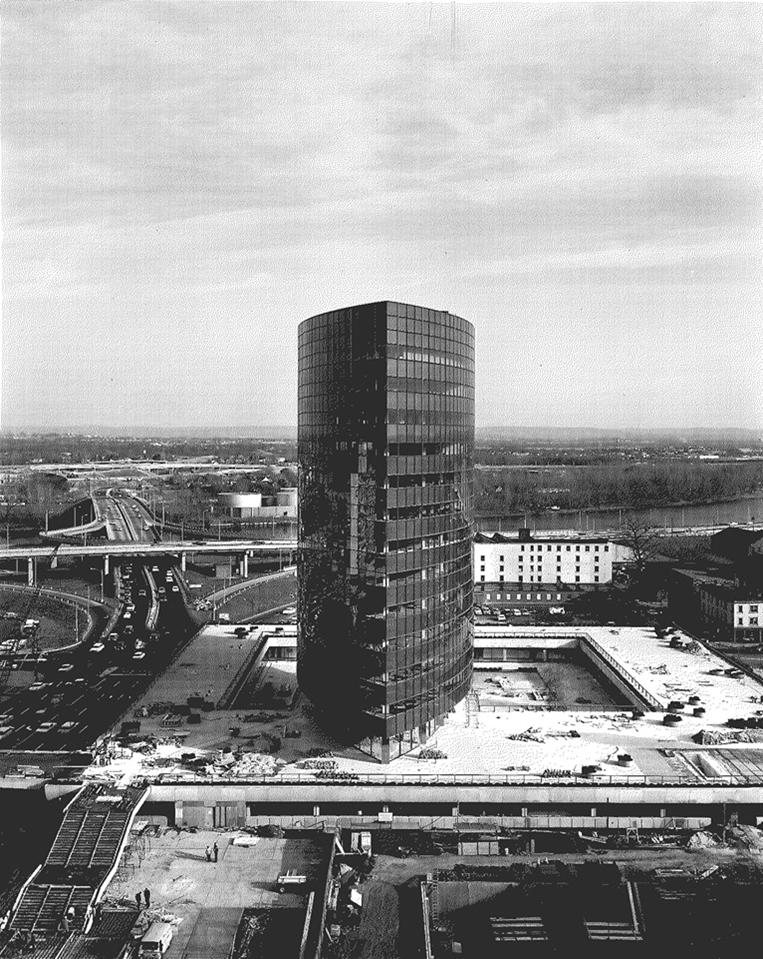
Dubbed the "Boat Building," it is the world's first two-sided building and in 2013 celebrates its 50th anniversary. The headquarters of The Phoenix, located in downtown Hartford at One American Row, was an architectural original, and half a century later, continues to stand out amongst newcomers to the Hartford skyline.

Completed in 1963, the building is listed on the National Register of Historic Places, and is an exceptionally significant example of the Modernist architectural style.

Distinguished by its unique form and lenticular plan, the building was designed by Max Abramovitz, a recognized 20th century master. Abramovitz -- widely acclaimephotod for his role in designing two of New York City's landmarks, the United Nations and Lincoln Center -- envisioned the locally dubbed "boat building" as a reflection of a daring and progressive company.

The construction of One American Row cemented Phoenix's commitment to the renewal of Hartford, where the company was founded in 1851, and reflected its forward-thinking and innovative business approach. The company decided to remain in Hartford in the 1960’s – and since then – choosing neither to move to the suburbs or to the planned Constitution Plaza nearby, which was the first urban renewal project in Connecticut and one of the earliest in the nation.

The 13-story tower is properly called an elliptic lenticular cylinder and is 225 feet along its axis and 87 feet wide at maximum width. It is oriented so that its pointed ends face east and west and the sides face north and south. The building was designed by one of the nation's foremost architectural firms, Harrison & Abramovitz, of New York. Ground was broken in 1961 and the contractor, George A. Fuller Company, completed construction in November 1963.

In 2010, the building was awarded Silver Leed® certification from the U.S. Green Building Council, and is one of a small number of buildings that are both Leed® certified and listed on the National Register of Historic Places.

The Phoenix was named one of the region’s top workplaces by The Hartford Courant in 2012.

In 2013, th1381819_522913201135740_1394654112_ne plaza surrounding the building was renovated with environmentally friendly planted areas. The "green" plaza renovation was the first completed private property piece of Hartford's iQuilt Plan, which promotes creative urban design to strengthen pedestrian links between downtown destinations.

The Phoenix Companies, Inc. is a boutique life insurance and annuity company serving customers' retirement and protection needs. Insurance products are available through select independent distributors, supported by our wholesaling team at Saybrus Partners.  Founded in 1851, Phoenix is publicly traded on the New York Stock Exchange under the symbol PNX. Corporate offices are in Hartford, CT, and there is a customer service center in East Greenbush, NY. As of December 2012, they reportedly had approximately 600 employees.


1963

Hartford Hosts First-Ever International Start-Up Weekend

Hartford’s Start-Up Weekend is going international.  The MetroHartford Alliance and its young professionals organization, HYPE, have announced that this year’s Startup Weekend Hartford, to be held October 18-20, will represent the first transnational collaboration, as Hartford organizers have partnered with Start-Up participants in Ottawa, Canada.

 Startup Weekend Hartford-Ottawa, a coordination of virtually connected sets of teams, mentors and organizers during the competition, will also feature Jeff Hoffman, co-founder and partner at ColorJar and a former founding team member of Priceline.com, who will virtually connect to speak to the event's participants.

Startup Weekend convenes active and empowered entrepreneurs to navigate the basics of founding startups and launching successful ventures - all in 54 hours.  The event, held in cities all over the world, convenes local developers, graphic designers, marketing professionals, Htfd Ottawaproduct/business managers and startup enthusiasts to build viable business plans around entrepreneurial ventures.  In Connecticut, previous events have been held in New Haven, Storrs and Hartford.

The Hartford base will hold its event at the uniquely equipped Connecticut Institute for Primary Care Innovation at Saint Francis Hospital and Medical Center in Hartford.  Counterparts in Ottawa have partnered with longtime sponsor and Ottawa-based startup Shopify, where the local event will be held.

Startup Weekend begins with participants pitching their startup ideas and receiving feedback from peers. Participants are not required to pitch an idea to participate, but all are welcome to do so. Teams are then formed by participants based on the top ideas as voted on by the group.  Over the course of the subsequent 54 hours, each team focuses its energies on creating a business model and on coding, designing, and obtaining market validation for their product or service.

The weekend culminates with presentations in front of entrepreneurs and business community leaders who offer constructive feedback in the competition’s judging process.  This year, three winners will be named.

“Both cities have a strong entrepreneurial spirit and base, and the mechanics of this transnational effort will allow all participants, especially those who opt for the joint opportunity, to harness the most innovative and advanced technologies to connect, create and compete,” said John Shemo, vice president and director of economic development for the MetroHartford Alliance.

“We’ve found a great fit with the Startup Weekend Hartford team, both in terms of passion and in the common values that make up the secret sauce of technology entrepreneurship,” said Paul Austin-Menear, Marketing Director for Startup Weekend Ottawa.  The pace of change in business and technology continues to make waves in both Canada and the United States, and it’s important to us that the next generation of entrepreneurs be prepared for, and take part in the next leap forward.”

The MetroHartford Alliance and HYPE successfully facilitating two previous events in Hartford.  The 2012 event was the second vertical, or industry-focused, event of its kind with an emphasis on health and wellness. Registration to participate in the Hartford base for Startup Weekend Hartford-Ottawa is $99 per person.  A discount rate of $25 is available to college students.

For more information, visit http://hartford.startupweekend.org.

WNBA Leads Major Sports in Gender, Racial Diversity; Baseball Mirrors Society Best

The WNBA received a combined grade of A+ for race and gender diversity, after earning and A+ for race and an A+ for gender in the 2013 WNBA Racial and Gender Report Card, produced by The Institute for Diversity and Ethics in Sports (TIDES) based at the University of Central Florida.

The study provides an analysis of the racial breakdown of the players and management in the league office and at the team level. It also looks at team general managers, coaching staffs and other support personnel.

Meanwhile, the Institute’s comparison of the racial breakdown of players in major league baseball, the National Football League and the National Basketball Association, alswnba_logo_detailo released this month, shows that baseball has a demographic breakdown that more closely reflects the nation’s demographics. But the most diverse league – in terms of players as well as the front office – is the WNBA.

Richard Lapchick, the director of TIDES and primary author of the report, said, “The WNBA continues to set the standard for racial and gender diversity amongst all professional leagues.”

Among the key statistics compiled by TIDES highlighting the WNBA:racial-diversity-in-professional-sports_5255f9324cb41

  • At 67 percent, women held the highest percentage of assistance coaching positions in the history of the WNBA, setting a new mark for the second consecutive year.
  • The percentage of people of color holding professional level staff positions in the WNBA League Office increased from 29 to 33 percent while the percentage of women increased by 8 percentage points.
  • WNBA players of color increased by five percentage points in 2013.
  • Nine women and seven people of color had ownership positions on a WNBA franchise in 2013.  Most were limited partners.
  • The number of women in the top management role increased from two to five women CEO/Presidents from 2012 to 2013.

Locally, of the 24 individuals highlighted on the Connecticut Sun website as members of the team staff, 12 are women and two are individuals of color.  The CEO and VP/General Manager are men, and the head coach, Anne Donovan, is a woman.

Laurel J. Richie, tmlb-logohe first woman of color to become president of a professional sports league, continued the WNBA’s tradition as professional sports’ most diverse organization.  Richie, a veteran marketing executive, brought more than three decades of experience in consumer marketing, corporate branding, public relations and corporate management, when she was appointed President of the WNBA, in 2011.

Many would argue that baseball is no longer "America's Pastime", but strikingly the racial composition of the average major league team corresponds almost perfectly to their proportions in American society, the Institute noted.“It truly is the game that looks like America the most, the other major sports leagues do not even come close,” the organization pointed out, as reflected in an Infographic on the website visually.

The WNBA Racial and Gender Report Card is the third report issued thus far in 2013 after the releases of the reports on Major League Baseball and the National Basketball Association earlier this year.

CT is Top 10 State in Percentage of Seniors in Workforce;Both Men and Women Highly Ranked

Connecticut is among the nation’s leading states in the percentage of senior citizens – men and women age 65 or older – still in the workforce.  The Land of Steady Habits placed in the top ten for both men and women, and showed increases in the percentage of seniors in the workforce compared with 2000, reflecting a national trend.

Connecticut is ranked 9th in the nation in the percentage of female senior citizens in the workforce, with 14.7 percent.  The state is 7th nationwide in the percentage of male senior citizens in the workforce, with 23.8 percent.

Looking at the percentage of senior female workers, the top ten are AlasTop 10 words over white backgroundka (with 20.7%), Nebraska, District of Columbia, South Dakota, Wyoming, New Hampshire, Hawaii, Maryland, Connecticut and North Dakota.  The lowest percentage was in Michigan at 9.2 percent.

In Connecticut, 9.2% of women age 65-69 are working, 3.3% of women age 70-74, and 2.2% of women 75 years old or older.  The overall percentage of women seniors in the workforce in Connecticut increased from 9.9% in 2000 to 14.7% in 2011.

Using U.S. Census data, Bloomberg.com ranked the U.S. states and the District of Columbia based on thworkinge percentage of female seniors employed.  Figures are calculated by dividing the number of females aged 65+ and employed by total population of females aged 65+.   The male population was calculated in a similar fashion.

Connecticut ranked 7th in the nation in the percentage of male senior citizens in the workforce.  Data for male senior citizens indicate that in Connecticut, the overall percentage in the workforce is 23.8 percent, with 13.3% of those age 65-69, 5.6% of those 70-74 and 4.4% of male seniors age 75 or older still working.

The top ten states in the percentage of male senior citizens in the workforce are District of Columbia, Nebraska, South Dakota, Kansas, North Dakota, Maryland, Connecticut, Vermont, Alaska and Massachusetts.  The lowest percentage was in West Virginia, with 13.5 percent.