Planning Underway for 2015 White House Conference on Aging; Connecticut Has 7th Oldest Population

Next year will be the 50th anniversary of Medicare, Medicaid, and the Older Americans Act, as well as the 80th anniversary of Social Security. It will also be the year when the White House will convene the 2015 White House Conference on Aging. The Conference will be of particular interest in Connecticut, currently the 7th oldest state in the nation based on median age.  The state is undergoing “a permanent and historic transformation in its demographics,” according to the state’s Legislative Commission on Aging (LCA).

The first White House Conference on Aging was held in 1961, with subsequent conferences in 1971, 1981, 1995, and 2005. These conferences have been widely viewed as catalysts for development of aging policy over the past 50 years.

The White House is “fully committed,” to conducting a 2015 conference, and is moving forward developing plans.  Officials intend to seek broad public engagemelogo-WHCOA2015nt and work closely with stakeholders in developing the conference, viewed as “an opportunity to look ahead to the issues that will help shape the landscape for older Americans for the next decade.”

Given the advances in technology and social media in the past decade, the 2015 Conference is expected to use web tools and social media “to encourage as many older Americans as possible to participate,” according to White House officials.

Among the key issues likely to be included are: retirement security; healthy aging; long-term services and supports to help older adults remain in their communities; and preventing financial exploitation, abuse, and neglect of older adults.

According to the Connecticut for Livable Communities report, issued earlier this year by the LCA, the state’s 65 and older population is projected to grow by 57% between 2010 and 2040. During the same period, Connecticut’s 20- to 64-year-old population is projected to grow less than 2%.

“In 2010, there were 4.35 working-age people for each person age 65 and older in Connecticut,” according to the CLCA. “In 2030, there will be only 2.75.”  More than one-third of the Connecticut population is over the age of 50, according to the report, and that proportion continues to rise. Residents born in Connecticut today, the report indicates, can expect to live to be 80.8 years old—the third highest life expectancy in the nation.

Nationally in 2013, there were 44.7 million Americans aged 65 and over and 6 million aged 85 and over.  Over the next 50 years, the number of people aged 65 and older is expected to more than double to 92 million and the number of people aged 85 and older is expected to triple to 18 million.

Among the key areas expected to be highlighted during the Conference, according to the White House website:282f3319af64c02e9f_h7m6bq4iz

  • Retirement security - Financial security in retirement provides essential peace of mind for older Americans, but requires attention during our working lives to ensure that we are well prepared for retirement.
  • Healthy aging will be all the more important as baby boomers age. As medical advances progress, the opportunities for older Americans to maintain their health and vitality should progress as well and community supports, including housing, are important tools to promote this vitality.
  • Long-term services and supports - Older Americans overwhelmingly prefer to remain independent in the community as they age. They need supports to do so, including a caregiving network and well-supported workforce.
  • Elder justice - Seniors, particularly the oldest older Americans, can be vulnerable to financial exploitation, abuse, and neglect. The Elder Justice Act was enacted as part of the Affordable Care Act, aimed at protecting seniors from scam artists and others seeking to take advantage of them.

In 2013, there were 75.9 million baby boomers (people born between 1946 and 1964) accounting for almost one-quarter of the population. Baby boomers began turning 65 years old in 2011.  Between 1980 and 2013, the centenarian population more than doubled from 32,194 in 1980 to 67,347 in 2013.

Between 1990 and 2013, the labor force participation rate of people age 65 and over increased from 12% to 19%.  Among the population age 65 and over, there are 128 women for every 100 men. At age 85 and over this ratio increases to 196 women for every 100 men.

Earlier this year, Cecilia Muñoz, Assistant to the President and Director of the Domestic Policy Council, announced that Nora Super will be leading this effort as the Executive Director of the 2015 White House Conference on Aging.

Additional information can be obtained by contacting: White House Conference on Aging, 200 Independence Avenue SW, Suite 637D, Hubert H. Humphrey Building, Washington, DC  20201, (202) 619-3636, info@whaging.gov. Individuals can also sign up for updates as plans develop, at https://public.govdelivery.com/accounts/USWHCA/subscriber/new?topic_id=USWHCA_1

Individuals with Depression Not Seeking Help from Mental Health Professionals, Study Finds

As the public conversation about mental health continues, new federal data released by the Centers for Disease Control and Prevention suggest that nearly two-thirds of individuals who have severe depression do not seek the assistance of mental health professionals. The report, by the National Center for Health Statistics within CDC, also found that people with mild depressive symptoms, as well as those with moderate or severe depressive symptoms, reported difficulties with work, home, and social activities related to their symptoms. For those with severe depression, nearly 90 percent reported such difficulties.  Nearly 3 in 4 with moderate depression also reported having difficulty in those everyday situations.

Studies have shown that the most effective treatment for depression, especially for severe depression, is a combination of medication and therapy. Although medication can be prescribed by a primary care physician, therapy is generally provided by a mental health professional.Depression

The study, which covered 2009-2012, found:

  • 7.6% of Americans (aged 12 and over) had depression (defined as moderate or severe depressive symptoms in the past 2 weeks). Depression was more prevalent among females and individuals age 40–59.
  • About 3% of Americans (aged 12 and over) had severe depressive symptoms, while almost 78% had no symptoms.
  • People living below the poverty level were nearly 2½ times more likely to have depression than those at or above the poverty level.
  • Almost 43% of persons with severe depressive symptoms reported serious difficulties in work, home, and social activities. Of those with severe symptoms, 35% reported having contact with a mental health professional in the past year.

According to the National Institutes of Health, more than 20 million people in the United States have depression. Its symptoms go beyond feeling sad for a few days, and interfere with people's daily lives, causing energy loss, feelings of worthlessness, problems with sleeping, or thoughts of death or suicide.CDC_logo2

A report by the Connecticut Department of Public Health (DPH) issued earlier this year found that 1 in 6 Connecticut adults (16.7 percent) reported having been told they had a depressive disorder. Women were significantly more likely to have been told they had a depressive disorder (19.0 percent) compared to men (14.2 percent).The likelihood of having been diagnosed with a depressive disorder decreased significantly for each increase in income range, the study found.  The DPH data is from 2012.

According to the CDC, depression is a serious medical illness with mood, cognitive, and physical symptoms. Depression is associated with higher rates of chronic disease, increased use of health care facilities, and impaired functioning.  Its causes may be genetic, environmental, psychological or biochemical.  Numerous studies have also shown that individuals with depression have more functional limitations than those without depression. The DPH study points out that “Depressive disorders may interfere with a person’s work and daily activities and prevent them from functioning normally. Some forms of depression develop under unique circumstances; others occur in episodes or may be longer-term.”

Concussion Education Plan Due to School Districts on January 1; Advisory Panel Meets Today

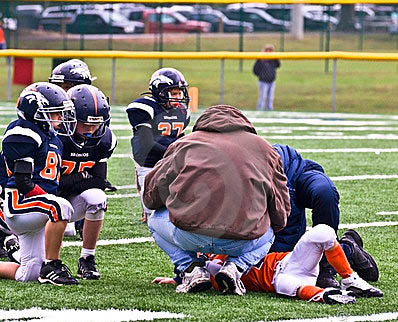
Three weeks from now, Connecticut should have in place a state concussion education plan to be used by local and regional boards of education.  That’s according to a law passed by state legislators earlier this year in response to growing concerns about the potential lifelong effects of concussions on students injured in school sports. Local school boards will be responsible for implementing the plan using written materials, online training or videos, or in-person training.

The Connecticut Youth Concussion Advisory Group, coordinating the state’s effort, has met four times this fall.  Minutes of the most recent meeting, on November 6, were posted to the group’s website more than a month later, just days ahead of the meeting scheduled for Thursday, December 11.  That meeting is to include an update on the Concussion Education Plan, according to the meeting agenda.

Although the law was approved in May, it was highlighted in public ceremonies in September in Westport, the hometown of three mothers who were instrumental in advocating for passage of the law. Each of their sons’ lives were changed by concussions. Ann Sherwood, Pippa Bell Ader and Diana Coyne came together to form the Parents Concussion Coalition, FOX Connecticoncussion3cut reported.

Public Act 14-66 requires the state Department of Education to consult with the state Department of Public Health, the governing authority for intramural and interscholastic athletics, an appropriate organization representing licensed athletic trainers, and an organization representing county medical associations to do the following:

  • By January 1, 2015, develop a concussion education plan to be used by local and regional boards of education. Boards of education will be responsible for implementing such plan using written materials, online training or videos, or in person training.
  • Develop a signed informed consent, which must include a summary of the concussion education plan, and a summary of the local board’s policies regarding concussions. For the school year beginning July 1, 2105, local boards of education must prohibit a student athlete from participating in intramural or interscholastic athletic activities unless the student athlete and a parent or guardian returns such form.
  • Collect and report to DPH all occurrences of concussions, including the nature and extent of the concussion and the circumstances in which the student sustained the concussion.

The law also requires that a training course regarding concussions be developed or approved, and that “a refresher course regarding concussions, including current best practices, and, for football coaches, current best practices around the frequency of games and full contact practices and scrimmages.”  That provision was effective on October 1. 5455a41b65555.image

At the November meeting of the Advisory Group, “there was discussion regarding the pros and cons of mandating a specific time frame between stages of recovery from a concussion versus considering each case individually and relying on the student’s physician,” the meeting minutes reported.  Among materials reviewed were a Concussion Web page, Concussion Education Initiative Course feedback, and an annual review and refresher course.

Regarding data collection, the Advisory Group “discussed what will work best for schools; what is an ideal versus realistic approach.”

The Connecticut Interscholastic Athletic Conference (CIAC) Board of Control is requiring all CIAC member schools (including private and parochial schools not covered by the law) to develop a plan and begin implementation in the 2014-15 school year.

Westport’s Staples High School is among the Connecticut school that now provide concussion protocols on their websites, so that students, parents, coaches and the community are aware of expected practices.  According to the Staples site, “links include concussion education, the concussion care plan that is to bimagee filled out by your physician when a concussion occurs, our procedures for concussion management, and our Return to Play protocol that will be followed by all athletes before returning to competition after sustaining a concussion.”
Connecticut was one of the first states in the nation to adopt a concussion law, in 2010, following Oregon and Washington, which implemented similar statutes in 2009.  The law dealt primarily with training requirements for coaches.

Video 1       Video 2


Two CT Metro Regions Among Nation's Best for Young Workers

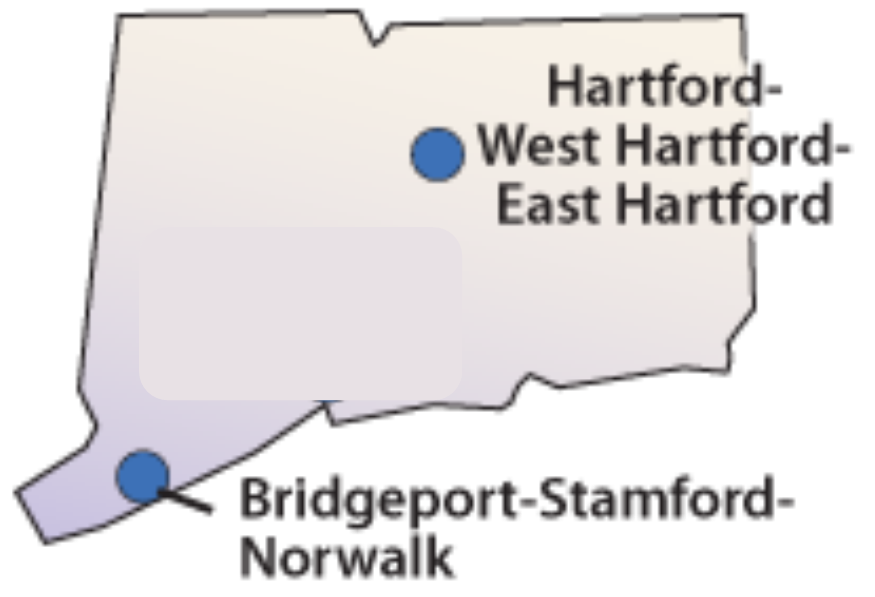
Two of Connecticut’s metropolitan regions have among the highest median earnings for full-time workers age 18 to 34, according to U.S. Census Bureau data.  The Bridgeport-Stamford-Norwalk area ranked #5, with Hartford-West Hartford-East Hartford ranked #6, just ahead of New York-Newark-Jersey City.  Connecticut and California were the only states to have two regions among the top ten. The media incomapme in the Bridgeport-Stamford-Norwalk metropolitan area was $42,757, and the Hartford-West Hartford-East Hartford region was $42,322 for 18-34 year olds working full-time, according to the data, highlighted in an article posted to The Atlantic’s CityLab website.
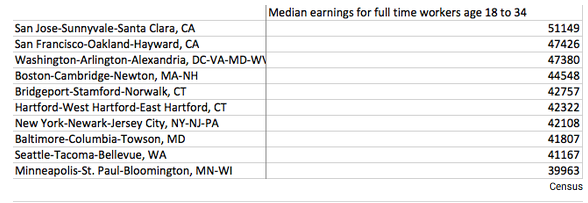
Those median salaries in Connecticut compare to a media of $33,883 for the same age category nationwide.    The data indicates that 21.9 percent of the region’s population is age 18-34 in the Hartford metro area; 19.9 percent in the Stamford centered region.

Nationwide, the website points out “since the start of the Great Recession in 2007, the median wage for people between the ages of 25 and 34, adjusted for inflation, has fallen in every major industry except for health care.”  The Atlantic reported earlier this month that “overall U.S. wages are barely growing, and wages for young people are growing 60 percent more slowly than overall U.S. wages.”

“When you dig into the numbers,” the website continues, “the Hartford, Connecticut, metro area emerges, beaconlike, in the darkness: It has become one of the most lucrative job markets for young Americans.”ef5a6bf26

The report notes “a higher median income for young workers than in New York, Seattle, or Chicago. Millennial wages in many smaller metropolitan areas, including Austin, Minneapolis, and Denver, also lag behind Hartford's.”  The Hartford-West Hartford-East Hartford region offers the combination of strong median income and a cost of living that isn’t rising at the rate of other metropolitan areas, which makes the regioncitylab “looking remarkably attractive.”

Also this month, the real estate website Zillow predicts “a big year for home buyers in 2015, with more millennials entering the market amid rising rents.”   Zillow’s annual housing predictions identified the five best housing markets for first-time homebuyers in the year ahead, and ranked Hartford at #2, just behind Pittsburgh and ahead of Chicago, Las Vegas and Atlanta.

Lookinzillowg ahead to 2015, Hartford was among the “markets most favorable to first-time buyers … with strong income growth among 23-34 year olds, significant growth in the number of entry-level homes on the market and home prices that won’t take a big chunk out of buyers’ paychecks.”

CT’s First Sensory-Friendly Performance Ready at Hartford Stage

Hartford Stage will host a first-ever sensory-friendly performance of its annual holiday classic, A Christmas Carol - A Ghost Story of Christmas on Tuesday, December 9.  This will be the first time that Hartford Stage has offered this type of performance for the community – and apparently the first such effort in Connecticut. A “sensory-friendly” performance is a theatre production that is modified to accommodate individuals with sensory-input disorders, such as people on the autism spectrum, those with anxiety, and people with a range of cognitive abilities. hartford_stage_company

At the Tuesday night performance, “house rules” will be relaxed – people may need to get up, move around, and leave the theatre in the midst of the performance. There is no expectation that the audience will be completely quiet during the performance.  In addition, a Quiet Room will be available with sensory-friendly toys for anyone who needs a break from the performance.

"Sensory-friendly performances are designed to create a performing arts experience that is welcoming to all families of children with autism or other disabilities which create sensory sensitivities," says Jennifer Roberts, director of education for the theater.  The Hartford Stage website adds, “Our goal is to create an environmacc_sfent where people with autism or sensory needs, along with their families, can enjoy coming to the theatre together and will feel comfortable, supported and free to be themselves.”

Officials point out that while the script of A Christmas Carol will not change, some of the technical elements will be softened to accommodate sensitive ears and eyes. For example, haze will be reduced and strobe lights will be removed from the production. Lights in the audience will be remain lit at a dim level during the entire show to allow safe movement in and out of the theatre.

Abrupt and loud sound effects will be lowered, and there will be a signal to the audience to warn them that a potentially jarring moment is about to happen, so that caregivers can be ready to help those with sensory sensitivities.

The hope is to achieve “a judgment-free, fun experience for the entire family.”  About 150 people, students and their families, are expected to attend the performance.

Hartford Stage has prepared a plot synopsis and social story to help prepare audience members for the experience. They have encouraged families and caretakers to read the synopsis of A Christmas Carol and use the social story to prepare for the whole theatrical experience, from beginning to end.sponsor_tdf

The production, designed for age 9 and up, is about two hours long with a 15-minute intermission.   Theatre Development Fund’s Autism Theatre Initiative served as an advisor for the performance.

[view NBC Connecticut news story on the sensory-friendly performance]

Connecticut Ranks #12 in Child Homelessness Risk and Response, National Numbers at All-Time High

A new report finds 2.5 million children experienced homelessness in the United States in 2013, representing one in every 30 children in the country - an historic high in the number of homeless children. The report by Homeless Children America at the American Institutes for Research, called America’s Youngest Outcasts, documents the number of homeless children nationally and in every state, their well-being, their risk for child homelessness, and state level planning and policy efforts. It used the most recent U.S. Department of Education count of homeless children in U.S. public schools, which was released in September, and on 2013 U.S. Census data.report cover

From 2012 to 2013, the number of children experiencing homelessness annually in the U.S. increased by 8 percent nationally. The number of homeless children also increased in 31 states and the District of Columbia and in 13 of those states, it increased by 10 percent or more.

Connecticut’s child homeless number was virtually unchanged.  The report examined childhood homelessness on a state-by-state level, ranking the states from 1 (best) to 50 (worst). Connecticut’s overall ranking was #12.

The top 11 states were Minnesota, Nebraska, Massachusetts, Iowa, New Jersey, Vermont, New Hampshire, Pennsylvania, Hawaii, Maine and Maryland.

For Connecticut, the report shows there were 5,508 homeless children during the 2012-2013 school year. That is virtually identical - down  by four children - from the 2011-2012 data, and nearly 200 less children than in 2010-11. Connecticut, based on those numbers, ranked #1 in the nation 2012-2013 in the “extent of child homelesnational centersness” category.

The state ranked #17 in policy and planning, based on factors including the number of emergency and transitional housing units for homeless families, and state planning efforts.

The 130-page report, which will be presented to Congress, at a briefing scheduled for February 10, listed six causes of child homelessness nationwide:

  • the nation’s high poverty rate
  • lack of affordable housing across the nation
  • continuing impacts of the Great Recession
  • racial disparitiesstate child homeless map
  • challenges of single parenting
  • the ways traumatic experiences, especially domestic violence, pave the way toward and prolong homelessness

“Without decisive action now, the federal goal of ending child homelessness by 2020 will soon be out of reach,” said Dr. Carmel DeCandia, Director of the Boston-based National Center on Family Homelessness at American Institutes for Research. “Living in shelters, neighbors’ basements, cars, campgrounds, and worse—homeless children are the most invisible and neglected individuals in our society.”

According to the report, research shows that homeless children are hungry and sick more often. They wonder if they will have a roof over their heads at night and what will happen to their families. Many homeless children struggle in school, missing days, repeating grades, and drop out entirely.

Up to 25% of homeless pre-school children have mental health problems requiring clinical evaluation; this increases to 40% among homeless school-age children. Homelessness, especially in young children, may also lead to changes in the brain, which can interfere with learning, emotional self-regulation, cognitive skills and social relationships.

The report also recommends a series of “effective responses” to child homelessness:

  • Safe, affordable housing.
  • Comprehensive needs assessments of all family members.
  • Family-oriented services that incorporate trauma-informed care.
  • Identification, prevention, and treatment of major depression in mothers.
  • Parenting supports for mothers.
  • Education and employment opportunities for parents.
  • Further research to identify evidence-based programs and services for children and families.

The National Center on Family Homelessness, founded in 1988, is described as the nation’s foremost authority on child and family homelessness, using research and evidence-based approaches to prevent and end family homelessness.

childrenheader

2016 US Gymnastics Championships Back in Hartford, All About the Men

Connecticut residents watching the televised coverage of the men’s and women’s gymnastics competitions at the 2016 Olympics from Rio de Janeiro will likely see some familiar faces.  The run-up to the Olympics will come through Hartford that summer, as USA Gymnastics rolls out a new split schedule for the men and women, which will bring the mens’ National Championships to the XL Center, and the women for a pre-Olympic competition. For the first time since 1976, the 2016 U.S. Olympic Team Trials in gymnastics will be held on different days, in different cities.  The women's gymnastics trials has been awarded to San Jose, and the men's trials to St. Louis, to be held in late June and early July.

The trials will follow USA Olympic Gymnastics Trials 2012the U.S. Championships, which will also be held in different cities.  The men’s championships will be held in Hartford, June 3-5, 2016.  The women will also be in town, competing in the Secret Classic – a major pre-Olympic event.  The women will move on to their national championships three weeks later in St. Louis.

Why the new event pairings and tradition-breaking schedule?  It’s all about the men.

In an effort to boost the mens’ team’s chances in the 2016 Olympics, and increase public interest in the team, the competition schedule has been revised.  USA Gymnastics president Steve Penny explained in published reports that the organization moved up the men's trials to give the team more recovery time before the Rio Games. The U.S. men earned the top score in qualifying at the 2012 London Olympics but dropped to a disappointing fifth in the team finals. The men will have about six weeks to prep between the trials and the Olympics, which begin on Aug. 5, 2016, compared with four between the trials and the games in 2012.

Performance and notoriety go hand-in-hand.  Despite having earned a Silver Medal at the 2008 Beijing Olympics, for example, American gymnast Jonathan Horton did not become a household name in the U.S.  That’s not surprising, as the public generally is more focused on the women’s teams competing in the Olympics every four years.Hartford Has It_black-aqua

“People think gymnastics, and they think little girls in leotards, powerful and graceful, and they forget about our side,” Horton recently told the Pittsburgh Post-Gazette. “Right now, there’s this stereotype that we’re not a masculine sport. All of us are trying to change that image that it’s a sissy sport. It’s not.”logo

The Post-Gazette noted that in most other countries where gymnastics skills are cultivated, the men are still more popular than the women. Because of that, Penny noted, there is more depth among the men in international competitions, which has made it tougher for the U.S. team to bring home medals with the same frequency as the women’s team.

Inside Gymnastics magazine reported last year that “in the NCAA, men’s teams are losing funding while women’s teams are being created,” adding that “The reality is - boys’ gymnastics has never been as popular as girls’ gymnastics.”

Only six states sponsor a high school boys gymnastics championship, and only 17 Division I colleges still support men’s gymnastics programs, the newspaper reported. USA Gymnastics is making a concerted effort to reward male gymnasts who are competing in club programs at the high school and college level with recognition for their effort, Penny told the Post-Gazette. “There’s always been more sport opportunities for young men than there were for women. The role models for women always stand out. For men, it’s a more cluttered sports landscape.”

There’s little doubt about the popularity of gymnastics during the Olympics.  After the 2012 Olympic Games in London, there was an analysis of the sports and athlete mentions on Twitter, which revealed that there were more than 150 million Summer Games tweets. According to Twitter, the sport which saw the most Twitter conversation was soccer with well over 5 million Tweets.  Rounding out the top five were swimming, track & field, gymnastics and volleyball.

USA Gymnastics tends to return to cities that have been successful hosts previously for major gymnastics competitions, and that is true for San Jose, St. Louis and Hartford.  The XL Center has hosted the USA Gymnastics national championships twice: in 2010 and 2013.  Neither was an Olympic year.  2016 will be.

2016 Competition Schedule

Men

  • National Championships, Hartford, June 3-5
  • Olympic Trials, St. Louis, June 23-26

Women

  • Secret Classic, Hartford, June 3-5
  • National Championships, St. Louis, June 23-26
  • Olympic Trials, San Jose, July 8-10

Economic Development Awards Recognize Innovation, Growth and Jobs

There are some economic development gems in Connecticut that have somehow managed to largely escape public attention, even as their businesses have grown and employment levels increased.  The companies were among 20 recipients at the annual Connecticut Economic Resource Center "Celebrate Connecticut" program, which recognizes "a broad range of individuals, companies and programs that have uniquely contributed to economic growth in Connecticut." Recipients ranged from individuals, including Waterbury Mayor Neil O'Leary and North Haven First Selectman Michael Freda, to the Seymour Fish Bypass, Durham Agricultural Fair Association (the largest fair in North America managed entirely by unpaid volunteers), and Five Point Gallery in Torrington.  But the bulk of the honorees were businesses - more small than large- with solid economic development stories to tell.  Among them:Cerc1

Tower Laboratories is a leading provider of effervescent products in the United States and supples to distributors worldwide.  The company provides the fizz and bubbly sensation that gives products an edge, both in effectiveness and product appeal.  Located in Centerbrook in Middlesex County, they develop and man;manufacture over-the-counter medications, prescription pharmaceuticals and personal care, beverage and household products.

Belimo Air Control USA employees 300 people in Danbury, and recently moved into newly constructed headquarters.  Belino's products are essential components of the HVAC systems that keep indoor air comfortable, healthy, efficient and safe.  Prominent customers are not only in the U.S, but worldwide.

Polamer Precision is an advanced contract aerospace manufacturing firm that has just completed a 152,000 square-foot facility in New Britain.  The company will employ 83 highly skilled workers in this new facility, which will allow the company to increase its output and handle larger contracts.  It will also feature the largest industrial solar power generation system in Connecticut.

ctRecognized programs and organizations  include the Rowley Spring Adult Education Diploma and Certificate Program, Billings Forge Community Works, Northwest Connecticut Manufacturer's Coalition, the Southeastern Connecticut Cultural Coalition, Fiddleheads Natural Food Co-op and the Putnam Business Association's First Fridays event.


"These awards pay tribute to the hardworking people and successful programs and projects that are stimulating new jobs and investment in our economy,” said CERC President and CEO Robert Santy. “CERC is proud to recognize the 2014 honorees and the many successes making a positive impact on our business environment.”  The awards were presented by state Economic and Community Development Commissioner Catherine Smith and Shelly Saczynski, Chair of the CERC Board.celebrate cover

Officials noted that a number of the businesses receiving awards began in local basements or with homegrown talent and have grown to successful enterprises.  Danbury-based Mediassociates, for example, has seen 30 percent growth over the past 10-plus years and was highlighted as one of the top 3,000 fastest growing privately owned businesses in America by Inc. magazine.  Datto, Inc., headquartered in Norwalk with nearly $50 million in revenue in 2013, and more than 300 employees, began in a basement as nothing more than an idea.

Among the innovative programs recognized was the Stamford 2030 district, a private-sector-led initiative of 23 property owners and managers and community and professional partners working toward the goal of cleaner and greener commercial and large-scale buildings.  Stamford is the first city in New England and the tri-state region to establish a District, and one of only a handful nationwide.  The initiative is led by Connecticut Fund for the Environment and the Business Council of Fairfield County.

The 20 award recipients, two in each of 10 regions across the state, were:

North Central Billings Forge Community Works CareCentrix

South Central First Selectman Michael Freda Alexion

Southeast Fiddleheads Natural Food Co-op Southeastern Connecticut Cultural Coalition

Middlesex Tower Laboratories, Ltd. Durham Agricultural Fair Association

Waterbury / Naugatuck Waterbury Mayor Neil M. O’Leary Seymour Fish Bypass (Paul Pawlak Fish Bypass)

West Mediassociates Belimo Air Control USA Inc.

Southwest Datto, Inc. Stamford 2030 District

Central Polamer Precision Rowley Spring Adult Education Diploma and Certificate Program

Northeast Putnam Business Association First Friday's Event Plainfield Renewable Energy – A Leidos Company

Northwest Five Point Gallery Northwest Connecticut Manufacturer's Coalition

In addition, CERC awarded its Customer Service Award,named for the late Connie Maffeo, to Donna Wertenbach, President and CEO of the Community Economic Development Fund.

Connecticut Economic Resource Center, Inc.  is a nonprofit corporation and public-private partnership that provides economic development services consistent with state strategies, leveraging Connecticut’s unique advantages as a premier business location.

New Business Aims to Deliver Science to 8-11 Year-Olds, One Month at a Time

There’s a new Connecticut start-up launching this month, aiming to engage upper elementary school age children with the fields of science, technology, engineering and math (STEM) through monthly hands-on activities delivered right to their doors.  What began as a response by two college friends to an entrepreneurial start-up challenge is now a full-fledged business, hoping to grow as it excites children ages 8-11 about the potential of the STEM fields. The business, Genius Box, delivers a “monthly STEM adventure to a subscriber’s mailbox, featuring a topic to explore and the tools to do so."  Each box will contain activities or experiments that further illustrate the topic of the month, providing hands on learning opportunities through a narrative “challenge” posed in each box.genius box  horiz

Kate Pipa and Shivangi Shah received second place at Demo Day at Northeastern University a few years ago, and “with much excitement and encouragement,” decided to launch a company based on their idea.  Next was a successful crowdfunding campaign in fall 2013, which led to initial beta testing and feedback collection, including work with students in Connecticut classrooms to obtain reactions from students and their teachers.  Earlier this year, a prototype Genius Box was provided to middle-school age participants at the Connecticut Technology Council’s annual Girls of Innovation program.

Genius Box aims to connect kids with real life examples of science, technology, engineering, and math to further the understanding of these critical subjects “in a way that resonates with upper elementary school aged children.” The topic to be explored in December’s inaugural Genius Box will be Kaleidoscopes.  The company’s website is now accepting one month, three month or six month subscriptions for the monthly deliveries.

“We are excited to staco foundersrt this new chapter,” said co-founder and CEO Kate Pipa, who lives in Shelton. “And we are excited to bring kids a new box each month of hands-on fun that also doubles as a learning opportunity and is making social impact for the kids and for our partner organizations.”

Co-founder and COO Shivangi Shah adds, “We hope that the next generation of geniuses will embrace STEM and apply it to the world around them. We want them to believe they can change the world.”

Each box includes a narrative story and activity cards to explain topic and activities in a fun, engaging way, and three or more activities and experiments in each box.  Each monthly kit is “designed in a way that puts each genius in the driver's seat to solve the challenge at hand, with minimal help from adults.”

Extending the Benefits

Pipa and Shah have also added a social benefit component to their sales. For each box sold, Genius Box Inc. will donate $1.00 to a partner nonprofit. December’s partner organization is Connecticut-based ManyMentors, which connects middle and high schools students interested in the S.T.E.M. fields with near age peer mentors via interactive, engaging workshops and a highly innovative online platform.

Genius Box is also among the first social benefit corporations in the state of Connecticut, allowing the company to pursue an expanded mission that embraces societal good along with profits.  Legislation creating the new designation was approved by the state legislature earlier this year, and took effect in October.

The company’s website explains “We want to provide an experience that inspires, encourages, and empowers kids to think big. To be curious. To experiment. To make mistakes. To explore new topics. Overall, to be the change makers and problem-solvers of tomorrow, today.”  Aiming directly at its target audience, the site invites, “Adventure on, geniuses. Your monthly mystery awaits.”

The company is currently shipping only within the United States, and offers free shipping.  More information about Genius Box is available at www.geniusbox.me.

Photo:  Kate Pipa and Shivangi Shah


CT Ranks #4 in High-Speed Internet Use; #14 in Computer Ownership, Census Data Shows

acslogo

acslogo

Connecticut ranks #14 in the nation in computer ownership, and #4 in high-speed internet use, according to national data compiled by the U.S. Census. Overall, 83.8 percent of U.S. households reported computer ownership, with 78.5 percent of all households having a desktop or laptop computer, and 63.6 percent having a handheld computer, according to the recently released data.

The top ten in computer ownership were Utah, New Hampshire, Alaska, Wyoming, Colorado, Washington, Oregon, Minnesota, Maryland and New Jersey.  Also just ahead of Connecticut were Hawaii, Massachusetts and Idaho.

Nationwide, 88.4 percent of the population lives in a household with a computer.  In Connecticut, it is 90.8 percent.  Utah leads the way at 94.9 percent.  At the bottom of the list are West Virginia, Alabama, New Mexico and Mississippi, all at just under 83 percent.

5

5

The Census Bureau data also indicated that, on average, 78.1 percent of Americans live in a household with high-speed Internet use.  The top ranked states were New Hampshire (85.7%), Massachusetts (85.3%), New Jersey (84.5%), and Connecticut (83.9%).  Rounding out the top ten are Utah, Maryland, Hawaii, Washington, Colorado and Rhode Island.  The lowest percentages were in New Mexico, Arkansas and Mississippi.

In analyzing the data from metropolitan areas, the U.S. Census Bureau indicates that none of Connecticut’s metro regions made the nation’s top 30 in computer ownership, but the Bridgeport-Stamford- Norwalk metropolitan region was ranked #7 in the nation in high-speed internet use.

The data used in the report, released in November 2014 for calendar year 2013, comes from the American Community Survey, a large and continu­ous national level data collection effort performed by the Census Bureau. Computer and Internet data from the ACS are based on a sample of approximately 3.5 million addresses.

Nationwide, 74.4 percent of all households reported Internet use, with 73.4 percent reporting a high-speed connection.

high-speed-internet

high-speed-internet

Of the 25 states with rates of computer ownership above the national average, 17 were located in either the West or Northeast. Of the 26 states with rates of high-speed Internet subscriptions above the national average, 18 were located in either the West or Northeast.

The Census Bureau also reported that although household computer ownership was consistently higher than household Internet use, both followed similar patterns across demographic groups. For example, computer ownership and Internet use were most common in homes with relatively young household­ers, and both indicators dropped off steeply as a householder’s age increased.

The most common household connection type was via a cable modem (42.8 percent), followed by mobile broadband (33.1 per­cent), and DSL connections (21.2 percent).

US map

US map