Summer Olympics May Come to CT if Boston Bid for 2024 Succeeds
/Boston is one of four cities being considered to be the United States entry in the international competition to host the 2024 Olympic Games. If Boston's bid were to become a reality, at least one Olympics observer is suggesting that Connecticut may have an Olympic supporting role to play.
Boston, San Francisco, Washington D.C. and Los Angeles have been selected to develop bids to be considered by the U.S. Olympic Committee, which would decide which city - if any - to support and present to the International Olympic Committee (IOC), which will decide in 2017 on the host city for the 2024 Olympics.
Rosanna Garcia, associate professor of marketing in the D’Amore-McKim School of Business at Northeastern University in Boston, who has attended the past eight Summer Olympics, sees the city turning to Connecticut and Rhode Island to host some events.
“With more than 300 events that typically occur at the Olympics, many cities around Massachusetts, and even Rhode Island and Connecticut, will need to partner with the International Olympic Committee to host these events,” Garcia points out.
 “Many preliminary competition events would need to take place outside of the main Olympic Park areas so events may occur as far away as Connecticut. This also is an opportunity for more people to get involved with the Olympic Spirit,” Garcia adds.
The Boston Globe has reported that the U.S. Olympic Committee is expected to decide early next year whether to enter a U.S. city in the international competition to host the 2024 Olympics. That would be just after the IOC acts on recent recommendations to reform its selection process, which would take effect with the 2024 Summer Games host selection. The IOC meets next month to consider the series of recommendations.
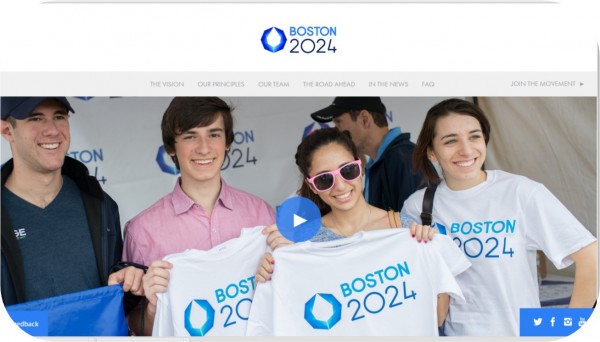
Members of the U.S. Olympic Committee were in Boston last week, meeting with representatives of the Boston bid and area colleges which would participate, potentially providing sports venues, dorms, and other support services. Last month, a promotional video advocating a Boston bid was released, and a website was launched. With an eye toward innovation and efficiency, the video highlights Boston’s bid “to create a sustainable model for hosting the Olympic and Paralympic Games that can become the blueprint for future host cities.”
The Connecticut Convention & Sports Bureau, the state’s official meetings and sports event sales and marketing organization, "supports Boston’s bid for the 2024 Olympics," said Interim President H. Scott Phelps. "Regardless of whether or not Boston wins the Olympics, the City’s bid has helped to elevate the Boston and other New England brands to sports event planners from all over the world." Officials noted that if the Olympic Games decide to come to Boston, "it could be great for tourism in nearby Connecticut as well, as spectators and competitors would be encouraged to come visit our State’s attractions," adding that "there might be opportunities for our state to host pre-Olympic competitions and ... athletes."

The Globe noted that if the International Olympic Committee, meeting in Switzerland in December, decides that its preference is for compact venues, as is expected, Boston is seen as a strong candidate and could gain an advantage over Los Angeles, San Francisco, and Washington, whose plans offer less intimate settings, according to the Globe. Supporters of the San Francisco bid have noted that the chairman of the U.S. Olympic Committee, Larry Probst, lives in nearby Burlingame, CA. The San Francisco effort is being led by Larry Baer, the chief executive officer of baseball's World Series champion Giants, according to published reports.
It is the first time that Boston has prepared a bid to host the Games, and it is being led by an organization called the Boston 2024 Partnership, a nonprofit organization formed to prepare the bid materials. The group is governed by a 36-member executive committee, and has launched a series of subcommittees aimed at master planning, fundraising, outreach, and engagement. Organizers note that no tax dollars have been spent on Boston 2024, and tax dollars will not be used to build venues or pay for the operation of the Games. Public investment will be confined to roadway, transportation and infrastructure improvements, most of which are already planned and are needed with or without the Olympics.
 An Olympic games in Boston would utilize existing sports venues of both professional teams and area colleges, which could reduce potential costs. Infrastructure improvements, such as in transportation, are already on the drawing board, and could accelerate with a Boston bid.
The U.S. last hosted a Summer Olympiad in Atlanta in 1996; a Winter Olympics in 2002. St. Louis hosted in 1904 and Los Angeles held the Games in both 1932 and 1984. In recent years, the unsuccessful U.S. bids to the IOC was to host the Summer Games were New York (2012) and Chicago (2016). The 2016 Games will be held in Rio de Janeiro and the 2020 Summer Olympics are scheduled to be held in Tokyo, Japan. Other potential contenders, according to published reports, include Paris, Rome,Doha, Istanbul and either Hamburg or Berlin in Germany.
“Holding the Games in the Boston area would serve as a catalyst for growth in the region,” said John Fish, CEO of Suffolk Construction and driving force in the initiative. “We are also excited for the chance to deliver something that is both powerful and meaningful for the worldwide Olympic and Paralympic movements that will also connect more youth to sport.”
 Making the grade are Bridgeport, Hartford, and New Haven. Their respective round one opponents make the Connecticut cities strong underdogs in need of a sizable population surge. Bridgeport goes up against San Francisco, Hartford faces Baltimore, and New Haven is up against Portland. (No, not Portland, Connecticut.)
 one of two versions of the game, geographic level: metro areas or states. Then they click on the name of the city in each match-up that you think has the larger population. Green shows a correct answer, red indicates an incorrect answer. Players are urged to “see how close you can come to a perfect score of 63” and then asked to “mouse-over results to view the most current population estimates for each pair.”



 The report also indicated that more than 80% of litigants appear without lawyers in matters as important as evictions, mortgage foreclosures, child custody and child support proceedings, and debt collection cases. “Making courts user-friendly for these self-represented litigants is imperative if we are to keep the promise of equal justice for all,” the report indicated. In comparing the 50 states’ systems for self-represented litigants, Connecticut ranked #9. The top states were Hawaii, California, Delaware, Arizona, Iowa, Indiana, Washington, Massachusetts and Connecticut.

 ld University at #396. Outside the top 400 from Connecticut were Wesleyan University, Yale University, Quinnipiac University and Trinity College.
 ity in New Jersey, Florida Agricultural and Mechanical University, Florida International University, and six institutions in California, including California State Polytechnic University, the University of California and Cal State.


 Republicans. The House Speaker, House Majority Leader, Senate President Pro Tempore Senate Majority Leader, and Senate Republican Leader for the 2015 session are men, as was true in the previous legislative session. Connecticut has seen a woman Speaker of t
 he House, but there has not been a woman selected to serve as Senate President Pro Tempore or Majority Leader.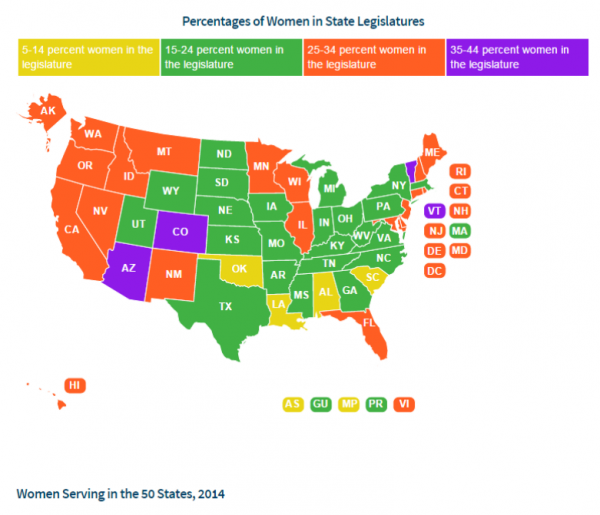
 t households unable to afford all of life’s basic necessities far exceeds the official federal poverty statistics. United Way calls this newly revealed demographic ALICE, an acronym for Asset Limited, Income Constrained, Employed.
 an double the official U.S. poverty level.