Nearly 2/3 of Americans Have Confidence in Charities, But More Than 1/3 Don’t, Survey Reveals

Almost two-thirds of Americans have confidence in charities, according to a new poll by the Chronicle of Philanthropy — the first to measure public views on the subject since 2008. Although most expressed “a great deal” or “a fair amount” of confidence in charitable organizations and more than 80 percent said charities do a very good or somewhat good job helping people, dissatisfaction was also expressed.  A significant number voiced concern about finances: a third said charities do a "not too good" or "not at all good" job spending money wisely; and 6 in 10 said their leaders are paid too much, the Chronicle reported.62

Half of those surveyed said that in deciding where they will donate, it is very important for them to know that charities spend a low amount on salaries, administration, and fundraising; 34 percent said that was somewhat important.  And 35 percent said they had little or no confidence in charities, the Chronicle underscored.

Maggie Gunther Osborn, President of the Connecticut Council for Philanthropy, points out that “in a new and positive era of transparency, better questions are being asked and more data provided about the positive impact of charities.  The sector is being asked to more openly communicate and be accountable to the public trust.  This is a good thing.”

“At the same time,” she added, “outliers and bad actors are publicized and amplified, tarnishing the sector and creating misinformation and incorrect perceptions.”

People who gave charities low marks on spending money wisely were asked what kind of spending they considered unwise. The biggest portion, 37 percent, cited salaries or other administrative costs. The second-highest answer, named by 11 percent, was advertising.50

Mary Cahalane, a Connecticut-based nonprofit fundraising consultant and author of the blog Hands On Fundraising, said that “Charities need to do a better job explaining the importance of our work to the general public. Surveys like this are instructive.”

The Chronicle poll, conducted by Princeton Survey Research Associates International, surveyed 1,000 adults in June, asking several questions identical to those included in polls that Princeton conducted from 2002 to 2008.

Americans rank charities higher than a range of other institutions. Fifteen percent said they had a great deal of confidence in charitable organizations over all, with 21 percent stating the same about charities in their own communities. Other institutions did not fare nearly as well.  In a June Gallup poll, only 4 percent said they had a great deal of confidence in Congress, 9 percent in big business, 10 percent in newspapers, and 12 percent in banks, public schools, and organized labor. The top scorers: the military (42 percent) and small business (34 percent), the Chronicle reported.Print

The survey found significant demographic differences in views toward charities. For example, young people were more positive than older people: 65 percent of 18- to 29-year-olds said they had a great deal or fair amount of confidence in charities, compared with 54 percent of people ages 65 and older. Republicans were more likely than Democrats to say nonprofits do a not-too-good or not-at-all-good job spending money wisely (38 percent and 22 percent, respectively), the Chronicle noted.

“Even the politicians are trying to highlight outliers in the sector to make statements about the whole which are creating false perceptions and in fact end up undermining the social purpose sector and creating false understandings,” Osborn explained.page-title-philanthropy

“It also undermines the ability of the sector to continue to care for the most vulnerable, lift up and advance our society through the arts and education and create ways to deal with safety, environmental and health shifts of enormous impact on our daily lives,” she continued.  “The majority of people, who have factual information or just faith, support and believe in the powerful good of the sector.”

Cahalane also noted three thoroughly debunked myths about charities, which nonetheless remain widely held, are reflected in the survey results:

  • Myth #1: Charities should spend every dollar on direct service. This has been called the “overhead myth”. Services can’t happen without administrative and fundraising support. Charities should spend money wisely, but looking at a ratio of service versus administration expenses is not wise. The largest watchdog groups have realized this, she points out.
  • Myth #2: Nonprofit staff don’t deserve to be paid for their work. Many staff people have years of specialized experience and skill. This is their profession, and they deserve to be paid fairly for their work. If charities are to run well, skilled people are needed to do the work. A few egregious examples of high executive salaries shouldn’t fool anyone: most in the industry make considerably less than they would in the for-profit world, Cahalane explains.
  • Myth #3: People make giving decisions based on low salaries or administrative costs. Most do not. Most give to organizations that make a good case for giving - organizations that move their hearts and align with their values, she emphasized.

80When asked in the survey about factors that influence their giving, the biggest portion, 68 percent, said it is very important the charity has evidence that its programs are effective. The other factors, in addition to the 50 percent who favored low overhead spending: the charity gets good ratings from watchdogs, 54 percent; it works on a cause that has affected me or my loved ones, 39 percent; it only occasionally asks for money, 27 percent; and I know people who work there, 24 percent.

In the survey, women had more confidence than men (66 percent to 57 percent) in charitable organizations, and college graduates had more than those with just some college (73 percent to 56 percent).  In 2008, 64 percent said they had a great deal or a fair amount of confidence in charities, compared with 62 percent in the new poll.

Update:  Additional Resource

Fairfield County and Westchester County Merge in Monthly Business Publication

For regular readers of the Fairfield County Business Journal, September ended with something new in the mailbox – a combined issue of that publication and the Westchester County Business Journal.  The monthly combined edition of the two weekly publications will occur the last week of each month, while the other three weeks will see a continuation of the separate publications covering the business news of the two neighboring counties in New York and Connecticut. As the publications stated, “the normally separate Fairfield and Westchester County Business Journals are combined this week in a glossy magazine format.  The look is new, but the journalism, ads and legal information remain true to our half-century tradition of excellence in publishing.”Westfair_Communications

Westfair Business Publications (Westfair), a privately held publishing firm located in White Plains, N.Y., publishes weekly business newspapers: the Westchester County Business Journal in combination with HV Biz (Hudson Valley Business) in New York state and the Fairfield County Business Journal in Connecticut.

With a weekly readership of more than 150,000, Westfair’s business publications reach business leaders and decision makers in seven counties (Westchester, Rockland, Putnam, Orange, Dutchess and Ulster in New York state, and Fairfield in Connecticut). The new monthly publication required a combining of the two mastheads, which was accomplished beginning with the premiere issue.issue

There is no question that the economic fates of the two counties are intertwined.  Earlier this month, the mayors of cities in both counties came together for a forum to explore common issues including economic development and transportation, concluding that they had “more similarities than differences,” according to published reports.

The Fairfield and Westchester Business Journals are nearly 50 years old and are the only weekly, countywide local business newspapers. They were founded by former Westchester resident David Moore, a grandson of celebrated New York publisher Joseph Pulitzer, and John Smith, a former Wall Street Journal editor.

WESTFAIRonline_logoAs the Westfair website describes, “In keeping with its founders’ principles, the newspapers focus on the local and regional business community with news and information that are helpful to business people. As a premier source of business information on matters of concern and interest …Westfair business publications and its website westfaironline.com, provide up-to-date news and information on issues important and pertinent to the regional business marketplace.”

With a staff of more than 30 industry professionals and several freelance writers and photographers and a highly informed insider network of business and community contacts in all the counties covered, Westfair brings timely business news and information in all its publications to its readers, the website points out. As is true of many business publications in Connecticut and across the country, Westfair also sponsors seminars, expos, conferences, roundtable discussions and debates, and the popular annual 40 Under 40 competition that highlights the region’s young business leaders.

Four CT Businesses Among Finalists in Martha Stewart American Made Competition

Four Connecticut small businesses owners and entrepreneurs are among the finalists selected in the Martha Stewart American Made contest, which highlights the creativity in design, crafts, food and style that is thriving nationwide.  Members of the public can vote on-line for their favorites, with the winners to be announced later this month.  The Connecticut-based finalists operate in Hartford, Bridgeport, East Lyme and Stafford Springs. “Made in America” means that “all or virtually all” of the product has been made in America—that is, all significant parts, processing, and labor that go into the product must be of U.S. origin. Products should not contain any—or should contain only negligible—foreign material. logo-am-stacked

The descriptions of the Connecticut-based finalists:

  • American Woolen (Stafford Springs - Design Finalist) is re-introducing excellence in domestic textile manufacturing and re-establishing the American "Metropolitan" style aesthetic. American Woolen occupies a red brick, textile mill in northeastern Connecticut. Originally constructed in 1853 and subsequently extended in 1919, the building offers textured surfaces and colors that provide continuous inspiration for our fabric collections.
  • Paloma's Nest (East Lyme - Design Finalist) creates new traditions for modern families- heirloom gifts that celebrate wedding, baby, home & holiday. It is the creative work of husband and wife team Jose Vasquez-Corbalan and Caroline Colom Vasquez. Designing together since the day they met (literally designing furniture on cocktail napkins), the pair handcrafts each and every Paloma's Nest item in their coastal Connecticut studio from fine wood and clay materials.studio2
  • Raw Material (Bridgeport - Crafts Finalist) is one part street, one part rural Americana. The business’s DIY Knit Kits let anyone create luxe fashion with American-spun merino and alpaca yarn.  Raw Material is a collaboration between mill, woodworker and knitwear maker, using American fiber, spun in an artisan mill. The business works out of a studio in Bridgeport, CT in the American Fabrics Art Building.
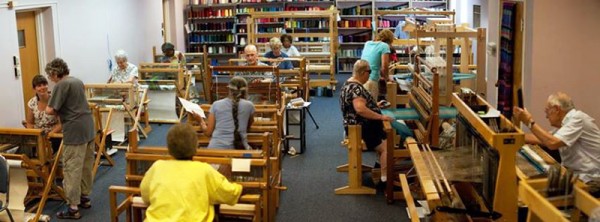
  • Hartford Artisans Weaving Center’s (Hartford - Crafts Finalist) mission is to promote the craft of hand weaving in a supportive and creative community to individuals with low or no vision or senior in age. People may enroll in the program to get out of the house, to learn a new craft, or to earn extra income; however, “they find far more at our center. They form social bonds, dispelling the loneliness and isolation so common among sight-impaired, blind, and/or senior people,” the website points out.

OLYMPUS DIGITAL CAMERA

Creative entrepreneurs and small business owners were encouraged to enter the Martha Stewart American Made Choice competition. From all the published nominees, up to 1,000 finalists have been selected to compete for the American Made Awards across the categories of crafts, design, food, and style. Of these finalists, up to 500 will be handpicked by a panel of judges. From the entire pool of finalists, one winner will be selected. Voting ends on October 19, 2015 at midnight.  The Audience Choice Award Winner will be announced on or about October 23, 2015.

American Made “spotlights the maker, supports the local, and celebrates the handmade,” according to the competition’s website.  The program is made up of people and communities that have “turned their passion for quality craftsmanship and well-designed goods into a way of life.” The categories are Crafts, Design, Food and Style.

Martha Stewart and the executive editorial team of Martha Stewart Living will serve as category judges and oversee the selection process of the finalists. The judges will base their selections on the following criteria: Innovativeness, demonstrated creativity, and originality of idea; workmanship; appearance; and embodiment of an American made theme.

https://youtu.be/9i56efixOLY

https://youtu.be/jadOiFFFA5Q

Aurora Foundation Grants Focus on College Preparedness, College Completion for Region's Girls

The Aurora Foundation, which supports women and girls in Greater Hartford, has awarded a $20,000 grant to Trinity College and four partner organizations to launch Free to Succeed, a pilot program designed to increase higher education opportunities for women being released from prison in Connecticut.  The grant is the largest among ten grants, focused on college preparation and college completion, being provided to ten organizations, totaling $92,000. By forging a collaborative initiative, the Trinity Prison Seminar Series, Capital Community College (CCC), Manchester Community College (MCC), Community Partners in Action, and Judy Dworin Performance Project have created a program providing accessible college-level course offerings, advising, arts engagement, and mentoring for female inmates at York Correctional Institution (YCI), the state’s only prison for women, and pivotal support services after their release to expedite enrollment in associate degree programs at CCC and MCC.aurora_logo_new2

At Trinity, Judy Dworin, professor of theater and dance, emerita, and Sheila Fisher, professor of English and coordinator of the Trinity Prison Seminar Series, were instrumental in developing Free to Succeed, the goal of which is to ensure that participating women, who begin taking college classes while still incarcerated, are able to complete an associate’s degree upon release.

Since 2005, Dworin’s nonprofit organization, Judy Dworin Performance Project (JDPP), has offered comprehensive arts outreach programs for women, children, and families affected by incarceration. The Trinity Prison Seminar Series (TPSS), since 2012, has provided post-secondary credit-bearing courses for women incarcerated at YCI. Prison education outreach efforts at Trinity College provide educational opportunities for Trinity undergraduates to investigate critical issues concerning the correctional system through reading and discussion, as well as through field study.

The Aurora Foundation will also be providing a $15,000 grant to the University of Saint Joseph (USJ) for a new initiative, Inspiring College Readiness &aurora Increasing College Retention for Minority Women in the Greater Hartford area. This new program will provide a stipend for USJ Latina students to complete an internship at either the Connecticut Department of Children and Families or the USJ Gengras Center. It will also provide inspiration to Bulkeley high school girls to hear from the USJ students about exploring careers and remaining in school.
The Urban League of Greater Hartford’s Project Ready College Success Program, GO, GIRLS! leverages an existing program and will pilot its first minority female cohort. This program, which also is to receive a $10,000 grant from Aurora Foundation, “has the potential for being a model to replicate at other Urban Leagues.,” according to the Foundation. The grant will enhance and expand its existing program designed to provide college preparation and retention services to at-risk minority females to increase the likelihood that they will enroll in and succeed in attaining college degrees.

The Women in Transition (WIT) program at Charter Oak State College is an initiative that provides the opportunity for single, underemployed and underserved mothers to earn a college degree on-line. A $10,000 grant from Aurora Foundation will cover the cost of tuition and fees, books and internet service. The Women in Transition Program was established in 1999 by the former President of Charter Oak State College, Dr. Merle Harris.

The Aurora Foundation, which partnered with the Farmington Bank Community Foundation to support Free to Succeed, is currently focusing strategic grant making and community initiatives in the areas of college readiness and retention, based on findings from the organization’s 2014 Aurora Report indicating that college completion is critical to a woman’s economic stability and well-being, as well as that of her family.  Grants are also being provided to the University of Hartford’s Women’s Advancement Initiative, the Hartford region YWCA, Grace Academy, Goodwin College’s Women Investing in Secure Education (WISE) program, and the Boys & Girls Club of Hartford.

The organization’s website stresses that “As we move into our planning for the 2016 grants cycle, we will be increasingly focused on partnering with organizations with programs proven to help females complete their college education, knowing how important a post-secondary degree is to economic self-sufficiency that women seek for themselves and their families.”

Trinity College President Joanne Berger-Sweeney will be the keynote speaker at the foundation’s 10th Annual Signature Breakfast on October 16.  The theme is “Driving Change for Women.”

Shelton's Wiffle Ball Being Pitched for National Toy Hall of Fame

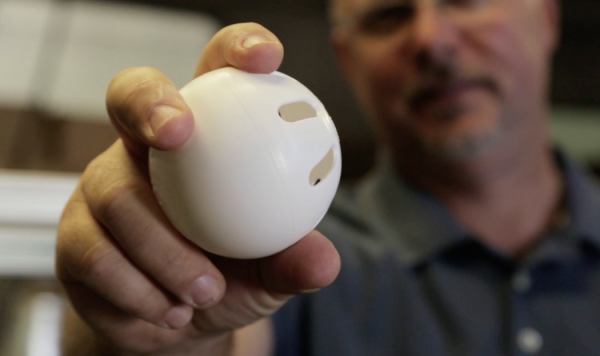
A Connecticut native is being considered for induction into the National Toy Hall of Fame.  The Strong National Museum of Play in Rochester, N.Y. has announced its twelve finalists for this year's induction into the National Toy Hall of Fame, and the Wiffle Ball – invented and still manufactured in Connecticut - is among them.Screen-Shot-2015-09-17-at-11.10.28-AM-1050x623 It all began in the summer of 1953, when David N. Mullany, grandfather of the current company owners (brothers David and Stephen) was watching his 12 year old son and a friend play a game in their backyard in Fairfield, using a perforated plastic golf ball and a broomstick handle. They had given up on baseball and softball - not enough players for two teams, not enough space for a field, and too many broken windows.


After some trial and error, the wiffle ball was invented, and the rest is history – perhaps Hall of Fame worthy history. Even with the abundance of toys and rapidly expanding new technology available to today’s youth, the Wiffle Ball business remains strong, with millions manufactured in Shelton and distributed world-wide every year.wiffle

The competition is tough, including favorites from more recent decades and some with origin generations ago.  Among the other toy finalists for 2015: American Girl dolls, Battleship, coloring book, Jenga, PLAYMOBIL, puppet, scooter, Super Soaker, Teenage Mutant Ninja Turtles, top, and Twister. Only two of these iconic toys will be inducted into the Hall of Fame. The finalists are chosen by historians and curators at The Strong. From there, a national panel of judges made up of inventors, educators, psychologists and others choose the winners.

strongEstablished in 1998, the National Toy Hall of Fame serves to recognize toys that have stood the test of time, remaining popular with kids generation after generation. The 12 toys are chosen on the advice of an advisory committee, and the winner will be announced at the Strong Museum in Rochester next month - on Thursday, November 5 at 10:30 a.m.

Inducted toys are selected on the basis of the following criteria:

  1. Icon-status: The toy is widely recognized, respected, and remembered.
  2. Longevity: The toy is more than a passing fad and has enjoyed popularity over multiple generations.
  3. Discovery: The toy fosters learning, creativity, or discovery through play.
  4. Innovation: The toy profoundly changed play or toy design. A toy may be inducted on the basis of this criterion without necessarily having met all of the first three.

If the Wiffle Ball wins, it will join toys such as bubbles, Candy Land, checkers, Crayola Crayon, Mr. Potato Head, Barbie, Monopoly, Easy-Bake Oven, G.I. Joe, the Frisbee, View-Master and Hot Wheels, just to name some of the 56 toys that have been inducted so far.  Last year’s selections were the Rubik's Cube, bubbles and Little Green Army Men.  The previous year, Chess and the Rubber Duck were inducted.

The Strong Museum is also running an internet-based poll asking viewers to select their preferred toy.  (One vote permitted every day.)   With 4,500 votes cast as of this week, the Whiffle Ball is in the lead among the 12 finalists, with 854 votes, about 18 percent of the total votes cast; followed by the puppet, the coloring book and Teenage Mutant Ninja Turtles.

https://youtu.be/iPrFiBxCX-s

Building Police-Community Connections As Diversity Lags in Hartford

When Governing magazine examined the diversity within local police departments, compared with the communities they serve, Hartford was among the ten cities with the largest disparity.  But two recent programs that have also received national attention underscore the city’s efforts to strengthen relationships between police and the community. The data indicated that Hartford’s police department was 35.3 percent minority, in a city where the population is 84.1 percent minority.  That was the 7th largest gap in the nation, after Fontana, CA; Edison, NJ; Irving, TX; Grand Prairie TX; Daly City, CA; and Allentown, PA.  Using 2013 data, Governing reviewed 269 local police agencies across the country.

The article points out that “although no national standards regarding diversity levels exist, the Commission on Accreditation for Law Enforcement Agencies does require accredited agencies to adopt steps to ensure their workforce mirrors their communities.”  It also indicates that “law enforcement experts emphasize that mending fractured relationships with communities takes much more than merely a diverse force.”hartfordltc1

Two locally developed programs, one at the Hartford Public Library (HPL) and the other at the Charter Oak Cultural Center, are working at building police-community relationships.

HPL is one of 10 public libraries in the U.S. that have been participating in the American Library Association’s Libraries Transforming Communities (LTC) initiative since April 2014. The initiative, in collaboration with the nonprofit Harwood Institute for Public Innovation, is an 18-month community engagement training program where libraries learn how to address challenges facing their community.

Hartford’s work was recently featured on the national website of the American Library Association.Week-3-boy-teaching-HPD1-e1435857651518

Through eight community conversations in Hartford’s North End neighborhood, HPL found that residents’ main concerns were public safety, community violence, and their relationship with the police. In response, a three-session community dialogue on public safety with police and community members was held, led by HPL community engagement director Richard Frieder.  Participants ranged in age from 18 to 87.

During the three sessions, according to published reports, the groups got to know each other; talked about what makes a good neighborhood and what they liked about theirs, what they would like to change, how safe community members feel, and what they believed the residents’ and police officers’ roles were in making the community safe; and figured out how to take action and solve the problems.

Some of the ideas generated include having the police and the community members participate in more activities and learning experiences together, such as block parties and community theater, where they address these issues.  Even though the 18-month project officially ends this month, HPL’s staff hopes to sustain the values and goals they developed.

3958730264_662fc1b23f_zAt the same time, another initiative in the city was taking root – one which soon reached the pages of The New York Times and the attention of the White House.

The Charter Oak Cultural Center’s Good Vibrations program began with a conversation between Hartford’s police chief, James Rovella, and the Center’s director, Rabbi Donna Berman.  The innovative program, which began earlier this year, sought to pair middle school age students who were at a crossroads in their lives with Hartford police officers to inspire and inform the youths involved as well as helping to change the community's negative perception of police officers.  Nearly two dozen students – and police officers – collaborate on musical instruments, and in composing rap lyrics.  The relationships built, and music made, has been described as transformative. Good Vibrations includes two free courses; a Rap Poetry/CD production class, and a guitar class. All the materials are free, including the guitars, which students get to keep.

white hosueLast month, a Hartford police officer and a seventh-grader who participate in the program were honored at the White House as "Champions of Change" for their role in helping to build "bridges between youth and law enforcement, while improving public safety," according to the White House. "During the three-and-a-half month program, officers and youth helped to lift the negative stigma between police and youth through open discussions about racism, crime, government, and family."

One participating middle-schooler told the Times: “I thought police officers were just to catch bad guys and be in a bad tone. But these guys are awesome. They’re always in a good tone with us. They play with us. They tag along in our jokes. They do stuff with us. They help us. They give us advice and everything.”


CT Ranks 14th in Percentage of Women in State Legislature, As Numbers Stagnate Here and Nationwide

For two decades, it has been one step forward, one step back in efforts to expand the number of women serving in state legislatures around the county.  That is true as well in Connecticut, where in recent years the number of women in the Connecticut General Assembly has receded slightly. Connecticut’s legislators include 53 women – 44 House members and 9 Senate members, who make up 29 percent of the General Assembly’s membership.  That is a decline from 59 women, or 31 percent, as recently as 2009. Women currently comprise 25 percent of the State Senate and 30 percent of the House of Representatives, according to the Permanent Commission on the Status of Women.   That number places Connecticut 14th among the states in 2015 for the percentage of women members in the legislature, tied with Alaska. 1017-Women-in-Politics-badge_200x200

The latest issue of Governing magazine indicates that “women have held less than 25 percent of all state legislative seats for years. But both parties are trying to recruit more female candidates.”  Women make up about a third of Democratic legislators nationwide, but less than a fifth of Republicans. Of the 1,793 women currently serving as legislators right now, 60 percent are Democratic.

A 2013 report from American University indicates that women are less likely to seek political office than men, even if they have similar resumes. Women who are elected, however, are far more likely than men to have participated in a training program, according to Debbie Walsh, director of the Center for American Women in Politics at Rutgers University.CT-House-300x199

"Women do need to be recruited more than men," she told Governing. "In our surveys, men were much more likely to say it was largely their own idea, that nobody had to ask them."

According to the National Conference of State Legislatures (NCSL), 24.4 percent of state legislators in the United States this year are women.  That is almost identical to 24.2 percent in 2014 – and the 24.2 percent back in 2009. That year, NCSL pointed out that the ratio of women “has increased by less than 4 percentage points over the past fifteen years.”

The leading states are Colorado, where 42 percent of the legislators are women, followed by Vermont, at 40.6 percent, Arizona at 35.6 percent, and three states tied at one-third of the legislature (33.3 percent) – Washington, Minnesota and Nevada.   At the bottom of the rankings are Louisiana, 11.8%, Wyoming, 13.3%, South Carolina, 13.5%, and Alabama, 14.3%.

States with the most women elected to the state legislature:CT-Senate-300x197

  1. Colorado      42%
  2. Vermont      40.6%
  3. Arizona         35.6%
  4. Washington  33.3%
  5. Minnesota 33.3%
  6. Nevada        33.3%
  7. Montana     31.3%
  8. Oregon          31.1%
  9. Illinois            31.1%
  10. New Jersey     30%
  11. New Hampshire 29%
  12. Maine                    29%
  13. Hawaii                 28.9%
  14. Connecticut      28.3%

Medical Device Tax Seen as Inhibitor to Innovation, Repeal Sought

Emerging technologies that can develop breakthrough medical devices are at the intersection of innovation and tax policy, and a growing list of businesses and organizations are urging Congress to repeal a tax, instituted as part of the Affordable Care Act, that they say is harmful to industries with the potential to improve lives and boost local economies.  The issue has particular resonance in Connecticut, where efforts to grow technology, precision manufacturing and the medical and pharmaceutical industries have accelerated in recent years. tech Medical technology creates more than two million jobs directly and indirectly across the United States. The industry is one of the few U.S. manufacturing sectors that is a net exporter, and its innovations help reduce the human and economic burden of chronic disease.  Industry officials point out that while U.S. leads the world in the development of new medical technology, the device tax “threatens that leadership.”


Earlier this year, a bipartisan majority of the U.S. House of Representatives voted to repeal the medical device tax.  The fate of the proposal in the Senate is unclear.  A growing coalition of research advocates, disability rights leaders, patient groups and others support repeal of the device tax because, they say, it drains critical resources away medical innovation.  According to a 2015 study by opponents of the tax, two-thirds of med-tech companies that were surveyed said they had to either slow or halt job growth at their companies because of the medical device tax.backpain_skeleton-165x300

Between 2002 and 2012, the number of jobs in the Medical Equipment and Supplies Manufacturing industry in Connecticut increased by 10.75 percent, with the addition of about 700 jobs, according to the Connecticut Economic Resource Center (CERC).  CERC’s research indicated that jobs in the field were almost twice as concentrated in Connecticut in comparison to the United States, with average wages above the national average, with more than 150 companies in the medical equipment and supplies manufacturing business.

Connecticut’s medical device industry continues to see new entries.  Just two years ago, a company launched by a 2011 UConn graduate, Orthozon Technologies, received local notice for its newly developed “minimally invasive tool for spine surgeons,” which led to the company’s quickly “gaining momentum in the medical device field,” the Fairfield County Business Journal reported that year.

The Stamford-based company’s Lumiere™ is a state-of-the-art minimally invasive surgical retractor that provides “access and visibility for physicians as well as faster and less painful recovery time for patients,” according to the company website.  Utilizing a patented technology with powerful unobstructed fiber optic lighting, translucent retractor blades, full medial access, and an expandable field of view, the medical device provides surgeons with a tool “for quicker and more efficient spinal decompressions.”

Earlier this month, when the state’s fastest growing technology firms were honored at the 2015 Marcum Tech Top 40, in partnership with the Connecticut Technology Council, medical devices were among the technologies highlighted. chart

One of the leading categories included “Medical Devices companies manufacturing medical instruments and devices including medical diagnostic equipment (X-ray, CAT scan, MRI), medical therapeutic devices (drug delivery, surgical instruments, pacemakers, artificial organs), and other health related products such as medical monitoring equipment and handicap aids.”

Among the companies selected was Guilford-based Bio-Med Devices, which designs, manufactures, and markets a complete line of critical care and transportable respirators/ventilators, air - oxygen blenders, ventilation monitors,  disposable and reusable breathing circuits, and accessories.

Connecticut Innovations. The state’s leading source of financing and ongoing support for Connecticut’s innovative, growing companies, highlights six Connecticut companies in the medical device industry within its investment portfolio, with some investments dating back to 2007.

Nationwide, an aging population, people with disabilities living longer lives, and chronic disease rates growing at faster rates, lead advocates of repeal say now is the time for more—not less—resources to advance cures and treatments that help people live longer and healthier lives.  The industry survey indicated that 85 percent of respondents plan to reinstate forgone R&D projects if the tax is repealed.

https://youtu.be/uqTdNffOaas

Connecticut's Top 40 Technology Companies Earn Recognition for Growth

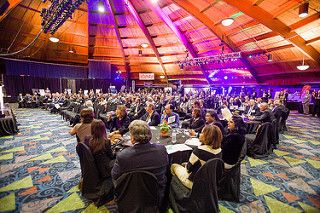
Connecticut's fastest growing technology company didn't exist a decade ago.  The overall 2015 winner in the annual tech competition  is New Haven-based Continuity, a software provider that delivers technology solutions that automate compliance management for financial institutions. Continuity led this year's companies with revenue growth of 1,142 percent since 2011. The relatively young company was founded in 2007 and is led by Andrew Greenawalt, its CEO and co-founder. The winners of the 2015 Marcum Tech Top 40, an annual awards program recognizing the fastest growing technology companies in Connecticut, were announced this month by Marcum LLP and the Connecticut Technology Council. Other 2015 category winners are:ContinuityLogo

  • Revolution Lighting Technologies Inc., Stamford (Advanced Manufacturing)
  • FuelCell Energy, Inc., Danbury (Energy/Environmental Technologies)
  • Alexion Pharmaceuticals, Inc., Cheshire (Life Sciences)
  • iSend, LLC, Middlebury (New Media/Internet/Telecom)
  • Datto, Inc., Norwalk (IT Services)

state-techThe Marcum Tech Top 40, now in its 8th year, recognizes technology companies with at least $3 million in annual revenue and a four-year record of growth, in six industry sectors. Both privately held and publicly traded companies are eligible.  This year, 14 were publicly traded; 26 were privately held.
Some of the companies named are familiar to state residents or the state's business community, others are less widely known.  Many are within just a handful of years from launch, others are longstanding industry leaders.  For top-ranked Continuity, it is Greenawalt's second go-around with a Tech Top 40 company, having been a founder of 2008-2011 finalist Perimeter eSecurity (now SilverSky).

"The annual Marcum Tech Top 40 is a highlight of the year for our national High Technology Services Group and our New England region, in particular," said Anthony P. Scillia, partner-in-charge, Marcum New England. "As always, the technology companies being honored this year are true innovators that provide a model of business success in an increasingly complex market environment. Marcum is extremely proud to partner with the Connecticut Technology Council on this outstanding program and enthusiastically congratulates all the finalists and category winners."connecticut-technology-council

"Technology companies are challenged by a shared set of obstacles ranging from capital-raising and complex revenue reporting to intellectual property management and international expansion. The 2015 Marcum Tech Top 40 finalists and winners are best-in-class by all of these measures," said Michael Brooder, partner-in-charge of Marcum's Hartford office.

New Haven and Fairfield counties appear to be the state's center-of-the-tech universe, as each county had 14 winners; Hartford County had eight and Litchfield, Middlesex and New London counties had one each. (One company withdrew during the selection process.)

Bruce Carlson, CTC's President & CEO, said, "Each year, at the Marcum Tech Top 40 event we are reminded that technology companies are thriving in Connecticut. We need to support these companies and the others that are in the growth pipeline in order for Connecticut to achieve the job creation and economic growth we are all striving for. The CTC will continue to advocate for policies and programs that will help our technology community."

2015 Marcum Tech Top 40 Companies by Industry Category  (Company Name, Category, City)21165475734_60feac0c90_n

  • Amphenol Corporation, Advanced Manufacturing, Wallingford, 
  • APS Technology, Advanced Manufacturing, Wallingford
  • Barnes Group Inc., Advanced Manufacturing, Bristol
  • Dymax Corporation, Advanced Manufacturing, Torrington
  • Harman International Industries, Inc., Advanced Manufacturing, Stamford
  • Hexcel Corporation, Advanced Manufacturing, Stamford
  • RBC Bearings Inc, Advanced Manufacturing, Oxford, New Haven
  • Revolution Lighting Technologies, Inc., Advanced Manufacturing, Stamford
  • FuelCell Energy, Inc., Energy / Environmental / Green Technology, Danbury
  • Proton OnSite, Energy / Environmental / Green Technology, Wallingford
  • F3 Technology Partners, IT Services, West Hartford
  • Gartner, Inc., IT Services, Stamford
  • MResult Corporation, IT Services,
  • SAI Systems International, Inc., IT Services, Shelton
  • Southridge Technology Grp, LLC, IT Services, Brookfield
  • The Network Support Co., IT Services, Danbury
  • VLink, Inc., IT Services, South Windsor
  • Alexion Pharmaceuticals, Inc., Life Sciences, Cheshire
  • Protein Sciences Corporation, Life Sciences, Meriden
  • Metrum Research Group, Life Sciences, Tariffville (Simsbury)
  • Bio-Med Devices, Life Sciences, Guilford
  • Chief Executive Group, LLC, New Media / Internet / Telecom, Greenwich
  • HealthPlanOne, LLC, New Media / Internet / Telecom, Trumbull
  • iSend, LLC, New Media / Internet / Telecom, Middlebury
  • M2 Media Group, New Media / Internet / Telecom, Stamford
  • Priceline Group Inc., New Media / Internet / Telecom, Norwalk
  • Reality Interactive, New Media / Internet / Telecom, Middletown
  • TVEyes Inc., New Media / Internet / Telecom, Fairfield
  • Clarity Software Solutions, Inc., Software, Madison
  • Continuity, Software, New Haven
  • Core Informatics, Software, Branford
  • Datto, Software, Norwalk, Fairfield
  • Evariant, Software, Farmington
  • Higher One Holdings, Inc., Software, New Haven, 
  • Insurity, Software, Hartford
  • Shoptech Software Corporation, Software, Glastonbury, Hartford
  • Square 9 Softworks, Software, New Haven, New Haven
  • SS&C Technologies, Software, Windsor, Hartford
  • Tangoe, Inc., Software, Orange, New Haven


Early Childhood Data Aims to Helps Pre-K Learners in Hartford, West Hartford Neighborhoods

Long before a child steps into a Kindergarten classroom, they are getting ready for school. How ready they are on day one, and how local policies can influence that preparedness, is the focus of an initiative in Greater Hartford that has proven to be successful in communities around the world. In partnership with the public school districts and municipal leadership of Hartford and West Hartford, the Hartford Foundation for Public Giving is piloting the use of the Early Development Instrument (EDI) to gauge the learning readiness of incoming Kindergarteners from different neighborhoods.

photoRecognizing that families and caregivers are the first teachers— and homes and neighborhoods are the first learning environments – the EDI process strives to discern what works best.  The EDI is an assessment that provides population-level data by neighborhood on school readiness, and has been used in over 40 communities in the United States and extensively internationally.

“Positive relationships and supportive environments guide a young child’s development and provide the foundation for future learning and well-being,” said Richard Sussman, director of Early Childhood Investments at the Hartford Foundation for Public Giving. “While the EDI provides important data, the most impactful aspect of this project is the collective action strategy which encourages parents, residents, and communities to use data to make positive changes to support young chilteccs-logo-web21dren and families in their neighborhoods.”

Last year, after students had been in class for at least three months, Kindergarten teachers in Hartford, West Hartford, and Jumoke Academy filled out a comprehensive questionnaire regarding the social competence; emotional maturity; language and cognitive skills; physical health and well-being; and communication skills of each of their students.  Approximately 2500 kindergarten students were included, representing about 85 percent of the kindergarten-age population of Hartford and West Hartford.

EDI looks at the whole population of children in a neighborhood; it is not a diagnostic tool for individual children or a means to evaluate individual teachers or programs. The process enables local leaders to develop customized solutions designed specifically for their communities. It identifies obstacles facing children in individual neighborhoods and builds improvement strategies around resources that already exist, officials point out.

The Hartford Foundation worked in partnership with Trinity College’s Cities and Suburbs and Schools Project, the Connecticut Data Collaborative, and the University of Connecticut’s Mapping and Geographic Information Center (MAGIC) to analyze and visualize the data to help communities examine outcomes in the context of neighborhoods, socioeconomic and community resources. This information can be accessed by logging on to edi.ctdata.org.

It is hoped that this work will be shared broadly with key stakeholders in the community including local municipal officials to create dialogue that focuses on using limited resources more effectively to support young children and families.edi-logo

The Foundation has trained community residents and community-based organizations in Hartford to interpret the EDI data and lead discussions in Hartford neighborhood. Several parent-led “community cafés” focused on analyzing neighborhood data have already taken place with a half dozen additional  cafés and follow-up meetings scheduled, to take closer looks at specific data and steps to improve outcomes for young children. 

The Hartford Foundation has developed a brochure in English and Spanish for local residents that explains the background, purpose and methodology of the Early Development Instrument. This brochure can be downloaded at hfpg.org.  At present, over 40 communities nationwide work with UCLA on the EDI project and the university center works with its international colleagues in Canada, Australia, and the United Kingdom where the instrument is used widely.

The Hartford Foundatiblok 2on for Public Giving is the community foundation for Hartford and 28 surrounding communities. In 2015, the Foundation marks ninety years of grant making in the Greater Hartford region, made possible by the gifts of generous individuals, families and organizations. It has awarded grants of more than $620 million since its founding in 1925.