Charter Oak to Offer College Credit for Completed MOOCs
/One of the leading unanswered questions in higher education globally is how MOOCs – Massive Open Online Courses – will evolve in the coming years. Those college-level courses, delivered on-line and offered by some of the top institutions in the U.S. and around the world, are open to anyone, without charge, but also without college credit. Tens of thousands of people have taken courses, but turning those courses into college credits that could lead to a degree has been largely absent from the higher education equation.
Now, Connecticut’s Charter Oak State College is setting out to change that.
Connecticut’s public online college has announced that it will award credit for select online courses taken through the edX.org platform, one of the most popular MOOC programs. edX participating institutions include Harvard, MIT, CalTech, University of Texas System, University of California – Berkley, Davidson, Dartmouth, Princeton, University of Pennsylvania and University of Chicago.
Founded by Harvard University and MIT in 2012, edX offers “high-quality courses from the world’s best universities and institutions to learners everywhere.” According to the edX website, the organization was “founded by and continue to be governed by colleges and universities,” and is “the only leading MOOC provider that is both nonprofit and open source.”
This collaboration creates the potential for edX learners to earn college credit for those courses reviewed and approved by Charter Oak’s Connecticut Credit Assessment Program (CCAP). Ed Klonoski, President, Charter Oak State College said, “For Charter Oak, evaluating prior learning for college credit is what we were created to do. Now, we have the opportunity to partner with a worldwide leader in online learning, edX, to award college credit for successful completion of select courses.”
“We are pleased to offer a new pathway to college credit through this collaboration with Charter Oak State College,” said Anant Agarwal, edX CEO and MIT Professor. “EdX learners around the world will now be able to earn credit for their hard work and success in MOOCs, offering an opportunity to many who would otherwise never have access to high-quality education and credit.”
The edX website indicates the MOOCs are offered by 85 global partners, and 580,000 course completion certificates have been issued in just the past few years.
The first two edX courses Charter Oak will offer credit for are open for enrollment now, www.edx.org/charter-oak , and begin in January. They include MITx’s Introduction to Computer Science and Programming Using Python beginning January 13, and UC BerkeleyX’s Engineering Software as a Service (SaaS) Part 2 beginning January 11. Learners can earn three lower level college credits from Charter Oak for the successful completion of the MITx course, and two upper level credits from Charter Oak for the UC BerkeleyX course.
Additional edX courses continue to be reviewed for credit, and will be included in the program in the coming weeks and months, officials indicated.
Klonoski added, ““This partnership reflects our mission of using non-traditional means to speed adults toward the completion of their college degrees in a cost effective manner. It is another innovative strategy for us to increase enrollment and support our sustainability by providing an outstanding value to students. The total cost to students of the course and credit is approximately $350.”
Officials highlighted the benefits for edX learners:
- Course credit for open online courses – Charter Oak provides a pathway for learners to earn accredited college credit for knowledge learned through MOOCs.
- Cost Effective – students earn affordable college credit that can then be applied to credentials, continuing ed credits, or completion of a college degree.
- Learn before payment - students learn now and decide to pay later for college credit. This provides qualified students with a pathway for academic exploration who may otherwise not seek college credit.
- Unlimited Reach – an unlimited number of students worldwide can study and receive college credit without any barriers of scaling up.
- Eliminates Barriers to Admission – students can study and earn credit, sidestepping the process of applications, application fees and transcript requests.

Participating students in the new initiative will first enroll as a verified student on edX.org in a course that Charter Oak State College has reviewed and approved for credit. Students then take the course through the edX.org platform. Students have the ability to check at any time as they progress through the course as to whether they have met the requirements for credit.
Once credit eligibility has been attained, a message appears on the student’s dashboard and they are sent an email. Students can then complete the request for credit from Charter Oak and fee payment on the edX site. Students then confirm their credit request with Charter Oak State College, and will then have credit on a Charter Oak State College transcript that can be used to meet continuing education, professional certification or degree requirements at other institutions or at Charter Oak State College.
Founded in 1973, Charter Oak State College (www.CharterOak.edu) is Connecticut’s only public online college. Charter Oak students complete degrees through online courses and alternative approaches to earning credit. Charter Oak is accredited by the New England Association of Schools and Colleges and governed by Connecticut’s Board of Regents for Higher Education.
 In Connecticut there are 4,071 children in foster care, with 74 percent in family placement and 24 percent in non-family placement, exceeding the national average, according to the report. That compares with 84 percent in family placement and 14 percent in non-family placement, nationally. Only Colorado (35%), Rhode Island (28%) and West Virginia and Wyoming (27%), had a higher percentage of foster children than Connecticut in a non-family placement.
 Among the report’s findings across the United States:

 locations in the United States to offer Aer Lingus flights to Ireland. The daily service will include one evening departure from Bradley and one afternoon departure from Dublin. Published
  The demolition of the half-century old Terminal B is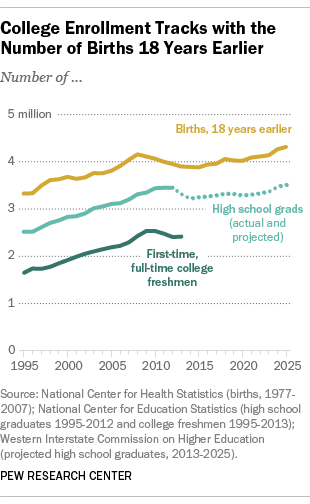

 "The Connecticut Council for Philanthropy along with other funding partners invested in the first ever statewide Community Wellbeing Survey, a scientific survey of the state’s entire adult population that will provide timely, powerful knowledge about our communities and enable us to better know the people and places we care about,” added Maggie Osborn, President of the Connecticut Council for Philanthropy.



 No state has a higher opinion of its two senators than Vermont. Sanders’s colleague, Patrick Leahy (D), the longest-serving member of the Senate, begins his campaign for re-election with a 71 percent approval rating, the fourth-highest job performance mark in the Senate.
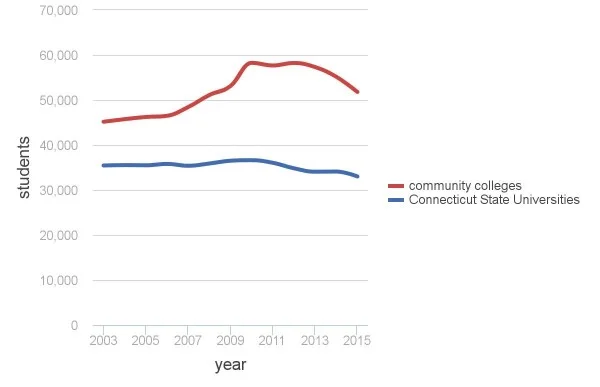
 in 1997. At that time, the college had approximately 2,700 students enrolled and immediately experienced a significant enrollment increase, according to the college. But the peak years now appear to be in the rear view mirror.
 The APNA Annual Conference delivers more than 100 varied educational sessions and invaluable networking opportunities to the more than a thousand psychiatric-mental health RNs and APRNs who attend each year. The organization has more than 10,000 members nationwide.
 In Florida last month, more than 1,800 attendees were on hand for a program “packed with psychiatric-mental networking, updates, and continuing education targeted to psychiatric-mental health nurses.” Session recordings from the Annual Conferences are made available in the APNA eLearning Center in podcast form, along with up-to-date session slides and other relevant materials.
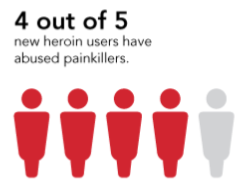
 In Connecticut, the average rate between 1999 and 2001 was 4.1 per 100,000. Between 2010 and 2013, the drug overdose rate had risen to 8.3, above the national aver
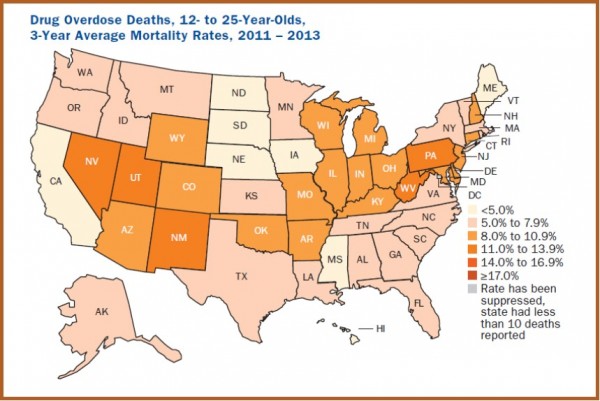 age but unchanged from a previous three-year period, 2005-2007. The data was compiled from the Centers for Disease Control and Prevention. Males are 2.5 times as likely to overdose as females (10.4 vs. 4.1 per 100,000), according to the report.
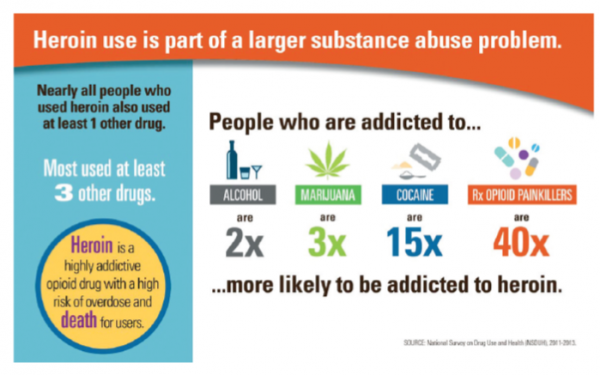 s to help practitioners identify potential abuse that leads to over prescribing by requiring them to check patient history to verify if patients seeking certain prescriptions have recently received these medications from multiple other prescribers or pharmacists.