Bullying Is Parents Top Concern, Depression Next

Across the country, parents with children under age 18 are most concerned about their child being bullied, with 6 in 10 expressing that concern.  The next most prevalent concern – expressed by a majority of those surveyed by the Pew Research Center – is that their child will struggle with anxiety or depression.  Fifty-four percent have that concern. Noting that comprehensive statistics on bullying are difficult to obtain, Pew referenced the 2013 Youth Risk Behavior Study (which covered only high-school students) finding that 19.6 percent had been bullied on school property in the previous 12 months, and 14.8 percent had been electronically bullied. In both cases, white teens and female teens were more likely to say they’d been bullied.FT_16.01.05_parentalConcerns

Connecticut’s statistics were higher than the national average in both categories.

In the 2012-13 school year, there were more than 1,400 incidents which an investigation was conducted and active bullying was concluded to have occurred, according to the state Department of Education.  The most recent data posted on the department’s website indicates that “21.9% of Connecticut students had been bullied on school property. Nationwide, the rate is 19.6%. In Connecticut, the prevalence of having been bullied on school property is significantly higher among females (26.1%) than among males (17.9%). The prevalence of having been bullied on school property is significantly higher in grade 11 among students in CT (22.8%) than in the US (16.8%).”

The Youth Risk Behavior Study also indicated that 17.5% of Connecticut students had been electronically bullied. Nationwide, the rate is 14.8%, according to the study report.youth risk report CT

Earlier this month, the parents of a high school freshman in Westport who died last month asked the local Superintendent of Schools to investigate reports that their son may have been the target of bullying and the nature of widespread social-media comments about his death among students.

In a letter to school officials, the parents wrote: “several current Staples High School students have reported observing bullying, humiliating or inappropriate behavior by one or more peer or peers toward others, and these students report that they do not know how to respond or intervene. They feel guilty and ashamed of their inaction and passive consent to the blatant behaviors. This is a critical area needed to stop these types of malevolent behaviors.”

Published reports indicate that police have found no evidence of bullying in the student's death.

The likelihood of their child facing anxiety and depression is also of great concern to parents, ranked second-highest in the survey.  About one-in-ten adolescents, or around 2.6 million, have experienced major depression in the past year, according to 2013 data reported by National Institute of Mental Health, the Pew report indicated; for 7.7 percent, their depression caused severe impairment.

Depression was three times as common among teen girls as teen boys (16.2% versus 5.3%). Available data suggest that a quarter of teens have experienced some sort of anxiety disorder (such as phobias, panic disorder or post-traumatic stress disorder) at some point in their lives, according to the National Institute of Mental Health.

The nationwide survey by the Pew Research Center survey also found that the nature of parental concerns varies considerably across demographic groups.  The research found, for example that:

  • low-income parents are more concerned about teen pregnancy and their kids getting in trouble with the law than are higher-income parents.
  • Black parents are more likely than white parents to worry about their children being shot, while white parents are more likely than black parents to worry tFT_15.12.21_parentalConcerns_shoothat their children will struggle with anxiety or depression.
  • Hispanic parents worry more than black or white parents in all eight areas of concern, from being bullied to having problems with drugs or alcohol

Pew Research Center points out that in 2014, the rate of firearm deaths for black youths was 4.26 per 100,000, almost three times the rate for white youths and nearly four times the rate for Hispanic youths. Hospital emergency departments, from which the Centers for Disease Control and Prevention gathers its injury data, don’t always obtain information on race and ethnicity for their patients, the report noted. But based on the 80 percent or so of nonfatal firearm injury cases involving juveniles in 2013 for which race and ethnicity data are available, the disparity among different subpopulations was stark: 1.68 per 100,000 for white youths, 5.3 per 100,000 for Hispanic youths and 24.67 per 100,000 for black youths, the Pew report indicated.

The report also indicated that every state in the nation, as well as the District of Columbia, has a lower teen birthrate than it did in the early 1990s. The birthrate for 15- to 19-year-olds (the metric tracked by federal researchers) has been dropping for decades, Pew pointed out, and hit a record low in 2014. There were just 24.2 births per 1,000 teen females that year, compared with 61.8 per 1,000 in 1991 and 41.5 as recently as 2007.


Rockies, Yard Goats Extend Relationship; Among Top 10 Farm Systems in MLB

When the Hartford Yard Goats take up residence at the new Dunkin’ Donuts Park later this spring, they will continue to be a Double-A farm team of the National League’s Colorado Rockies, which run one of major league baseball’s top 10 farm systems, according to a pre-season analysis  by the website minorleagueball.com. At the top of the rankings – the “elite” organizations – are the Chicago Cubs, Boston Red Sox, Minnesota Twins, Los Angeles Dodgers and Texas Rangers.  The next five, described as organizations that “should be considered very productive with a chance to move into the top group soon,” include the New York Mets, Pittsburgh Pirates, Toronto Blue Jays, Colorado Rockies and Houston Astros.  The New York Yankees farm system was ranked at #13. Primary_Logo_for_the_Hartford_Yard_Goats

The Hartford Yard Goats Double-A baseball club will launch its inaugural season at home in Hartford on May 31, a delayed opening due to stadium-construction delays.  The team will begin its season playing on the road in April and May.  The Yard Goats will play the Boston Red Sox affiliate Portland Seadogs in June and July of 2016, the New York Yankees affiliate Trenton Thunder in August, and the Binghamton Mets in July and August.

When they finally arrive home, it appears that the Rockies-Yard Goats relationship will not be short-lived.  This week, the Colorado Rockies announced a player-development contract extension for another two years with the Hartford Yard Goats. It will keep the two teams together through the 2018 season.  The original agreement signed in the fall of 2014 was set to expire at the conclusion of this season.

The Yard Goats recently announced the addition of a third founding sponsor.  Stamford's Frontier Communications, which has expanded its Connecticut telecom offerings through its $2 billion acquisition of AT&T landline assets last year, will pay an undisclosed sum for the right to display its signage inside and outside the $66 million stadium under construction in the Downtown North neighborhood.Colorado_Rockies_logo.svg

The company's name will also be on the Frontier Communications Stadium Club, and the deal includes provision of free Wi-Fi for fans at home games.  Frontier joins founding sponsors Travelers and The Hartford Financial Services Group. In addition, Dunkin' Donuts owns the naming rights to the stadium.

Playing lwpopast season as the New Britain Rock Cats, the team finished with a record of 69-71, a fourth place spot in the six-team Eastern League’s Eastern Division.

The Hartford Yard Goats have also announced that all 142 games (home and away) will be broadcast live on News Talk 1410AM (WPOP) and will be available for fans to listen on iHeartRadio. News Talk 1410AM will serve as the Yard Goats flagship station over the next three seasons, through 2018. Veteran broadcaster Jeff Dooley will be the "Voice of the Yard Goats" and lead play-by-play announcer for the games.

Caregiving Is Critical Issue as "Incredible Demographic Transformation" Continues, Aging Report Stresses

The United States continues to experience “incredible demographic transformation,” according to the Final Report of the White House Conference on Aging (WHCOA), a year-long, nationwide endeavor throughout 2015. In Connecticut, with the nation’s 7th oldest population, input was provided by legislative and executive branch agencies, which held hearings and offered expert testimony from organizations including AARP, the state Department on Aging, Legislative Committee on Aging and Commission on Aging. “No topic attracted more attention in the lead-up and follow-up to the 2015 WHCOA than caregiving. It echoed across all four of the conference issue areas,” the report indicated, referencing the four common themes that emerged as particularly important to older Americans: Retirement Security, Healthy Aging, Long-Term Services and Supports, and Elder Justice.cover  The final report noted the participation, at the Boston Regional Forum, of Connecticut’s Commissioner of the Department of Public Health, Jewel Mullen.

Among the findings in the report, issued by the White House, that will demand the attention of policy makers in the next decade:

  • Over 10,000 baby boomers are turning 65 every day, and the fastest growing demographic in the U.S. is women over age 85. The proportion of older adults representing racial and ethnic minorities is also increasing rapidly.
  • There is a need to break down the silos between housing, transportation, health care, and long-term services and supports in order to support healthy aging. The United States must also take advantage of an “increasing array of web-based technologies, robotics, and mobile devices” that “help older adults access the services they need, stay connected to family and friends, and remain active and independent.”
  • The majority of assistance for older Americans is generally provided at home by informal caregivers, especially family and friends, and are often the “primary lifeline, safety net, and support system for older adults.” Although rewarding, caregiving can be demanding, and “informal caregivers need to be supported and sustained with appropriate resources.”
  • With family structures changing as Americans are having fewer children and increasingly moving away from families of origin, the availability of family members to provide care is diminishing. “Direct care is a demanding profession with low wages, long hours, and limited benefits. It is critical for there to be efforts to recruit and retain a sufficient number of direct-care workers to keep pace with the growing need.”chart

The White House has held a Conference on Aging every decade, beginning in 1961, to identify and advance actions to improve the quality of life of older Americans. In 2015, the United States marked the 50th anniversaries of Medicare, Medicaid, and the Older Americans Act, as well as the 80th anniversary of Social Security. The White House Conference on Aging provided "an opportunity to recognize the importance of these key programs as well as to look ahead to the next decade."

At a public hearing in May at Connecticut's Legislative Office Building, state officials noted that Connecticut is undergoing a “permanent and historic transformation” in its demographics.  Statistics released as part of the WHCOA report echoed that observation.

65-600x249On July 13, 2015, President Obama hosted the sixth White House Conference on Aging, joining older Americans and their families, caregivers, and advocates at the White House and virtually through hundreds of watch parties across the country.

The July event built on a year-long dialogue; the White House Conference on Aging launched a website to share regular updates on its work and solicit public input; engaged with stakeholders in Washington, D.C. and listening sessions throughout the country; developed policy briefs on the emerging themes for the conference and invited public comment and input on them; and hosted regional forums with community leaders and older Americans in Tampa, Florida; Phoenix, Arizona; Seattle, Washington; Cleveland, Ohio; and Boston, Massachusetts.  Additional hearings, including those in Connecticut, were shared with conference officials.  Individuals and groups participated via live webcast in watch parties held in every State and were able to ask questions of panelists and others via Twitter and Facebook.

The Final Report, completed in late December and publicized by the White House this week, now goes to policy makers at the federal and state level to review findings and consider policy actions to respond the critical issues cited as requiring attention.

ph-whcoa-blog-collage


Average Age of Mothers Increasing in CT and Nationwide, Federal Data Reveals

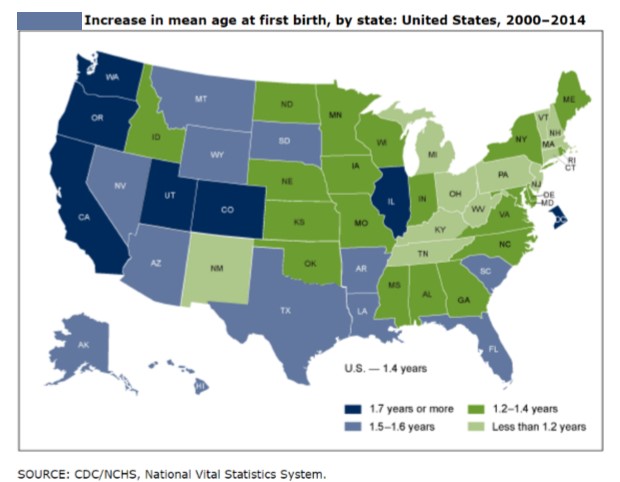
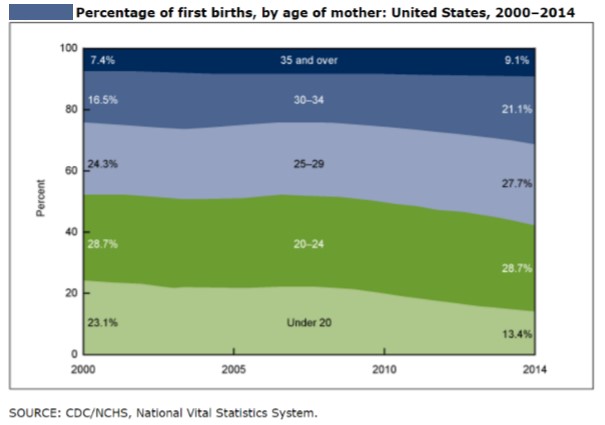
First-time mothers are older than ever, new federal data has revealed.  Since 2000, the average mother’s age at the birth of her first child has increased in every state in the nation, rising 1.9 years or more in D.C., California, Oregon, and Utah, while increasing by less than a year in Connecticut, Michigan, New Hampshire, and West Virginia. Overall, the average age of mothers has increased from 2000 to 2014 for all birth orders, with age at first birth having the largest increase, up from 24.9 years old in 2000 to 26.3 years in 2014, according to newly released data compiled by the Centers for Disease Control and Prevention.  Connecticut is among a dozen states with the smallest increases in the average age of first-time mothers. graph

The federal agency points out that “a mother's age at birth, and particularly the average age when a mother has her first child, is of interest to researchers and the public. Mean age can affect the total number of births a mother has over a lifetime, which in turn impacts the composition and growth of the U.S. population. Age of mother is associated with a range of birth outcomes, such as multiple births and birth defects, the agency noted.

The largest factor in the rise a mother’s average age when her first child is born is the decline in the proportion of first births to mothers under age 20, down 42 percent from 2000 to 2014, or from approximately 1 in 4 births to 1 in 7.

Increases in the average age for all birth orders were most pronounced from 2009 to 2014, according to the data.  While the average age at the birth of a mother’s first child was fairly stable for the first half of this time period, greater increases were observed from 2009 (25.2 years) to 2014 (26.3 years).new mom

Increases from 2000 to 2014 in average age for higher birth orders were less than those for first births, rising 1.4 years for first births, 1.0 years for second births, 0.8 years for third- and fourth-order births, and 0.5 years for fifth- and higher-order births.  As a result of the different rate of increases by birth order, the gap in the average age between sequential birth orders is less than previously. For example, the difference in a mother’s average age at first birth compared with the mean age at second birth was 2.8 years in 2000 and fell to 2.4 years in 2014.

States with larger increases (1.7 years or more) in the average age at first birth tended to be in the western United States (California, Oregon, Washington, Utah, and Colorado), the data indicated. Greater increases were also seen in Illinois, Arkansas, and D.C.

mapThe report emphasized that over the past several decades, the United States continued to have a larger number of first births to older women along with fewer births to mothers under age 20. “This trend and the more recent uptick in delayed initial childbearing can affect the number of children a typical woman will have in her lifetime, family size, and for the overall population change in the United States,” the federal agency pointed out.

This report contains data from the birth data set, which is part of the National Vital Statistics System (NVSS). NVSS contains all live births reported in the United States. The birth data set is the primary data set for analyzing birth trends and patterns in the United States.


PERSPECTIVE: Gun Reforms vs. Gun Servants

by Dick Polman Why do Republicans nauseatingly refuse to address America's gun murder epidemic? Why are they so determined to sustain our well-earned reputation as the most violent nation in the civilized western world? Why are they jerking their knees in reflexive opposition to President Obama's modest attempts to defend our right to remain alive?

Of course we know why. It's Obama hatred and gun lobby love.

You would think, judging by their tiresomely predictable reactions, that Obama is poised to dispatch an army of flying monkeys to swoop into American homes and spirit away the 270,000,000 guns that we apparently hold dear.PageLines- CTperspective.jpg

But this fever swamp rhetoric is flatly contradicted by reality. Obama is basically tweaking existing gun laws to make them work better. Which is exactly what Republicans have been urging all along.

For instance, the federal background check system is notoriously understaffed and under-financed. Under federal law, if the FBI can't complete a check within three days, the buyer gets his gun without the check having been completed. That's what happened last year in Charleston, South Carolina. Remember the white racist terrorist who killed nine people at the historic black church? He got his gun because the understaffed feds didn't obtain his criminal record within the mandated three days.

So Obama is beefing up the background-check system - directing more money and manpower to weed out the criminals and mentally ill. Plus, he's earmarking an extra $500 million to mental-health services, to better help those who have woes between their ears.

Yet the Republicans don't like any of that.

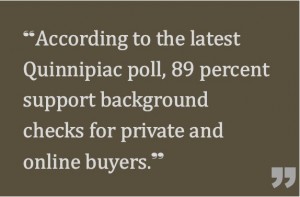
Obama also took action to close loopholes in existing laws - most notably, the one that allows people to buy guns, without any background screening, from private sellers and online sellers. Isn't it logical to tweak existing laws so that everybody gets screened prior to buying bang-bangs? The American public certainly thinks so; according to the latest quoteQuinnipiac poll, 89 percent support background checks for private and online buyers.

The Republicans don't want any of that, either.

Requiring shippers to report stolen guns - that makes sense, too. Investing in advanced technology so that kids can't accidentally pull gun triggers - that makes sense, too. And yet, not a single Republican has spoken up to say, hey, that's a good idea.

Instead, all we got was the usual pap, plus a lot of whining about Obama's alleged kingly behavior. They're basically complaining that Obama is doing end-runs around the Republican Congress, somehow forgetting that the Republican Congress is invested in doing the gun lobby's business by doing nothing. Just last month, in fact, it squashed a bill designed to beef up background checks.

Kathleen Parker - the center-right political columnist, no friend of Obama's - says it well on Wednesday: "In fairness to the gun lobby, which may not deserve such charity, one can understand reservations about limiting access to guns. What is less easily understood is the refusal of Republicans to take the reins of any given issue and do something constructive rather than invariably waiting to be forced into the ignoble position of 'no.' It is one thing to be in the pocket of the National Rifle Association. It is another to do nothing and then assume a superior posture of purposeful neglect, as though do-nothingness were a policy and smug intransigence a philosophy."

Can Obama's executive actions substantially curb our annual gun murder epidemic? No way. We have too many guns in circulation for that to happen. He freely acknowledged that on Tuesday, saying, "We know we can't stop every act of violence, every act of evil in the world.  But maybe we could try to stop one act of evil, one act of violence."

There it is - the desire to save at least a few of the lives that would otherwise be lost. Doing something to dent the death toll sure beats thoughts 'n' prayers.

Or to paraphrase the Talmud, "He who saves a single life, saves the world entire."

__________________________________________

Dick Polman is a former columnist at The Hartford Courant and was founding editor of The Hartford Advocate.  He is the national political columnist at NewsWorks/WHYY in Philadelphia and a "Writer in Residence" at the University of Pennsylvania. Email him at dickpolman7@gmail.com. Copyright 2016 Dick Polman, distributed exclusively by Cagle Cartoons newspaper syndicate.

PERSPECTIVE commentaries by contributing writers appear each Sunday on Connecticut by the Numbers.

Ten Percent of CT Community College Students Earn Bachelor's Degree, Below National Average, 30th in U.S.

Nationally, only 14 percent of community college students go on to earn a bachelor’s degree within six years.  In Connecticut, that percentage is even lower – 10 percent.  That’s the finding in a new study measuring states’ effectiveness at helping community college students attain four-year degrees. In the best-performing states—Wyoming, Montana, and Maryland—nearly 20 percent of community college students earned a bachelor’s within six years. But in several states, bachelor’s completion rates were in the single digits. Connecticut ranked 30th out of 43 states.  The study was released this week by the Community College Research Center at Teachers College, Columbia University.  tackling transfer

As the cost of higher education continues to grow, the role of considerably less-expensive community colleges - and their success at helping students earn an associate’s degree and continue in higher education is receiving more scrutiny.  The study concluded that "transfer outcomes depend on what community colleges and 4-year colleges do to teach and support their students."  The data also indicated that 36 percent of higher income students transfer to a 4-year school while 28 percent of low-income students do.  A diminishing percentage complete the requirements for a bachelor's degree after transferring.

The study’s analysis indicated that for “students who plan to transfer to a four-year college, there too often is no clear path through the thicket of choices at the community college and across the divide to the four-year school. Though as many as 80 percent of new community college students want to get a bachelor’s degree, only about 14 percent transfer and graduate within six years.”

The Connecticut State University and College System has developed a Transfer and Articulation Program (TAP) aimed at “ensuring Connecticut community college students complete degree programs that transfer to the Connecticut State Universities and Charter Oak State College “without either losing or generating excess credit.”Community-College-Research-Center

Under the new plan, students attending any of the state’s 12 community colleges enrolled in the program would complete the first 60-63 credits at a community college and the final 60-63 credits at one of the state universities (Central, Eastern, Southern or Western).  The program, which launches for students entering college in the Fall 2016 semester, will allow students to select from “over 20 concentrations that prepare them to complete four-year bachelor’s degrees.”

CSCU logoThe first TAP pathway—Biology—was approved by the Board of Regents last month, “after careful review by TAP's Framework Implementation and Review Committee (FIRC) and curriculum committees on all 17 CSCU campuses.”  Additional pathways are slated to be determined beginning next month, with a total of 11 initially to be selected.  Possible subject areas include history, chemistry, communication, criminology, English, math, political science, psychology, social work and sociology, according to the state Board of Regents website.

“This research tells Connecticut that far too many community college students are failing to meet their higher education goals,” said Davis Jenkins, a senior research associate at the center, told the Connecticut Post. The TAP program aims to help address that. The study found that students who can tranfer 90 percent of their crfedits are 205 percent more likely to earn their bachelor's degree, compared to those who transfer half or less.  transfer

The study looked at the outcomes of more than 700,000 degree-seeking students nationwide who entered higher education through a community college in fall 2007, providing evidence about where students are getting stuck in particular states.

Some states, such as Oklahoma, had above-average rates of transfer out of community colleges but low transfer-student graduation rates at four-year schools. In others, such as Washington, community colleges transferred out relatively few students, but relatively high numbers of those who transferred earned bachelor’s degrees. In the states where more community college entrants earned bachelor’s degrees, both rates tended to be high, according to the study’s authors.

10 percentThe study also found that “the student demographics at community colleges appear to matter less than how the colleges serve students aiming to transfer. Regardless of whether they are rural or urban, or serving mostly lower or higher income students, community colleges can boost the transfer success of their students by looking to better performing schools to inform their practices.”


Housed at Teachers College, Columbia University, CCRC strategically assesses the problems and performance of community colleges in order to contribute to the development of practice and policy that expands access to higher education and promotes success for all students.


https://youtu.be/Fg61rj6kO-o


Background Checks Up 71 Percent in Past Five Years in CT, 12th Highest Increase in U.S.

Between 2010 and 2015, the number of background checks in Connecticut related to the purchase of firearms grew by 71.4 percent, ranking Connecticut 12th in the nation in the increase in background checks, according to data compiled by Bloomberg.  The number of background checks during the five-year period increased in every state in the nation, except Utah. In Connecticut in 2010, there were 179,595 background checks conducted as part of the process of purchasing  a firearm.  In 2015, that number had increased to 307,750 during the year, the data compiled by the National Instant Criminal Background Check System (NICS) revealed.gun stats graphic

The states with the largest increased in the number of background checks, from 2010 to 2015, were Indiana (211% increase), Delaware (162%), Alabama (139%), California (115%), District of Columbia (112.6%), Florida (105.1%), Wisconsin ((96.8%) Ohio (90.3%), Illinois (79.4%) and New Jersey (78.2%).

Overall, the largest number of background checks occurred in Kentucky, with 3.2 million.  California conducted 1.7 million, Texas 1.5 million, Illinois 1.2 million, and Wisconsin 1.1 million.

The Bloomberg news website ranked the 50 states and the District of Columbia by the percentage increase in number of NICS firearm background checks from January 1, 2010 through December 31, 2015. NICS is the National Instant Criminal Background Check System.background-check

In six jurisdictions – the states of Indiana, Delaware, California, Alabama, Florida and the District of Columbia – the number of federal firearm background checks more than doubled from 2010 to 2015.

Because of varying state laws and purchase scenarios, the statistics do not represent the number of firearms sold, the data analysis indicated.


$80,000 in Grants Boost Preservation Initiatives in 7 CT Communities

Connecticut Main Street Center (CMSC), the downtown revitalization and economic development non-profit, has selected seven organizations and municipalities to receive a share of $80,400 in 2016 Preservation of Place grants. The grants will be used to provide communities in Bridgeport, Canton, Haddam, Fairfield, New Britain, New Haven (Westville Village) and Simsbury with targeted resources to increase their capacity to plan for preservation and revitalization initiatives in their downtowns and neighborhood commercial districts. place

This year's awards are notable because two applicants, Canton and New Britain, sought the grant funds to pursue the creation of tax increment financing (TIF) districts, made possible through the passage of legislation in 2015 that was proposed by a coalition led by CMSC. TIF is a financing mechanism in which an investment in a specified area is repaid over time using the increased tax revenue generated by the investment.

"The projects funded through this year's Preservation of Place round have the potential to be transformative for these communities," said John Simone, CMSC's President & CEO.  "Canton and New Britain may very well become the models for creating successful TIF districts, while Haddam's award can help set the foundation for a unified, mixed-use commercial area that marries their historic charm with a modern, connected design. Certainly, all of the communities represented are as diverse in location as in their unique character, but each has something wonderful to offer, which will only be enhanced through the use of these grant funds."

The Preservation of Place grant program provides a source of funding for new initiatives that can be integrated into, and leverage, comprehensive Main Street preservation and revitalization programs.  The funds are meant to be flexible to meet individual community need.

The 2016 recipients of Preservation of Place grant funds are:BPT creates

  • Bridgeport Downtown Special Services District - Awarded $10,400 for Bridgeport CREATES, Phase II, to assist in the pre-development activities associated with the creation of a Maker Space/ Innovation Center.
  • Town of Canton - Awarded $10,000 for a Tax Increment Financing Master Plan for Collinsville Center & the Collins Company Complex to develop a viable TIF agreement, master plan and district to help develop the historic complex.
  • Town of Haddam - Awarded $10,000 for a Market Analysis & Village District Zoning Regulations for Tylerville in order to assess viable businesses and draft zoning regulations that will allow for and promote such businesses, as well as mixed-use development, in this historic area.
  • Town of Fairfield - Awarded $10,000 for a Signage & Wayfinding Program for Downtown & Neighboring Commercial Districts to help visitors and residents navigate their way around downtown Fairfield's many prominent cultural, tourist and academic attractions.
  • New Britain Downtown District - Awarded $10,000 to work in conjunction with the City on the Creation of a Tax Increment Financing District for transit oriented development around the CTfastrak terminus.
  • Westville Village Renaissance Alliance (New Haven) - Awarded $20,000 for the Westville Village Comprehensive Plan: The Visioning Phase, a comprehensive plan to guide a sustainable and place-based approach to long-term economic and physical development.
  • Simsbury Main Street Partnership - Awarded $10,000 for a Comprehensive Parking Study of Downtown to develop specific parking recommendations, including short- and long-term solutions.

Since 2008, the Preservation of Place grant program has leveraged over $1 million of investment in local Main Street initiatives. Connecticut Main Street Center and the Preservation of Place grant program receive support from the State Historic Preservation Office, with funds from the State of Connecticut through the Community Investment Act.

Advertisers Target Hispanic and Black Youth with Unhealthy Snack Ads, UConn Center Study Finds

The University of Connecticut’s Rudd Center for Food Policy & Obesity is calling on media companies to “set nutrition standards” for snack ads aimed at children and teens and “stop targeting advertising high-calorie, nutritionally poor foods to all young people,” but “especially advertising aimed at Black and Hispanic youth.” The recommendations come in the wake of a report that found that Black and Hispanic children “are exposed to more food advertising than white non-Hispanic children” and much of it is for unhealthy foods that have a greater likelihood of adversely impact children’s health.rudd-logo-300x77

The Rudd Center’s report, Snack Facts, found that Black children saw 64 percent more snack food ads on TV compared to white children, and Black teens viewed 103 percent more compared to white teens.  The disparity, according to the report issued last fall, had increased between 2010 and 2014, the most recent year studied.  “FACTS” is an acronym for “Food Advertising to Children and Teens Score.”

The findings also indicated that in addition to a barrage of advertising for unhealthy snacks, Black children and teens saw approximately 50 percent and 80 percent more ads for healthier fruit and yogurt brands – although the positive findings were generally outdistanced by findings of concern.  Black children also saw 99 percent more ads for savory snacks and Black teens saw 129 percent more, compared with white children and teens.spanish snak ads

From 2010 to 2014, TV ads for savory snacks (salty or spicy) viewed by black children increased 48 percent and ads viewed by black teens increased 95 percent.  “Given that youth of color suffer from higher rates of obesity and other diet-related diseases,” the Rudd Center indicated, “snack food advertising likely exacerbates health disparities affecting their communities.”

Two-thirds of 2- to 5 year-olds and more than half of youth ages 6 to 19 report having three of more snacks per day, and Americans are spending more on snacks – an increase of more than $100 million from 2012 to 2015, according to data cited in the report.

The Rudd Center report found that snack advertising on Spanish language television had changed dramatically between 2010 and 2014, and not for the better:

  • Yogurt advertising declined by 93 percent, and not one fruit brand advertised on Spanish-language TV in 2014.
  • Spending on savory snack ads (salty/spicy snacks) skyrocketed 551 percent and sweet snack ads rose 30 percent.
  • Ads for unhealthy snacks comprised 88 percent of snack food ads viewed by Hispanic children on Spanish-language TV in 2014, a dramatic jump from 39 percent in 2010.

The 102-page report reviewed the advertising practices of specific companies in the snack food industry, and highlighted changes in advertising emphasis.  It also tracked trends in advertising on social media.  The advertising analysis examined 90 brands spending more than$1 million in total advertising in 2014 from 43 different companies, according to the report. chips

The report suggested that “media companies could provide lower rates for advertising that promotes nutritious foods,” noting that aggressive marketing of unhealthy snack foods to children and teens exacerbates the crisis of poor diet and related diseases among young people.”

Snack FACTS examined the nutritional quality and advertising for 90 snack food brands offered by 43 companies that were marketed to U.S. children and teens on TV, internet, and in schools in 2014. Researchers analyzed healthier snacks, including yogurt, fruit, and nuts, as well as unhealthy snacks, including sweet and savory snacks such as cookies, chips, and fruit snacks, comparing 2010 and 2014 when possible.

The report also indicates that “companies have recognized the business opportunity in marketing healthy snacks to young people,” and urges those companies to respond in children and youth’s best interest.

The Rudd Center for Food Policy & Obesity, which affiliated with UConn a year ago after a decade at Yale University, is a non-profit research and public policy organization devoted to improving the world’s diet, preventing obesity, and reducing weight stigma. The Rudd Center is described as “a leader in building broad-based consensus to change diet and activity patterns, while holding industry and government agencies responsible for safeguarding public health.”  Research related to the report was funded by a grant from the Robert Wood Johnson Foundation.snack food