

Connecticut’s Presidential Primary Ballot to Take Shape for April 26
/In the roller-coaster that is the presidential nomination process, with its progress of caucuses and primaries in states across the country, Connecticut’s card does not come up until late-April. Who will reach the Connecticut ballot, and the order in which they will be listed, will be determined in the coming weeks by Secretary of the State Denise Merrill, in accordance with criteria outlined in state law. That process begins this Tuesday, February 16, with the announcement of presidential candidates who have qualified for the Connecticut primary ballot. The order in which candidates will appear on the ballot for the Republican and Democratic parties will not be known until March 22, when Secretary Merrill will “determine the order of all candidates by lot in a public ceremony.” Connecticut law also requires that “Uncommitted” appear last on each party’s ballot.
 When Connecticut voters go to the polling places on Tuesday, April 26, voters in nearly two-thirds of the states will already have made their preferences known. The same day as Connecticut, presidential primaries will also be held in Delaware, Maryland, Pennsylvania and Rhode Island. The previous week, primaries will be held in New York, a state called home, at various times, by three of this year’s leading contenders – Hillary Clinton, Bernie Sanders and Donald Trump.
March 1 and March 15 are major dates on the presidential primary calendar this year. Dubbed Super Tuesday, March 1 will see votes cast in Alabama, Alaska, Arkansas, Colorado, Georgia, Massachusetts, Minnesota, Oklahoma, Tennessee, Texas, Vermont, Virginia and Wyoming. Two weeks later, the spotlight will fall on Florida, Illinois, Missouri, North Carolina, and Ohio.
Also prior to Connecticut, the states of Wisconsin, Wyoming, Washington, Hawaii, Arizona, Utah Idaho, Michigan and Mississippi will conduct their presidential primaries, according to the Council on State Governments.
According to Connecticut’s Office of Legislative Research, in August 2010, the Democratic National Committee and the Republican National Committee adopted rules prohibiting states, other than Iowa, New Hampshire, South Carolina, or Nevada from holding a presidential primary before the first Tuesday in March in the year in which a national convention is held (Democratic National Committee, Delegate Selection Rules, Rule 11(A) and Republican National Committee Rules, Rule No. 16(c)(1)). In response, Connecticut delayed the date of its presidential primary from the first Tuesday in February to the last Tuesday in April (CGS § 9-464).
Reaching the Primary Ballot
In Connecticut, the political parties with the largest and second largest number of enrolled members conduct presidential preference primaries, according to the website Ballotpedia. There are two methods by which candidates can access the primary ballot:
- The Connecticut Secretary of the State can order that a candidate's name be printed on the primary ballot if he or she "determines ... that the candidacy of such person for such party's nomination for president is generally and seriously advocated or recognized according to reports in the national or state news media." The secretary of state must publish a listing of such candidates at 10:00 a.m. on the 74th day preceding the primary. (This year, that is Tuesday, February 16.)
- A candidate who is not included on the Secretary of the State’s list can petition for placement on a party's primary ballot. A candidate may request the requisite forms from the secretary of the state’s office beginning at 12:00 p.m. on Tuesday. The petition must contain signatures equaling at least 1 percent of the total number of enrolled members in the candidate's party in the state, and must be submitted to "the registrar of voters of the party holding the primary in the town of voting residence of the signers thereof" by 4:00 p.m. on the 53rd day preceding the primary (March 4). The registrar of voters must verify the signatures and forward the petition to the secretary of state by 4:00 p.m. on the 49th day preceding the primary (March 11).
Among the states holding presidential primaries after Connecticut in May and June are In diana, New Mexico, California, New Jersey, Nebraska, West Virginia, Oregon and Montana. Most states have their Democratic and Republic primaries on the same day, although a handful hold party primaries on different days. South Carolina’s Republican primary will be on February 20, for example, and its Democratic primary on February 27.
Should any candidate whose name is set to appear on the Connecticut April 26 primary ballot decide to withdraw from the race, the deadline is March 21. A letter indicating withdrawal must be received by the Secretary of the State by 12 Noon. Petitioning candidates may not withdraw, according to state officials.
Absentee ballots for military and overseas voters become available on March 12. Absentee ballots will be available as of April 5. Only registered voters in a particular political party can vote in the presidential primary of that party. The deadline for new voters, and for unaffiliated voters to mail in party affiliations is April 21. The in-person deadline is April 25, the day before the primary, at 12 Noon. On primary day April 26, the polls are open from 6 AM to 8 PM.

 NOT ENOUGH PEOPLE. The growth rate of the US population aged 18 to 64 is rapidly decelerating and will remain very low through 2030.
 challenges, an aging workforce, and lack of coordination and overlap in services, now is the time to create more public / private partnerships to drive success.
 ecessarily result in that many jobs,” according to the website
 . Boston may be in the running for similar relocations.
 The Crain’s article reports that headquarters began shrinking a decade ago, but the trend has accelerated in the past three years, according to Vinay Couto, a consultant in the Chicago office of Strategy&. In recent years, 16 companies have relocated their main headquarters to the city from the suburbs. Seventeen came from outside the metro area. The phenomenon, he points out, is driven by the outsourcing of shared services such as IT, accounting and human resources, as well as by a mindset borrowed from private equity to cut overhead and make every part of a business count toward profitability.


 age, MSW, Director of Community Organizing, Yale Program for Recovery and Community Health. “We know that good nutrition plays a key role in mental health and that’s why the mental health community is here today to support the Witnesses.”




 Also making the list were Evariant of Farmington, a software developer, at number 272, and HP One, a software company in Trumbull at number 307. Biopharmaceutical company Alexion, in the midst of moving its headquarters from Cheshire to New Haven, was ranked at number 349, and etouches, a Norwalk software company ranked at number 357. Rounding out the Connecticut companies on the list is Wallingford oil extraction technology company APS Tecnhology, at number 466.
 rough technology’s continued disruption and proliferation across industries,” said Sandra Shirai, principal, Deloitte Consulting LLP and US technology, media, and telecommunications leader.
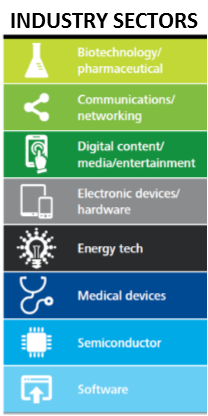 Overall, 283 of the 500 companies were in the software sector, and 67 percent of the 500 companies have received venture capital funding at some point in their company’s history. Topping the list was StartApp, with a growth rate of 21,984 percent from 2011 to 2014. Based in New York and founded in 2010, StartApp provides a free monetization and distribution platform that integrates with applications on mobile devices.

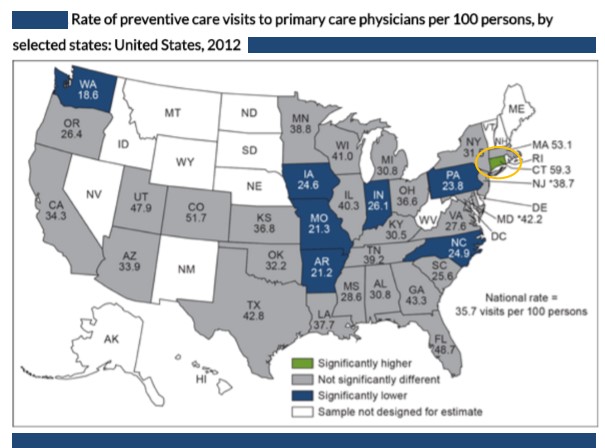
 The rate of preventive care visits in the 34 most populous states ranged from 33.1 visits per 100 persons in Arkansas to 120 visits per 100 persons in Connecticut. Among those 34 states, the rate of preventive care visits was lower than the national rate in 11 states (Arkansas, Indiana, Iowa, Michigan, Missouri, North Carolina, Oklahoma, Oregon, Pennsylvania, South Carolina, and Washington). The national average was 61.4 visits per 100 persons. The data is from 2012, the most recent year available from the National Ambulatory Medical Care Survey.


 However, this is a rare occurrence. More often than not mothers unconsciously carry an imprint which keeps them from giving their daughters the chance to be their best. This imprint then gets passed on, leaving the next generation of girls carrying on a legacy of self-doubt and low self-esteem. Our point of power as women is to know that we do not need to repeat our mother’s unconscious legacies – that our past does not script our future. And the moment we decide to break the cycle we can then truly awaken to our potential.





















