Three Connecticut Universities Among Best for Game Design Career

Quinnipiac University, Sacred Heart University and Fairfield University were Connecticut’s stand-outs when The Princeton Review determined the best undergraduate and graduate schools for students to study—and launch a career in—game design. The University of Utah captured the #1 spot on the undergraduate schools list and the University of Central Florida ranked #1 on the graduate schools list. Quinnipiac University was the top-ranked Connecticut undergraduate institution, ranking #39.  Sacred Hearth University was just three slots back, at #42.  Fairfield University was #21 on the list of graduate institutions.gamedesign

At Quinnipiac, the bachelor of arts in game design and development is a pre-professional program that prepares students to enter the highly competitive industry of game design or to pursue studies at the graduate level. It is an applied, interdisciplinary major, which focuses on the meaningful application of game technologies beyond commercial entertainment by addressing serious topics regarding the environment, health care and education including STEM and STEAM (science, technology, engineering, arts and math) initiatives. Students receive a solid foundation in fundamental arts principles and concepts, and develop specialized technical skills and competence in design, according to the university.

"For students aspiring to work in game design, the 58 schools that made one or both of our 2016 lists offer extraordinary opportunities to learn and to hone one's talents for a successful career in this burgeoning field," said Robert Franek, The Princeton Review's Senior VP-Publisher. "The faculties at these schools are outstanding. Their facilities are awesome. And their alumni include legions of the industry's most prominent game designers, developers, artists, and entrepreneurs."

The Princeton Review chose the schools based on its 2015 survey of 150 institutions in the U.S., Canada and abroad offering game design degree programs or courses. The 40-question survey gathered data on everything from the schools' game design academic offerings and lab facilities to their graduates’ starting salaries and career achievements. More than 40 data points in four areas (academics, faculty, technology, and career) were analyzed to tally the lists.

princeton-longThe top 10 undergraduate schools to study game design were University of Utah (Salt Lake City, UT), University of Southern California (Los Angeles, CA), Rochester Institute of Technology (Rochester, NY), DigiPen Institute of Technology (Redmond, WA), Becker College (Worcester, MA), The Art Institute of Vancouver (Vancouver, British Columbia), Hampshire College (Amherst, MA), Michigan State University (East Lansing, MI), Drexel University (Philadelphia, PA) and New York University (Brooklyn, NY).

Undergrad and grad students enrolled in the schools that made the lists also gain valuable professional experience while in school, according to The Princeton Review. About 85 percent of their undergrad and/or grad game design students that graduated in their 2015 classes developed actionable plans to launch games while in school.  In addition, 49 percent of undergrads and 59 percent of grad students at these school programs worked on games that were shipped before they graduated.

The top 10 underggame-design-image-3raduate schools to study game design were University of Utah (Salt Lake City, UT), University of Southern California (Los Angeles, CA), Rochester Institute of Technology (Rochester, NY), DigiPen Institute of Technology (Redmond, WA), Becker College (Worcester, MA), The Art Institute of Vancouver (Vancouver, British Columbia), Hampshire College (Amherst, MA), Michigan State University (East Lansing, MI), Drexel University (Philadelphia, PA) and New York University (Brooklyn, NY).

Among the top ranked graduate programs in game design, the only Connecticut school to rank among the top 25 was Fairfield University, which placed twenty-first.  The top 10 were: University of Central Florida (Orlando, FL), Southern Methodist University (Plano, TX), University of Utah (Salt Lake City, UT), University of Southern California (Los Angeles, CA), DigiPen Institute of Technology (Redmond, WA), New York University (Brooklyn, NY), Rochester Institute of Technology (Rochester, NY), Drexel University (Philadelphia, PA), The University of Texas at Dallas (Richardson, TX) and Michigan State University (East Lansing, MI).

Opioid Epidemic Leads Conference Marking 100 Years of Public Health in CT

Tackling the opioid epidemic at the federal, state, and local levels will be the focus of the featured panel when the Connecticut Public Health Association (CPHA) celebrates 100 years of public health in Connecticut at the 2016 CPHA annual conference in November. photoIn addition to the expert panel on opioid abuse, there will be more than 30 presenters on public health topics, a presentation on the history of CPHA and public health in thelogo state, and a look forward to the future and innovations on the horizon in health research, policy, and community programs.
“Today, more than ever, the value of public health in saving lives and reducing health care costs is at the forefront of public policy,” the organization’s website points out.  Members represent a wide variety of disciplines, and “are united in the goal of protecting and promoting the public's health.”

Keynote speaker will be Camara P. Jones, MD, MPH, PhD, President of the American Public Health Association (APHA).  Dr. Jones is a research director on social determinants of health and equity in the Division of Adult and Community Health, National Center for Chronic Disease Prevention and Health Promotion and President of the American Public Health Association (APHA).

cpha-logo_2She seeks to broaden the national health debate to include not only universal access to high quality health care but also attention to the social determinants of health (including poverty) and the social determinants of equity (including racism). As a methodologist, she has developed new ways for comparing full distributions of data (rather than means or proportions) in order to investigate population-level risk factors and propose population-level interventions.


Opioid abuse has hit record levels in the United States, with drug overdose deaths quadrupling over the last 15 years, the CPHA points out. According to the Centers for Disease Control, Connecticut is experiencing a death rate for drug and opioid overdoses that surpasses the national rate and has reached epidemic proportions.

The conference is being held at Anthony’s Ocean View in New Haven on November 10.  The theme is “Back to the Future – 100 Years of Public Health in Connecticut and Beyond.” The annual meeting is the oldest and largest gathering of public health professionals in Connecticut, attracting hundreds of attendees each year.

CT's Strength in Aerospace, Engineering on Display at Upcoming Conference in Hartford

The three-day conference at the Connecticut Convention Center at the end of this month begins with technical tours of Sikorsky and UTC Aerospace Systems to provide industry experts with a first-hand look at their industry-leading innovations. It is the opening of what organizers describe as a conference “unlike other aerospace and defense events,” focusing on the “practical application and implementation of technology, and technology in development in commercial, military and general aviation -essential for the aerospace technical community, government, and research personnel.”sae-international

The SAE 2016 Aerospace Systems and Technology Conference (ASTC) is to be held  September 27-30.  SAE International is a global association of more than 128,000 engineers and related technical experts in the aerospace, automotive and commercial-vehicle industries.  The conference “combines the strength of the SAE Power Systems Conference (PSC), Aerospace Electronics and Avionics Systems Conference (AEAS) with tracks in unmanned systems and systems engineering. No other event provides the breadth and depth of technical presentations across these domains,” organizers stress.

prattwhitneypw1100g-pwKeynote speakers include Thomas W. Prete, Vice President of Engineering for Pratt & Whitney, Michael McQuade, Senior Vice President, Science and Technology, for United Technologies, Chris Van Buiten, Vice President of Sikorsky Innovations at Sikorsky Aircraft, and Peter Smith, Vice President, Engineering, at UTC Aerospace Systems.schedule
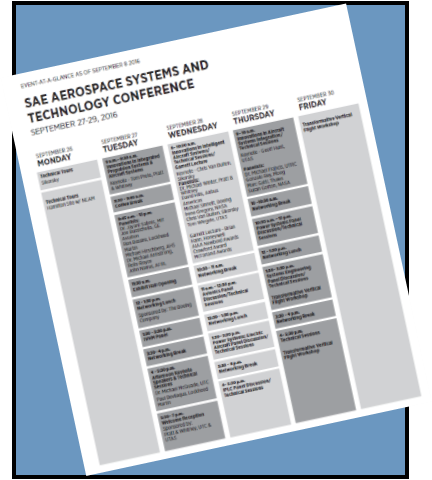
The conference will offer an open technical forum for aerospace systems professionals, especially engineers working in a range of disciplines to gather valuable technical knowledge, insight, and information on emerging and applied technologies with respect to commercial, military, and unmanned aviation.

The technical sessions, developed by industry professionals to maximize relevance, are designed to allow industry members of all levels the opportunity to gather timely, relevant, and stimulating information to enhance skills and creativity

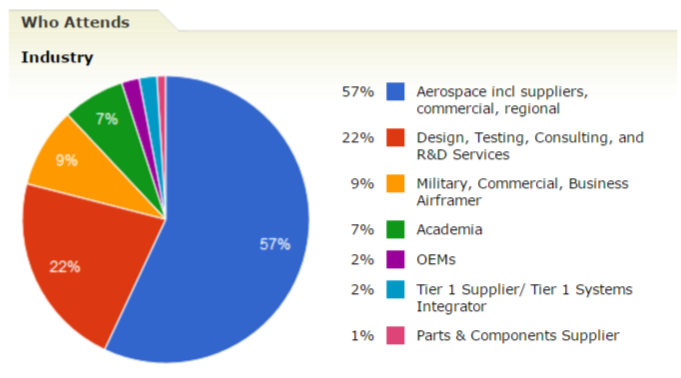
who-attendsOverall, the event provides an invaluable opportunity for attendees to renew and develop important business relationships within the international aerospace industry and for engineering professionals to discover, collaborate, and engage with peers from around the globe.  Attendees will interact directly with the event organizers and technical leaders from Boeing, Airbus, GE, NASA, U.S. Air Force, Honeywell, Pratt & Whitney/UTAS, Rolls-Royce, Sikorsky, and many others.

The conference concludes on Sept. 30 with a day-long Transformative Vertical Flight Workshop.

Panels at the Hartford conference will bring industry experts together to discuss critical issues regarding the integration and application of technologies relevant to the solving emerging issues in the engineering and maintenance communities. The goal of the panels is to enhance the technical understanding of items critical to those participating in the audience via problem solving discussions and exchange of ideas. Topics will include innovations in Integrated Propulsion Systems & Aircraft Systems, Intelligent Aircraft Systems and Aircraft Systems Integration.


“State of Innovation” Specialty License Plate Is Latest to Join List of Choices

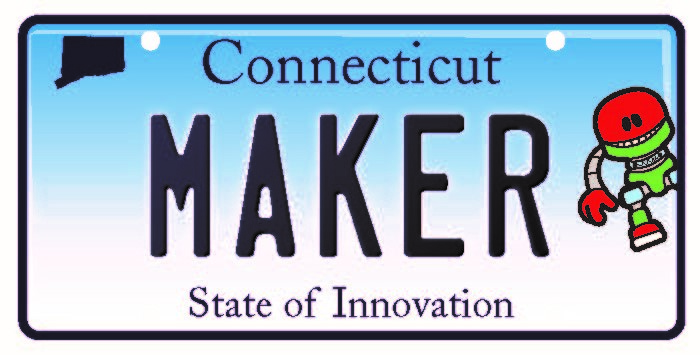
Connecticut, with more than 50 special license plates featuring everything from animals to war survivors, now has one more available for purchase by state residents. At the fifth annual Westport Mini Maker Faire earlier this year, it was announced that a new “State of Innovation” license plate was being developed by a non-profit organization, Remarkable STEAM.   The organization has now announced that their design has been approved, and sales of the new plate are underway.

Individuals can transfer an existing plate or obtain a vanity plate.  A portion of the proceeds goes to Remarkable STEAM, Inc, a 501(c)(3) not for profit corporation, best known for the Westport Mini Maker Faire.  Remarkable STEAM initiatives support job creation and educational programs.license-plates-ct

State law allows the Department of Motor Vehicles to issue of special background plates on behalf of non-profit organizations. The organization must be non-profit, must submit a copy of the organization's charter or by-laws, provide a letter of good standing from the State of Connecticut Secretary of State’s Office (if required) and supply any Internal Revenue Service ruling on their non-profit tax exemption status.

The logo production and cost incurred will be the responsibility of the organization. The logo prototype design, preferred in PDF format, must be submitted to the DMV. The logo can be no larger than 2 inches wide and 3.5 inches high. DMV has final approval on all the plate and logo designs.

A liaison for the organization must be appointed. This individual will be responsible for all communications with the DMV as well as certifying and authenticating (by signature) each member’s application, submitting the logo design to DMV for approval, submitting 400 applications with the required fee prior to the manufacturing of the special background plates, and submitting a Special Interest Plate disclaimer.

Many organizations in Connecticut offer license plates to their members and the general public.  General categories include animals, colleges, environment, organizations, police and fire, cities and towns, and recreation.

Organization vanity plates include Amistad, Benevolent & Protective Order of the Elks, IUOE Local 478, Grand Lodge of Connecticut, Knights of Columbus, Olympic Spirit, P.T. Barnum Foundation Inc., Preserving Our Past CT Trust for Historic Preservation, Red Sox Foundation, Lions Eye Research Foundation, Special Olympics, Federated Garden Clubs, Fidelco Guide Dog Foundation, Keep Kids Safe, New England Air Museum and the U.S.S. Connecticut Commissioning Committee.

All fees established and collected pursuant to the United We Stand plate (except moneys designated for the administrative costs of the DMV) shall be deposited in the United We Stand commemorative account.  Funds are directed to the United States Department of State Rewards for Justice program and is used solely to apprehend terrorists and bring them to justice. The account will also be distributed to the Secretary of the Office of Policy and Management for the purpose of providing financial support and assistance to the former spouses and dependents of persons killed as a result of the acts of terrorism committed on September 11, 2001.

innovation-license-plateWhen individuals purchase a Keep Kids Safe plate, a portion of the fee goes to the Keep Kids Safe Fund, which “makes many worthy projects happen for youngsters.”  The fund awards grants to schools, hospitals, municipalities and other non-profit organizations working to make all Connecticut children safer from severe and preventable injuries, according to the DMV website.

In most cases, remake of a current plate is $70; a new vanity plate is $139, a new series plate is $50.  For others, including the UConn Huskies plate, the price tag is somewhat different.  Off-the-shelf license plates cost $55, remake of a current plate is $75, a new vanity plate costs $144, according to the DMV website.

The Support Our Troops plate sends a portion of the fee to provide funding for programs to assist Connecticut troops, their families and veterans. When you buy a Red Sox plate, a portion of the fees support and help fund academic scholarship programs in Connecticut.

Also included are 17 varieties of military specialty plates, including Disabled American Veteran, Gold Star Family, Iwo Jima Survivor, Korean War Veterans Association, Marine Corps League, Laos Veterans of America, Military Order of the Purple Heart, Pearl Harbor 1941, U.S. Submarine Veteran, National Guard Association of Connecticut, First Company Governor’s Foot Guard, First Company Governor’s Horse Guard,

Colleges with designated plates include Central Connecticut State University, Penn State Alumni, University of Hartford, University of Connecticut, and University of New Haven.  Cities with available plates include Meriden, Norwich, and Stafford.

Organizations interested in launching a new special plate, should contact the DMV Special Plate Unit at (860) 263-5154 for further information.

PERSPECTIVE: Over-Regulation Would Harm Innovative Tech Industry, Hurt Consumers

by Jack Carey In the years since the financial crisis, there has been a prevailing thought in America that “big” is bad. This sentiment started with banks, but in Washington, some are starting to question whether the theory holds for other industries as well.

In Connecticut and the Hartford region specifically, we need to be mindful of the harmful effects of government over-regulation, especially when it can have a damaging effect on innovation and our ability to create and retain high quality jobs.CT perspective

As the owner of Carey Manufacturing in Cromwell, I know first-hand how challenging government regulations can be. Since 1981, we've been supplying catches, latches, and handles for military, aerospace, computer, electronics, telecom, automotive and consumer applications. In addition to an expanding global sourcing network, we own and operate a 30,000 square foot manufacturing facility here in Connecticut.  We work every day to maintain a competitive global advantage and government interference here at home frequently gets in our way.

Most recently, some policymakers have suggested that we abandon our decades-long approach to enforcing the antitrust laws, which focus on what is in the best interest of competition and the consumer, to one that looks primarily at size and views large companies as inherently bad. However, there is little evidence of the need to depart from our existing consumer-oriented antitrust framework, and that’s especially true in the case of the technology sector.

q1In fact, the current technology market is a vibrant and competitive one, where even big companies are required to constantly innovate in order to stay on top. This innovation has provided enormous benefits to consumers, who reap the rewards in the form of better and more advanced products and technologies.

These advances are the result of a market in which even the biggest giants in tech are vulnerable to competition. Ten years ago some of the dominant tech players were MySpace and AOL. These companies have since been surpassed – not because regulators intervened to check their growth, but because new startups offering better products won out in the market place.

In fact, in the tech sector, major companies are constantly competing with and challenging one another. Google has threatened Amazon’s dominance in the cloud storage business, Facebook is working to compete with YouTube for video consumption, and Apple is using its Siri technology to challenge Google Search – to name just a few examples. At the same time, these American companies are also facing new overseas competitors from China and other countries.

Unlike stagnant brick-and-mortar industries, the barriers to entry in tech markets are relatively low. Advances are constantly being made through innovation, enhancing competition and forcing companies to always stay one step ahead of the curve. It’s easy for startups to become the next big tech company, while even major players can fall as fast as they rose. Look how Facebook is battling newer social media platforms like Twitter, Instagram, Snapchat, and Pinterest that didn’t even exist a few years ago but now have hundreds of millions of users.

Larger tech companies also often act as platforms for the development and growth of these startups, as well as other businesses. New startups can release their software on app stores managed by Apple or Google, new products can be sold far more easily than ever before on Amazon, and growing companies can use digital ads to generate crucial revenue.q2

The competitive nature of the tech marketplace is made clear by the amount major players spend on research and development. In noncompetitive markets, R&D spending is low, and innovation is minimal. The opposite is true in tech. In 2014, PricewaterhouseCoopers found that the Internet and software sector had the highest growth rate of R&D spending of any industry. This year, Google, Amazon, Facebook, and Apple have all significantly increased their R&D spending. These companies are investing in R&D because they understand the tech sector for what it is: a fast-changing and competitive industry in which startups thrive, new products are constantly being developed, and consumers are the ultimate winners.

In 2016, we’ve gotten used to being able to answer emails or plan a trip with a few taps on our phone. These services, so common that we don’t even give them a second thought, are the result of the tremendous and ongoing innovation in the technology sector. Proposals to change how we apply our laws and regulate the tech industry, however, would have the government intervene in this dynamic and competitive marketplace, threatening innovation and the enormous benefits it has provided consumers and our economy.

__________________________________

Jack Carey is the owner of Carey Manufacturing Company in Cromwell, CT.

PERSPECTIVE commentaries by contributing writers appear each Sunday on Connecticut by the Numbers.


State’s Educational Technology Commission Plans to Consider Changes to It’s Scope and Purpose

The website of the Connecticut Commission for Educational Technology explains that “as require by law, the Commission “reports annually; on its activities and progress made in the attainment of the state-wide technology goals, and provides recommendations” to the state legislature. At the next Commission meeting, scheduled for next week, the Commission is expected to “take a look at any changes that Commission members feel should be addressed in terms of our scope and purpose.” Nine months ago, in December 2015, the Commission produced an “annual report’ covering the years 2012, 2013, 2014, and 2015 – somewhat less frequent than “annual.”  The Commission has met twice this year, on March 7 and June 13, and plans to meet again before year’s end on September 12 and December 5.ctedtech-logo

The Commission for Educational Technology was established at the turn of the century.  In 1999, then Lt. Governor M. Jodi Rell submitted to Governor John Rowland the results of a three-month study that she led on computer readiness in Connecticut’s schools and libraries.  The Lt. Governor’s report made nineteen recommendations “to ensure Connecticut’s students and teachers are prepared to meet the information technology needs of the next century.”  Among them was the creation of the Connecticut Commission on Education Technology, which was proposed by Gov. Rowland and became law in 2000.  Lt. Gov. Rell convened the first meeting in August, sixteen years ago.

An independent group composed of twenty leaders from education, business, information technology, and government, the Commission is empowered by the General Assembly to envision, coordinate, and oversee the management and successful integration of technology in Connecticut's schools, libraries, colleges and universities, according to the organization’s website. Commission members include representatives from the University of Connecticut, Office of Consumer Counsel, Office of Policy and Management, Department of Economic and Community Development, State Library, Connecticut Board of Regents for Higher Education, Connecticut Library Association, Connecticut Conference of Independent Colleges, Connecticut Conference of Municipalities, and Connecticut Council of Small Towns.

reportAs the state's principal educational technology advisor, the website explains, “the Commission works to ensure the effective and equitable use of resources, without duplication, and engender cooperation and collaboration in creating and maintaining technology-based tools for use by all the people of Connecticut.”

The Commission’s “long-range” strategic plan was adopted on December 19, 2002.  Goals and objectives included “communicate the promise and excitement of educational technology to the public,” “implement a development program to secure non-public support for educational technology initiatives,” and “provide educational equity and reduce the digital divide.”

Fourteen members were present at the June 2016 Commission meeting, when it was announced during a 90-minute session that the Connecticut Education Network funding was being reduced from just under $3 million to just over $1 million for fiscal year 2017.  Officials said they were “anticipating that we will ultimately generate enough revenue to match former funding levels.”  The website includes minutes of the meeting, as well as notes from the advisory councils that provide information to the Commission.

The Commission has four advisory councils:

  • eLearning & Content - The eLearning & Content Advisory Council was established to provide to the Commission ideas and information about educational content and services that would benefit Connecticut learners.
  • Professional Development - The Professional Development Advisory Council was established to provide the Commission with a description of options for best preparing teachers and faculty members to optimally use technology in a learning environment.
  • iCONN - The Library Advisory Council provides the Commission with information and suggestions for enhancing iCONN, Connecticut's Digital Library.
  • Network Infrastructure & Services - The Network Infrastructure & Services Advisory Council advises the Commission on matters relating to the Connecticut Education Network (CEN), and suggests technical services and enhancements that might benefit CEN users. Established in 2000, the Connecticut Education Network (CEN) is part of the State's secure "Nutmeg Network", whose purpose is to deliver reliable, high-speed internet access, data transport, and value added services to its members throughout Connecticut.

As part of the advisory council updates provided in June, Commission members heard about a new state law that will take effect on October 1, which imposes requirements on school districts regarding notification to parents about the use of student data, and includes provisions that govern contracts that schools enter into with education technology providers and consultants to ensure protection of student information, records and content.  The Commission also noted that it has established a Twitter account, listserv, and updated website.

The location of the scheduled Sept. 12 meeting is not yet available.

Disparities Continue As Uneven Economic Recovery Challenges Children and Families; Changes Urged

Connecticut lost 85,358 jobs during the recession, which technically ended nearly seven years ago. The state has continued to hemorrhage manufacturing jobs, however, and industries dependable before the crash—particularly those in finance and health care—grew more slowly or not at all. According to a new report by Connecticut Voices for Children, 97.7 percent of Connecticut’s net job losses were in mid- or high-wage industries and 51 percent of the job losses occurred in the manufacturing and construction sectors, with another 15 percent of job losses occurring in retail trade.

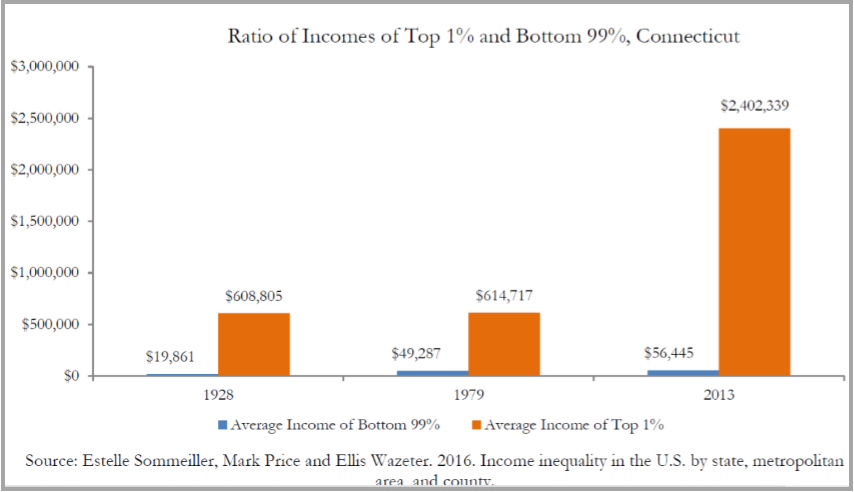
The financial disparity in the state’s population is more stark than ever, the report said.  “Over the past thirty years, incomes for the bottom 99 percent grew by just 14.5 percent, while the incomes of the top 1 percent swelled by 290.8 percent. As a result of this lopsided growth—a period in which the top 1 percent captured 71.6 percent of all income—incomes of the top 1 percent are now 42.6 times greater than the bottom 99 percent.”

The report stresses that many Connecticut working families have been left out of the economic recovery. “As the share of low-wage jobs rises, so does the challenge of raising a family,” the report states. “The jobs created in low-wage sectors not only pay less, but often provide less flexibility, less predictability and fewer benefits than jobs past.”voices

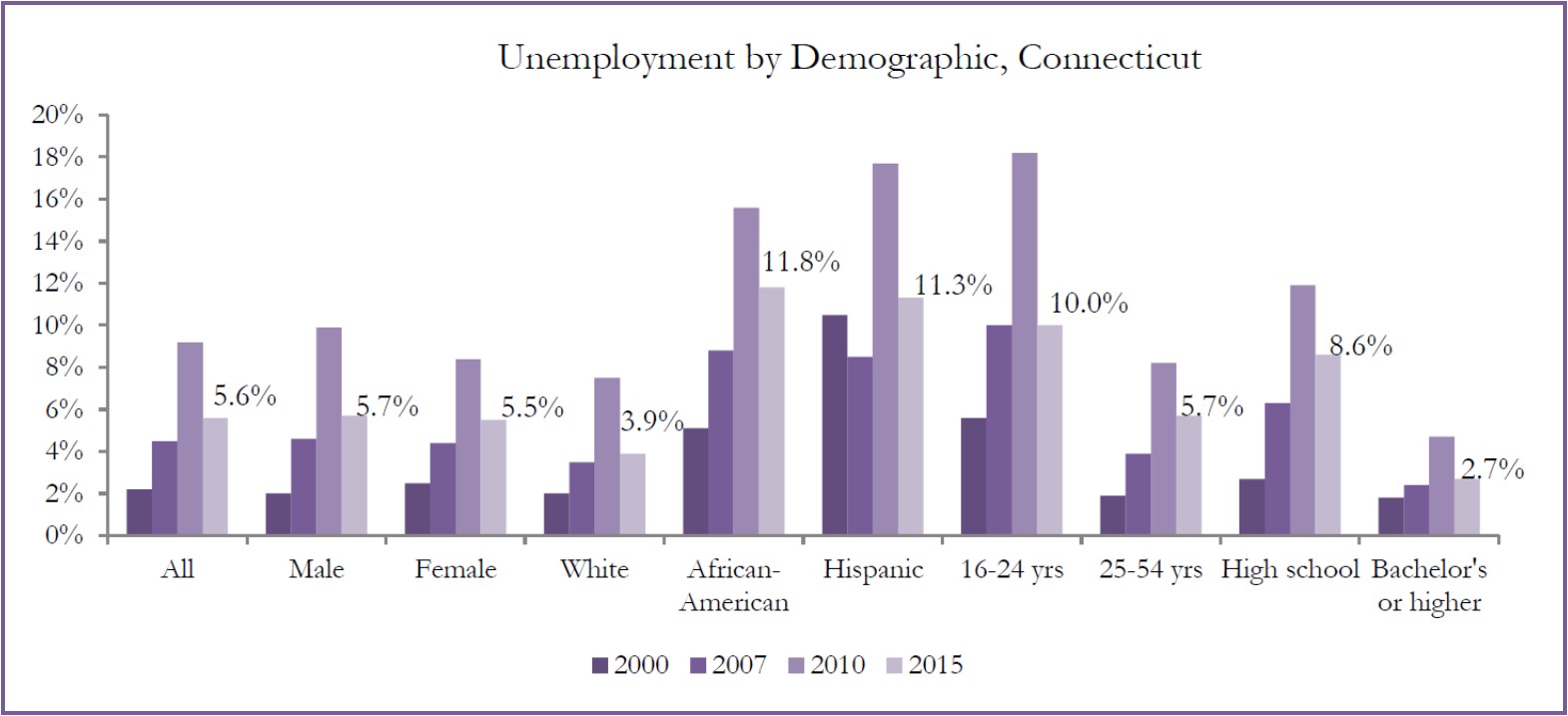
In the report. Connecticut Voices for Children points out that the combination of an increase in the share of low-wage jobs, slow wage growth and persistently high unemployment for minorities and workers without a college education threaten the long term well-being of the state. Data highlighted points out that “black and Hispanic workers in Connecticut make median hourly wages that are, respectively, $7.25 and $8 less than white workers’—a gap that has widened since before the Great Recession.”

Among the recommendations:  raise the minimum wage.  Raising the minimum wage to $15 per hour would offer relief to 336,000 workers, the report points out, which would help those the state's recovery has left farthest behind. Breaking down the demographics, the research report indicated that 60 percent of benefitting workers would be women; 31.8 percent of all black workers and 37.5 percent of all Hispanic workers would benefit.

“Changes in the state economy pose challenges for low wage workers seeking to give their children the best possible start in life,” says Ellen Shemitz, Executive Director of Connecticut Voices for Children. “Higher unemployment and lower wages for workers of color exacerbate existing disparities in opportunity, with significant implications for both the competitiveness and fairness of our state’s economy.”

chart-3The report documents a long term shift in job and wage trends in Connecticut, with almost half of all jobs created since the start of the recovery in low-wage industries. Since 2001, the share of industries that typically pay low-wages has increased by 20 percent, while high-wage industry employment has decreased by 13 percent.

At the same time, unemployment has returned to pre-recession levels for white and college educated workers, but unemployment for workers of color and those without a college education have yet to recover.  Despite years of sustained job growth, these workers face unemployment rates that are three times higher than whites.

“Connecticut’s jobs swap has implications for individual family economic well-being and for the state’s overall revenue sufficiency,” explained Derek Thomas, Fiscal Policy Fellow at Connecticut Voices for Children and report co-author. “The first decade in the 21st-century – which includes the loss of manufacturing jobs in the early 2000s as well as the vast job losses during the Great Recession – has left the state with a sizeable high-wage jobs deficit.”

Among the reports’ key findings:

  • Since 2010, unemployment has steadily declined for white and college educated workers, but not for workers of color and those without a college education. Unemployment for workers of color is nearly triple than for whites.
  • Underemployment remains stubbornly high; the rate of part-time employees that would want to work full-time and workers that have given up on their job search in the past year is two times higher today that it was in 2007.
  • Since 2001, the share of private-sector jobs in low-wage industries has increased by 20 percent, while the share of private-sector jobs in high-wage industries has decreased by 13 percent. Nearly half of new private sector jobs since 2010 are in low-wage industries.
  • The median and bottom 10 percent of wage-earners have seen their wages decline by more than 2 percent since 2002, while the top 10 percent have experienced growth of more than 11 percent.
  • Black workers’ median hourly wage is $8 lower than white workers and Hispanic workers’ median hourly wage is $7.25 lower than white workers.

graph-unSince the workplace is meeting fewer of the needs of children and families, Connecticut Voices for Children is urging state policy makers to take action to bridge the gap between wages and the growing cost of raising a family. The report recommends five key policy initiatives:

  • Restore the earned income tax credit for low income workers to its original 2011 levels, allowing low wage workers to retain more of what they have earned
  • Raise the minimum wage to $15, allowing low wage workers to cover their families’ basic needs
  • Expand high-quality early childhood education to remove barriers to employment for parents and better prepare future generations of workers
  • Strengthen infrastructure investments to ensure economic competitiveness and economy-boosting jobs
  • Reform property taxes for a more equitable education system

Because workers of color are overrepresented in the low-wage industries that have driven the state’s job recovery, racial and ethnic wage gaps have widened. “The growth in low-wage industries is a double whammy for working families – not only do they pay less, but they also lack the benefits, predictability and flexibility of jobs past,” says Ray Noonan, Associate Fiscal Policy Fellow at Connecticut Voices for Children and report co-author.

Connecticut Voices for Children is a research-based policy think tank based in New Haven.  The organization’s mission is to promote the well-being of all of Connecticut's young people and their families by advocating for strategic public investments and wise public policies. To achieve these objectives, Connecticut Voices for Children produces “high quality research and analysis, promotes citizen education, advocates for policy change at the state and local level and works to develop the next generation of leaders.”

Financial Capital Remains Hurdle for Women Entrepreneurs

“Data reveal that an increasing number of women are choosing entrepreneurship as a career path, and of those, a growing number of them share aspirations for growth.”  That fact, pointed out in the preface of a new book co-written by a local university professor, is the proverbial tip of the iceberg. According to the U.S. Census Bureau, there are roughly 9.9 million women-owned firms in the United States, representing over a third of all firms in the country—and the ranks of new enterprises with women at the helm are growing rapidly. Between 2007 and 2012, women-owned firms in the U.S. grew by 27 percent compared to a growth rate of 2 percent for firms overall.

“But in spite of their impressive growth in numbers,” writes University of Hartford finance professor Susan Coleman, “the business ventures women are launching today continue to lag behind those launched by men in terms of revenues and employment. So while an increasing number of women can count themselves as entrepreneurs, many appear to be running into barriers, as the vast majority of their businesses remain quite small.”6a00d8342f027653ef01b8d205bcbd970c-800wi

Coleman, along with Alicia M. Robb, have co-authored The Next Wavcoleman_8_13e: Financing Women’s Growth-Oriented Firms (published by Stanford University Press), which points to “three essential factors that women entrepreneurs need to thrive: knowledge, networks, and investors. In tandem, these three ingredients connect and empower emerging entrepreneurs with those who have succeeded in growing their firms while also realizing the financial and economic returns that come with doing so.”

Robb is Senior Fellow with the Ewing Marion Kauffman Foundation and Visiting Scholar at the University of California, Berkeley and the University of Colorado, Boulder. She previously worked with the Office of Economic Research in the Small Business Administration and the Federal Reserve Board of Governors. Coleman is Professor of Finance and Ansley Chair at the Barney School of Business at the University of Hartford.

Coleman notes that “A crucial pitfall is that women face unique challenges in their attempts to acquire financial capital. Growth-oriented firms typically require substantial investment—both in the form of bank loans and external equity in the form of angel or venture capital funding—to scale up.” Studies reveal, however, that “women entrepreneurs raise significantly smaller amounts of capital than men and face continued barriers in their attempts to secure external equity in particular,” Coleman points out.

In the book’s forward, the authors explain that the motives behind women-run entrepreneurial businesses vary.  “Some of these growth-oriented entrepreneurs are motivated by a desire to pursue an opportunity or an unmet need in the marketplace.  Others are frustrated by the constraints imposed by a ‘glass ceiling’ that prevents them from reaching the most senior ranks of corporations.  Still others are drawn by the financial and economic rewards that can come from leading a firm that achieves scale.”

According to IRS data, women represent over 40 percent of top wealth holders in the United States, yet estimates from the University of New Hampshire’s Center for Venture Research indicate that they represented only 25 percent of angel investors in 2015, Coleman notes.

Optimistic about the future success of women entrepreneurs, Coleman and Robb observe that “Successful women entrepreneurs who are paying it forward in a variety of ways are a driving force” in what they describe as the “next wave.”

“In a virtuous cycle, women entrepreneurs evolve from being the recipients of human, social, and financial capital into becoming the providers of those key resources as their firms grow and create economic value. The more successful women at the helm of businesses that kick off cash, the more women there are to invest in others, and the faster we see the number of women grow in the ranks of larger businesses and investing.”

In addition to appreciation expressed to the Kansas City-based Kauffman Foundation for financial support, the book’s acknowledgements note that the Barney School of Business and the University of Hartford’s Women’s Education and Leadership Fund provided grants that helped support initial research and development of case studies on women entrepreneurs. The authors also expressed appreciation to three University of Hartford graduate assistants – Ece Karhan, Mert Karhan, and Isha Sen – who “played an invaluable role in the book’s development.”

State Arts Office Completing Outreach for Strategic Plan, Adding Staff Position

Connecticut’s Office of the Arts (COA), which operates within the state Department of Economic and Community Development, is concluding a months-long strategic planning process to inform the agency’s next five-year Statewide Cultural Strategy. The Office is also looking to hire a full-time program associate, even as budget cuts and layoffs decimate state agencies from tourism to developmental disabilities. It is just one of nearly three dozen state positions currently being advertised by the state Department of Administrative Services.

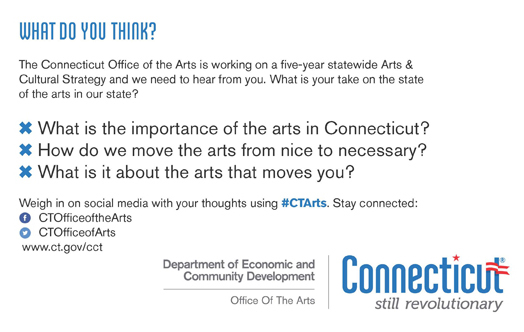
The aim of the strategic planning effort is to move perception of the arts from "nice to necessary," according to the agency’s website. “jobTo do this, we've engaged a firm to help guide our discussions and considerations and are utilizing a Design Thinking approach to this process.”
The firm, Austin-based Public City, is a culture-driven public engagement consultancy and studio. Public City works “to create authentic culture-based experiences that allow our clients to deeply connect with their publics.”  The firm’s website cites 25 years of experience “strategizing, designing, commissioning, exhibiting, and partnering with cities, businesses, artists, designers, and curators.”  Connecticut is listed first on the company’s client roster, which includes numerous Texas organizations and others from throughout the country.

COA has used social media, Survey Monkey, and regional charrettes for data collection in Connecticut.  Regional charrettes were conducted in collaboration with regional partners and were “small think tank discussions by invitation which represent a wide sampling of voices.”  Facebook and Twitter sites were used, along with the hashtag #CTArts.

The Office of the Arts develops and strengthens the arts in Connecticut and makes artistic experiences widely available to residents and visitors, according to the agency website. Through its grant programs, COA invests in Connecticut artists and arts organizations and encourages the public’s participation as creators, learners, supporters, and audience members, the site explains.

In addition, the Office of the Arts plays an ongoing convening role and provides an array of training and professional development opportunities, and also collects and disseminates state, regional, and national arts information resources via web communications, directories, publications, data-sharing, one-on-one consultations, and referrals.COA_outreach(revised.med)

The staff position that COA seeks to fill will report to the state’s Director of Culture and work “independently to support the grant-making, researching, and developing activities necessary to implement arts and cultural programs in a wide range of artistic areas.”  Applications for the position – with an anticipated salary range between $62,973 and $81,493 – are due by September 22.

Following data collection and analysis in the strategic planning process, COA anticipates sharing results and engaging in further outreach. The final plan was set to emerge this week, according to the COA website.

PERSPECTIVE: Can the ‘Sharing Economy’ of Regionalism Reduce Income Inequality?

by Frank Shafroth So far, 2016 has been framed by unfolding fiscal tragedies in a number of cities -- Flint, Mich.; Ferguson, Mo.; and East Cleveland, Ohio, come to mind. Plagued by high poverty, rising crime rates and diminished sources of revenue, these cities are examples of the increase in income inequality among U.S. municipalities.CT perspective

Just as the richest Americans have raced ahead of working-class Americans, there are haves and have-nots among cities, too. It got me thinking: What role should states play in all of this? And more specifically, are there ways to use the “sharing economy” to narrow the disparity gap?

For a change, we’re not talking about Airbnb or Uber. The sharing economy I mean is about regional governance, or sharing agreements where local policymakers create new, multijurisdictional fiscal arrangements to address regional objectives.

Right now, throughout America, otherwise identical households pay different taxes for the same level of public services simply because they live in differenq1t cities. Bo Zhao, senior economist at the Boston Federal Reserve, wonders if such differences in taxes put some cities or counties at a disadvantage in economic competition. After all, he says, fiscal disparities occur when economic resources and public service needs are unevenly distributed across localities. For the most part, it’s been up to cities and counties to attempt to address these growing disparities. There are any number of longstanding examples of regional taxation and regional tax-base sharing across the U.S., such as in Minneapolis-St. Paul. More recently, there are new innovations on the theme: The Scientific and Cultural Facilities District, for example, distributes roughly a tenth from a 1 percent sales and use tax to cultural facilities throughout the Denver metropolitan area.

States are really in the best position to implement sharing agreements, but few do. One exception is Minnesota, which more than a generation q2ago enacted legislation to encourage a sharing economy statewide. The Minnesota Fiscal Disparities law has three important goals: reduce the impact of fiscal considerations on location of business; reduce interjurisdictional competition; and direct resources to communities facing the greatest fiscal pressures.

The law shifts millions of dollars in property taxes to be shared among communities in a metro area, including cities, counties and school districts. Each jurisdiction or entity “contributes” 40 percent of post-1971 growth in its commercial-industrial property tax base to an areawide pool, where the tax base is then allocated among local governments in inverse relation to their per capita fiscal capacity.

The percentage of the total q3tax base in the Minneapolis-St. Paul areawide pool has increased from 6.7 percent in 1975 to 37.6 percent by 2012. More than $588 million of taxes were shared among the participating localities in 2012. The distribution of shared revenue reduced incentives for cities to compete for businesses and infrastructure projects, and it created greater incentives for shared investments, especially in infrastructure.

It is an effective fiscal disparities program. But unfortunately, despite the growing income disparity among localities and regions, the approach does not seem to be catching fire with other states or with the biggest potential player of all, the federal government.

________________________________________

Frank Shafroth is the director of the Center for State and Local Leadership at George Mason University, and was director of policy and federal relations for both the National Governors Association and the National League of Cities.  He is a columnist for Governing magazine, where this article first appeared.  Reprinted with permission.


PERSPECTIVE commentaries by contributing writers appear each Sunday on Connecticut by the Numbers.

 Also of interest… Progress Made on Regional Cooperationmap