
PERSPECTIVE: New Economic Perspectives on the I-91 Knowledge Corridor
/by Don Klepper-Smith Today, as I look out over our economic landscape in mid-2016, and given recent developments, I believe there is enough evidence to suggest that the odds of a U.S. recession over the next 12-18 months have risen to roughly 30-40 percent.
During our last recession, the National Bureau of Economic Research (NBER) did not make the official call until December 2008, a full year after the recession began, and after the November 2008 presidential election. So given the 2016 presidential election and the current political environment, it is highly unlikely that the so called "R- word" will be formally uttered by NBER before the end of 2016.
If there's one thing I've learned in my 35 years of being a professional economist, it's that once the dominos start falling in a given direction, either to the upside or the downside, expect them to do more of the same. In other words, the economic status quo always perpetuates itself.
Good news begets good news, and bad news begets more bad news. The trick is in discerning the "turning point", which has so many intangibles attached to it. Bottom line: We are clearly starting to see cracks in our economic recovery, but recession is not a foregone conclusion.
 Essentially, structural change relates to those factors within the domestic economy which are NOT related to, and operate independent of, the U.S. business cycle. Structural changes have to be understood in their scope and magnitude in impacting today’s economy because many of these same factors will also be affecting future levels of growth.
Often unappreciated by federal and state policymakers, these structural changes have had profound and significant effects on levels of economic growth and have vastly reshaped our economic landscape over time. As a result, policy options are far more complicated and challenging.
The good news is that the current U.S. expansion is seven years old this summer, a bit longer than the average post-war recovery of five years. Despite all the rhetoric and cheerleading, the domestic economy grew just 1.7%, 2.4% and 2.6% respectively over the last three years, about a half a percent below our long-term average. In fact, the last time we saw “average growth of 3%” was in 2005. Today, the economic fundamentals clearly argue for another year of “modest growth” in the range of 2%, but red flags are starting to appear.
Importantly, the traditional tools for stimulating the domestic economy - monetary and fiscal policy - have either been exhausted, or are politically unpalatable as of mid-2016. Here’s the bottom line: With little means to stimulate the U.S. economy, the overall economy is poised for just modest, below-average, real GDP growth in the 2%-2.5% range for both 2016 and 2017.
In Connecticut, there's clearly been an escalating "crisis of confidence" in the state's business community that's been long ignored, and it's not going to turn around quickly. Research shows that both business confidence and consumer confidence don't turn on a dime, and that it takes many years to rebuild confidence once it's lost.
The present lack of fiscal discipline in state and local finances is clearly one contributing factor. With State and local budgets climbing three, four and five percent annually, and those on fixed incomes earning one to two percent, it doesn't take a degree in math to understand that "mounting fiscal stress" is already baked into Connecticut's fiscal picture over the next ten to fifteen years.
Inform CT is a public-private partnership that provides independent, nonpartisan research, analysis and public outreach. Highlights of the August 2016 Inform CT survey results include:
- 40% of the state’s residents say they are likely to move out of state within the next five years.
- More significantly, more than half of those between 18-25 also said they will leave in the coming years, adversely impacting the local labor supply in the years ahead

The issues cited include lack of economic growth, lack of jobs, health insurance costs, declining business conditions, high S&L taxes, and a transportation system that cannot support the needs of its workforce.
Look at the key economic metrics, Connecticut vs. Massachusetts:
- Unemployment: CT at 5.6% in August 2016; MA at 3.9%; US at 4.9%
- Unemployed: CT up 5,500 over last year; MA down 30,300
- State Tax Revenue: CT up 0.8%; MA up 1.9%
- Single Family Housing Sales: CT up 9.9% year-to-date; MA up 14.2%
The Connecticut economy is expected to see growth of about 1%-1.5% in both 2016 and 2017, well below our long-term average annual growth rate of 2.5%.
Four recommendations for Connecticut:
- To promote fiscal discipline, adopt a state spending cap tied to the CPI-U with accountability, adhere to the present spending cap laws on the books, which has been circumvented, and seek full accountability and visibility, making it known to the public when spending caps are exceeded.
- Privatize where it makes sense.
- Reconfigure wage and benefit packages for state and local workers to reflect what the private sector is paying.
- Promote regionalism and the sharing of resources with the idea of increasing productivity.
If the region wishes to be competitive in a global marketplace that is increasingly competitive and subject to profound structural changes, then emphasis on the STEM skills- science, technology, engineering and math provides a gateway for growth.
STEM skills set the table for expansion in our manufacturing sector, which carries significant economic multipliers. It’s manufacturing which begets non-manufacturing, not the other way around. For every manufacturing job created, there are another 1.5 jobs created elsewhere in the local economy.
_______________________________________
Don Klepper Smith is Chief Economist & Director of Research at DataCore Partners LLC and Economic Advisor to Farmington Bank. This is adapted from his presentation to the New England Knowledge Corridor Mayors’ Economic Forum on October 5, 2016.
PERSPECTIVE commentaries by contributing writers appear each Sunday on Connecticut by the Numbers.

 In recent months, First Niagara did consolidate five Connecticut branches (Woodstock, Dayville, Hamden, East Haven and Madison), and all of the employees who worked at those branches were offered positions within the bank, officials indicated, and no layoffs were associated with that consolidation.

 Unite For Sight's international eye care services with partner local eye clinics are provided year-round and are comprehensive, including examinations by local eye doctors, diagnosis and care for treatable conditions, education, and preventative care. The organization’s website indicates that Unite For Sight has provided eye care services to more than 2.1 million people worldwide, including more than 93,166 sight-restoring surgeries.

 The conference also includes Social Impact Labs, which provide an opportunity for selected speakers to present their new idea in the format of a 5-minute pitch. All of the presentations are ideas that are being developed, meaning that the ideas are in the brainstorming, early development, or early implementation stage. Following each presenter’s 5-minute pitch, there is a 15-minute period for discussion and coaching with two expert speakers, questions, answers, and feedback from the audience.
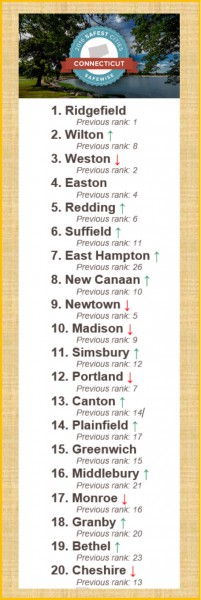 In 2014, roughly 30 out of every 1,000 people across the U.S. were victims of crime, while Connecticut’s crimes affected only 21 out of 1,000 people. Among the state’s 20 safest cities, however, only about three crimes were reported for every 1,000 citizens.

 Recent articles by The New York Times and Atlantic are referred to, noting that they also reflected poorly on the state’s current condition. National Review adds to the journalistic observations of a state filled with seemingly intractable dilemmas, noting that “Connecticut’s tax system is currently so dependent on the incomes of Fairfield County high-earners — as Governor Malloy has often made clear — that even the slightest variations can trigger a budget crisis.” The article adds, however, that “finance lies somewhere near the bottom of a long list of factors in explaining the current state of Connecticut.”

 And it gives to ambitious, corrupted, or deluded citizens (who devote themselves to the favorite nation), facility to betray or sacrifice the interests of their own country, without odium, sometimes even with popularity; gilding, with the appearances of a virtuous sense of obligation, a commendable deference for public opinion, or a laudable zeal for public good, the base or foolish compliances of ambition, corruption, or infatuation.


 “The New England Region is looking forward to the expansion of two weekends for our Winterfest tournament,” says Roxann Link, New England Region Junior Commissioner. “All of our clubs, players and coaches have enjoyed playing at the Connecticut Convention Center and are excited that we will be able to add more teams.”

 Employers in Durable Goods Manufacturing, Nondurable Goods Manufacturing and Other Services plan to reduce staffing levels, while hiring in Construction is expected to remain unchanged, according to the survey.
 In the Northeast, 20 percent of employers surveyed anticipate stronger hiring activity in Quarter 4 2016. Connecticut employers expectations are somewhat lower.

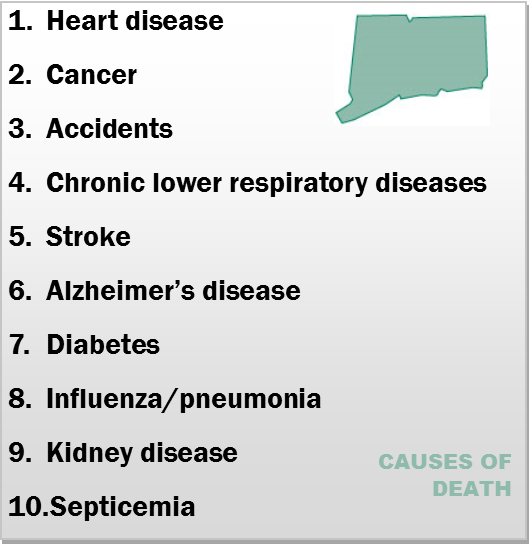
 eaths due to diabetes, and 48th in deaths caused by stroke. The state ranked 15th, however, in deaths caused by septicemia and 35th in accidental deaths.