

Opponents to Natural Gas Pipeline Rally to Grow Public Interest
/A planned natural gas pipeline in Connecticut and neighboring states brought protesters out in Suffield and East Granby, calling attention to potential adverse environmental impacts. Kinder Morgan’s natural gas project, Connecticut Expansion, is scheduled to begin construction in Suffield and East Granby shortly, according to the Connecticut Sierra Club, which organized the protest and has been conducting a public education initiative opposing the plans.
The People Over Pipelines March, held Saturday, mirrors similar efforts held in Massachusetts, aimed at drawing attention the ratepayer subsidized gas pipeline expansion. Participants followed the Kinder Morgan pipeline route in Suffield and East Granby. Co-sponosrs of the effort included 350 CT, Toxics Action Center, Bethlehem Ecodefense and Berkshire Environmental Action Team.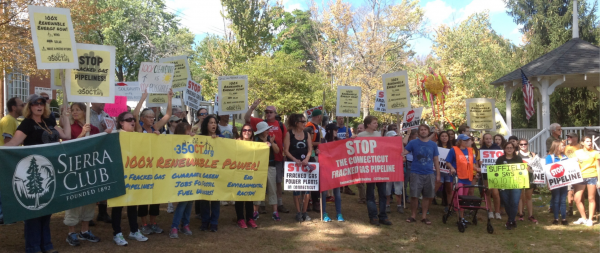
At an accompanying rally, Sierra Club’s Martha Klein said, “We’re here today to fight for the future of our planet, but the real reason to oppose this new pipeline is that it’s expensive, unneeded and what’s worse we’re paying for it!” The high pressure, large diameter fracked gas pipeline is being built in three states Sierra Club officials point out, noting that methane (natural gas) causes global heating that is 100 times worse than carbon dioxide in the near term.
Diane Lentakis of 350 CT added, “I’m marching here today to oppose a new taxpayer-funded pipeline because natural gas presents many of the same problems as oil and coal: toxic emissions, huge transport costs, and huge risks of accidents. I want Connecticut to be a leader in our country’s transition to clean energy. We can take a major step towards this goal by opposing this costly pipeline and instead investing in renewable and clean energy. “
Sierra Club officials explain that Connecticut residents have been paying for the expansion of fracked gas in the state through ratepayer increases on their electric bill since 2013, as a result of state lawmakers approving a “Comprehensive Energy Strategy.” In 2015, the General Assembly passed a law that mandated future ratepayer subsidies for multi-state gas pipeline projects, which will lead to ratepayers subsidizing the construction of interstate gas pipelines.
The state Department of Energy and Environmental Protection (DEEP) “is the agency in the state that both procures large natural gas projects, and also issues permits for aspects of the construction. The aim of the State energy plan is to create thousands of new gas customers, through advertising and ratepayer subsidies. Only the two large corporations, Eversource and Iberdrola, will benefit from the expansion. They have a monopoly on gas distribution in the area,” Sierra Club pointed out in a news release highlighting the issue. Eversource owns Yankee Gas; Iberdrola owns Connecticut Natural Gas and Southern CT Gas.
Sierra Club officials indicate that it is “not likely” that Connecticut citizens will benefit from the pipeline, stating that “Natural gas is not cheaper, cleaner or safer than other fuels. Gas, which is methane, is currently more expensive than heating oil in Connecticut and according to the International Governmental Panel on Climate Change (IPCC), worse for the environment than oil or coal. Methane extraction (fracking), use, and transport produce significantly more greenhouse gas emissions causing worse climate change than other fossil fuels.”
 Studies show that there is no unmet demand for natural gas in Connecticut, opponents of the planned pipeline said, stressing that gas pipelines are routinely only half full now and electricity demand in New England has remained virtually flat over more than 10 years. Proponents have stated otherwise.
According to DEEP, there are approximately 590 miles of transmission pipeline in Connecticut, including 16 miles in Long Island Sound. These pipelines range in size from 2” to 36”. Pressures range from 750 pounds per square inch gauge (psig) to 1,440 psig. There are 5 compressor stations in Connecticut with a total of approximately 110,300 horsepower. The pipelines currently in place:
- Algonquin Gas Transmission (AGT - Spectra Energy Corporation) originates in New Jersey where it connects to Texas Eastern and runs from Danbury northeasterly to Thompson, with major spurs to North Haven and New London.
- Iroquois Gas Transmission System (IGT) starts at the Canadian border, enters Connecticut at Sherman and runs southeast through Milford, then offshore to Long Island.
- Tennessee Gas Transmission (TGP -Kinder Morgan) starts in the Gulf, enters Connecticut in Greenwich, runs northeasterly leaving Connecticut in Suffield, with a spur from Massachusetts to Torrington.
The Sierra Club will be conducting a public education session on the pipeline at Quinebaug Valley Community College on Thursday, Sept. 29 at 1 p.m.

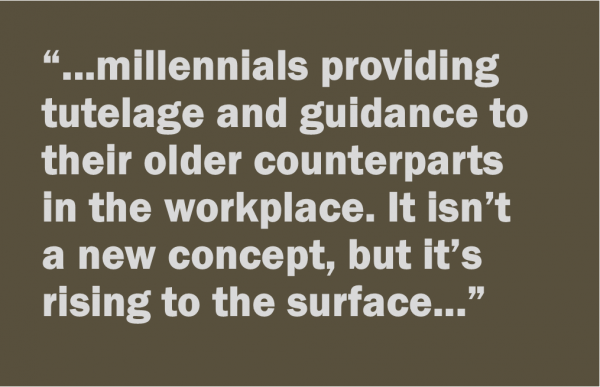
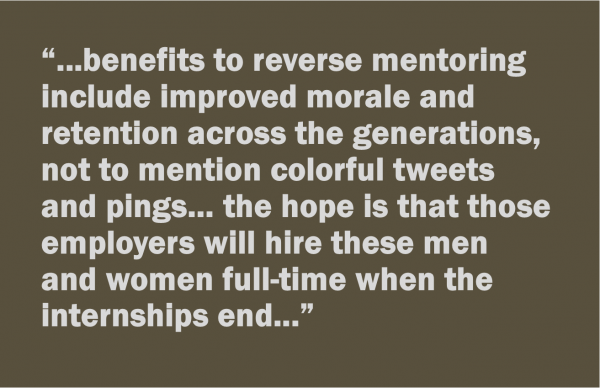 Other benefits to reverse mentoring – improved morale and retention across the generations, not to mention colorful tweets and pings that fly across social media platforms and engage the consumer.
 The U.S. Department of Education July 2016 Data Point report from the National Center for Education Statistics includes data from the School Crime Supplement (SCS) to the National Crime Victimization Survey, a nationally representative sample survey of students ages 12 through 18, which were used to analyze trends in hate-related words. The SCS study is completed every other year.
 oped by the federal Health Resources and Services Administration notes that “indirect bullying” includes “rumor spreading or encouraging others to exclude a peer.” Bullying is described as “a public health problem and requires a coordinated community response.”



 FBI Special Agent Judy Eide, a 25-year veteran currently assigned to the Bureau’s New Haven Division Computer Crime squad and a coordinator of the Connecticut Chapter of InfraGard, will be one of the speakers. Also on the program is Mark Ramsey the Chief Information Security Officer for ASSA ABLOY – Americas and President of the Connecticut Chapter of InfraGard. Ramsey also teaches at Fairfield University, and previously held information security positions at Stanley Black & Decker and General Electric.

 “We want this to be a must-attend event for anyone responsible for strategic technical decisions within their organization,” says Steven Bulmer, Walker’s vice president of professional services. “Tech Impact is really a self-defining event based upon the intense interest and demand from our clients, especially for information security services.”
 mission,” said Ted Carroll, President of Leadership Greater Hartford. “It is important that our brand reflect the organization we have become and where we will continue to be headed in the future - making our communities better and stronger.”

 For practitioners, thinking about a collaborative effort of this scope even five years ago would have been impossible. Finding money for buses for field trips, combined with the time-crunch of the classroom day and ‘teach to the test’ mentality made learning outside of school walls nearly impossible. Museum educators created one terrific program after another for school audiences, but invariably, visits dwindled. And students suffered the consequences. But as demonstrated time and time again in Connecticut’s history, state educators and historians rose to the challenge. Our story has a happy “middle” (the ending has yet to be written.) Not content with mediocrity, two groups of organizations led by people who care about Connecticut’s students approached this growing problem from two different angles.
 f conversations, phone calls, deep discussions and “ah-ha” moments that paved the way to unprecedented collaboration between educators, museums, public historians and academics. If, by working together, we could build bridges of communication and access between the people who steward Connecticut’s past, and the people who have daily interaction with our students, then wonderful, magical, life-long critical skills learning would happen. And it is working.
 s the state plans for the court-ordered overhaul of school funding and the creation of new standards for high school graduation and special education, I would like to offer the collective experience of this group of “power historians and educators” (yes, similarities to the Power Rangers are purposeful) as a resource for state planning.

 At #296 is Glastonbury-based Fiondella Milone & LaSaracina. FML was founded in 2002 “for the purpose of providing professional auditing, tax and business consulting services to a wide range of clients and industries throughout the Northeast,” the company’s website indicates. After working together at Ernst & Young, the firm’s founding partners, Jeff Fiondella, Frank Milone and Lisa LaSaracina launched FML.
 counting newsletter and the award-winning National Benchmarking Report.

 The top 10 undergraduate schools to study game design were University of Utah (Salt Lake City, UT), University of Southern California (Los Angeles, CA), Rochester Institute of Technology (Rochester, NY), DigiPen Institute of Technology (Redmond, WA), Becker College (Worcester, MA), The Art Institute of Vancouver (Vancouver, British Columbia), Hampshire College (Amherst, MA), Michigan State University (East Lansing, MI), Drexel University (Philadelphia, PA) and New York University (Brooklyn, NY).
 raduate schools to study game design were University of Utah (Salt Lake City, UT), University of Southern California (Los Angeles, CA), Rochester Institute of Technology (Rochester, NY), DigiPen Institute of Technology (Redmond, WA), Becker College (Worcester, MA), The Art Institute of Vancouver (Vancouver, British Columbia), Hampshire College (Amherst, MA), Michigan State University (East Lansing, MI), Drexel University (Philadelphia, PA) and New York University (Brooklyn, NY).




















