Children Who Primarily Attended Early Childcare Centers Before Kindergarten Start School Stronger in Math, Reading

Young children who attended day care, preschool and other types of center-based care in the year before kindergarten earned higher scores in math and reading and had stronger learning and cognitive flexibility skills than their peers who did not participate in such activities, according to a national report by Institute of Education Sciences (IES). The study revealed racial and ethnic disparities in early care arrangements. The percentages of first-time kindergartners who received center-based care as their primary early care and education arrangement the year before kindergarten were lower for Hispanics (48%) and Pacific Islanders (28%) than for whites (58%), blacks (56%), Asians (62%), American Indians/Alaska Natives (57%) and kindergartners of two or more races (61%).cover

About 36 percent of kindergartners from households where a primary language other than English was spoken had no regular early care and education arrangement in the year before kindergarten, compared with 18 percent of kindergartners whose primary home language was English. The data of the study, released this year, is from the fall of 2010.

The 60-page report, produced by the American Institutes for Research (AIR) for the U.S. Department of Education’s National Center for Education Statistics (NCES), drew from a nationally representative sample of U.S. kindergartners as they entered school.

Connecticut's Office of Early Childhood, established in 2014, notes that "Study after study confirms the value of high-quality early childhood education for developing the cognitive, social and emotional skills that children need to succeed in kindergarten."

Major findings from the study, which examined children’s performance as they entered kindergarten in fall 2010, include the following:

childrenReading: children who had no regular early care and education arrangements the year before kindergarten and those whose primary arrangements were home-based relative care or non-relative care tended to score lower than children who were primarily in center-based care or who spent the same amount of time in multiple care arrangements.

Math: children who had no regular early care and education arrangements the year before kindergarten tended to score lower than children who attended any type of arrangement outside of parental care. Children who were primarily in home-based relative care scored lower than children who were primarily in home-based non-relative care, center-based care or multiple care arrangements for equal amounts of time.

Cognitive flexibility scores were lower, on average, for children who had no regular early care and education arrangements the year before kindergarten and for those whose primary arrangements were home-based relative care than for children who primarily attended center-based care. (These scores measure a child’s ability to adjust behavior or attention in response to changes in the environment.)

Approaches to learning—in which teachers rated students on attentiveness, task persistence, eagerness to learn, learning independence, flexibility, organization and ability to follow classroom rules—tended to be lower for children who had no regular early care and education arrangements the year before kindergarten than for those who were primarily in home-based non-relative care, center-based care or multiple care arrangements for the same amount of time.

The report examined five categories of primary early care and education arrangements for children:

  1. center-based care, including day care centers, Head Start programs, preschool, prekindergarten and other early childhood programs;
  2. home-based relative care;
  3. home-based non-relative care;
  4. multiple arrangements for equal amounts of time;
  5. no regular early care arrangement (i.e., mainly parental care only)

It found that the percentage of children who attended center-based care as their primary arrangement before kindergarten has increased only slightly over nearly two decades, from 55 percent in 1995 to 58 percent in 2012.

The American Institutes for Research (AIR) is a nonpartisan, not-for-profit organization that conducts behavioral and social science research and delivers technical assistance both domestically and internationally in the areas of health, education and workforce productivity.


https://youtu.be/bs_Svx6JPro

PERSPECTIVE: All Ways Able Best Describes Deaf and Hard-of-Hearing

by Jeffrey S. Bravin This is a pivotal time for the American School for the Deaf.

In April, we celebrate 200 years of deaf education in the United States and ASD’s bicentennial anniversary.  While much has changed since our early days, ASD’s dedication to providing a quality education for all deaf and hard of hearing children has remained the same. CT perspective

We continue to explore innovative teaching methods while incorporating state-of-the-art technology into our classrooms.  ASD is equipped with the latest technology to provide students with total access to language – this includes signing, captioning, and advanced digital systems to assist students with hearing aids and cochlear implants.

We firmly believe that the use of sign language is also critical to ensure that our students benefit from communication access in all environments.  Exposing children to a communicatively accessible environment at the earliest possible age results in language development and academic success.  The bilingual approach will foster this accessible environment while providing our students with the tools to achieve fluency in two languages. q1

Now in the second year of our three year strategic plan, we are hard at work growing our enrollment, raising our academic rigor, and integrating the American Sign Language/English Bilingual Approach on campus.

With our eyes to the future, we are also completing a comprehensive branding and marketing effort to reposition ASD as the first choice in education for all deaf and hard of hearing students.

We have unveiled a new logo, tag line (ALL Ways Able), and credo (see below) for the school that not only captures ASD’s centuries of excellence, but also translates our visions for the future as we embark on our next 200 years. Our credo:

What does it mean to be able?asd-logo

It means you can.

You have what it takes.

To think.

Question.

Decide.

Dream.

Achieve.

Not just in a classroom, but in the world.

So we prepare deaf and hard-of-hearing students

not only for diplomas,

but for their whole lives.

By nurturing the whole child:

Intellectually.  Emotionally.  Physically.  And socially.

and by giving every student everything they need

to focus not on obstacles or challenges,

but on opportunities and potential.

Our students and their families find we’re more than a school -

we’re a true community, made up of passionate professionals

And, using a holistic ASL/English bilingual approach,

we help students and their families be well-prepared

To participate in everything tomorrow will bring.

Because we want all our students

To look forward to futures in which they’re…

ALL ways able.

_______________________

Jeffrey S. Bravin is Executive Director of the American School for the Deaf, located in West Hartford.  Founded in 1817, the American School for the Deaf was the first permanent school for the deaf in the United States and a nationally renowned leader in providing comprehensive educational programs and services for deaf and hard-of-hearing students.

https://youtu.be/MaMJ_sXbnc4

Pasta Making Business Continues to Grow, Government Continues to Help

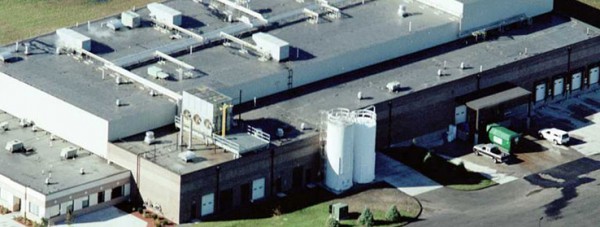
Sometimes, home-grown businesses decide to stay in Connecticut.  That was the case this fall as Carla’s Pasta – an American Dream business success story – reportedly spurned an offer to relocate to a western state, and chose instead to expand in South Windsor, aided by a significant tax abatement. The company produces filled pastas, Italian sauces and pestos, appetizers, and entrees. The brainchild of Carla Squatrito, the business now employs 156 people, including her sons, Sandro Squatrito and Sergio Squatrito, who are vice presidents of business development and operations, respectively. The Italian food product manufacturer, which was launched in 1978, in Manchester and moved to South Windsor in 1997. carlas1

The latest expansion deal, as reported by the Journal Inquirer, will see the town give the family-run Carla’s Pasta a 70 percent tax abatement for seven years, reducing the company’s tax burden by well over $200,000 per year.  The planned expansion is expected to generate 60 to 100 new jobs, and is due to be completed next fall. In 2013, Carla's completed a 30,000-square-foot expansion of its South Windsor facility, the Hartford Business Journal reported.

Town Manager Matthew Galligan, the JI reported, said the state of Utah was courting the company, but Carla’s ultimately decided to stay in town as a result of the deal that was approved by the Town Council.

Carla, a native of the small Italian village of Madonna del’Olmetto, emigrated to the U.S. at age 27.  Her business began as a means of bringing “home-made filled pastas, Italian Sauces and Pestos, made from fresh ingredients, the flavors of her youth” to local customers, retail and later wholesale.  Since 2010, Carla has been recognized by the National Women Business Owners Corporation as an outstanding CEO.carla

The company distributes its pasta to restaurants, institutions and supermarkets. In 2012, the company estimated that it was making about 2 million pounds of pasta per month, with projections to increase that number by a third.

The company received a bridge loan of $2,175,000 from Connecticut Innovations that year to help purchase and install a fuel cell along with a $750,000 grant from the Connecticut Clean Energy Fund. The state assistance was aimed at supporting the company efforts to be environmentally conscious and energy efficient.

In Oct. 2015, the company launched its own retail brand, Cucina di Carla.  Among the distinctive products inspired by the season:  autumn-inspired cinnamon clove pasta ravioli filled with golden pumpkin, whole milk ricotta and Fall spices.

https://vimeo.com/150720277

Digital Citizenship Summit, Born in CT, Grows on Twitter

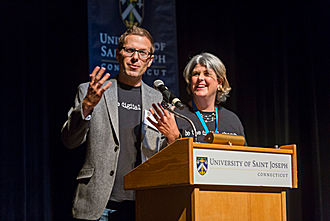
A year ago, the first annual Digital Citizenship Summit was held in West Hartford, hosted by the University of Saint Joseph.  This Friday, the second annual Summit will be held in San Francisco, hosted by Twitter at their global headquarters.  The livestream is expected to reach 3.2 million people globally via Twitter Livestream. The mission of the initiative hasn’t changed as the reach has grown - to unite people, organizations, and companies around the world committed to the safe, savvy, and ethical use of social media and technology. The Digital Citizenship Summit, being held on October 28, is described as a global event, with speakers from Australia, Spain, England, Ireland, Canada, and Kenya.  Attendance can be in-person or virtual.digcitsummit-logo-twitter

The event includes a diverse range of well-known and emerging voices with “quick and powerful” 10-minute talks, along with a range of panels covering the breadth of digital citizenship.  The three themes for the Summit are: Citizenship, Literacy, and Advocacy.

Organizers say “the Digital Citizenship Summit isn’t a conference, it is a movement - away from fear and distrust, and towards educating, empowering and engaging all groups.”  The Summit will share best practices and insights, and promote collaboration, bringing together educators, parents, students, organizations and industry.

The initiative was launched by West Hartford’s David Ryan Polgar and academician Marialice B.F.X. Curran.  Dr. Curran's teaching, scholarship and service focus on digital citizenship and social media in K-12 teacher education. She was named one of the Top 10 Digital Citize65ea16_1edb198f98dd4c51bfd32665595a5f99-mv2nship bloggers to follow in 2014 by Common Sense Media. Polgar, an attorney and college professor, is a frequent speaker (three-time TEDx) and tech commentator on television and in print, focusing on digital citizenship, creativity, cyber ethics, tech balance and humanizing the online experience.

“Millions of people are struggling with modeling safe, savvy and ethical behavior online.  Beneath the surface, there are major conflicts between parents, students, educators and administrators that span personal safety to politics.  The Digital Citizenship Summit bridges the gap between what we want to see online and how to actually be the digital change,” organizers point out.

The event will be emceed by Kelly Wallace, a digital correspondent and editor-at-large for CNN. It is also serving as the kick-off for US Media Literacy Week. The Digital Citizenship Summit will be livestreaming from Twitter headquarters from 9 AM PST to 5:00 PM PST. It can be seen on the Summit website or from Twitter's @Safety account. Individuals do not need to register in order to watch the live stream, but all registrants will receive post-event videos and resources, according to organizers.

2fbe44_14adf49eed2f4d16a1a2b224de945ee0-mv2Joining internationally renowned speakers, there will be student voices – “passionate voices from elementary school students to college-age advocates who are already leading us into the future as positive role models.”  Among the speakers is Jim Steyer, Founder and Chief Executive Officer of Common Sense Media, the nation’s leading non-partisan organization dedicated to improving media and technology choices for kids and families. He is also the Co-Founder and Chairman of the Center for the Next Generation.

In addition to the annual flagship summit event, past digital summits have been held in Ireland and the United Kingdom, with plans for a summit in Australia later this year.

Health Insurance Report Card Provides Data on Companies Doing Business in CT

Members of health insurance plans in Connecticut offered by a changing list of companies competing for their business, were “always or usually able to see a specialist or obtain routine care as soon as they wanted,” according to a new annual report card released by the state insurance department. Insurance Commissioner Katharine L. Wade said that the 2016 Consumer Report Card on Health Plans in Connecticut is now available on the Insurance Department’s website, providing consumers with information on nearly 20 health insurers that are marketing plans for 2017.

“Open enrollment season is upon us and the Department’s newly formatted and consumer friendly Report Card can be a very useful tool for individuals and employers researching their coverage options for 2017, particularly for the thousands who can begin shopping November 1 for health insurance through Access Health CT,” Commissioner Wade said.

The Commissioner also noted that the department has “expanded mental health information in this report based upon work of the Insurance Department-led behavioral health working group which included consumers, providers, health plans and other agencies.”ccover

Among the aspects that the report card reviews, by company, are the reasons and proportion of denial of claims as well as member satisfaction with the leading companies in Connecticut, including Aetna Health, Anthem, Cigna, ConnectiCare, Harvard Pilgrim , and Oxford Health.

The Department has been publishing the report for nearly two decades and the information has expanded each year as more quality measures were added.  “The intent remains the same – provide useful information to educate consumer on what health plans best suit their needs,” Commissioner Wade said.

The 2016 Report Card provides an overview of Connecticut’s health insurance managed care landscape by comparing care measures and member satisfaction surveys from six health maintenance organizations (HMOs) and 11 indemnity companies that have a total enrollment of more than 2.4 million members.

For this report, the Department worked with the Connecticut Economic Resource Center to help provide a statistical analysis and redesign. The report now includes three years of comparative data where available to reflect changes in insurance provisions due to the implementation of the federal Affordable Care Act.

member-satisfactionThe report also indicates that “most participating primary care and specialist physicians are board certified, with increases in the percentage of providers by company from 2013 to 2015.”



“This new, expanded report card offers everyday people, advocates and policymakers a graphic snapshot of consumer experience with the state's health plans, said Lynne Ide, Director of Program & Policy, Universal Health Care Foundation of CT.  “It illustrates successes and gaps in our state's health care marketplace - and helps us all focus on opportunities for improvement.”

The mission of the Connecticut Insurance Department is to protect consumers through regulation of the industry, outreach, education and advocacy. The Department recovers an average of $4 million yearly on behalf of consumers and regulates the industry by ensuring carriers adhere to state insurance laws and regulations and are financially solvent to pay claims. The Department’s annual budget is funded through assessments from the insurance industry.

Javier Colon Music Video Collaboration for NASA Takes Off, Includes CT Science Center, UHart

An Atlas V rocket blasted off with NASA's Lunar Reconnaissance Orbiter from Cape Canaveral in Florida on June 18, 2009. Two years later, on June 29, 2011, West Hartford’s Javier Colon won the inaugural season of the NBC-TV hit “The Voice.” It’s doubtful that anyone would have predicted that the trajectories of those two orbits would coincide.webpage

However, they have – with the release this month of a new music video co-performed by Colon, along with Matt Cusson.  The new song, “The Moon and More,” was inspired by the Lunar Reconnaissance Orbiter (LRO) mission, and produced in collaboration with NASA’s Goddard Space Flight Center in Greenbelt, Maryland and veteran video producer/editor David Ladd.

Colon, who earned a Bachelor of Music in Music Education from the Hartt School at the University of Hartford, said: “This project brought me back to when I was a kid watching NASA launch the shuttle missions.  Every kid at some point wants to fly, and I think that dream has a lot to do with NASA’s exploration of space and discoveries.”

The song and music video focuses on the inspirational nature of studying the moon -- the cornerstone to learning more about the solar system -- and how LRO has ushered in a new era of lunar science. The mission is expected to relay more information about the lunar environment than any other previous mission to the moon.javier_and_matt_still_image_print

The video appears on the NASA LRO website, and is available on You Tube, where comments have been overwhelmingly positive, and numerous space exploration websites.  Filming locations included the Hartt School of the University of Hartford and Connecticut Science Center;  the Intrepid Sea, Air and Space Museum in New York; the National Air and Space Museum in Washington, D.C.; and the “Living on Mars” mural in the Bronx, New York.

“I wanted to create a unique production for the LRO mission that centered around music as a way to engage kids, parents and educators,” said Ladd. “A major focus was also to convey an important and encouraging message to kids, particularly children of color—that nothing is beyond their reach. You can achieve the goals you set and take yourself to places you never thought possible — just as NASA has done in going back to the moon with LRO and its continued journey into the solar system.”

Ladd conceived of the project, and selected Cusson and Colon to write the song and perform the music.  The project came together with a strong sense of destiny.  Ladd had heard Cusson’s music previously, through a mutual friend, and had been of fan of Colon’s since the voice.  When he contacted Cusson to gauge his interest, he learned that Cusson and Colon were friends, musically and otherwise.  The connection was made, and Cusson and Colon set out to create a song that matched – or, as it turned out, exceeded, the story board that Ladd had in mind.

nasalogo-570x450“I picked out five of each of their songs that I liked, and that I thought had a sound that would work.  Then I let them have at it.” Ladd recalled.  When he received the first rough videos from them of the words and music, his response was succinct:  “This is perfect.  Keep running with it.”
They did, and the song was completed earlier this year and debuted in recent weeks.  Ladd hopes the song will boost awareness of the LRO, and transcend it.  “Some have described it as the ‘Frozen’ of space exploration in its majestic feel.  We hope it will have broad appeal, a song that you’ll enjoy on the radio, and be inspired by.”photo

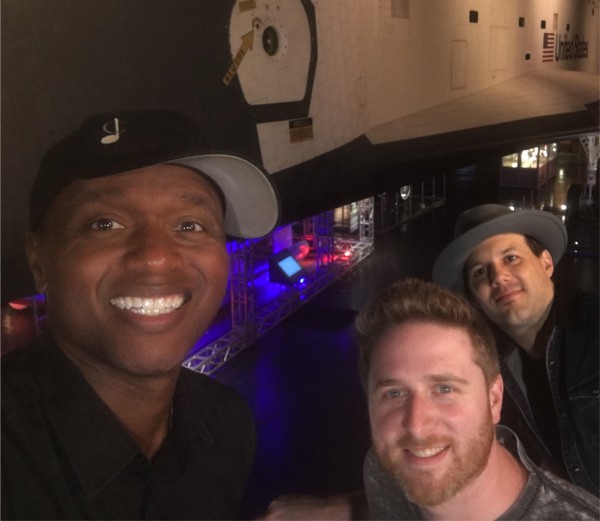
Ladd explained that the casting in the music video, which features people of color (including members of the same family to highlight authenticity) was intentional, so that “kids that don’t always see themselves,” can better connect to the possibilities that science and exploration can offer. (PHOTO:  Javier Colon, David Ladd, Matt Cusson)

The LRO mission team believes “The Moon and More” will have a lasting impact, adding a popular element to an array of education programs that are already part of the LRO mission. The LRO Lunar Workshops for Educators are an award-winning professional development program focused on lunar science and exploration for grade 6-9 science teachers, and programs for grade levels beginning with elementary school have been made available to teachers nationwide.

“It was exciting to have this chance to work with NASA,” said Cusson, a Pittsfield, MA native. “As a musician, you don’t usually think that this is something you could do. But I was honored to offer up my skills and music, and to bring the worlds of science and music together.”

“A number of us working on LRO have had something inspire us to pursue careers in science and engineering,” said LRO Deputy Project Scientist Noah Petro at Goddard. “This video serves as an opportunity to inspire future generations to follow their dreams into the sciences or the arts.”  Ladd expressed appreciation for the supportive efforts of both the Hartt School and the Connecticut Science Center, and indicated that some of the videos best segments were filmed at the Connecticut locations.346876main_lrologo_full

LRO is managed by NASA's Goddard Space Flight Center in Greenbelt, Maryland, as a project under NASA’s Discovery Program. The Discovery Program is managed by NASA’s Marshall Spaceflight Center in Huntsville, Alabama, for the Science Mission Directorate at NASA Headquarters in Washington, D.C.

https://youtu.be/PPB1ZHb9FKA


PERSPECTIVE: Move over Oprah - Giving to Women’s and Girls’ Causes is Growing (and is a Rising Force for Good)

by Carol Buckheit What role do philanthropic funds supporting women’s and girls’ causes play in creating change in Connecticut communities? Increasingly, a big one.

According to the Connecticut Council for Philanthropy, the first women’s fund in Connecticut was established in 1993, formed to gather and distribute dollars to improve the lives of women and girls and inform women about the most pressing issues affecting them in their local communities. Connecticut Community Foundation’s  Women’s Fund, serving the Greater Waterbury and Litchfield Hills region, is one of 12 such funds in the Nutmeg State. The Council reported that the combined assets of these women’s funds in Connecticut have grown dramatically, increasing more than six-fold from $2.9 million in 2002 to $18.7 million in 2011.CT perspective

Nationally, the numbers are even more startling. Between 1990 and 2006, U.S. foundation giving to benefit women and girls (including international grants) grew from $412 million to $2.1 billion, an increase that surpassed the rate of growth for all foundation giving.

Connecticut funders (nearly all of them community foundations) have granted millions of dollars from women’s and girls’ funds to organizations tackling issues uniquely affecting women and girls, including prevention and treatment of eating disorders, dating violence, teenage pregnancy and domestic violence.

Our work, and focus, continues.

infographicIn the 21-town Greater Waterbury and Litchfield Hills area served by Connecticut Community Foundation, recent Women’s Fund grantees have included the Susan B. Anthony Project and Waterbury Youth Services. Each endeavors to build girls’ self-esteem and resiliency through programs sensitively developed just for girls, whether through supportive group therapy for girls in residential care or ensuring girls are connected to strong female role models in fulfilling careers.

New research bodes well for the continued growth of women’s funds and, most importantly, their influence in improving the lives of women and girls.

Data from a new study—the first academic research examining who gives to women and girls causes and what motivates donors to give—was released in May 2016 by the Women’s Philanthropy Institute (WPI) at the Indiana University Lilly Family School of Philanthropy.

The encouraging news: Large percentages of female and male survey respondents (50% and 40%, respectively) reported donating to causes primarily affecting women and girls.  Women reported investing in these causes based on their personal experiences, including experiencing discrimination and having children, and because they believe that supporting those causes leads to the greatest social return to all of society.

An in-depth analysis of giving to women’s funds by the Foundation Center and Women’s Funding Network suggests this belief is valid, pointing to real and significant systemic changes worldwide in areas such as education, health and economic growth.q1

But, there’s even better news from WPI’s research for the women’s funds in Connecticut, particularly those hosted by community foundations like ours: donors trust us and are looking to us to gain a deeper understanding of issues affecting women and girls in local communities.

The authors discussed, “Our research showed that existing donors were highly complimentary of the women’s funds they supported, seeing them as a locus of expertise in their communities with the ability to make both local and systemic changes.”(p. 35).  Donors indicated that they were intentional about their giving, sought specific impacts, and trusted the women’s funds to deliver desired results.

“As more and more people make the connection between giving to women and societal change, we can see that giving to women and girls is not just a temporary trend but is here to stay,” said lead author of the study, Debra Mesch, Ph.D., director of the Women’s Philanthropy Institute. “Understanding the demographics and motivations of those who are giving to women’s and girls’ causes is increasingly important if we are to improve the lives of women and girls, and their families and communities.”

Indeed.

______________________________________

Carol Buckheit is Senior Communications Officer at the Connecticut Community Foundation.  Established in 1923, Connecticut Community Foundation fosters creative partnerships that build rewarding lives and thriving communities in 21 towns in Greater Waterbury and the Litchfield Hills. The Foundation provides leadership in addressing the region’s critical issues, strengthens local nonprofit organizations through grants and technical assistance programs, and works with individuals, families and corporations to establish and steward scholarships and charitable funds.


PERSPECTIVE commentaries by contributing writers appear each Sunday on Connecticut by the Numbers.

Teen Safe Driver Week Observed in Connecticut; Car Crashes Are #1 Killer of Teens

Motor vehicle crashes are the leading cause of death for U.S. teens according to the Centers for Disease Control and Prevention.  In 2014, 2,270 teens in the United States ages 16–19 were killed and 221,313 were treated in emergency departments for injuries suffered in motor vehicle crashes. That means that six teens ages 16–19 died every day from motor vehicle injuries.
Those stark statistics provide the backdrop for the observance of National Teen Safe Driver week, which runs through Saturday,in Connecticut and nationwide. The week-long observance, through October 22,  brings that message to communities across the state by reminding them safety must come first.  Connecticut adopted in 2008 more stringent teen driving laws to raise awareness and reduce crashes, injuries and deaths. The state has seen an 82-percent reduction in fatalities for 16 and 17 year-old drivers from a high of 11 in 2002 and to an average of two per year since the tougher laws began.teen-safety1
"As long as motor vehicle crashes remain one of the leading causes of death for American teenagers, everyone needs to do their part to ensure our youngest, and most inexperienced drivers have the knowledge to make responsible decisions when they get behind a wheel," said Governor Dannel P. Malloy. State Attorney General George Jepsen said, "National Teen Driver Safety Week is a great time to encourage conversations with new and soon-to-be drivers about the importance of safe driving habits. Parents, teachers, advocates and even peers all play a role in helping to make sure that teens make safe choices when operating motor vehicles."
drivingMembers of the Department of Motor Vehicles (DMV) Teen Advisory Board said the week is important for a variety of reasons, and encourages teens to play an active role in promoting safety behind the wheel.  The risk of motor vehicle crashes is higher among 16-19-year-olds than among any other age group, CDC data indicates. In fact, per mile driven, teen drivers ages 16 to 19 are nearly three times more likely than drivers aged 20 and older to be in a fatal crash.
“One second represents when we make a driving decision, be it a good or bad one,” said Armani Nieves, a senior at Hall High School in West Hartford and member of the DMV Teen Advisory Board.  “It only takes one second to be a good or bad driver.”
Maggie Silbo, a junior at Mercy High School and a member of the teen advisory board, said teen drivers can lead by example in many ways.  “To be safe drivers, teens should follow the rules of the road, such as not talking or texting on the phone, obeying the posted speed limits and following the passenger restriction laws,” Silbo said.  Angela Zhu, a senior at Cheshire High School, said teenagers can play an active role as responsible passengers.“It's all about awareness,” said Zhu, also a member of the DMV Teen Advisory Board.  “All it takes is one small sentence.  If you really care about your friends, simply tell them to put down the phone.”
Compared with other age groups, teens have among the lowest rates of seat belt use. In 2015, only 61% of high school students reported they always wear seat belts when riding with someone else. Teens are also more likely than older drivers to underestimate dangerous situations or not be able to recognize hazardous situations, and more likely than adults to make critical decision errors that lead to serious crashes, according to the CDC.
The DMV Teen Advisory Board also came up with the theme for this year’s DMV-Travelers Teen Safe Driving Video contest:  “One Split Second…”  The board designed the theme to engage teens to produce a video on how a split-second decision related to driving can make a difference in the lives of these youngest drivers.
“I believe it is crucial to promote the message of safe driving for teens, especially as there are even more distractions on the road today,” said Kojo Appiah, a senior at Xavier High School in Middletown and a member of the  DMV Teen Advisory Board.  “This video contest is an exciting activity that teens can do with your peers while learning the life lessons and responsibilities of being a safe driver.”
DMV Commissioner Michael Bzdyra said this week is a great time for parents to review the state’s teen driving laws (http://ct.gov/teendriving/laws) and create a safe driving agreement (http://1.usa.gov/1MA7miP) with their teens. “This is an important week because it’s a reminder to teens, parents and communities who can all be positive influences for safe driving in a variety of ways,” Commissioner Bzdyra said.   “This is a great time to discuss safe driving at home, in the classroom or anywhere else to promote good choices related to driving and help ensure teens follow the rules of the road.”


Almond Joy, Born in Connecticut, Is State's Candy Sales Champion

Almond Joy, Milky Way and M&Ms are the likely candies to be greeting Connecticut trick-or-treaters as they move from door to door later this month.  That’s according to candystore.com, which sells bulk candy on-line, in their review of sales data from 2007 through 2015.ct-joy Connecticut's favorite Halloween candy is Almond Joy, with 2,619 pounds of it, on average, ordered each year, the website indicated. Milky Way is Connecticut's second favorite Halloween candy, with 1,366 pounds ordered. M&M's placed third, at 910 pounds on average.

Among Connecticut’s neighboring states, the candy favorite in Massachusetts is Butterfingers; in New York it is Sour Patch Kids, in Rhode Island candy corn topped the list.  Connecticut was the only state where Almond Joy ranked first in candy sales.

Industry research shows that since 2015, online candy sales have increased by 15 percent, according to candystore.com.

The Almond Joy candy bar was introduced in 1946, just after the World War II, when sugar, tropical coconuts and chocolate became more readily available, by the New Haven-based Peter Paul Manufacturing Company,  which was already well-known for its popular Mounds bar introduced in 1921. Today, the Peter Paul Candy Manufacturing Company is a candy-making division within the Hershey Company. It was originally founded in the Elm City in 1919 by six Armenian immigrants led by Peter Paul Halajian, with a manufacturing plant in nearby Naugatuck.

"Almond Joy has seen a resurgence in popularity over the past few years.  No where is that more apparent than Connecticut.  While it cracked the top 3 in a few other states (MN, SD, TX), it was the #1 candy in Connecticut, " said co-CEO of CandyStore.com, Tom Hoeck.

CandyStore.com is an industry leader in candy sales in the United States and Canada, and offers candies of all shapes, sizes, colors, and brands. To determine the best sellers by state, the company reviewed sales from 2007–2015, focusing on the three months leading up to Halloween.candy-map

“Since we sell candy to all 50 states (and Canada), it was easy for us to see a state-by-state breakdown of candy trends and top orders. And we have relationships with all the major candy companies, so they helped us verify as well. Based on this analysis, we determined the Halloween best-sellers that people all over the country love to use in Halloween crafts and treats and give out to trick-or-treaters.”

The company also provides “candy trivia” on its website, noting that during the 1981 inauguration of Ronald Reagan, three tons of jelly beans were served, candy corn is the top selling candy, and two-thirds of American candy bars were introduced more than 50 years ago.

Nationwide, Parents Seek Expanded Health Curriculum in Schools

In Connecticut, a planned, sequential PK-12 Coordinated School Health (CSH) education curriculum is a system designed to addresses the physical, mental, emotional and social dimensions of health.  CSH aims to improve students’ health and their capacity to learn through the support of families, communities and schools working together. A new nationwide survey indicates that the broader, comprehensive definition of health education is precisely what families are seeking in the health education of children.  Teaching kids about drugs, alcohol and sex appears to be less controversial than ever before with the majority of parents in a new poll saying schools should and do teach these subjects.school-health

Many parents want more — saying those topics are not enough — finds the University of Michigan C.S. Mott Children’s Hospital National Poll on Children’s Health. Researchers surveyed a nationally representative sample of parents with kids in middle or high school. Two-thirds of parents polled say schools should definitely cover emotional and mental health issues — which may include such subjects as dealing with depression, stress and bullying — yet only a third say these topics are currently covered by their child’s school.  Another 68 percent of parents want to see schools cover basic first aid, and 63 percent say kids should learn CPR.umh_c_mottpoll_healthed_supportvisual1x

A coordinated approach to school health aligns health and education efforts and leads to improved physical, mental and developmental outcomes for students, according to the State Department of Education (SDE) website. The department’s overview of the program indicates that “Students’ physical, social and emotional development requires the same level of ongoing assessment and support as their academic development.”

“Research has consistently concluded that student health and academic achievement are directly connected and, in fact, that student health is one of the most significant influences on learning and achievement,” SDE points out.

In the national survey, parents “clearly perceive a gap between what their children need and what they are receiving in the area of mental health education, as well as basic first aid and CPR,” says Sarah Clark, M.P.H., co-director of the C.S. Mott Children’s Hospital National Poll on Children’s Health.  “We are seeing increasing concerns for such issues as stress, depression and suicide among young people, and parents want schools to be a part of the solution. These results suggest that the stigma of mental health issues may have relaxed among today’s parents, in favor of using a broad array of resources to help children and adolescents with these critical areas.”

The Connecticut curriculum is designed to “motivate children and youth to maintain and improve their health, prevent disease, reduce health-related risk behaviors and develop and demonstrate health-related knowledge, attitudes, skills and practices.”

Nearly four in 10 parents (39 percent) in the Mott survey believe schools should educate students on how to use the health care system. But only one in 10 parents say the topic is covered in their child’s school. Low-income parents are more likely to say schools should teach students how to use the health care system—perhaps, Clark notes, because these parents face challenges themselves in accessing health care.  The survey does not include a state-by-state breakdown of the data.