

CT Unemployment Rate in Construction Industry Improving, But Remains Among Highest in US
/Connecticut’s unemployment rate in the construction industry remained among the highest in the U.S., ranked 39th among the 50 states in October, although the year-over-year change was the 12th best in the country. Connecticut’s October unemployment rate in the industry was 6.7 percent, higher than the U.S. average of 5.7 percent, according to data released by the Associated Builders and Contractors (ABC).  The state’s construction industry unemployment rate nudged downward from 7.1 percent in September, but was 6.4 percent in July 2016. In recent years, the rate ballooned to 18.1 percent in October 2010, at the height of the recession, from a low of 5.8 percent in October of 2008.
Overall, the U.S. construction industry added 19,000 net new jobs in November and has now added jobs for three consecutive months, according to analysis of U.S. Bureau of Labor Statistics data compiled by Associated Builders and Contractors. 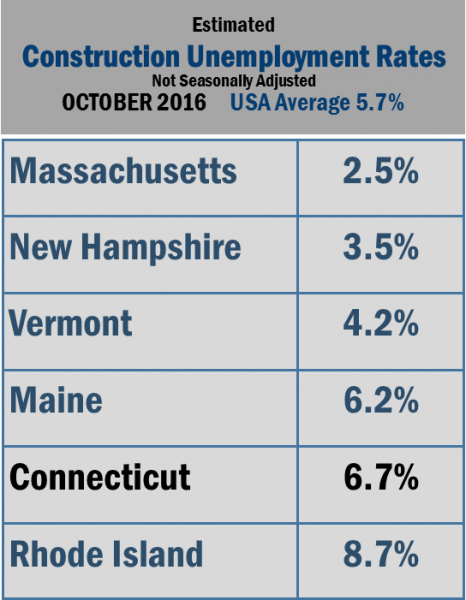
Industry employment is up by 2.4 percent on a year-over-year basis, considerably faster than the overall economy’s 1.6 percent job growth rate. Construction industry employment growth would likely be much sharper if more suitably skilled or trainable workers were available to fill available job openings, according to the ABC.
The data indicate that skilled labor shortage nationally appears to be impacting nonresidential activity more than residential. The nonresidential sector added 1,100 net new jobs in November, while the residential sector added 19,600 positions. Heavy and civil engineering lost 2,100 jobs for the month.
“The demand for construction talent was strong before the election, and the outcome has improved the near-term outlook for private and public construction activity,” said ABC Chief Economist Anirban Basu. “The implication is that demand for construction workers is positioned to remain high, which will translate into gradual reduction in industry unemployment and significant wage pressures.
In the state-by-state numbers, calculated for October, the states with the lowest estimated not-seasonally-adjusted construction unemployment rates were North Dakota, Massachusetts, Colorado, Utah, New Hampshire and South Dakota. October not seasonally adjusted (NSA) construction unemployment rates were down in 33 states, including Connecticut, on a year-over-year basis. Connecticut's October 2015 unemployment rate in the construction industry was 8.0 percent.
North Dakota’s unemployment rate in the industry was 2.4 percent, with Massachusetts at 2.5 percent. New Hampshire’s construction industry unemployment rate was 3.6 percent. Elsewhere in New England, Rhode Island’s unemployment rate in the construction industry was fourth highest in the nation, at 8.7 percent in October.
The unemployment rate for all U.S. industries fell to 4.6 percent in November, the lowest rate since mid-2007 and 0.3 percentage points below October’s rate. The labor force lost 226,000 persons for the month, but is still more than 2 million people larger than at the same time one year ago, officials pointed out.

 arch done


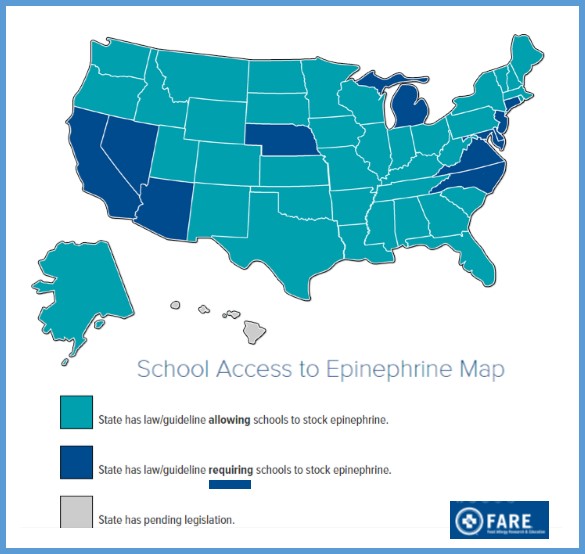
 In 2015 the legislature considered, but did not pass, a bill requiring the insurance commissioner to study and report on health insurance coverage of and out-of-pocket expenses for EpiPens, according to the OLR report. The 2014 legislation requires (a) schools to designate and train nonmedical staff to administer EpiPens to students having allergic reactions who were not previously known to have serious allergies and (b) the public health and education departments to jointly develop an annual training program for emergency EpiPen administration.
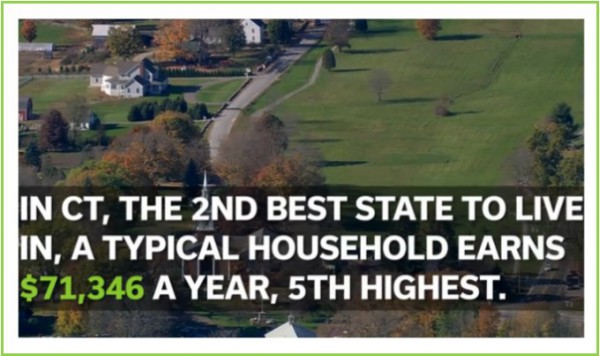
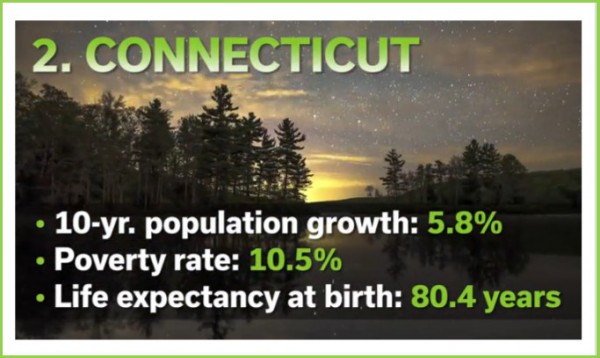 Quality of life in the United States is heavily dependent on financial status, the survey summary points out. As a consequence, the nation’s best states to live in often report very high incomes. With a median household income of $71,346 a year, fifth highest of all states, Connecticut is the second
 In a reversal from the previous quarter, 42 percent of state residents surveyed said they were unlikely to move out of state in the next 5 years, compared with 34 percent who described such a move as likely. In the previous survey, conducted in the second quarter of this year, the numbers were reversed with 42 percent saying that it was likely they’d be moving out of state within five years, compared with only 32 percent who said such a move was unlikely.
 Residents of Windham and Fairfield counties were more likely to view overall business conditions as being better now than six months ago, the survey found. Twenty-nine percent of Windham residents held that view as did 28 percent of Fairfield residents. Residents of the state’s other six counties, Middlesex (23%), New London (20%), New Haven (20%), Litchfield (16%), Tolland (16%) and Hartford (16%) had fewer residents expressing that opinion.

 Louise DiCocco, Assistant Counsel for the Connecticut Business & Industry Association, noted that “24 years ago, more than 80 percent of Connecticut votes overwhelmingly approved a spending cap to keep the cost of state government within the taxpayers’ means to afford it. Voters demanded the cap as an offset to the persona income tax in Connecticut. The state must enact a spending cap that is ironclad and works.”
 State Senator Toni Boucher of Danbury told the Commission: “I hope that the commission to adopt a definition of general budget expenditures that is comprehensive and gives a complete and realistic account of all the money that the state spends… it is equally critical that the legislature not be allowed to move what was once an expenditure included under the cap to bonding or fund it with a revenue intercept for the purpose of undermining the cap’s integrity.”



 cal Centers is a joint venture between two leading health care organizations – GuideWell Mutual Holding Company and Organización Sanitas Internacional. GuideWell is a U.S.-based not-for-profit mutual holding company and the parent to a family of forward-thinking companies focused on transforming healthcare.
 Mini-golf courses, skating rinks, gym facilities, laser tag, mazes, and even go-kart raceways are all within the spectrum of entertaining additions to malls these days.

 the right of abused and neglected children and children with disabilities. She was appointed by Governor Dannel Malloy to serve as Connecticut's Child Advocate on August 1, 2013. As Child Advocate, she sets priority reviews for the OCA, manages office operations, and publishes vital information regarding the well-being of children and recommendations for system reform. Prior to this appointment, she served for several years as the Director of the Child Abuse Project at the Center for Children's Advocacy in Hartford.

 his important issue and help animals by organizing fundraisers in Connecticut communities. The announcement of her election, after more than 4,000 ballots were cast earlier this month by 5th graders, was made at her school in Milford. She was one of seven candidates on the ballot; only 5th graders were eligible to vote.
 many others,” Stuart added.





















