Quantum Science is Specialty for CT Medal of Science Recipient

Professor Robert Schoelkopf, Sterling Professor of Applied Physics and Physics and Director of the Yale Quantum Institute, has been selected as the 2017 recipient of the Connecticut Medal of Science for his seminal contributions to the entire field of quantum science and to the new field of circuit quantum electrodynamics. Schoelkopf is a leading experimental physicist, whose research has helped establish the field of quantum computation with solid-state devices.  The Connecticut Medal of Science is the state’s highest honor for scientific achievement in fields crucial to Connecticut’s economic competiveness and social well-being.

Connecticut’s most talented young scientists and engineers were also honored by the Connecticut Academy of Science and Engineering at its 42nd Annual Meeting and Awards Dinner, held this spring.  Winners of this year’s Connecticut Science & Engineering Fair, Connecticut Junior Science and Humanities Symposium, and Connecticut Invention Convention were recognized during program ceremonies.

Together with his faculty collaborators at Yale, Michel Devoret and Steven Girvin, Schoelkopf has pioneered the approach of integrating superconducting qubits with microwave cavities, known as Circuit Quantum Electrodynamics. Some of Schoelkopf’s other inventions include the Radio Frequency Single-Electron Transistor and the Shot Noise Thermometer.

He is regularly called on to advise industry and federal agencies on the development and commercialization of quantum technologies, and he is a co-founder of Quantum Circuits, Inc., a Connecticut-based company working to deliver the first quantum computers.

Modeled after the National Medal of Science, the award is bestowed by the State of Connecticut, with the assistance of the Connecticut Academy of Science and Engineering, in alternate years with the Connecticut Medal of Technology.

Student work was also honored by CASE.  The H. Joseph Gerber Medal of Excellence, established by CASE and presented in partnership with the Connecticut Center for Advanced Technology, was awarded to the top winners of the Connecticut Science & Engineering Fair. The medal was created to recognize and honor H. Joseph Gerber’s (1924-1996) technical leadership in inventing, developing and commercializing manufacturing automation systems for a wide variety of industries, making those industries more efficient and cost-effective in a worldwide competitive environment.

The Connecticut Academy of Science and Engineering was chartered by the General Assembly in 1976 to provide expert guidance on science and technology to the people and to the state of Connecticut, and to promote the application of science and technology to human welfare and economic well-being.

Student Awards:

The 2017 H. Joseph Gerber Medal of Excellence:

  • Shobhita Sundaram, Greenwich High School, Greenwich, CT

2017 Connecticut Science & Engineering Fair – 1st Place, Life Sciences-Senior Division

Project: Detection of Premalignant Pancreatic Cancer via Computational Analysis of Serum Proteomic Profiles

  • Ethan Novek, Greenwich High School, Greenwich, CT

2017 Connecticut Science & Engineering Fair – 1st Place, Physical Sciences-Senior Division

Project: Novel Low-Temperature Carbon Capture Using Aqueous Ammonia and Organic Solvents

  • Maya Geradi, Wilbur Cross High School, New Haven, CT

2017 Connecticut Science & Engineering Fair – Urban School Challenge High School Winner

Project: A Study of Circadian Genetics and Abiotic Stress Towards Sustainable Agriculture

2017 Connecticut Science & Engineering Fair –

Middle School Winner, Urban School Challenge

  • Madison Lee, Sport and Medical Sciences Academy, Hartford, CT Project: Natural Plastic: Milk Plastic Biodegradation Versus Commercial Plastic Degradation

2017 Connecticut Junior Science and Humanities Symposium

  • 1st Place: Shobhita Sundaram, Greenwich High School, Greenwich, CT

Project: Detection of Premalignant Pancreatic Cancer via Computational Analysis of Serum Proteomic Profiles

  • 2nd Place: William Yin, Greenwich High School, Greenwich, CT

Project: Portable, Low-Cost Tattoo-Based Biosensor for the Non-Invasive Self-Diagnosis and Quantification of Atherosclerosis

  • 3rd Place: Haya Jarad, Amity Regional High School, Woodbridge, CT Project: Identification of Novel Small Project: Identifying Quasi Periodic Patterns in fMRI Versus CBF Data
  • 4th Place: Gabrielle Stonoha, Manchester High School, Manchester, CT

Project: Growth and Sustainability of Metarhizium on Low-nutrient Substrates

  • 5th Place: Lauren Low, Engineering & Science University Magnet School, West Haven, CT Project: A Novel Rapid Diagnostic Test for Zika Virus NS1 Protein Using Nanoribbon Microfluidics


PERSPECTIVE: Beyond the Land of Unsteady Habits

by Kevin B. Sullivan These days, it may seem like Connecticut is the land of unsteady habits.  As Governor Malloy says, sometimes it just feels like we always see the glass half empty.

For example, those of us in the capital area get a steady stream of bad news about our capital city in crisis.  Yet, right next door, there’s West Hartford where our state’s 8th largest municipality exemplifies diversity, good governance, fiscal sustainability and continuous economic re-invention.

So let’s not waste time obsessing about Aetna’s headquarters move, like we did with GE.  Neither move is about competitiveness in taxes or cost of living.  Both are more about the beggar-thy-neighbor bidding war among the states for public subsidies.

Make no mistake, our rhetoric – especially our political rhetoric – influences how we see ourselves and how others see us.  No democracy or economy, national or state, can thrive by looking backwards, devaluing our shared assets or chasing short-term satisfactions.  So stow the political back-biting and skip the pity party.  Let’s get back to work.

I am a realist, but not a pessimist.  Being a realist means building from our strengths, facing our weaknesses, embracing our challenges and creating new opportunities.  Right now is the best opportunity we have to get it right.  That starts by understanding there is no magic – just smart decisions, hard work and a vision that’s fiscally sustainable and economically nimble.

With long years of service in the State Legislature behind me, I see so many things we did right but also many that we did wrong or just ignored.  Now, as Revenue Services Commissioner, I get to have a new window on the state economy every day.  So what do I see?

Prior to the Great Recession, Connecticut experienced one of the strongest and longest runs of economic growth in the nation.  Confident in our highest per capita income and traditional economic base, we were complacent.  Then, in the hard times that followed, we failed to see that a very long and very deep recession also masked tectonic economic shifts.   We have been struggling ever since just to understand that this time it’s not about recovery – it’s about renewal.

Under Republicans and Democrats, state spending has outpaced economic growth and personal income growth for the past twenty years.  Worse still, most of the growth and most of every state budget is fixed costs.  Unfunded liabilities that no one before Governor Malloy has challenged.  No wonder, under Republican and Democratic governors, three major tax increases in the past twenty years have now reached a point of diminishing return.

Connecticut’s income tax is the third most progressive in the nation.  It includes an earned income credit that helps working families and puts money back into the economy.  Income taxes should be progressive.  But over-reliance on a highly progressive income tax and a relatively small segment of very high income taxpayers produces big revenue volatility.

While our [tax] rates are comparatively high, the business-backed national Council on State Taxation continues to rank Connecticut among the lowest total effective tax burden states.  But that does not mean we cannot do better.

Led by DRS, supported by the Governor and working with the business community, we have already achieved a trifecta of corporate tax reforms.  With conversion to a unitary, single factor, destination sourced approach, we have ended a tax regime that used to favor out of state businesses while burdening Connecticut-based businesses.  Whether corporate income or pass-through income, DRS is also stepping up in audit to challenge those who tilt the playing field through off-shoring and transfer pricing schemes that are tax evasion by any other name.

However, fewer and fewer businesses are organized as corporations.   Personal taxation of pass-through business income now drives state business tax revenue.  Different taxes and different rules for businesses that differ in form only.  There are also many other types of Connecticut business taxes determined solely by the nature of the product or service provided.

Add to that the irritant of Connecticut’s so-called Business Entity Tax, a fee that is often the first tax slap experienced by new enterprises well before turning even a first dollar of profit.  As other states have done, it’s time to at least consider rationalizing this mess with a single receipts-based tax that includes meaningful start-up and reinvestment credits.

In fact, there are so many ways to use smart revenue policy as an economic driver.  With transportation gridlock and aged infrastructure ham-stringing growth, we need a modern toll system that generates essential reinvestment.  Let’s ramp up tax credits for R&D, job creation, training for new workers, retraining for displaced workers and business reinvestment.

We can even pay for it by getting rid the remaining mishmash of credits and abatements that make no appreciable economic difference at all.  Rather than pile on more loans, let’s drag antiquated systems of public and private higher education into the 21st century and then use tax policy to provide incentives for graduates to stay in Connecticut as next generation entrepreneurs and skilled workers.

In exchange for real political and structural reform, we can also use tax policy - rather than bailouts, bankruptcies or yet another layer of government – to re-invent livability and economic viability in our struggling cities.

Connecticut’s economic strengths need to be the basis of any diagnostic for improved competitiveness.  A long and strong run of economic performance still leaves us a great state to live and work.  We continue to rank highly on so many key economic measures: personal income, low poverty levels (although dangerously concentrated), R&D investment, GDP per capita, invention and productivity, manufacturing and finance as competitive growth engines, educational attainment, public safety and livability, and location.

Connecticut may not economically be what it was, but there is no good reason why we cannot be what we want to be now and into the future.

________________________________

Kevin B. Sullivan is Commissioner of the state Department of Revenue Services, and previously served as Lieutenant Governor, Senate President Pro Tempore and a member of the State Senate.  This is adapted from remarks delivered in June at the Connecticut Business Summit. 

Hartford Region Ranks 13th in National Fitness Ratings

The Hartford region ranks as the 13th “fittest” metropolitan area in the nation, according to a nationwide fitness index developed by the American College of Sports Medicine.  Hartford ranked 9th a year ago and 11th in 2015 in the ACSM American Fitness Index, now in its tenth year. The top 10 “fittest” metropolitan areas are Minneapolis, Washington DC, San Francisco, Seattle, San Jose, Boston, Denver, Portland, Salt Lake City and San Diego. The top seven cities in the 2017 AFI are between 4-13 percentage points ahead of the rest of the pack, principally related to lower rates of smoking and cardiovascular disease deaths and higher reported physical activity, consumption of fruits and vegetables, and per capita park expenditures in their communities.

The index publication is supported by the Anthem Blue Cross and Blue Shield Foundation.  It is a scientific snapshot of the health and fitness status at a metropolitan level using data made up of personal health, community and environmental factors.
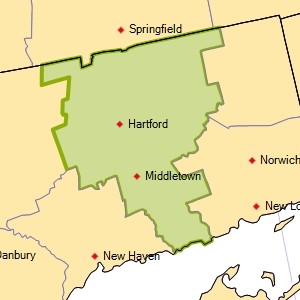
The United States Census Bureau defines the Hartford-West Hartford-East Hartford, CT Metropolitan Statistical Area (MSA) as containing 54 towns of Hartford County, Tolland County, and Middlesex County. The 2015 population estimate for the MSA is 1,211,324 and is ranked as the 47th largest metropolitan area by population in the United States

Fifty regions were rated, with the Hartford MSA the only region in Connecticut.  Boston-Cambridge-Newton ranked 6th and Providence-Warwick ranked 31st, among the New England states.

The Hartford region’s total score has ranked among the top 12 metropolitan areas since 2009, until this year. Strengths include a high number of farmers’ markets per resident, a high percent of parkland as city land area, as well as a high number of recreational facilities per resident, including ball diamonds, golf courses, park units and recreation centers.

The region’s personal health rank was 13; its community/environmental indicators rank was 25, leading to an overall ranking of 13th.  The analysis points to “Areas of Excellence,” in the region, including:

  • Lower death rate for diabetes
  • Higher percentage of parkland as city land area
  • More farmers’ markets per capita
  • Higher Walk Score® (75% report engaging in physical activity or exercise in the last 30 days)
  • More ball diamonds and basketball hoops per capita
  • More recreation centers per capita
  • More swimming pools per capita

Nationally, there were numerous positive shifts during the last year:

  • 0% increase in the percent who met the recommendations for aerobic and strength in the last 30 days
  • 5% drop in the percent with diagnosed angina or coronary heart disease
  • 9% increase in walkability scores
  • 9% increase in the percent who live within a 10-minute walk to a park
  • 7% increase in the total park expenditures per capita
  • 0% increase in the number of recreation centers per 20,000 residents

“Our ultimate goal is to offer individuals, families and communities trusted resources that can help them assess, plan and implement policies that promote positive health outcomes,” said Walter R. Thompson, Ph.D., FASCM, who chairs the AFI Advisory Board and is president-elect of ACSM.

The 2017 AFI report also revealed some shortcomings over the past year:

  • 7% increase in the rate of diabetes deaths
  • 3% reduction in the percent of residents biking or walking to work
  • 2% decrease in the percent of individuals eating the recommended number of servings of fruit
  • 6% reduction in the number of tennis courts per 10,000 residents

The American College of Sports Medicine is the largest sports medicine and exercise science organization in the world. More than 50,000 international, national and regional members are dedicated to advancing and integrating scientific research to provide educational and practical applications of exercise science and sports medicine. The Anthem Foundation is the philanthropic arm of Anthem, Inc. and through charitable contributions and programs, the Foundation promotes the inherent commitment of Anthem, Inc. to enhance the health and well-being of individuals and families in communities that Anthem, Inc. and its affiliated health plans serve, including Connecticut.

CBIA to Women: Drive a Truck

The Connecticut Business and Industry Association’s Education and Workforce Partnership is turning its attention to the state’s increasing demand for drivers of trucks, buses, and heavy equipment – a demand which is expected to grow to 30,000 by 2024. And the focus of their attention is women, urging them to consider careers in transportation. In an effort to showcase well-paying jobs in the industry, the partnership teamed up with Workforce Solutions Collaborative of Metro Hartford to create a video that highlights this growing industry.

Ellen Underwood, who now drives for the state Department of Transportation’s bridge crew, explains in the video that driving was a “natural pathway” because she enjoyed being outdoors, and driving.  She’s been at it for 20 years, with a number of different employers, including a local municipality.  She says state polices “make it easier for a woman to be treated as an equal,” adding that “if you’re willing to work hard and learn new things, you can do anything.”

A contract driver for CNS Transportation, Karen Roderick, says her career began “as a challenge to see if I could do it.”  She recalls being “the only female” in truck-driving school.  She has since earned Connecticut Driver of the Year, the only woman to do so.

CBIA notes some key facts about women in transportation:

  • Women in historically male-dominated jobs earn an average of 25 percent more than women in historically female-dominated jobs.
  • Women consistently do better with their paperwork, take better care of their trucks, and are often better with their customers.
  • Women, especially when compared with young men, are generally safer drivers.
  • There’s a huge shortage of heavy and tractor trailer drivers yet only 6 percent of truck drivers are female.

Daiana Soto, featured in the video, drives a big rig, and launched her career just four months ago.  “My truck is my office,” she explains. The limited number of women in the field is quite evident, and Soto says it is a challenge she’s ready to take on. “You can do the same job (as men)… and maybe better.”

Ezzie Williams, a professional motorcoach driver for Town & Country in New Britain, began as a school bus driver. She says young people should consider the field, so that they can “get a career and make money.”

Two versions of the video are available—one a full-length video with interviews with six women in six different transportation careers and the other is a one-minute highlight reel.  The project was supported by the Walmart Foundation. The Transportation partnership (Transportation, Logistics, and Distribution Partnership – TDL), convened by the CBIA Education & Workforce Partnership, aims to strengthens the transportation workforce pipeline, support on-the-job training, and improve retention rates among new hires.


https://youtu.be/pNRpQ16ZRNU

Safest Places to Raise a Child? Connecticut Communities Dominate A National Ranking

If you’re in the market for a safe community to raise children, and you are wondering about Connecticut, there is a new ranking that will be of particular interest. Developed by the SafeWise, a home security and safety brand, the ranking considered reported sex offender concentration, state graduation rates, overall school quality ranking, and FBI violent crime data in communities nationwide.  Parks and recreational opportunities as well as special programs focused on providing services for kids and families, were also in the mix.  And when the top 30 communities were ranked, Connecticut dominated the list, with nine towns.

Number one in the rankings was Greenwich, with Fairfield placing third.  Ridgefield, Southington and Westport earned a spot in the top 20, and Simsbury, Cheshire, Milford and Glastonbury also reached the top 30.

SafeWise said “these communities do exceptional jobs of protecting not only adults but also their smallest, most vulnerable residents.  The safest cities for raising families tend to skew towards coastal New England towns, where quiet, suburban neighborhoods have less crime, promote healthy and active lifestyles, and enjoy well-funded school systems.”  Communities across the country with populations exceeding 10,000 were considered.

Connecticut’s “exceptionally low rates of violent crime” contributed to the state’s strong presence – nearly one-third of the top 30 – on the rankings.

“While parents always strive to closely supervise their kids, it helps to have a community that’s willing to focus on family-friendly initiatives that make the difference. These are the cities across America that make one of the toughest and most rewarding jobs you’ll ever undertake a little less stressful,” commented Kaz Weida of SafeWise.

Among the Connecticut communities receiving honorable mention were Farmington, New Canaan, West Hartford, Newtown, Madison and Darien.

  1. Greenwich
  2. Essex, Vermont
  3. Fairfield
  4. Carmel, Indiana
  5. Merrimack, New Hampshire
  6. Fishers, Indiana
  7. Monroe Township, New Jersey
  8. Irvine, California
  9. Middletown, New Jersey
  10. Cary, North Carolina
  11. Wayne, New Jersey
  12. Franklin, Massachusetts
  13. Toms River, New Jersey
  14. Warwick, Rhode Island
  15. Ridgefield
  16. Gilbert, Arizona
  17. Bridgewater, New Jersey
  18. Southington
  19. Orem, Utah
  20. Westport
  21. Cumberland, Rhode Island
  22. Hillsborough, New Jersey
  23. Milton, Vermont
  24. Simsbury
  25. Cheshire
  26. Milford
  27. Glastonbury
  28. Narragansett, Rhode Island
  29. Lakeville, Minnesota
  30. Newton, Massachusetts

New Initiative Aims to Provide Vision Impaired Patients Access to Print News

The Connecticut Radio Information System (CRIS) continues to innovate and expand in Connecticut.  Connecticut’s only radio-reading service, which provides audio access to news and information for people who are blind or unable to read due to a print disability or medical condition, has announced a ground-breaking new service in partnership with Hartford’s Saint Francis Hospital and Medical Center that will bring patients audio of the latest news, in English and Spanish. Saint Francis will be the first acute care hospital in the nation to provide an alternative to printed Spanish-language magazines and newspapers through an in-house system streamed to each patient TV with audio recordings for patients unable to read or turn pages of a magazine due to their medical condition or treatment.

It will also be the first acute care hospital in Connecticut to offer an alternative to more than 50 English-language magazines and newspapers streamed to each patient room.

Patients will be able to listen to human-narrated audio versions of newspaper and magazine articles featuring human narration – in both English and Spanish – through the hospital’s in-house television system.

CRIS is a 39-year-old nonprofit providing audio access to news and information for people who are blind or unable to read due to a print disability or medical condition / treatment, including those with physical, learning, intellectual or emotional disabilities.

 “The Connecticut Hospital Association applauds Saint Francis Hospital and CRIS Radio for its innovative collaboration, serving as another example of hospitals partnering with key service providers to enhance patient satisfaction and improve the quality of a patient’s experience while being treated at the hospital,” said Carl Schiessl, director of regulatory advocacy for the Connecticut Hospital Association.

CRIS operates with 300 volunteers at its main broadcast center in Windsor and satellite studios located in Danbury, Norwich, Trumbull and West Haven.  CRIS radio recently announced it will open its fifth regional studio in Norwalk next month, to be located inside the gatehouse at the Lockwood-Mathew’s Mansion Museum.  CRIS will share the gatehouse with the Fairfield County Cultural Alliance, which has been in that location for nearly four years.

“Saint Francis Hospital and Medical Center is extremely grateful for the generosity of those who made this service possible for our patients,” said Dr. John F. Rodis, president of Saint Francis Hospital. “At Saint Francis we believe in caring for our patients in ways that help them on their journey to wellness. Whether it’s through surgical innovations or enhancements to their healing environment like the CRIS service, we are committed to providing the best patient experience possible.

Saint Francis Hospital and Medical Center has been an anchor institution in north central Connecticut since 1897. In 2015, Saint Francis became part of Trinity Health of New England, an integrated health care delivery system that is a member of Trinity Health, Livonia, MI, one of the largest multi-institutional Catholic health care delivery systems in the nation.

“Streaming audio versions of newspapers and magazines to each patient room at Saint Francis Hospital is an important milestone for CRIS Radio,” said Paul A. Young, chairman of the CRIS Radio Board of Directors. “It enables our nonprofit to expand access to print information for people unable to read due to their medical treatment or other print disabilities.”

Young also said he is very thankful for the generous funding that brought this project to life. Key funders of CRIS Radio’s hospital streaming project include the John G. Martin Foundation and Maximilian E. & Marion O. Hoffman Foundation. The Hartford Foundation for Public Giving supports the nonprofit radio station’s Spanish-language programming, CRIS en Español.

In addition to broadcasting newspaper and magazine articles, CRIS also records classroom materials for teachers, and the CRISKids Audio Library offers more than 800 classroom titles, including 17 children’s magazines, also recorded by CRIS volunteers.  CRIS also streams audio versions of children’s magazines to patient rooms at Connecticut Children’s Medical Center.

Other CRIS programs include CRIS en Español and CRISAccess, featuring Spanish-language newspapers and magazines and audible tours for museums, respectively. An initiative with the Mystic Aquarium, providing audio information about museum exhibits, was launched two years ago. Earlier this year, CRIS Radio's Voice's of World War I project was announced, coinciding with the 100th anniversary of the U.S. entry into the war.

CRIS Radio broadcasts can be heard with a special CRIS radio distributed free of charge, toll-free through the CRIS Telephone Reader, online streaming live or on-demand at the CRIS Radio website, www.crisradio.org, or with a free mobile app on any mobile device, including tablets or smartphones.


7,000 Refugees Settle in CT Since 2001; Burma, Congo, Iran, Somalia Most Frequent Origin

The United States has long been the global leader in resettling refugees, defined as people forced to flee their home country to escape war, persecution or violence, explains Smithsonian magazine in a state-by-state comparison. Since 2001, the magazine reports, more than 895,000 refugees have settled in the U.S., typically after being referred by the United Nations and vetted by the State Department in a process that takes at least 18 months. By comparison, a million or so legal immigrants arrive annually. From October 2001 through 2016, Burma, Iraq, Somalia, Bhutan, and Iran are the top five nations that send refugees to the U.S.

Refugees to the United States have come mostly from the Middle East, Asia and Africa. While many immigrants, legal and undocumented, come from Latin America, U.S. regulations make it difficult for Central and South Americans to qualify as refugees, according to Smithsonian.

The magazine developed a series of charts that compare refugee populations resettled in 41 states since October 2001. In depicting the refugees’ nation or origin, the breakdown in each state is limited to nationalities with at least 500 people, and no more than the top 5 nationalities are shown.

The number of refugees from those five nations, as well the total number of refugees is indicated.

For Connecticut, the total number of refugees is 7,144. The largest percentage of refugees come from Burma, Democratic Republic of the Congo, Iran and Somalia.  Those four nations were the home country for 3,824 of the refugees who settled in Connecticut since 2001.

Massachusetts' total is three times Connecticut - 21,441 refugees moving to the Bay State since 2001.

States with the largest number of refugees include California (102,614), Texas (81,765), New York (53,790), Florida (46,553), Minnesota (40,762), Washington (40,111), Arizona (39,031), Michigan (38,175), and Georgia (35,328).

There were nine states that had less than 500 refugees from a single country since October 2001:  Alabama, Alaska, Arkansas, Delaware, Hawaii, Mississippi, Montana West Virginia and Wyoming.


PERSPECTIVE: Enduring Impact of Risky Driving Can Change Anyone’s Life

by Nikole Doolittle and Sherry Chapman "This upcoming New Year’s Day will mark 14 years since I woke up in the intensive care unit of Hartford Hospital, unable to walk, talk, eat, or even breathe on my own.  I had been in a coma for 28 days, and had sustained a traumatic brain injury.

I can still remember that night like it was yesterday.  I headed out with a group of friends and the newly licensed driver decided to test out his speed.  When we hit what seemed like 100, all of us in the car screamed for the driver to stop or at least slow down, we were so scared.  One of my friends remembers the boys counting the speed up to 127 trying to beat their last record of 125.

I was told the driver had lost control of the car, it hit the guardrails on the right side of the highway and then flipped left rolling across the highway, through the median, landing on the other side.  At some point while the car was rolling I was thrown through the back window.   Once the paramedics showed up, I was unresponsive so they put me on life support right in the median of the highway.  For the next 30 days, I never took another breath on my own."

This is how Nikole Doolittle begins as she shares her heart wrenching experience with students at high schools and, most recently, Windham Middle School, as a part !MPACT's Drive 4 Tomorrow program.

Early in Nikole's recovery, she knew she had to do something to help combat motor vehicle crashes caused by young drivers, the number one killer of teens in America. She met members of !MPACT (an acronym for Mourning Parents Act, Inc.) at a presentation she made at Cromwell High School. Not long afterwards, she began delivering her safe teen driving message with the !MPACT moms at high schools across Connecticut and into greater New England.

All members of !MPACT have been directly affected by tragedy involving teen driving. Everyone has a horrific story. Sadly, Nikole fit right in.

!MPACT's mission is to eliminate tragedies caused by inexperienced drivers through awareness, education and legislation. The group raises awareness with their "Somebody Loves You" billboard initiative. They educate by delivering their heart wrenching Drive 4 Tomorrow presentations, in which members share their personal stories and teach teens how to protect themselves and their friends from becoming statistics. They fight hard for safety legislation to protect teen drivers, their passengers, and those of us who share the roads with them. The group was instrumental in helping to develop and pass into law Connecticut's graduated drivers licensing program, which serves to introduce the novice driver to the driving experience in a gradual manner.

This is how Nikole ends her story:

"I had taken for granted the daily routine of my life, getting up, brushing my teeth, combing my hair, eating, walking, even the simple task of talking.  These were all ordinary events which suddenly disappeared on the night of January 1, 2004. 

A lot has happened since then, one year of hospitals, two years of therapy, three eye surgeries, one stomach surgery, one mouth surgery, and a lifetime of memory problems. It has taken me well over eight years of rehab, therapy, and figuring out who I had become. Despite this, I landed a job with United Technologies, moved over 12 hours away and thrived on my own for five years. I finally returned home to Connecticut to be near family this past September.

When sharing my story, I try to remind these newly licensed drivers, that anything can happen to anybody – and driving is a huge responsibility.  I appear to be like everyone else, but I am not. I try to remind my audience that I could have been.  Once you make a bad decision, there is no turning back."

_________________________________

Sherry Chapman is Co-founder and President of Mourning Parents Act, Inc.

All of !MPACT's services are offered for free. Members of !MPACT include families, friends, and victims, and all donate their own time and resources to advance the mission of the organization.  If you are interested in having !MPACT present its Drive 4 Tomorrow program at your high school or other forum, please contact Sherry Chapman at 860-209-7070.  !MPACT is a 501(c)(3) nonprofit organization supported by donations, grants, and one annual fundraiser––their annual Tee Off For Teen Driving Safety golf tournament will be held at Blackledge Country Club in Hebron on Monday, June 26.


Public Transit Commutes Double, Triple Driving Time in CT Cities

People who take public transportation to get to work in the Bridgeport-Stamford-Norwalk area will have a commute nearly three times longer than those who drive to work.  In New Haven, the commute via public transportation is twice as long. Data compiled by Governing magazine indicate that across the nation’s largest metropolitan areas, public transportation riders spend significantly longer traveling to work than those who drive.  Data was compiled for the 25 largest metro areas, including New Haven-Milford and Bridgeport-Stamford-Norwalk.

Bridgeport-Stamford-Norwalk area public transportation commuters spend an average of 69.2 minutes traveling to work. By comparison, it takes those who drive 24.9 minutes.  The 44,742 estimated public transportation commuters account for 10 percent of commuters, according to the data.

New Haven-Milford area public transportation commuters spend an average of 48.4 minutes traveling to work. By comparison, it takes those who drive alone 23.9 minutes.  The 17,504 estimated public transportation commuters account for 4 percent of all commuters.

In nearly every metro area, driving to work remains far quicker than using a bus or train, taking less than half as long in some places.  Across the country, Governing reports, transit systems are seeking to attract new customers as the latest national statistics show stagnant ridership. Cutting down on commute times represents an opportunity to serve more riders who otherwise have a choice in how to get to work.

“Operating speed is going to be important for customers, so if they want to compete in that market, they need to be more competitive,” says Steven Polzin of the Center for Urban Transportation Research. “Time is important to folks across the full economic spectrum.”

Governing compiled the most recent Census survey data measuring total commute times, including travel to stations and the time spent waiting for buses or trains. In the 25 metro areas where public transportation accounts for the largest share of all commuting, riders reported commute times an average of 1.9 times greater than those who drove alone. Similar gaps exist in regions where public transportation isn’t as prevalent.

A metro area’s overall commute times partly reflect its different types of transit. Commuter rail passengers spend an average of 69 minutes traveling to work, far longer than those taking bus or light rail. Accordingly, areas relying more on heavy rail, like Bridgeport-Stamford-Norwalk, report lengthier commutes overall, Governing points out.

On average, the latest Census suggest Americans who drive alone spend an average of nearly 25 minutes traveling to work. The national average for bus commuters is 45 minutes, while those who ride subways or streetcars spend an average of 47 minutes traveling to work. For those who primarily walk to work, commute times average only 12 minutes.

College towns are about the only areas where public transportation commute times mirror those for auto commuters, according to the data compiled by Governing.

Financial Woes Aside, Dunkin' Donuts Park is Nation's Best Double-A Ballpark

With almost 49,000 voters weighing in on the top Double-A facilities, Dunkin’ Donuts Park, home of the Hartford Yard Goats, was the winner in the third-annual Best of the Ballparks fan vote from Ballpark Digest. It is the first time a new facility has won a Best of the Ballparks vote. Fans selected Dunkin’ Donuts Park over Peoples Natural Gas Field, home of the Altoona Curve, in a bracketed online competition at ballparkdigest.com that saw over 178,000 fans vote on their favorite minor league ballparks.

“We are extremely proud to hear that fans voted Dunkin’ Donuts Park as the best Double-A ballpark in the country,” Yard Goats General Manager Tim Restall said. “We want to thank all the fans for taking time to vote over the past few weeks and for Ballpark Digest for having this contest to help showcase Dunkin’ Donuts Park on a national level. This is such a wonderful honor and we have been completely overjoyed by the outstanding fan support at our games in Hartford this season.”

The Yard Goats have played in front of capacity crowds 15 times. This past weekend, 19,956 fans watched the Yard Goats in Hartford. Dunkin’ Donuts Park has been sold out completely in each of the last three weekends (Friday through Sunday) and filled to capacity in 11 of the past 17 home games.

Voters were asked to choose among Eastern, Southern and Texas League ballparks in five rounds of voting. Last year’s top vote-getter among Double A stadiums was Pensacola Bayfront Stadium, home of the Pensacola Blue Wahoos.  In this year’s voting, Dunkin’ Donuts Park was seeded sixth when the voting began.

Dunkin’ Donuts Park is the first brand new venue to open in the Eastern League since Northeast Delta Dental Stadium—home of the New Hampshire Fisher Cats—opened its doors in 2005, and it is seen as the biggest change to the league’s facility landscape since the extensive multi-phase renovation to the Harrisburg Senators’ FNB Field was completed prior to the 2010 season.
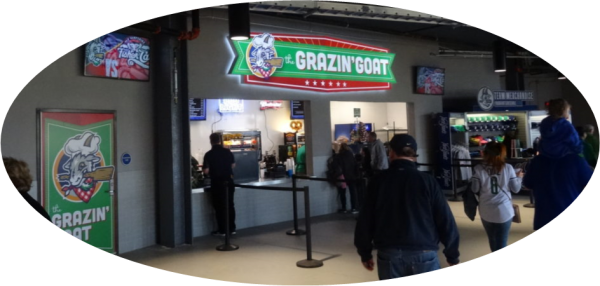
“Dunkin’ Donuts Park is one of the great stories in Minor League Baseball in 2017,” said Ballpark Digest publisher Kevin Reichard. “The Yard Goats front office persevered during a rough 2016 season and never wavered from a commitment to creating the best possible fan experience. That commitment to fans helped Dunkin’ Donuts Park snare a great honor in a highly competitive field.”

The stadium includes 18 luxury suites and two other suites adjacent to the dugouts, a kids “fun zone” just beyond the center field fence with an inflatable slide and bounce house and a glassed-in batting cage, which will allow fans with premium tickets to watch the players practice.

The Yard Goats are in their second year after moving 15 miles north from New Britain, where the team played through the 2015 season as the Rock Cats.  The club was forced to play its games on the road last year when construction delays caused the opening of Dunkin’ Donuts Park to be pushed back numerous times, ultimately to this season.

The team, an affiliate of the Colorado Rockies, is the first professional baseball club to call Hartford home since the Hartford Chiefs in 1952.  The team’s home opener earlier this year was played on the 20th anniversary of the home finale for the NHL’s Hartford Whalers.