New Area Codes Becoming More Prevalent in Connecticut; 475 and 959 Grow in Usage

Do the numbers 475 and 959 sound familiar?  If they don’t yet, they likely will in the relatively near future. There was a time, long ago but not far away, when residents in the entire state of Connecticut shared one Numbering Plan Area, better known as an area code.  All across Connecticut, it was 203.  Then, after about 50 years, it became more complicated.

First, with advances in technology and the exponential growth of communications devices, the state was split into two area codes in 1995, with Fairfield and New Haven counties retaining 203, and the other six counties shifting to the new 860. 

But that quickly proved to be insufficient.  Within the past decade, two “overlay” area codes were added.  Beginning in December 2009, residents or businesses in the 203 area code could be assigned a 475 area code.  And telephone customers in the 860 area could be assigned the 959 area codes as of August, 2014.

Commonly known as an area code, an NPA is the first three digits of a 10-digit North American phone number. In areas that have run out of phone numbers and a new area code has been introduced, some – including Connecticut - have chosen to overlay the new area code over the same area as the old one, instead of splitting the area in half. This avoids anyone having to change area codes, but does require that everyone in that region dial all ten digits for each call.

According to the North American Numbering Plan Administration (NANPA), which has jurisdiction for assigning area codes (Numbering Plan Areas) in Connecticut and beyond, as of June 30, 2017 telephone carriers reported approximately 57,000 numbers have been assigned using the 959 area codes, and nearly ten times that number, 523,000, have been assigned the 475 area code in Fairfield and New Haven counties.  The numbers are assigned to carriers, who then dole them out to customers. 

One of them is the Odyssey Early Learning and Enrichment Program in Norwalk, assigned a 475 number.  The New Haven Public Schools Office of Choice & Enrollment also was provided a 475 number, in the midst of all the 203’s across the city.  In Bridgeport, St. Vincent’s Medical Center Federal Credit Union has introduced customers to their 475 area code phone number.  The Hartford Correction Center began using a 959 area codes in January, and the UConn School of Social Work received a 959 number when they relocated to Hartford this year.

So, don’t be surprised if a new neighbor or a local businesses shares a phone number with an unfamiliar prefix.  It’s the wave of the future, and it’s here now.

It is still possible for the “old” 203 and 860 prefixes to be assigned to new customers by the carriers.  NANPA reports that there remain 200 blocks of one thousand numbers that may still be provided to various carriers for them to assign to customers.

Of course as reliance on land lines continues to diminish and people tend to keep their cellular phone numbers as the relocate across the country, the connection between where a person lives and the telephone area code becomes less meaningful. But for land lines in Connecticut what was once one area code is now four.  At least for the immediate future.



Unhealthy Food Marketing Targets Hispanic Youth, UConn Researchers Find

Hispanic children and youth, particularly youth in Spanish-speaking households, visited food/beverage websites at higher rates than their non-Hispanic counterparts, despite fewer visits to the Internet overall, according to a research study published by University of Connecticut faculty members. “The frequency with which youth in Spanish-speaking households visited popular food and beverage websites compared with primarily English-speaking Hispanic youth raises further concerns due to the potential for these sites to reinforce preferences for an ‘‘American’’ diet among less acculturated youth, which could contribute to Hispanic youth’s worsening diet with greater acculturation,” Maia Hyary and Jennifer Harris point out in the inaugural issue of the journal Health Equity, published in September.

They stress that “Further research is needed to understand why Hispanic youth disproportionately visit food/beverage websites to help inform potential actions to reduce their exposure to unhealthy food marketing.”

The researchers warn that “given higher rates of obesity and diet-related diseases among Hispanic youth, food and beverage companies should not target marketing of unhealthy products to Hispanic youth online.”

Dr. Jennifer L. Harris is Director of Marketing Initiatives at the Rudd Center for Food Policy and Obesity and Associate Professor in Allied Health Sciences at University of Connecticut. She leads a multidisciplinary team of researchers who study food marketing to children, adolescents, and parents, and how it impacts their diets and health. Maia Hyary is a PhD student at the Heller School for Social Policy and Management at Brandeis University and a former Rudd Center Research Associate.

Food and beverage companies often target marketing for nutrient-poor products such as candy, sugary drinks, snack foods, and fast-food restaurants to Hispanic audiences, including youth, the researchers state.  They cite previous research that has documented disproportionate exposure to unhealthy food marketing by Hispanic youth in their communities and on TV, but theirs is the first examination of the phenomenon on the internet.

Sites that were relatively more popular with Hispanic youth than with non-Hispanic youth included ChuckeCheese.com, HappyMeal.com, the Lunchables website, FrostedFlakes.com, and two Spanish language websites (ComidaKraft.com and McDonald’sMeEncanta.com). Among Hispanic children (under 12 years), ChuckECheese.com, FrootLoops.com, HappyMeal.com, TacoBell.com, LuckyCharms.com, and SubwayKids.com were relatively more popular.

Health Equity is a new peer-reviewed open access journal that “meets the urgent need for authoritative information about health disparities and health equity among vulnerable populations,” according to the publication’s website, “with the goal of providing optimal outcomes and ultimately health equity for all.” The journal intends to provide coverage ranging from translational research to prevention, diagnosis, treatment, and management of disease and illness, in order to serve as a primary resource for organizations and individuals who serve these populations at the community, state, regional, tribal, and national levels.


PHOTO:  Dr. Jennifer L. Harris, Maia Hyary

More CT Employers Expect Hiring to Increase for Remainder of Year; Hartford Region Lags State

Employers in Connecticut expect to hire at a modest pace during the fourth quarter of this year, which began on October 1, according to the ManpowerGroup Employment Outlook Survey. From October to December, 18 percent of Connecticut companies interviewed plan to hire more employees, while 7 percent expect to reduce their payrolls. Another 73 percent expect to maintain their current workforce levels and 2 percent are not certain of their hiring plans. This yields a Net Employment Outlook of 11%, which is below the national outlook projection.

“Hiring intentions are stronger compared to Q3 2017 when the Net Employment Outlook was 8%,” said ManpowerGroup spokesperson Betty Gooding. “The hiring pace is expected to remain stable compared to one year ago when the Net Employment Outlook was 12%.”

For the coming quarter, job prospects in the state appear best in Construction, Durable Goods Manufacturing, Nondurable Goods Manufacturing, Wholesale & Retail Trade, Information, Financial Activities, Professional & Business Services, Education & Health Services, Leisure & Hospitality and Other Services. Employers in Government plan to reduce staffing levels, while hiring in Transportation & Utilities is expected to remain unchanged, the survey found.

In an analysis of the largest metropolitan regions in the nation, three in Connecticut brought differing projections, with one slightly higher and the others slightly lower than overall expectations statewide.

In the Bridgeport-Stamford-Norwalk metropolitan statistical area (MSA), employers expect to hire at what is described as a “respectable pace” during this quarter, according to the Survey.  Twenty percent plan to hire more employees, which is offset by the 6 percent that plan to reduce payrolls, while 72 percent of employers expect to maintain current staff levels. Two percent indicate they are not sure of their hiring plans, which yields a Net Employment Outlook of 14% - higher than the expectation statewide.

In the New Haven-Milford MSA, 16 percent plan to hire more employees from October through December and 6 percent that plan to reduce payrolls. The Net Employment Outlook is 10%, just under the state outlook.  And in Hartford-West Hartford-East Hartford, 17 percent of employers plan to hire more employees, 8 percent that plan to reduce payrolls, while 70 percent expect to maintain current staff levels and 5 percent are not sure of their hiring plans. This yields a Net Employment Outlook of 9%.

Nationwide, of the more than 11,500 employers surveyed, 21 percent expect to add to their workforces, and 6 percent expect a decline in their payrolls during the final quarter of the calendar year. Seventy-one percent of employers anticipate making no change to staff levels, and the remaining 2 percent of employers are undecided about their hiring plans. When seasonal variations are removed from the data, the Net Employment Outlook is 17% nationwide.

This marks the 13th consecutive quarter with an Outlook of +15% or stronger, according to Manpower Group.  Compared with this time one year ago, hiring prospects are slightly stronger in the Northeast and remain relatively stable in the other three regions.  The Northeast Region includes Connecticut, Maine, Massachusetts, New Hampshire, New Jersey, New York, Pennsylvania, Rhode Island, and Vermont.  Employers across all sectors report favorable hiring intentions, with those in durable goods manufacturing reporting the strongest intentions in the past 10 years.

For the final quarter of the year, employers in Delaware, North Carolina, Wisconsin, Minnesota, Montana, Oregon, South Carolina and Utah report the strongest Net Employment Outlooks. Among the 100 largest metropolitan statistical areas, the strongest job prospects are expected in Cape Coral, Fla.; Oxnard, Calif.; Charlotte, N.C.; Stockton, Calif.; Deltona, Fla.; Grand Rapids, Mich.; Madison, Wis. and McAllen, Texas.  The Net Employment Outlook is derived by taking the percentage of employers anticipating an increase in hiring activity and subtracting from this the percentage of employers expecting a decrease in hiring activity, taking into account seasonal adjustments.

PERSPECTIVE: The Significance of Investing in Early Childhood Education

by Silvana Alarcon As a Connecticut native and a student at Dickinson College majoring in Psychology and minoring in Education and Spanish, I hope to make an impact in the early childhood education field by focusing on children with special needs. I have taught children how to swim with SwimAmerica and how to build Legos with Play-Well Teknologies, but I wanted to learn more about how children learn inside and outside of classrooms.

This summer I was fortunate to intern with the Partnership for Early Education Research (PEER) at The Consultation Center at Yale University. PEER is research partnership that works with the school districts and early childhood education providers of Bridgeport, Norwalk, and Stamford to support the use of data to inform education for young children. During this internship I achieved more than what I was hoping for: I learned about early education research and met many collaborators who are involved in the early childhood education system of Connecticut.

A specific part of what I learned from my internship at PEER is that the education system is a tall ladder of influential people who affect the children at the base of the ladder. Teachers, principals, district leaders, and state leaders from the Connecticut State Department of Education (SDE) and Office of Early Childhood (OEC) all influence the educational experiences of young children. These students are the future leaders of the nation, and educators and researchers should work together to raise students to be the people we want to see lead the world. Collaborative research can benefit multiple stakeholders by addressing educators’ needs and using readily available data to inform educational policy and practices.

The younger years of children are crucial because the brains of the children grow extremely rapidly between birth and the age of 8. Specifically the brain undergoes rapid cognitive development as well as linguistic and motor development in the first 3 years of life. By the age of 5 children have developed problem-solving skills and pre-literacy skills. Children are constantly learning from the environment and behaviors surrounding them.  Early brain development has a great influence on children’s long-term outcomes [1].

The first teachers in a child’s life are their parents. Parents teach their children how to speak, tie their shoes, and care for their bodies. However, school teachers also have a very important role such as teaching reading, mathematics, and appropriate social interactions. However, the role of a school teacher is different than parents because the teacher is someone outside the home who teaches the students how to connect with the outside world.  The students spend many of their waking hours with the teachers, building a foundation for future learning. Alongside parents, school teachers support children by providing motivation, skills, and lessons.

Effective early childhood education programs can produce positive outcomes because of the skilled teachers, small class sizes, strong curricula, and rich linguistic environments [1]. Early childhood education teachers have a significant role in the transition between the home and the K-12 school environment.

For this reason, it is powerful that PEER focuses its research on the age range of Pre-K to third grade. Because of children’s rapid growth in learning during these early years, I believe that Connecticut needs to focus more attention on educational opportunities, student services and family engagement programs that serve young children.

Collaborative research, which engages stakeholders in identifying research questions that will produce useful results, can help Connecticut provide quality education for children, which would increase the success of the students. I have truly enjoyed learning about the preschool and early childhood education systems, and I am very grateful for PEER and the work it is accomplishing in this area.

___________________________

Silvana Alarcon is a senior at Dickinson College studying psychology and education. She is a native of Norwalk, CT who received education from Kendall Preschool, Columbus Magnet School, and The Montessori Middle School, as well as the Harvey School in Katonah, NY. 

The Partnership for Early Education Research (PEER) is an alliance among early childhood stakeholders in Connecticut that engages in collaborative research focused on children from birth through age 8. By pursuing questions developed in collaboration with its members, PEER aims to produce rigorous, actionable research that can inform early childhood education policy and practice at the local and state levels, increase access to high-quality early childhood education, and reduce disparities in educational outcomes. Funding support for PEER is provided by the U.S. Department of Education’s Institute of Education Sciences (IES) and the Spencer Foundation.


Resources:  Center on the Developing Child (2007) A Science-Based Framework for Early Childhood Policy.


State Population Expected to Grow Slowly During Next Two Decades; Most Growth in Windham, East Windsor, Avon, Oxford, Ellington, As Other Towns Likely to Lose Population

Connecticut’s total population is projected to increase by about 60,714 between 2015 and 2040, a growth rate of 1.7% over the 25 year period.  Simultaneously, some towns in Connecticut are projected to slowly gain population as others diminish, according to an analysis of all 169 towns by the Connecticut State Data Center at the University of Connecticut. The new projections show that multiple towns are approaching a demographic shift due to an aging population, a near net zero overall migration rate, and a relatively low, but stable, birth rate. 

Windham, East Windsor, Avon, Oxford, Ellington, Sterling, Norwich, West Haven, Rocky Hill, and Manchester are expected to experience the largest percentage of increase in overall population between 2015 to 2040.

On the opposite side of the spectrum, the towns of Sherman, New Fairfield, Bridgewater, Sharon, Monroe, Cornwall, Salisbury, Old Saybrook, Washington, and Weston are projected to experience the largest percentage of decline in the overall population from 2015 to 2040, according to the analysis.

The changing demographics by age cohort for towns in Connecticut provides a more complete picture of the overall trends within towns over time. 

The comparison between are largest percentage of population gain (Windham) versus the largest percentage of population decline (Sherman) highlights the shifts in age cohorts within these towns.

Connecticut’s eight most populous towns will see a growing or stable population based on the projections from 2015 to 2040, following an overall trend for several of these towns since 2000.

While Connecticut is projected to gain 1.7%, Maine is projected to lose 0.5%, Massachusetts is projected to gain 10.4%, New Hampshire is projected to gain 6.6%, New York is projected to gain 2.2%, Rhode Island is projected to gain 1.7%, and Vermont is projected to gain 7.1% in population, according to projections produced by each of the respective states.

The Connecticut State Data Center has developed an interactive data dashboard to accompany the projections, which enables users to view demographic changes town by town with data from 1970 to 2040.  When reviewing the age cohort data, long-term trends in demographics shifts within towns, and more broadly across the state when comparing multiple towns, indicate which towns are experiencing stable or declining births by examining the under 5 age cohort, as well as visually presenting the demographic shift between age cohorts as individuals age 55 to 64 age into the 65+ age cohort.

State Energy Policy Needs Further Revisions, Environmental Advocates Say

Connecticut Fund for the Environment has formally submitted its comments on the state’s draft 2017 Comprehensive Energy Strategy to the Connecticut Department of Energy and Environmental Protection. The plan is intended to shape the state’s energy policies and investments for the next three years. “The draft energy strategy includes some important recommendations that will reduce dependence on outdated fossil fuels, landfill gas, and biomass, but it still doesn’t map out how the proposed policies will put Connecticut on a path to achieve the greenhouse gas reduction targets of the Global Warming Solutions Act,” said Claire Coleman, climate and energy attorney at CFE.

The final CES should do the following to sustain Connecticut efforts to combat climate change, CFE urged:

  • Incorporate a quantitative analysis of how its policies will achieve the emissions reductions necessary to meet Connecticut’s 2020 commitment under the Global Warming Solutions Act;
  • Go forward, not backward, on renewable energy by proposing a more ambitious annual increase to the renewable portfolio standard, with the minimum goal of powering 45 percent of Connecticut’s needs from renewable sources by 2030;
  • Recommend a full-scale shared solar program to allow access to renewable energy for the 80 percent of Connecticut residents who can’t install solar panels on their own roofs, and remove the proposed cap on behind the meter solar;
  • Bring Connecticut’s energy efficiency investment in line with neighboring states;
  • Create incentive and marketing programs to encourage consumers to switch to efficient heat pumps; and
  • Rapidly get more electric vehicles on the road by strengthening the CHEAPR rebate program, expanding charging infrastructure, and establishing a regional cap-and-trade program for fuels to reduce emissions.

    “Meeting these goals isn’t optional—it’s required under state law that’s been on the books now for almost a decade,” Coleman stressed. “State agencies and lawmakers need to get serious about rapidly ramping up renewables and energy efficiency, cutting emissions from cars and trucks, and clearly identifying how state policies will work together to meet the 2020 and 2050 targets. That’s what we’ll be looking for in the final plan.”

The Connecticut Electric Vehicle Coalition, of which CFE is a founding member, submitted its own comments last week. The coalition emphasized the urgency of more specific plans to get EVs on the road and meet the state’s commitments under the Zero Emissions Vehicle Memo of Understanding to get have 150,000 EVs on Connecticut roads by 2025.
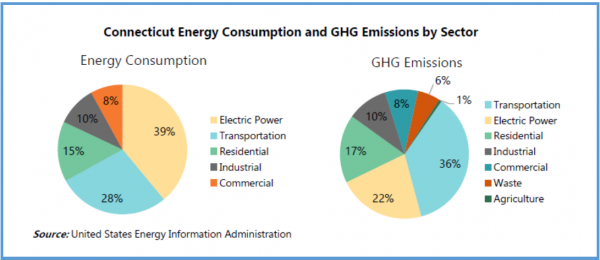

CFE, Consumers for Sensible Energy, RENEW Northeast, and Sierra Club also released an analysis by Synapse Energy Economics  which concluded that a 2.5 annual increase in Connecticut’s renewable energy growth would yield significant public health, economic, and climate benefits. Increasing the Connecticut RPS to 2.5% per year, the report indicated, would add an estimated 7,100 additional jobs to New England between 2021 and 2030, or about 710 jobs per year.

The Sierra Club noted that “even the administration's own analysis shows the draft energy strategy is not sufficient to protect the climate, and that more clean energy would create jobs, grow the economy, and improve public health.”

Bradley Ranks Last in Passengers’ Satisfaction Rating of 21 Mid-Sized U.S. Airports

Air travelers ranked Connecticut’s Bradley International Airport last among 21 medium-sized airports in a passenger satisfaction survey.  The airport fell from a second-to-last ranking in a similar analysis done at the end of last year, to the bottom rung of the latest ratings. Sacramento International Airport ranks highest among medium airports, with a score of 810. Indianapolis International Airport (807) ranks second, and Ted Stevens Anchorage International Airport (806) ranks third, in the survey by J.D. Power.

Bradley’s score of 742 was an improvement from 724 last year, but did not prevent the drop to the bottom of the category.  Just ahead of Bradley were Cleveland Hopkins International Airport (754) Kahului Airport (758), and San Antonio International Airport (761).  In last year’s survey, Bradley was tied for second-to-last with Kahului; Cleveland finished last.  Both passed Bradley in the latest rankings.  The medium airport average score was 781 in the survey released this month.

Connecticut Airport Authority Executive Director Kevin Dillon told the Hartford Business Journal, "We're pleased that our score has increased from last year and that our score is the highest among competing airports in the region."  He added that “we know that there are areas that need to be addressed, such as enhancing our concessions and terminal facilities. We have already introduced a number of new concessions over the last year and have made major updates to our terminal, and we have an ambitious plan for further upgrades over the coming months and years."

Nationally, overall traveler satisfaction scored a 749 out of 1,000 points, an 18-point increase from last year’s survey.  Among the nation’s largest airports, Orlando International Airport received a score of 778 out of 1,000, beating out the runner up, Detroit Metropolitan Wayne County Airport, which received a 767 score.

Newark Liberty International Airport in New Jersey received the lowest ranking among “Mega” airports, earning a score of 686. LaGuardia Airport, in New York City, ranked worst among “Large” airports, with a score of 654.

The survey ranked airports across the U.S. based on several key factors: accessibility, check-in and baggage check process, security screening, shopping, terminal facilities and baggage claim.

Airports were broken down into three categories based on size. “Mega” airports were defined as those handling more than 32.5 million annual passengers. The “large” category included airports with 10 million to 32.4 million passengers and “medium” airports, including Bradley, are those with between 3 million and 9.9 million passengers.

The J.D. Power analysis indicated that “with nearly every airport in the country dealing with challenges of high passenger capacity and ongoing construction projects to address increased demand, technology is helping to directly address these issues.”

“The trifecta of a steadily improving economy, record passenger volume and billion-dollar renovation projects unfolding in airports across the country has created a challenging environment for customer satisfaction,” added Michael Taylor, Travel Practice Lead at J.D. Power.

Now in its 12th year, the study is based on responses from 34,695 North American travelers who traveled through at least one domestic airport with both departure and arrival experiences (including connecting airports) during the past three months. Travelers evaluated either a departing or arriving airport from their round-trip experience. The study was conducted from January through August 2017.

New Haven Chamber Recognizes Business Success Stories, Starting with "Juice"

The annual Greater New Haven Chamber of Commerce awards luncheon on Thursday, September 28  will celebrate the diverse accomplishments of members of the region’s business community – including an entrepreneurial business with the “juice” to grow from a home-based start-up in Wallingford to employ more than 120 people in New Haven in less than a decade. The company - FreshBev LLC - produces two primary lines of beverages - RIPE Craft Juice and RIPE Craft Bar Juices, bringing real fresh juice to the market, and connecting local farmers to consumers by using only ingredients that could be traced back to the grower and region.
“We don’t heat our juice, we don’t pasteurize it. It’s cold-pressed,” founder Michel Boissy told NewsChannel 8 earlier this year. “We use an amazing new technology called high-pressure processing, which does everything that pasteurization does minus the heat. So we’re not heating the juice, we’re not killing the color, flavor, aroma, nutritional profile and all of what fresh juice is.”

The company’s website explains that “In the fall of 2008, tired of being subjected to the big ol’ bottle of day glow “margarita” mix, childhood friends and founders Michel Boissy and Ryan Guimond came to the conclusion that they had no choice but to create the first line of legit, handcrafted bar juices. With Mike's experience in high end kitchens and behind the bar, coupled with Ryan’s picky palate and a shared love of a good cocktail, these drink mix mercenaries set forth to create the nation's first pure squeezed, cold pressed, Bar Juice™.

The results are making local history, and spreading.  RIPE Craft Juices are available nationally through Whole Foods and select regional grocery chains.


The Chamber’s business leadership event is highlighted by the presentation of the Community Leadership Award to an individual who has made an outstanding contribution to the Greater New Haven Community.   That award will go to longtime Quinnipiac University President John Lahey, who has announced his retirement.  The other awards to be presented by the Greater New Haven Chamber of Commerce include:

Small Business Achievement Award  Four Flours Baking Company

Legislative Leadership Award   First Selectman Mike Freda, Town of North Haven

Achievement in Manufacturing Award  Cowles & Company

Leadership in Healthcare Award  Cornell Scott-Hill Center

Community Partnership Award  Easter Seals Goodwill Industries

Developer Investment Award  Randy Salvatore, RMS Companies

Alumnus of the Leadership Center Award  Paul Bartosic, Harvard Pilgrim Health Care

Volunteer of the Year Award  Mary Grande, New Reach

The awards will be presented on September 28 at the Omni Hotel in New Haven.


https://youtu.be/X56KIS8TEd0

Neighboring States Bring in Millions in Toll Revenue; CT Remains Toll Free

The Connecticut House of Representatives debated for nearly six hours the issue of reinstating tolls on Connecticut highways, but did not vote.  Connecticut remains a toll-free state, for residents and those driving through the state. How much money might the state receive in toll revenue if tolls were imposed?  The Office of Legislative Research, responding to a legislative inquiry, has surveyed neighboring states and issued a report this past week.

Toll revenue ranged from $20.4 million in FY 16 (Rhode Island) to $1.57 billion in calendar year 2016 (New Jersey), according to the legislature’s research office. In Massachusetts in FY2016, toll revenue was $395 million; in Maine $133.8 million in calendar year 2016; in New Hampshire a total of $130.7 million. 

The New York Thruway Authority and New Jersey Turnpike Authority each collect tolls on their respective highways, the Office of Legislative Research (OLR) report noted. In addition, the Port Authority of New York and New Jersey collects tolls on its bridges and tunnels connecting those two states (the George Washington, Goethals, and Bayonne bridges, the Outerbridge Crossing, and the Lincoln and Holland tunnels). In calendar year 2016, the Port Authority collected $1.86 billion in toll revenue.

Tolls were eliminated by lawmakers more than three decades ago in 1983, following a horrific accident at the then-Stratford toll booths, in which six people were killed. The last Connecticut highway toll was paid at the Charter Oak Bridge in Hartford on April 28, 1989.

In their final year of operation in the mid-‘80’s, Connecticut Turnpike tolls brought the state $56.4 million, the Merritt and Wilbur Cross Parkways 11.3 million, and the three bridges in the Hartford area, $4.7 million, according to a previous OLR report issued in 2009.

Technology, however, has made traditional toll booths obsolete, and Massachusetts recently removed its toll booths, switching to an overhead electronic system – thus maintaining the revenue without extending the dangers and the highway back-ups inherent with the toll plazas.  Connecticut residents driving through Massachusetts on the MassPike have noticed the striking difference.

Despite projections of budget deficits in coming years, the legislature did not vote on imposing tolls as a means of raising revenue this year.    It was estimated that 30 percent of the tolls would be paid by out-of-state drivers and 70 percent by Connecticut residents.  Federal rules require that toll revenue from interstate highways must be used for maintenance or improvements on those highways.  The legislature’s Transportation Committee had voted 19-16 in favor of the tolls bill, which led to the House debate on the proposal.  It was pulled before a vote could be held.

The 2009 OLR Report also noted that according to annual data compiled by the Federal Highway Administration, in 2007 almost 32.5 percent of all the vehicle miles traveled (VMT) in Connecticut occurred on its Interstate highways. Nationally, only 24.4% percent of all VMT occurs on Interstate System. Connecticut's Interstate VMT percentage is higher than many other states, including, at the time, Massachusetts, New York, New Jersey, and Pennsylvania.

The most recent OLR Report did not estimate what Connecticut might earn in toll revenue; it merely reported on the most recent earnings of neighboring states that impose tolls on their major roadways.

PERSPECTIVE: State Cuts will Mean Ballooning Costs; People with Traumatic Brain Injury Left Without Services

by Julie Peters Numbers matter. Traumatic brain injury (TBI) is a major cause of death and disability in the United States.  TBIs contribute to about 30 percent of all injury deaths. TBI was the diagnosis in more than 2.5 million ED visits. (www.cdc.gov). There were over 36,000 TBI ER visits in CT alone in 2014 (CT Dept. of Public Health).  Every 21 seconds in the US, a person sustains a brain injury.  5.3 million Americans currently have a long-term need for assistance to perform activities of daily living as a result of TBI.

The Brain Injury Alliance of Connecticut (BIAC) has been Connecticut’s resource for those with brain injuries and their families for over 35 years, and is the only organization that offers support to survivors and their caregivers while providing prevention education completely free of charge. BIAC’s brain injury specialists field thousands of calls each year, requesting our help.  Our 20 support groups provide peer support. We provide education and training to professionals who serve individuals with brain injury, assuring that they have the most up-to-date information possible.

Because Connecticut has no department of brain injury, and no mechanism to assist its residents with information regarding brain injury, they have contracted with BIAC for over 30 years to provide helpline, support, and community education on behalf of the Department of Social Services. Calls to 211 are referred to BIAC.

So when the State is considering a budget that would entirely eliminate BIAC’s funding, and a loss of up to 40 percent of our entire budget, the results could be catastrophic for those who need our help.

People like Linda, a 63 year old woman who contacted BIAC, is one such example.  Linda’s electricity was scheduled to be turned off, and her medical benefits, food stamps and cash assistance had all been discontinued as she had not remembered to fill out the redetermination paperwork.  She was out of her prescribed medication and was unable to see a doctor.  She had no medical insurance nor any medical transportation.  Additionally, Linda does not drive and has minimal family support.

All of the reported issues posed a significant health/safety risk for Linda within the community. Linda was not able to successfully complete the steps and activities necessary for her to pay bills or respond to mail which led to repeated discontinuation of benefits putting her housing and healthcare at risk. HelpLine staff were able to provide her with assistance in response to all of her concerns.  Calls and emails were made on Linda’s behalf to facilitate her obtaining services.  Together we were able to prevent the electricity from being turned off, an application was made for fuel assistance, medical insurance, food stamps, cash assistance were all reactivated.

Michael, a veteran injured during his second tour in the United States Army, contacted BIAC via his Veteran’s Affairs office. He was struggling with significant health issues, as well as cognitive challenges, behavioral and marital problems – decades after his initial injury from a fall. Navigating daily life became increasingly more challenging for him.  His BIAC brain injury specialist connected him to community based resources, including a physician who has successfully assisted him with medication. Michael remains independent and has also learned how to proactively advocate for his needs to be met in and outside of the VA system.  He credits his progress and significantly increased quality of life to his relationship with BIAC.

State funding for BIAC is an investment that pays off substantially, ensuring that those in need have access to lives of wellness, dignity and fulfillment.  In the short time it took you to read this article, at least 5 people in the U.S. sustained a brain injury. This could be your neighbor, your co-worker, your family member, or you.

Think about it – every number equates to a person, and every person has a name and a face – and a story to tell. Should funding for BIAC be severely reduced or eliminated, the State will experience ballooning costs as those who contact BIAC have nowhere to go for help.  They will end up in hospitals, long-term nursing facilities, or on the street.  And those numbers will matter to all of us.

____________________________

Julie Peters, CBIS, is Executive Director of the Brain Injury Alliance of Connecticut, which provides critical resources and support to brain injury survivors, their families and caregivers while educating individuals throughout Connecticut about brain injury awareness and prevention.